
Let me be straight with you, ground turkey has a reputation problem it doesn't entirely deserve.
Dry. Flavorless. The sad swap you make when you're "being healthy." I've heard all of it and honestly, I used to believe some of it too. Then I figured out that the problem was never the turkey. It was that most people cook it exactly like ground beef and then wonder why it tastes wrong.
Ground turkey is a different ingredient. It needs different handling. Once you get that right, it stops being the boring healthy option and starts being the thing you actually want to eat on a Wednesday night.
This guide covers the real stuff, the USDA nutrition numbers that actually matter, how to cook it so it doesn't dry out, seasoning combinations that work by cuisine and a full lineup of recipes organized by category.
Why Ground Turkey Belongs in Your Regular Rotation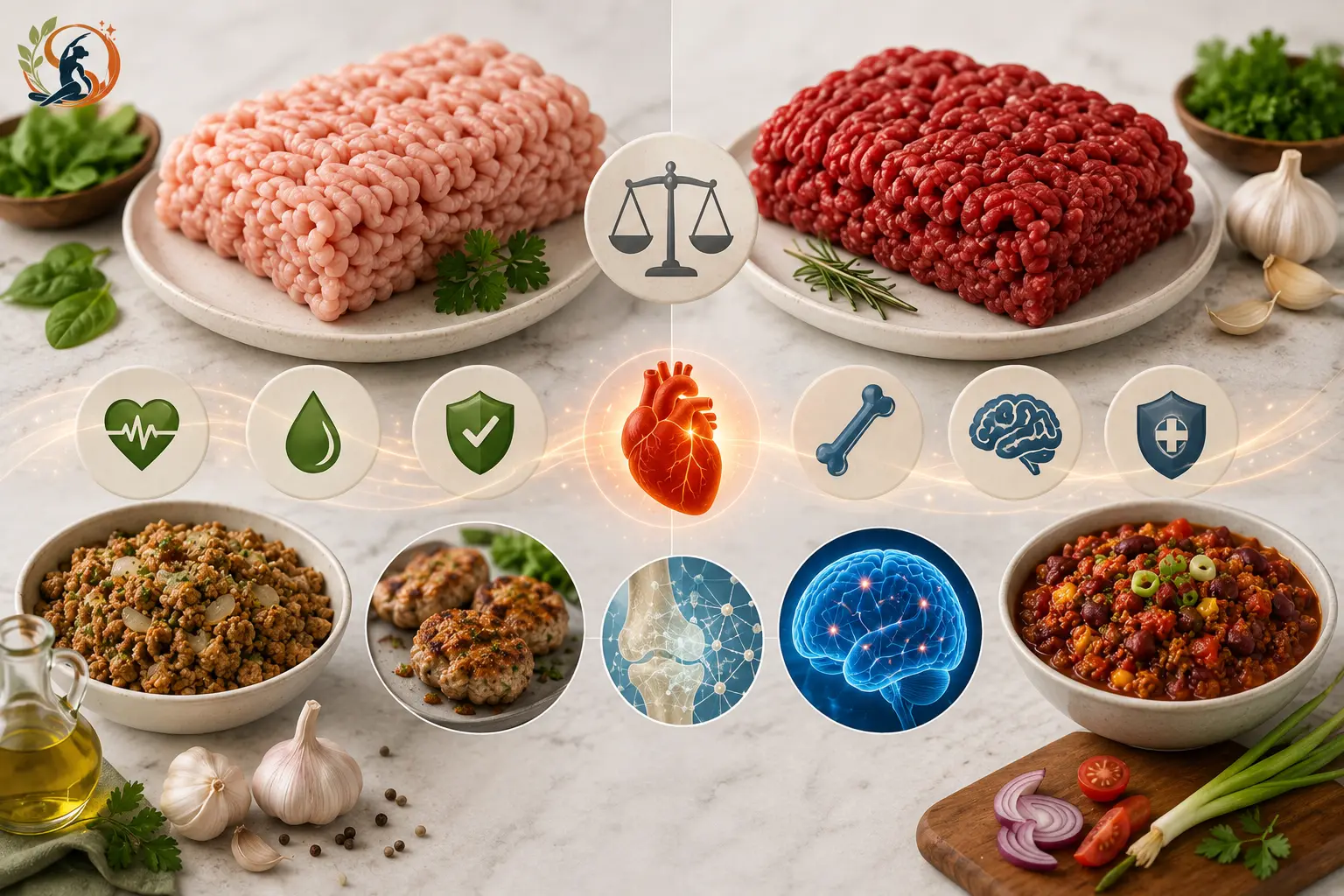
Here are the actual USDA numbers, because the internet gets this comparison wrong all the time.
Per a four-ounce serving, 93/7 ground turkey has 170 calories and 9.42g of total fat. 93/7 ground beef comes in at 172 calories and 7.91g of total fat. So total fat? Turkey is actually slightly higher. The real difference is in saturated fat ground turkey has 2.45g of saturated fat versus 3.25g in ground beef.
That's the number that matters for heart health. The American Heart Association recommends limiting saturated fat to 5–6% of total daily calories. Over multiple meals a week, that difference adds up.
Ground turkey is also a good source of phosphorus, delivering nearly 25% of the recommended daily intake, a mineral that helps form bones, teeth, DNA and ATP, the body's main energy molecule. It also contains choline for brain and nervous system health and zinc for immune support.
Ground beef does have more heme iron and zinc though, so if you're prone to iron deficiency, rotating both proteins makes more sense than cutting beef out entirely.
One more thing worth knowing: most ground turkey contains meat along with skin and fat in their natural proportions. The only type that doesn't contain skin is ground turkey breast, which runs around 99% lean. And 99% lean is actually too lean for most cooking. It dries out no matter what you do because the fat is what carries the spices. Stick with 93% lean. It's the sweet spot.
The Real Reason Ground Turkey Gets a Bad Rap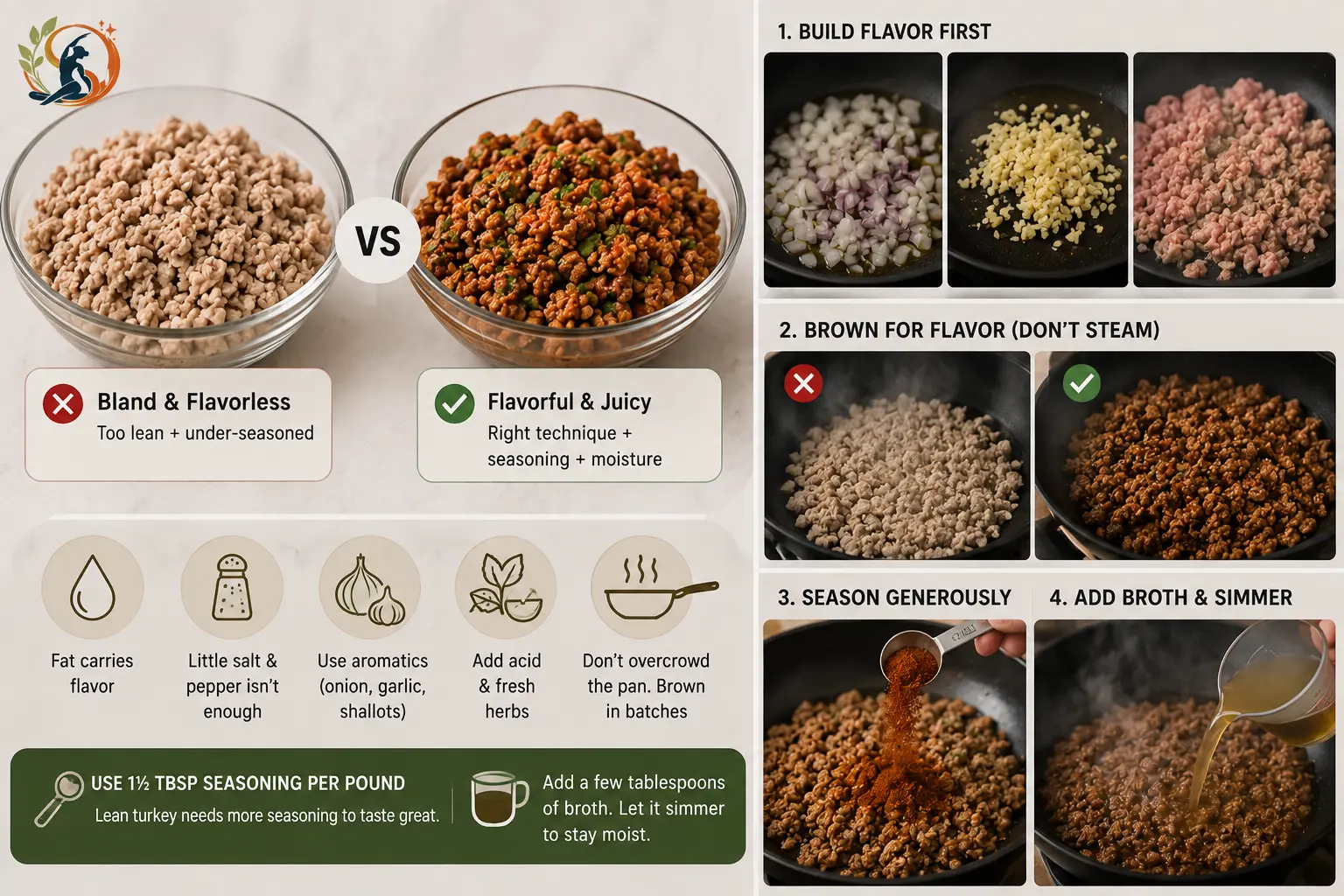
Nobody talks about this part honestly. Ground turkey doesn't taste bad. It tastes like almost nothing on its own and that's the actual issue.
Out of all the ground meats at the supermarket, ground turkey is ultra-lean. Since it contains less fat than beef or pork, you have to work harder to make sure it turns out flavorful. Fat carries flavor and without it, you need to build that flavor through other means.
Most people season it the same way they season beef: a little salt, a little pepper, done. That doesn't work here.
Ground turkey is a blank-slate protein. Making it taste great depends on building fat, seasoning and proper cooking technique. Don't overcrowd the pan and cook in batches so the meat browns instead of steams. Browning equals flavor (that's the Maillard reaction). Use aromatics like onion, garlic and shallots first. Add acid and fresh herbs to give it identity.
Use 1½ tablespoons of seasoning per pound. Don't be shy, lean turkey needs more seasoning than beef does to taste like anything. Add a few tablespoons of chicken or beef broth after seasoning, then let it simmer down. That's what keeps it moist.
That last tip alone will change your results completely.
How to Cook Ground Turkey Without Drying It Out
This is the practical stuff nobody puts in the intro.
Buy 93% lean, not 99%. Covered above 99% lean dries out reliably. The small amount of extra fat in 93% is what holds moisture and carries seasoning.
Start with aromatics. Saute minced garlic, scallions or onions in butter or olive oil over medium heat before adding the turkey. This builds a flavor base the turkey cooks into rather than sitting on top of.
Medium heat, always. High heat evaporates moisture before the meat has a chance to absorb any seasoning. Medium heat gives you a proper brown without going rubbery.
Season in layers. Season when you add the turkey to the pan and again after the liquid cooks off. Seasoning early and layering finishing salt gives you depth rather than a flat, one-note flavor.
Add broth at the end. A few tablespoons of chicken or beef broth after cooking, simmered down, is what keeps ground turkey moist. This is the single most underused tip in every ground turkey recipe.
Pull it at 165°F. Not 175°F, not "until it looks done." 165°F is the USDA-safe internal temperature for ground turkey. Every degree over that costs you moisture.
For meatballs add a moisture-retaining ingredient. Shredded zucchini, crumbled feta or milk-soaked breadcrumbs hold liquid from the inside while the meatball bakes. Without one of these, baked turkey meatballs almost always come out dense.
Is Ground Turkey Actually Healthier Than Ground Beef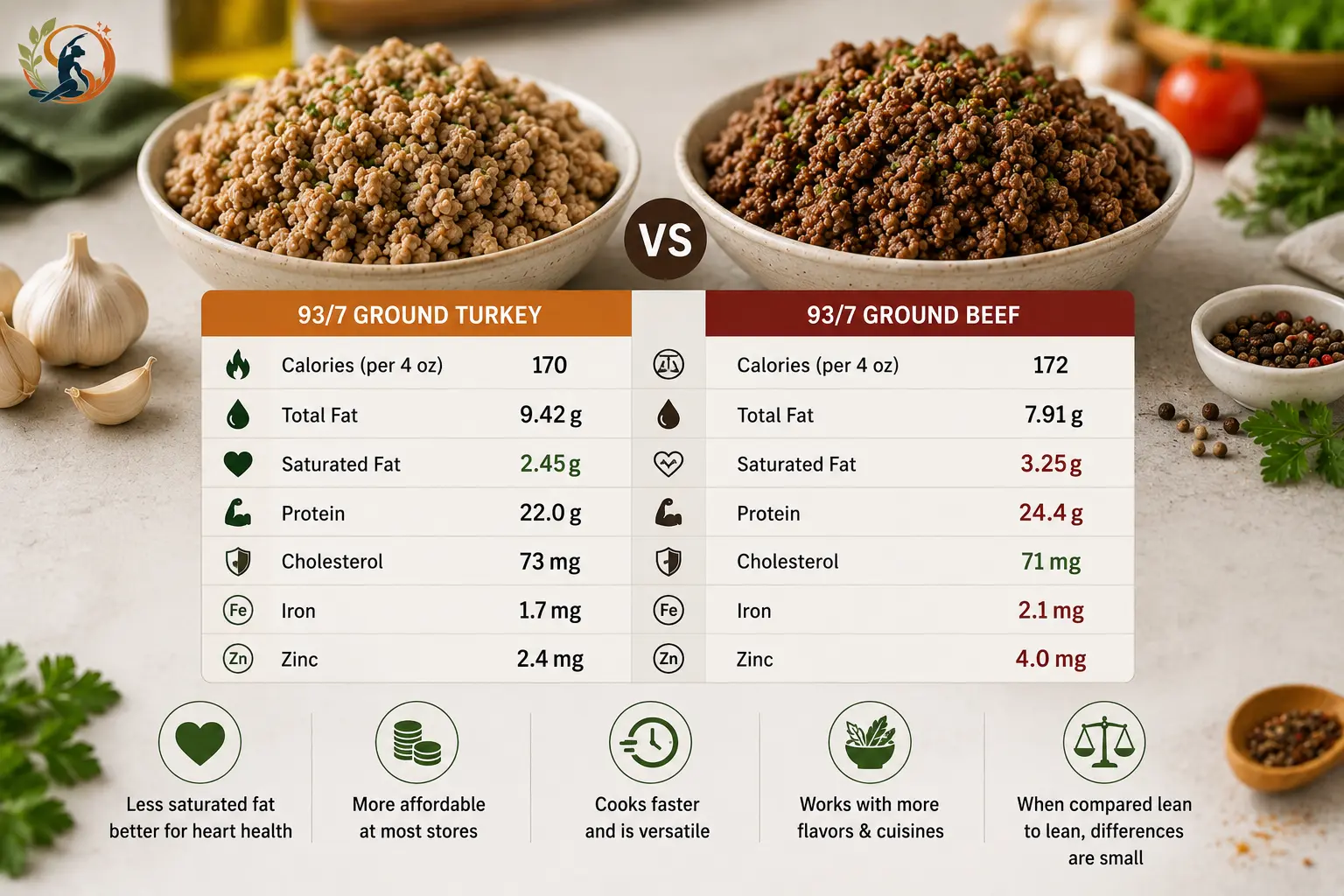
The honest answer is: it depends on what you're comparing and what you're optimizing for.
When you're comparing 93/7 ground beef to 93/7 ground turkey at the same fat ratio, the nutrition panels are surprisingly similar. Ground beef actually has 2.4 grams more protein and slightly less cholesterol, plus more iron and zinc than ground turkey.
Ground turkey does have less saturated fat, but only by about 0.8 grams. And if you're adding egg, salt or cheese for flavor and moisture, the heart-health advantage starts to shrink.
So the real-world answer: if you're comparing 93/7 turkey to 80/20 beef the kind most people actually use turkey wins clearly on saturated fat. If you're comparing lean-to-lean at the same fat ratio, the differences are much smaller than the health food marketing suggests.
What ground turkey genuinely offers is flexibility. It works across more flavor profiles than beef, costs less at most grocery stores and cooks faster. Those practical advantages matter just as much as the nutrition label.
How to Season Ground Turkey by Cuisine
The seasoning combinations below are what make healthy ground turkey recipes actually taste like something. Mix and match based on what you're making.
For Mexican and Tex-Mex: 1 tsp cumin, 1 tsp chili powder, ½ tsp smoked paprika, ½ tsp garlic powder, ½ tsp onion powder, ½ tsp dried oregano, salt and a squeeze of lime after cooking. This is your base for tacos, burrito bowls and enchilada skillets.
For Italian-Style Dishes: 1 tsp fennel seed (this is the secret one), 1 tsp dried basil, 1 tsp oregano, ½ tsp red pepper flakes, 3 cloves fresh garlic. Add a pinch of nutmeg to meatballs specifically. It sounds odd but it's a traditional Italian addition that adds depth.
For Asian-Inspired Recipes: 2 tbsp soy sauce, 1 tbsp sesame oil, 1 tbsp hoisin, 1 tsp fresh grated ginger, 2 cloves garlic, splash of rice vinegar. Works in lettuce cups, stir-fries and rice bowls.
For Mediterranean: Lemon zest, fresh dill, dried oregano, garlic and crumbled feta mixed directly into the meat for burgers or meatballs. Feta adds salt, moisture and flavor from the inside out.
For Classic American Comfort Food: Worcestershire sauce, garlic powder, onion powder. For meatloaf or sloppy joes, add a tablespoon of ketchup or mustard to the mix before cooking.
Best Healthy Ground Turkey Recipes by Category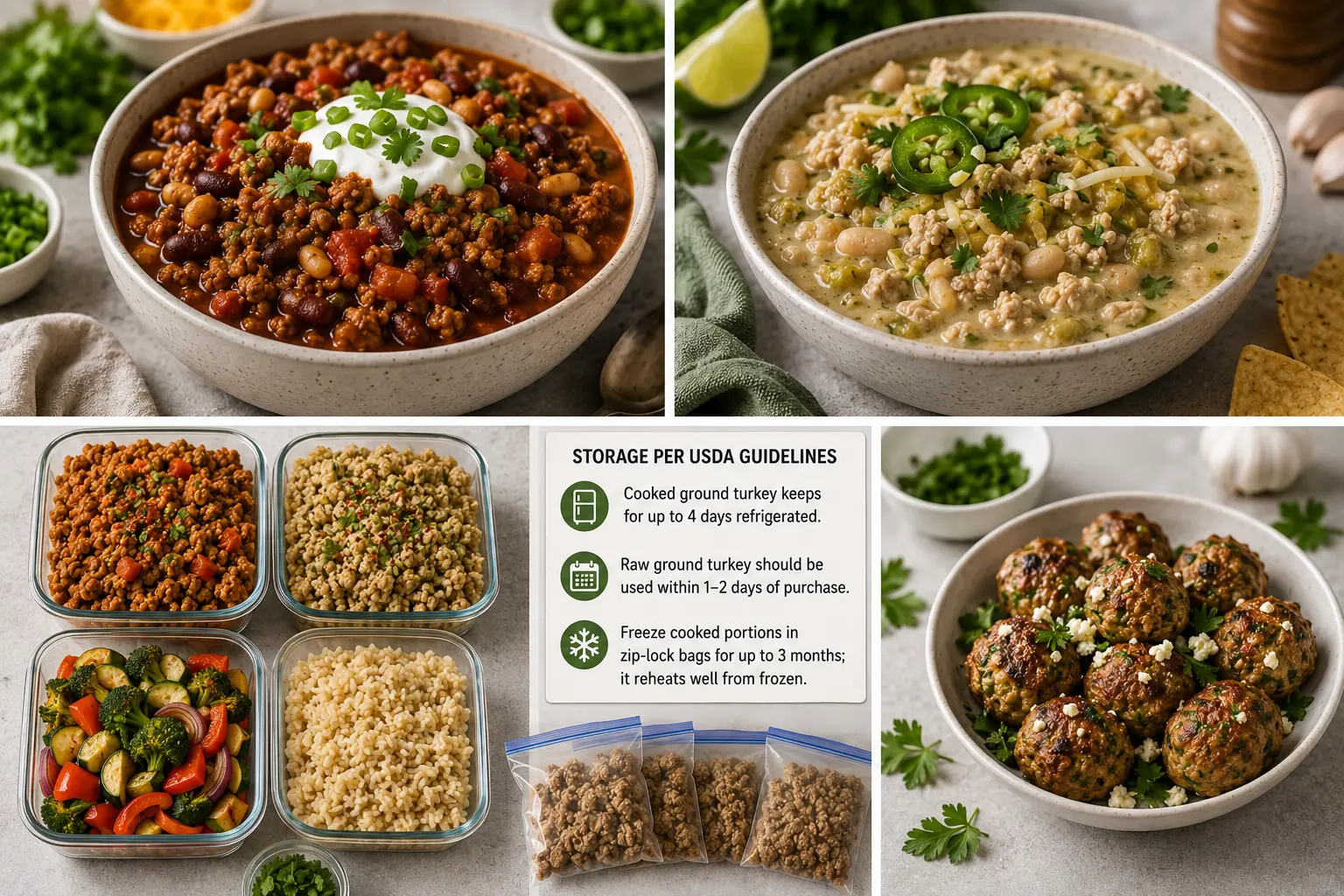
Turkey Chili Recipes
Turkey chili is the single best entry point into healthy ground turkey recipes. It's forgiving, gets better the next day and feeds a crowd without much effort.
Classic One-Pot Turkey Chili
Lean ground turkey, three types of beans, diced tomatoes, chicken broth and the right spice blend. Ready in 45 minutes, tastes like it simmered all afternoon. The beans do real work here; they add fiber, extend the protein and thicken the broth naturally without any cornstarch or flour.
One serving of a well-made turkey chili delivers 35–40g of protein depending on how much turkey and beans you use. Top with Greek yogurt instead of sour cream. You lose nothing in texture and save on saturated fat.
Meal prep note: Make a double batch. Turkey chili reheats better than almost any other ground turkey recipe and the flavor actually improves after a night in the fridge.
White Bean Turkey Chili
Milder, creamier and more weeknight-friendly than classic red chili. White beans create a naturally thick broth when partially mashed, no cream needed. Green chilis, cumin and garlic are the flavor backbone.
This is also the version to make if you or someone in your household has acid reflux. Skip the tomatoes and spicy seasoning, use mild green chilis instead and you have a GERD-friendly bowl that still tastes like actual food rather than a medical diet.
Ground Turkey Meal Prep
Ground turkey is genuinely one of the best proteins for weekly meal prep. It cooks in under 15 minutes, stores well for 4 days in the fridge and adapts to different flavor directions so the same base protein doesn't feel identical meal after meal.
The Two-Pound Sunday Method
Brown two pounds of ground turkey at once, split into two skillets one with Italian seasoning, one with taco seasoning. Roast a sheet pan of whatever vegetables you have. Cook a batch of brown rice or quinoa.
That's four to five lunches or dinners handled. Swap the sauce and toppings each day to keep things from feeling repetitive.
Storage per USDA guidelines: Cooked ground turkey keeps for up to 4 days refrigerated. Raw ground turkey should be used within 1–2 days of purchase. Freeze cooked portions in zip-lock bags for up to 3 months; it reheats well from frozen.
Greek Turkey Feta Meatballs
These are a meal prep staple that earns their spot. Bake a batch of 20–24 on Sunday and you have a protein that drops into grain bowls, pitas, pasta and salads all week without extra cooking.
The key technique: mix crumbled feta, a beaten egg, chopped fresh parsley, garlic and dried oregano directly into the raw turkey before forming. The feta adds salt and moisture from the inside. This is why these meatballs stay juicy after baking at 400°F for 18–20 minutes. Each meatball delivers approximately 7g of protein.
Ground Turkey Skillet Recipes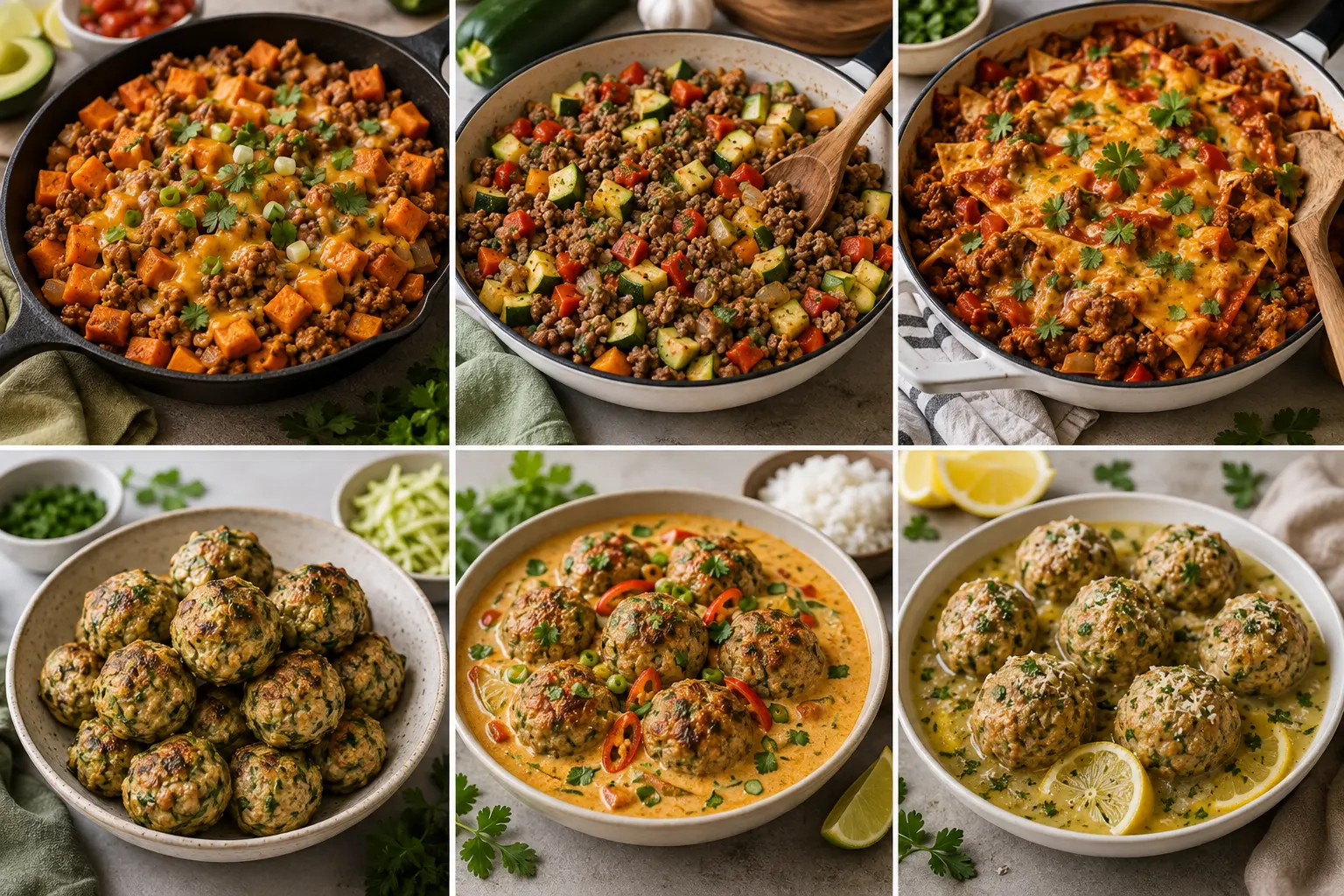
One pan, 30 minutes. These are the workhorses.
Ground Turkey Sweet Potato Skillet
Five ingredients: ground turkey, diced sweet potato, onion, taco seasoning and shredded cheese. One pan. Thirty minutes.
The sweet potato does more than add sweetness; it adds fiber, potassium and beta-carotene, which makes this a genuinely balanced meal rather than just protein in a pan. Serve over chopped romaine with salsa and guacamole.
Turkey and Zucchini Skillet
Onion, zucchini, bell peppers, garlic and ground turkey with simple spices. This is the recipe to make when you need to use up vegetables before they go bad. Mushrooms, corn, spinach and summer squash all work here. Naturally low-carb without trying to be the vegetables do all the bulk work.
Lazy Enchilada Skillet
All the flavor of enchiladas without rolling a single one. Ground turkey, zucchini, bell peppers and strips of whole wheat tortilla simmered in enchilada sauce, then broiled with shredded cheese. One pan, one broiler, no rolling required.
Ground Turkey Meatballs
Meatballs are the most versatile format in healthy ground turkey recipes. Make them once, use them across multiple meals.
Zucchini Turkey Meatballs
Shredded zucchini squeezed dry first mixed into the raw turkey before forming. You cannot taste the zucchini. What you get is a noticeably juicier meatball because the zucchini holds moisture during baking.
Bake at 400°F for 18–20 minutes. Works in pasta with marinara, grain bowls or just as a plain snack with dipping sauce.
Thai Turkey Meatballs in Coconut Sauce
Turkey meatballs with ginger, garlic and Thai-inspired spices, baked then finished in a coconut red curry sauce. Sounds fancy, takes under 45 minutes. The coconut milk keeps the sauce light while still feeling rich. Serve over jasmine rice.
Lemon Butter Garlic Turkey Meatballs
Herby, cheesy meatballs in a simple lemon garlic butter sauce. This is the one that tastes like you spent more time on it than you did. Serve over mashed potatoes or cauliflower mash.
Turkey Burgers That Actually Stay Juicy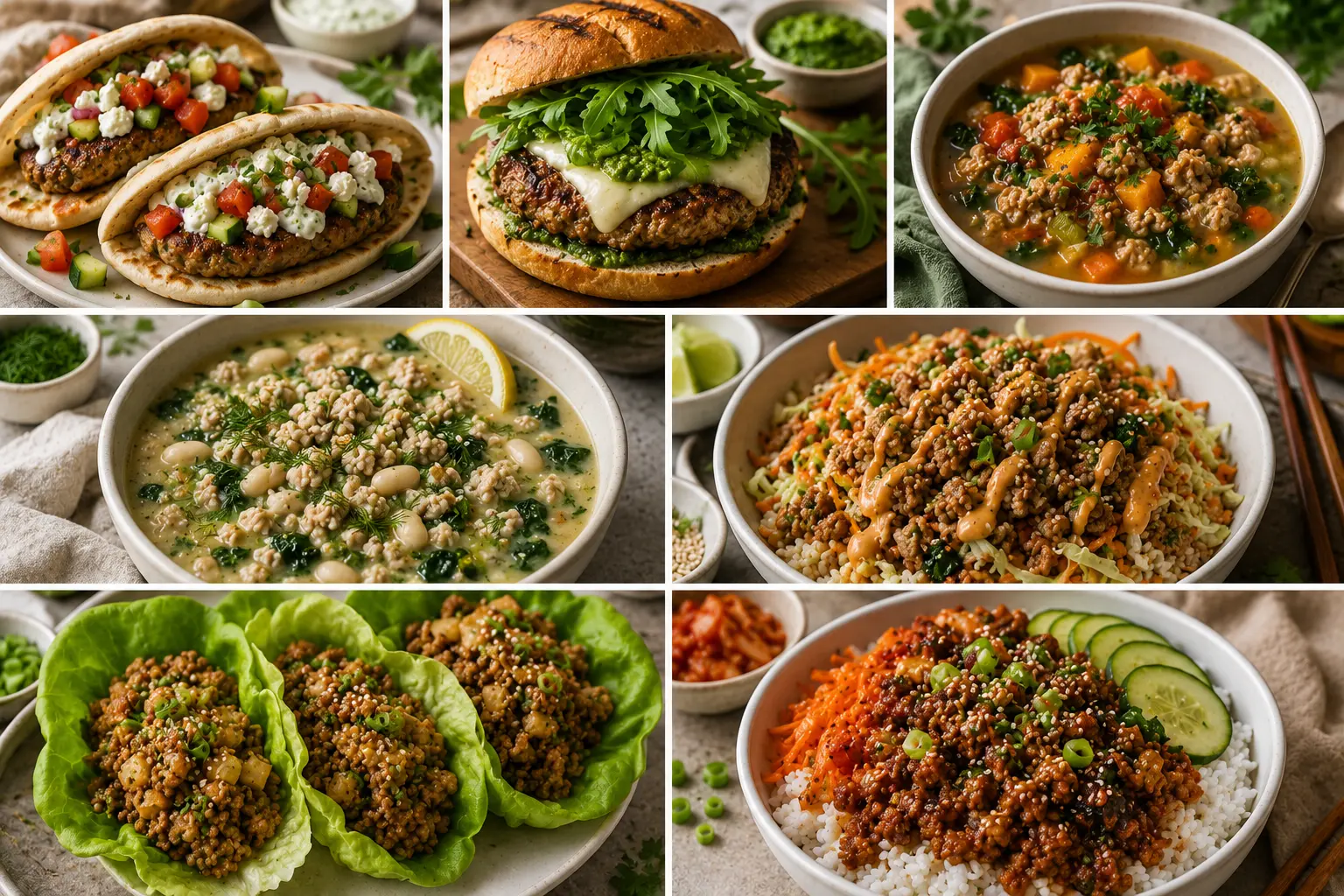
Turkey burgers dry out when the fat renders out faster than it can keep the patty moist. Two techniques fix this.
Don't overwork the meat. Mix in your seasonings just until combined, then stop. Overworked turkey gets dense before it gets dry.
Use the smash method. Press the patty thin against a hot pan or grill more surface contact means more browning, which means more flavor and better moisture retention than a thick patty that steams from the inside.
Greek Smashed Turkey Burger Pitas
Smash a seasoned turkey patty directly onto a hot pita so they cook together. Load with chopped tomatoes, cucumber, red onion, feta, hummus and tzatziki. This is one of those recipes that feels like a restaurant meal on a Tuesday night.
Grilled Turkey Burgers with Pesto
Fresh pesto, spicy arugula, mozzarella, on a turkey patty that was formed loosely and grilled over medium-high heat. The pesto adds fat and flavor that compensates for turkey's lower fat content.
Ground Turkey Soups
Turkey's mild flavor is actually an asset in brothy soups; it absorbs surrounding flavors without overpowering them.
Ground Turkey Vegetable Soup
Thirty-minute soup with whatever vegetables you have, ground turkey, broth and herbs. Seasoning the turkey well before adding liquid bland turkey floating in flavorful broth is the mistake most people make here.
Butternut squash, potatoes, carrots, kale and celery all work. This is a clean-out-the-fridge recipe that tastes intentional.
Lemon White Bean Soup with Turkey and Greens
Lemony broth, creamy white beans (partially mashed to thicken naturally), ground turkey and kale or spinach. Fresh dill added at the end. No cream needed. This one is genuinely elegant for how simple it is high protein, high fiber and done in 35 minutes.
Asian-Inspired Ground Turkey Dishes
Inside-Out Egg Roll Bowls
Shredded cabbage or bagged coleslaw mix, ground turkey, ginger, garlic, soy sauce and hoisin over rice. Thirty minutes tastes better than takeout and it's one of those recipes that surprises people the first time they make it.
Sriracha mayo on top is not optional.
Asian Turkey Lettuce Cups
Ground turkey with soy sauce, hoisin, sesame oil, ginger, garlic and water chestnuts for crunch. Served in butter lettuce cups. Low-carb naturally, ready in 20 minutes, works as an appetizer or a full meal depending on how hungry you are.
Korean Ground Turkey Rice Bowls
Savory-sweet ground turkey over rice with pickled cucumbers, shredded carrots and sesame seeds. The sauce is soy sauce, garlic, ginger, a little honey and gochujang if you want heat. A recipe that feels like a meal-kit delivery but costs a fraction of the price.
Ground Turkey Pasta and Stuffed Dishes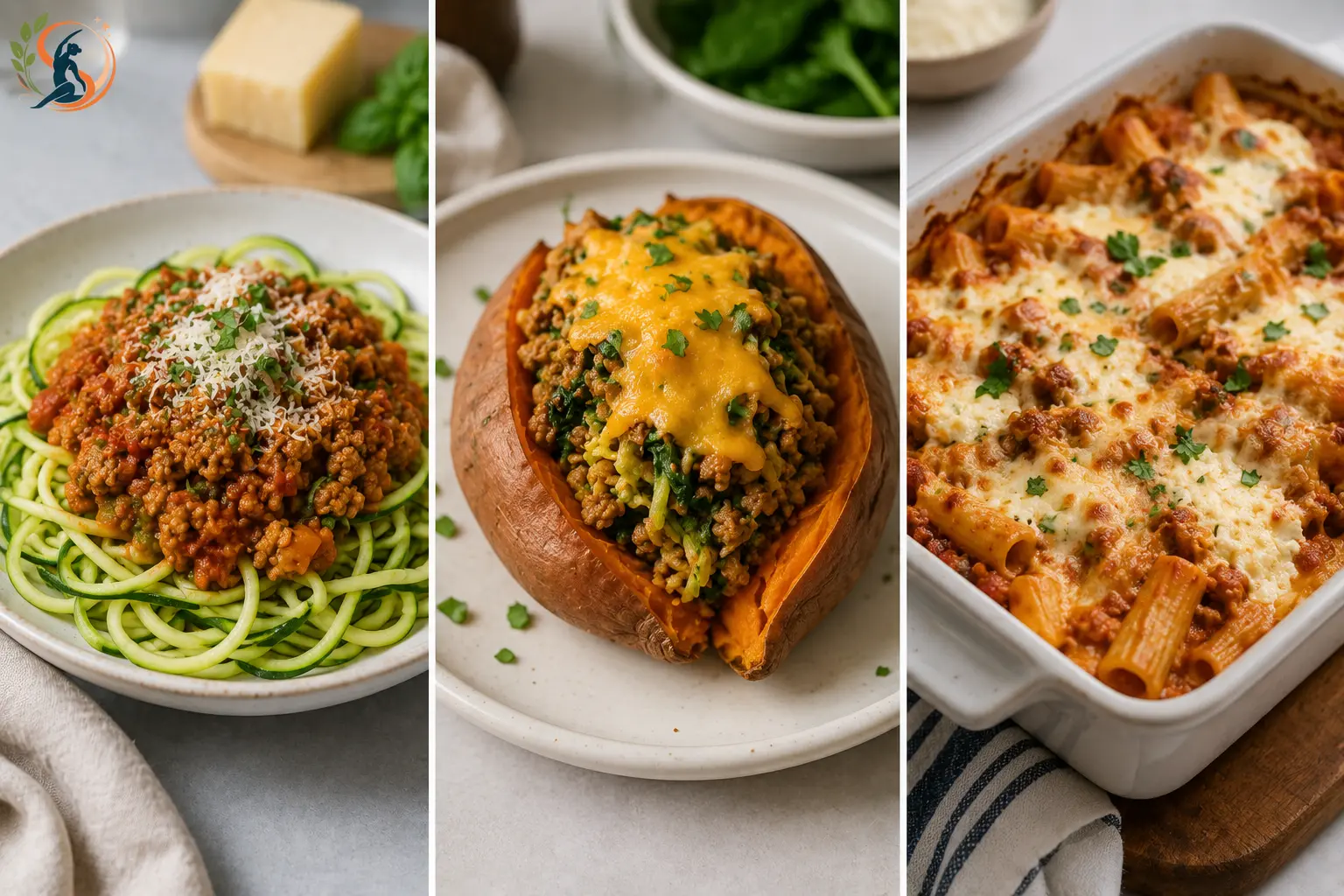
Turkey Bolognese with Zucchini Pasta
Lighter version of classic bolognese using ground turkey instead of beef and pork. The technique matters here: brown the turkey properly first, then cook low and slow after adding the tomatoes. A splash of whole milk added to the sauce is a classic Italian technique that adds body without heaviness. Serve over zucchini noodles or regular pasta.
Turkey Stuffed Sweet Potatoes
Baked sweet potatoes loaded with seasoned ground turkey, hidden shredded zucchini and spinach, topped with melted cheddar and broiled until golden. The hidden vegetables cook into the turkey so completely that even skeptical eaters don't notice them.
Under 30 minutes of actual work. Looks impressive. Works for meal prep.
Ground Turkey Rigatoni Bake
Rigatoni, turkey, tomato sauce and ricotta, baked until bubbling and slightly crispy on top. Think of it as lasagna without the layering frustration. Reheats perfectly and feeds a crowd without much hands-on time.
GERD-Friendly Ground Turkey Recipes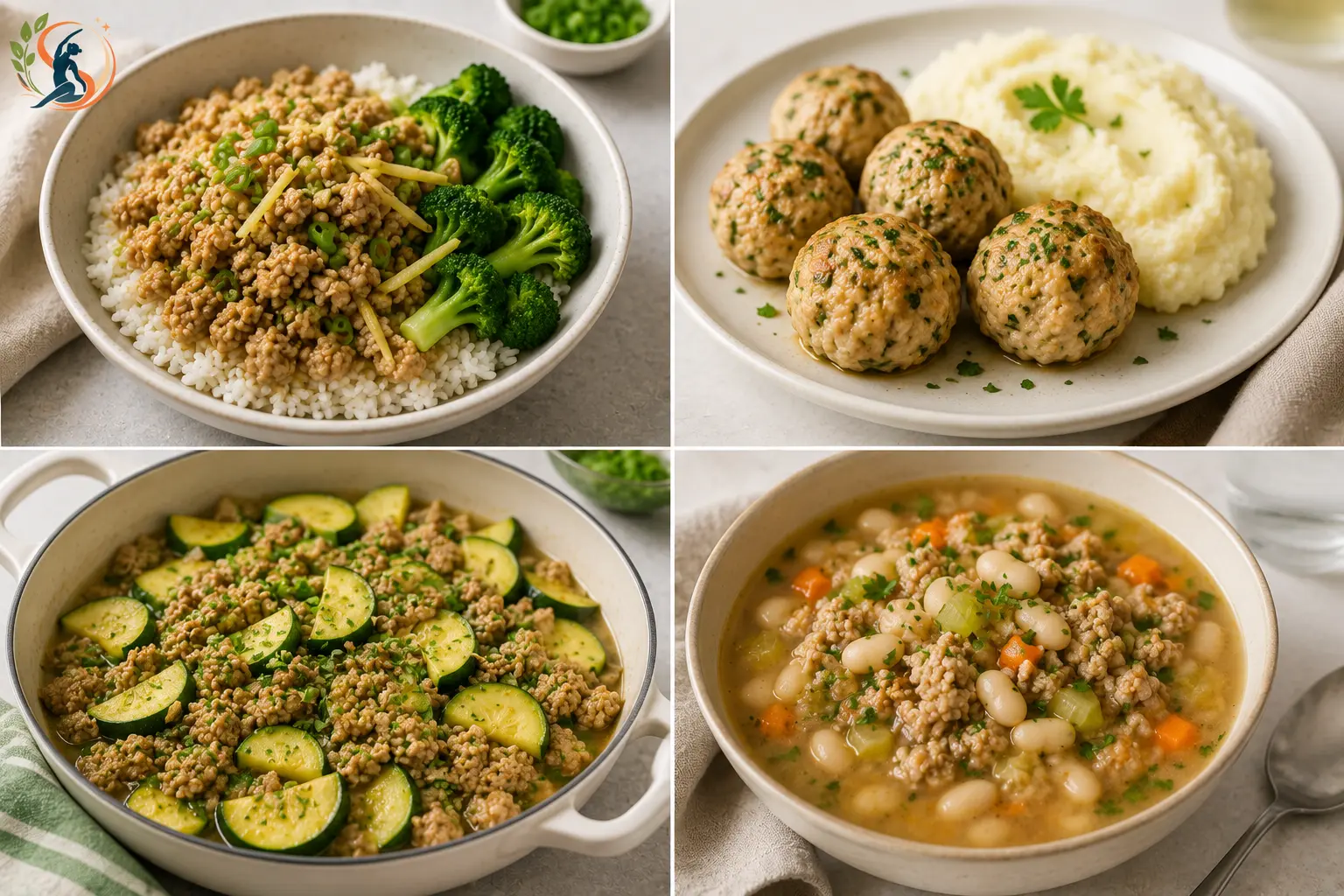
This is the section most ground turkey roundups skip entirely and it genuinely frustrates me that they do.
Ground turkey is actually an excellent protein choice for people managing acid reflux or GERD because of its low fat content. High-fat foods slow gastric emptying, which worsens reflux. Lean turkey doesn't have that problem.
Common GERD triggers to avoid in ground turkey recipes:
Tomato-based sauces
Spicy seasonings (chili powder, cayenne, red pepper flakes)
Citrus juice and zest
Large amounts of garlic and onion (tolerance varies significantly person to person)
Heavy cream and excess cheese
GERD-friendly approaches that actually work:
Turkey and rice bowls seasoned with low-sodium soy sauce, fresh ginger and sesame oil. Skip the garlic if it's a personal trigger, use ginger instead, same depth, different mechanism.
Baked turkey meatballs with fresh herbs, parsley, dill and chives don't trigger reflux the way acidic or spicy seasonings do. Serve over white rice or plain mashed potatoes.
Ground turkey and zucchini skillet with olive oil, fresh herbs and low-sodium chicken broth instead of tomato sauce.
White bean turkey soup made with vegetable or chicken broth, mild seasoning and no tomato base.
Everyone's triggers are different. These are starting points, not guarantees.
What to Eat With Ground Turkey for Weight Loss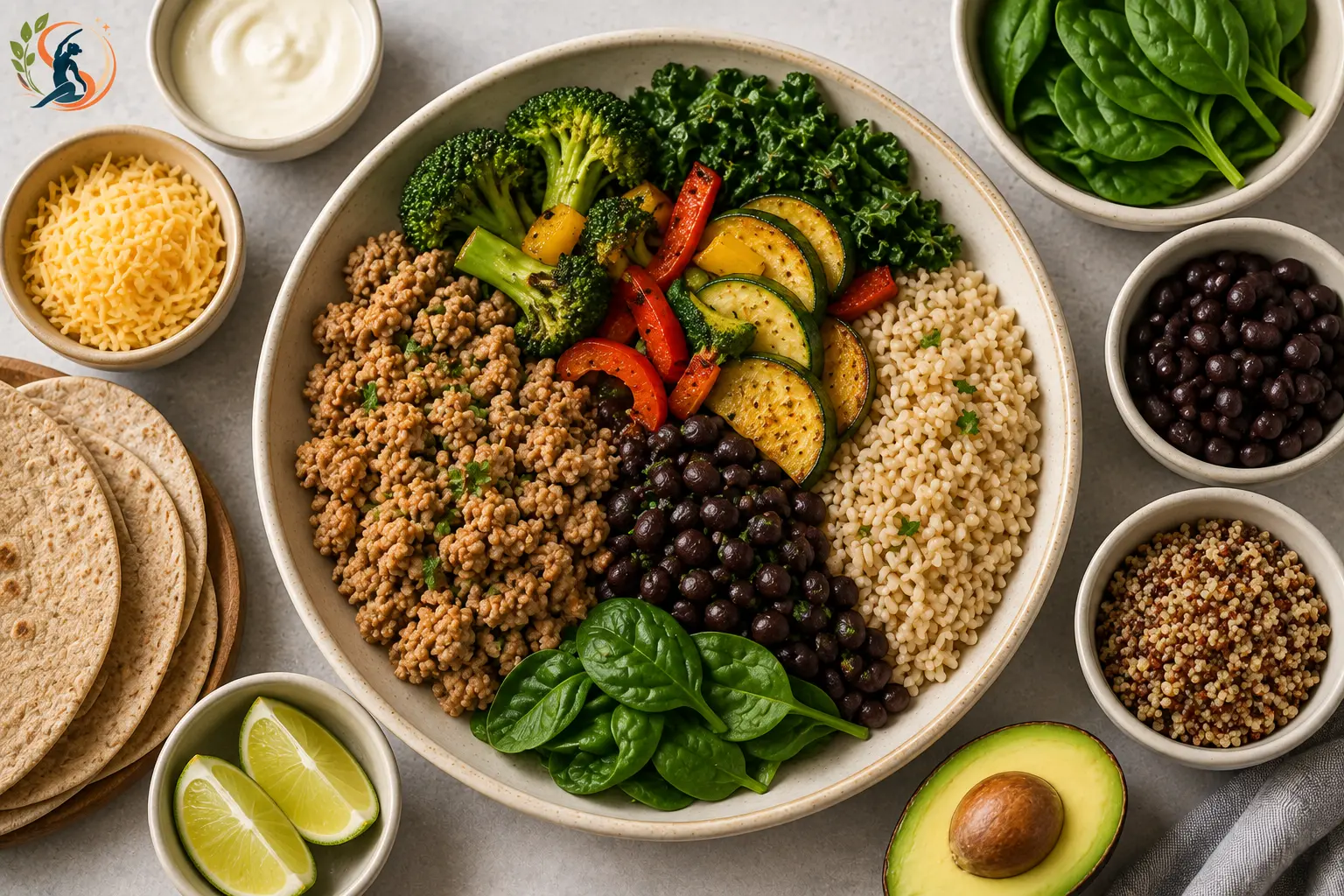
The turkey is the easy part. What you pair it with determines whether the meal actually supports weight loss goals.
Non-starchy vegetables are your bulk. Zucchini, broccoli, bell peppers, kale, spinach, mushrooms and green beans add volume and fiber without significant calories. You eat more food, feel fuller and consume fewer calories overall. This is the actual mechanism behind why "eating healthy" works volume and fiber, not deprivation.
Add beans for protein-fiber combination. Black beans, white beans and kidney beans alongside ground turkey extend the protein and add soluble fiber that slows digestion. This is why turkey chili is such an effective weight loss meal you stay full longer after eating it.
Watch the add-ons, not the turkey. The turkey itself is lean. Where calories accumulate is in cheese, creamy sauces, tortillas and oil. Use them to enhance the meal, not dominate it.
Complex carbohydrates in moderate portions. Brown rice, quinoa, sweet potato and whole wheat tortillas are not the enemy. A quarter plate of complex carbs gives you sustained energy. Cutting them entirely tends to backfire and you end up hungrier, less satisfied and more likely to overeat later.
Frequently Asked Questions
1. What can I make healthy with ground turkey?
Dozens of things: turkey chili, stuffed sweet potatoes, skillet dinners, meatballs, rice bowls, soup, burgers, lettuce cups, enchiladas, pasta bakes. Ground turkey is one of the most versatile lean proteins available. Season it well and it works in nearly any cuisine, from Mexican to Italian to Asian-inspired dishes across the entire week.
2. What's the healthiest way to cook ground turkey?
Cook over medium heat with a small amount of olive oil, season generously before and during cooking and pull it off heat the moment it hits 165°F internally. Never cook on high heat; it evaporates moisture before seasoning can absorb. For meatballs or loaves, add a moisture-retaining ingredient like shredded zucchini, egg or soaked breadcrumbs to keep the texture juicy rather than dense and dry.
3. What to eat with ground turkey for weight loss?
Pair it with non-starchy vegetables for volume and fiber, add beans for extended satiety, include a moderate portion of complex carbs like brown rice or sweet potato for sustained energy and be mindful of calorie-dense toppings. The turkey is lean where calories add up is in sauces, cheese and cooking fat, so use those to enhance rather than dominate the plate.
4. What are some GERD-friendly recipes for ground turkey?
Lean ground turkey is naturally GERD-friendly due to its low fat content. Avoid tomato-based sauces, spicy seasonings, citrus and large amounts of garlic and onion. Try turkey and rice bowls seasoned with soy sauce and ginger, plain baked meatballs with fresh herbs served over rice, ground turkey and zucchini skillet with olive oil and mild herbs or white bean turkey soup with low-sodium broth. Personal triggers vary, so adjust based on your own experience.
5. Can ground turkey replace ground beef in all recipes?
In most recipes, yes. It works as a turkey substitute for beef in chili, meatballs, tacos, burgers, pasta sauces, skillet meals and stuffed vegetables. The main adjustments: season more generously than you would beef, use medium rather than high heat and add a splash of broth or olive oil to compensate for lower fat content. The flavor profile is milder, so the seasonings carry more weight.
6. How long does cooked ground turkey last in the fridge?
Up to 4 days in a sealed container per USDA food safety guidelines. Raw ground turkey should be used within 1–2 days of purchase. For longer storage, freeze cooked turkey in portioned bags. It holds quality for up to 3 months and reheats well on the stovetop with a splash of broth to revive moisture.
Conclusion
Ground turkey doesn't need defending anymore, it just needs to be cooked right.
The nutrition is solid, the price is right and the versatility is genuinely hard to beat for a single ingredient. Once you get the seasoning and cooking technique down to medium heat, generous spices, a splash of broth at the end it stops being the compromise option and becomes the thing you actually reach for.
Start with one recipe. Get that technique dialed in. Then see how many different directions one ingredient can take you through the week.


Comments (0)
No comments yet. Be the first to share your thoughts!
Leave a Comment