
So I switched to a vegetarian meal plan almost a decade ago now. Mostly out of curiosity, if I'm being honest, not some big ethical awakening or anything dramatic like that. And I never really looked back, which surprised even me at the time. What actually surprised me most wasn't giving up meat though.
It was realizing just how confusing and contradictory good information on this topic is once you start actually looking for it online. This guide breaks down everything from a basic vegetarian meal plan to vegan, pescatarian and low FODMAP variations, plus specific plans for weight loss and managing diabetes, since those questions come up constantly too.
We'll cover real food, real numbers and skip the vague, hand-wavy advice that somehow leaves you more confused walking away than you were before you started reading. Ready to build something that actually fits your life instead of some influencer's? Let's just get into it.
What Is a Vegetarian Meal Plan
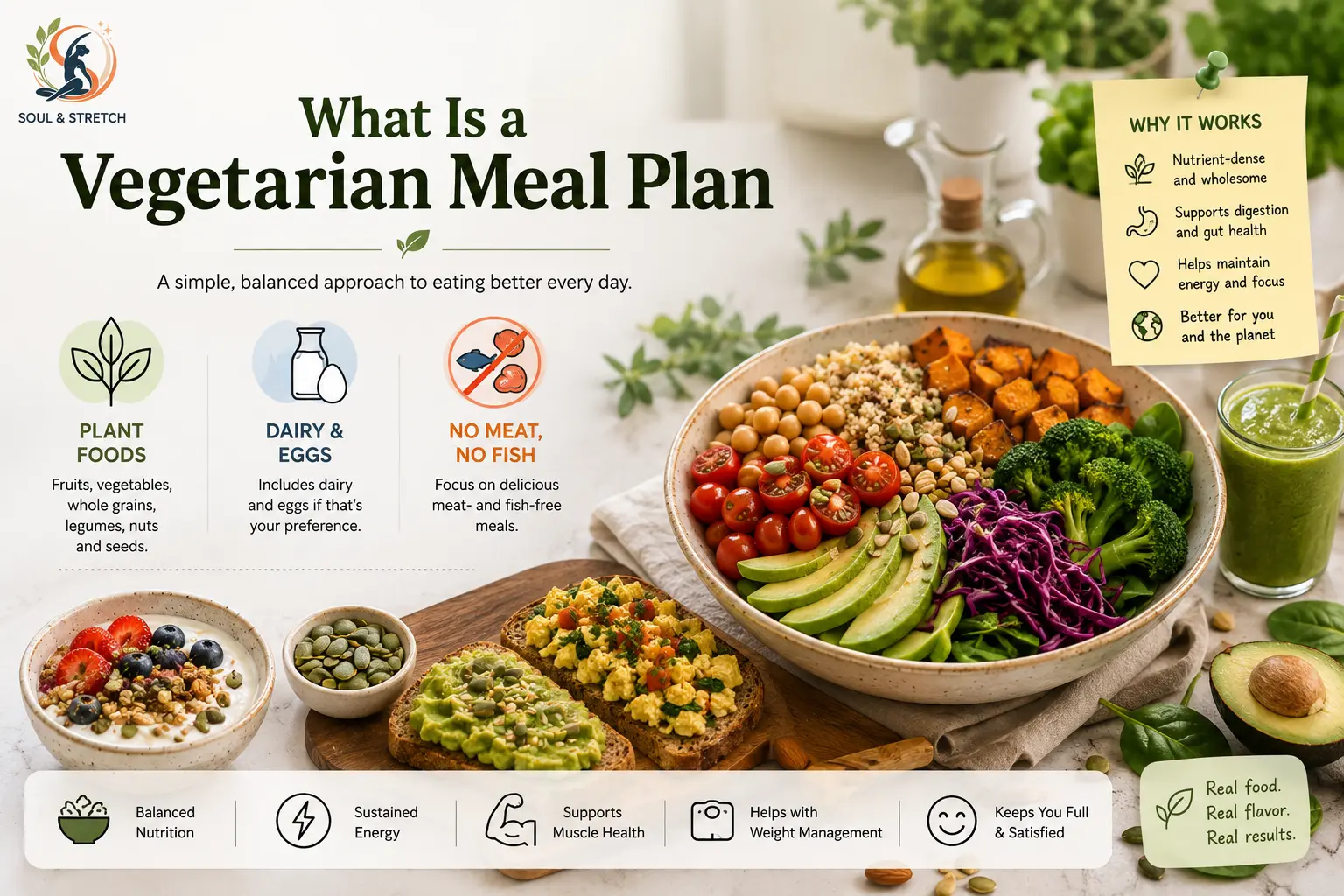
A vegetarian meal plan simply means structuring your meals around plant foods, dairy and eggs, while skipping meat and fish entirely. Sounds simple enough on paper. But the actual execution trips people up more than you'd think, especially around getting enough protein and, honestly, just keeping things interesting past week two.
The best vegetarian diet meal plan isn't just salads and pasta on repeat, which is what a lot of people assume walking in, myself included years ago. It includes whole grains, legumes, vegetables, healthy fats and dairy or eggs if that's your thing, all structured in a way that keeps you full and genuinely satisfied. Not just fed. There's a difference and you feel it after a few days either way.
Vegan Meal Plans and Plant-Based Nutrition
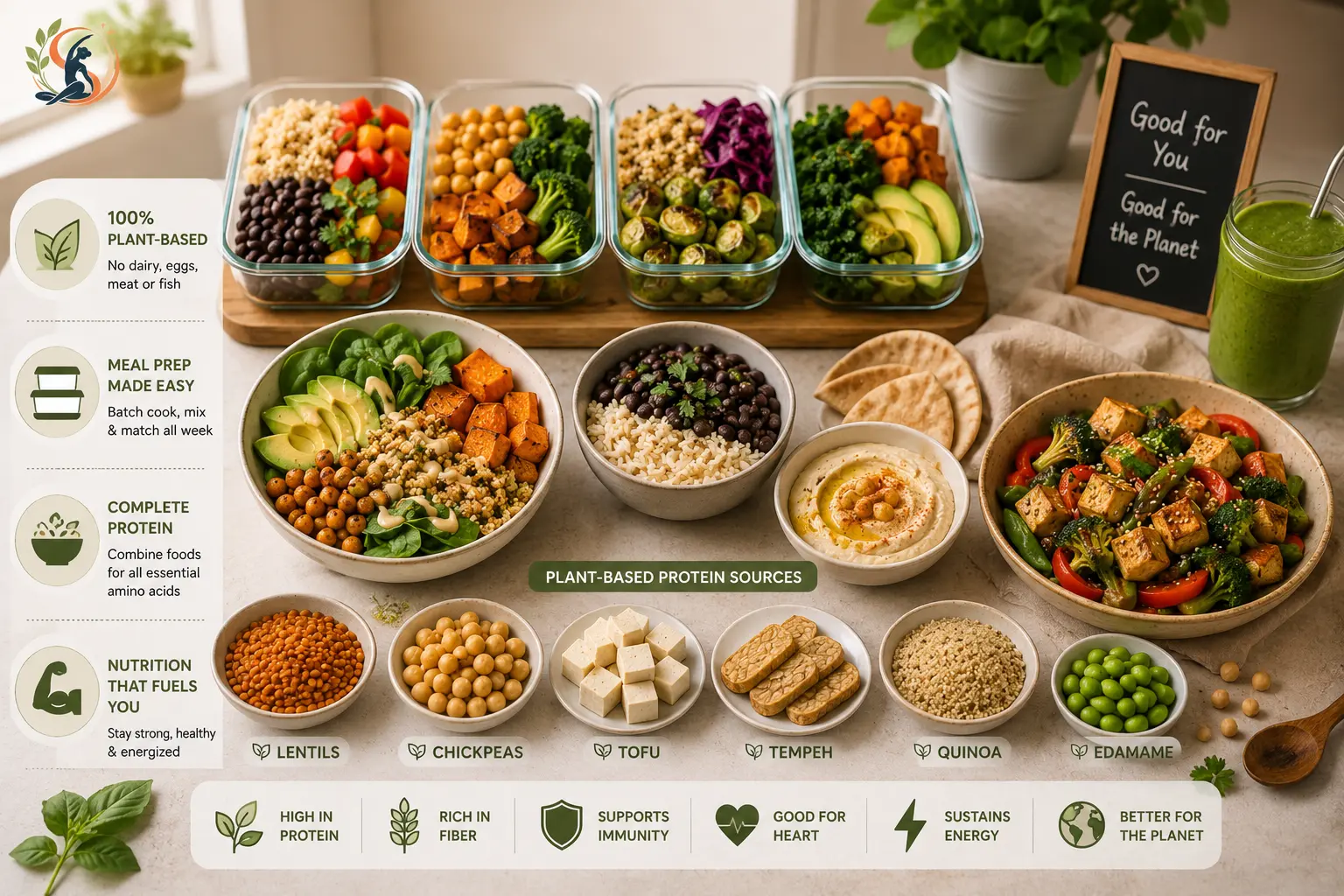
Vegan eating takes vegetarianism one step further, cutting out dairy and eggs along with meat and fish entirely. No exceptions there.
Vegan Meal Prep Basics
Vegan meal prep works best when you batch cook a few base ingredients, rice, beans, roasted vegetables, then just mix and match them all week. Saves a ton of time compared to cooking every single meal from scratch daily. Which, honestly, burns most people out within two weeks flat. It burned me out too, the first time I tried going full scratch-cooking mode.
Complete Protein Combinations
A lot of people worry about complete protein combinations when eating plant-based and it's a fair concern, worth understanding properly instead of just Googling for five minutes and panicking. Pairing rice with beans or hummus with whole grain pita, combines amino acids your body can't produce on its own into something that functions like a complete protein, similar to what meat gives you naturally.
Plant-Based Protein Sources
Solid plant-based protein sources include lentils, chickpeas, tofu, tempeh, quinoa and edamame. Rotating through these instead of leaning on just one keeps meals interesting and honestly covers a wider range of nutrients your body actually needs day to day, not just protein alone.
7-Day Vegetarian Meal Plan Basics
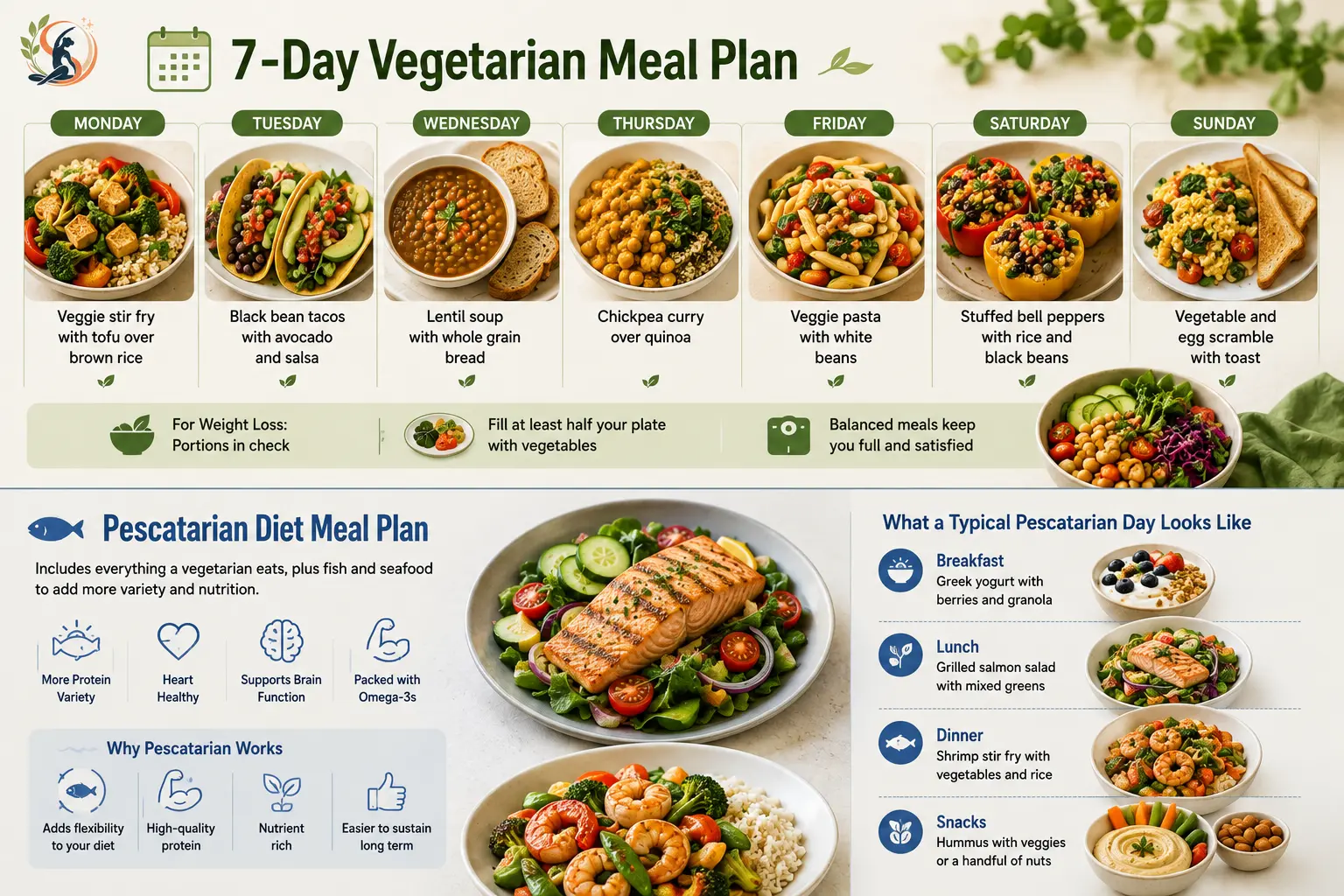
A 7 day vegetarian meal plan really doesn't need to be complicated to work. At all.
Monday: Veggie stir fry with tofu over brown rice
Tuesday: Black bean tacos with avocado and salsa
Wednesday: Lentil soup with whole grain bread
Thursday: Chickpea curry over quinoa
Friday: Veggie pasta with white beans
Saturday: Stuffed bell peppers with rice and black beans
Sunday: Vegetable and egg scramble with toast
This 7-day vegetarian meal plan for weight loss works especially well when portions stay reasonable and vegetables fill at least half the plate, every meal, no shortcuts on that part honestly.
Pescatarian Diet Meal Plan
A pescatarian diet meal plan includes everything a vegetarian eats, plus fish and seafood, which honestly opens up a lot more protein variety without needing to combine plant sources so carefully every single meal.
What a Typical Pescatarian Day Looks Like
Breakfast: Greek yogurt with berries and granola
Lunch: Grilled salmon salad with mixed greens
Dinner: Shrimp stir fry with vegetables and rice
Snacks: Hummus with veggies or a handful of nuts
Many people find pescatarian eating easier to sustain long term, mostly because fish adds a flexibility strict vegetarian or vegan plans just don't offer as easily. That's been my experience anyway and I've watched it play out the same way with a few friends who made the switch.
Low FODMAP Meal Planning
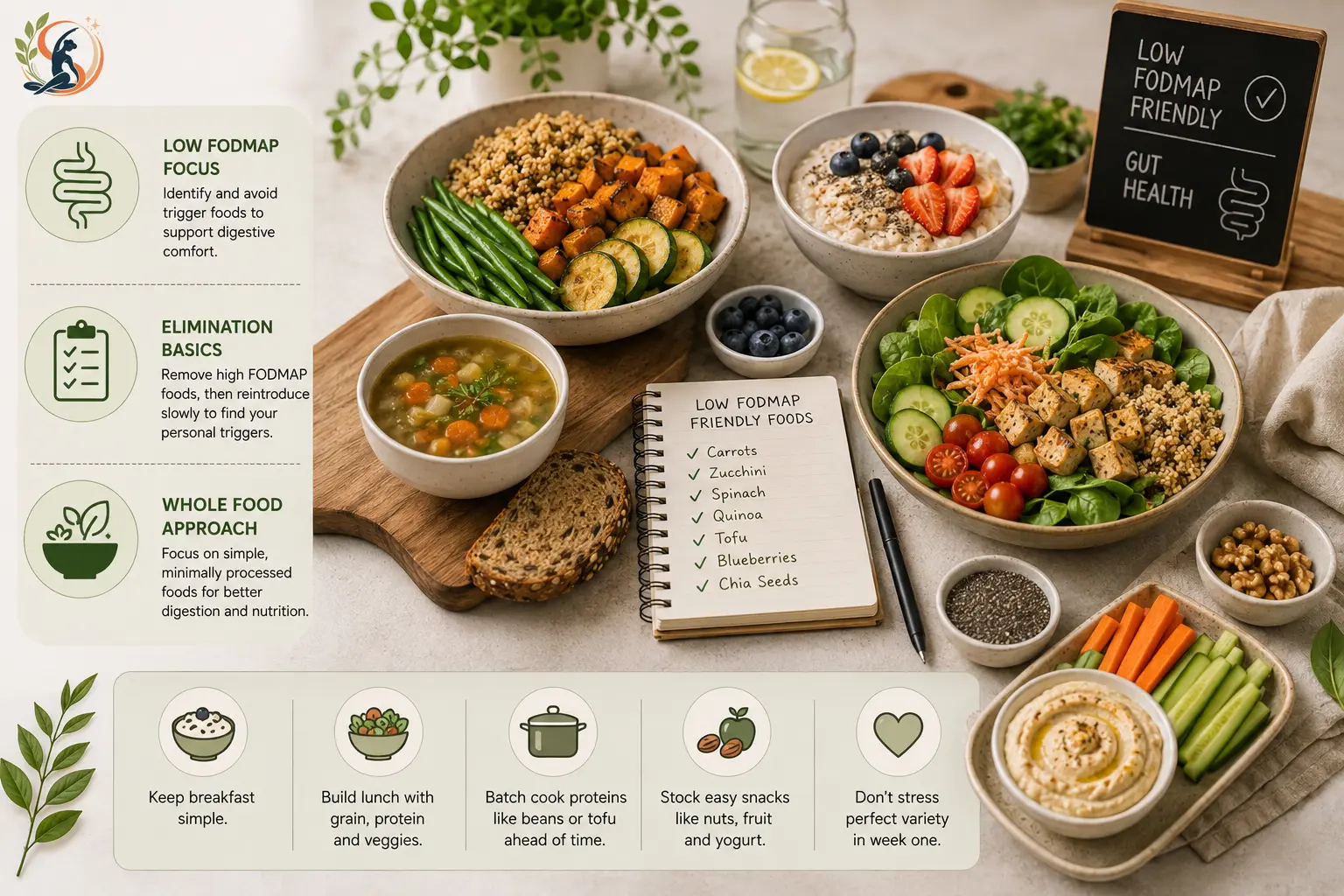
Low fodmap meal planning gets complicated fast if you're also vegetarian, since a lot of typical plant protein sources, beans, lentils, certain vegetables, turn out to actually be high FODMAP foods that trigger real digestive issues for some people.
Elimination Diet Meal Plan Basics
An elimination diet meal plan for low FODMAP eating usually starts by cutting out high FODMAP foods completely for a few weeks, then slowly bringing them back one at a time to figure out specific triggers. This takes patience, more than people expect going in. Honestly, working with a dietitian makes it way easier than just guessing blindly on your own, which is what most people end up doing anyway out of frustration.
Whole Food Meal Plan Basics
A whole food meal plan focuses on minimally processed ingredients, think fresh vegetables, whole grains and simple proteins instead of packaged substitutes trying to mimic the real thing. This approach naturally supports both low FODMAP needs and general vegetarian nutrition without a ton of extra effort, once you get the hang of it anyway.
Simple Vegetarian Meal Plan for Beginners
Starting out really doesn't need to be complicated, no matter what half the wellness internet makes it look like with their color-coded charts.
Keep breakfast simple with oatmeal, eggs or smoothies
Build lunch around a grain, a protein and vegetables
Batch cook dinner proteins like beans or tofu ahead of time
Keep easy snacks stocked, nuts, fruit, yogurt
Don't stress over perfect variety in week one
A simple vegetarian meal plan like this removes the overwhelm that usually causes people to quit within the first week. Happens way more often than people admit out loud.
Vegetarian Meal Plan for Weight Loss
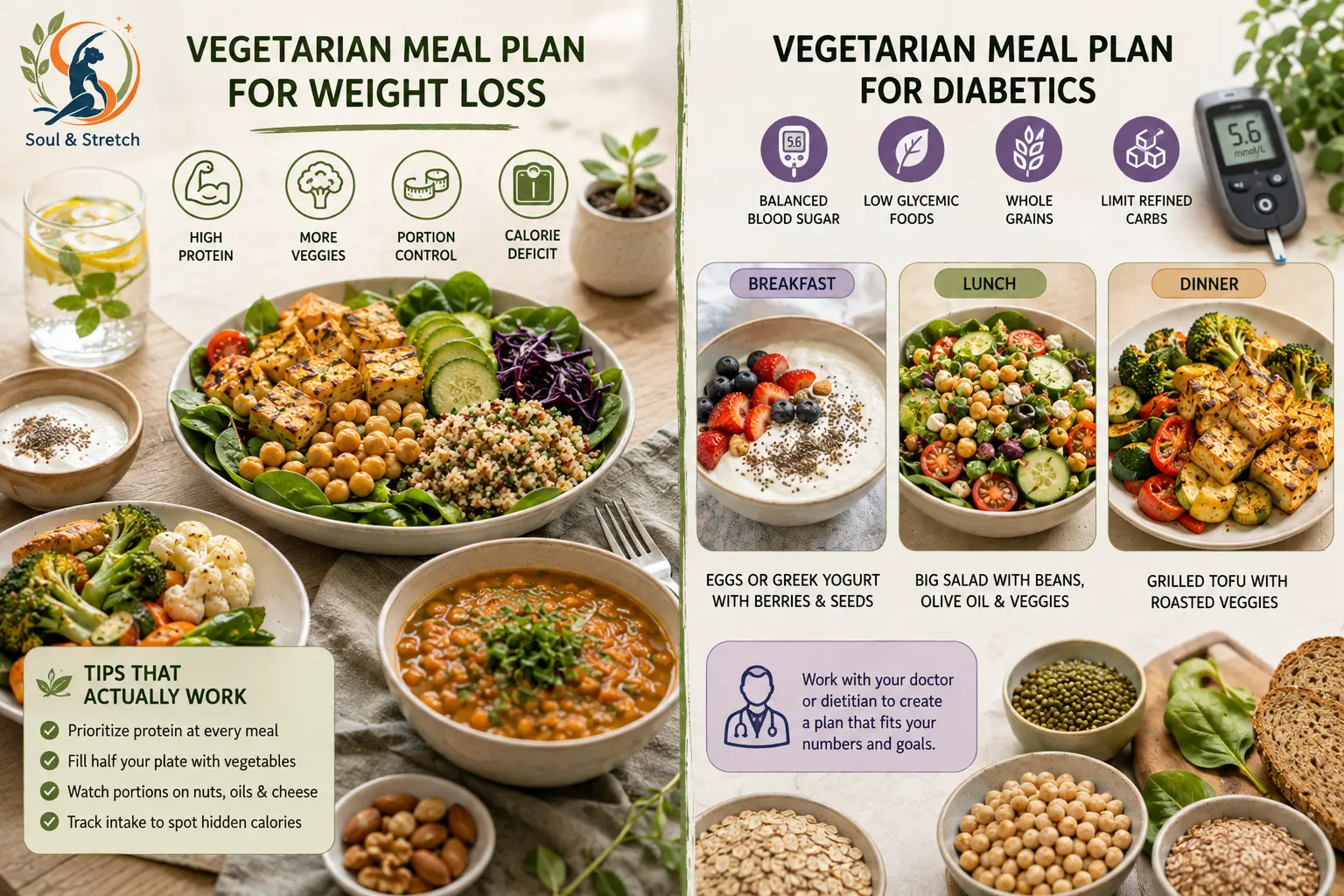
Weight loss on a vegetarian meal plan comes down to the same basics as literally any other diet, a moderate calorie deficit with enough protein to actually stay full.
Tips That Actually Work
Prioritize protein at every meal, tofu, beans, eggs or dairy
Fill half your plate with vegetables before adding grains
Watch portion sizes on nuts, oils and cheese specifically
Track intake for a week or two to spot hidden calorie sources
Whole foods diet meal plan structures tend to work especially well here, since minimally processed foods keep you fuller on fewer calories overall. At least that's what I've noticed and what most of the research seems to back up too.
Vegetarian Meal Plan for Diabetics
Diabetic vegetarian meal plans need a bit more attention to carbs and blood sugar impact, sure, but they're absolutely doable with the right structure. Not nearly as hard as people assume walking into it either.
A vegetarian diabetic diet meal plan generally focuses on low glycemic vegetarian foods, non-starchy vegetables, legumes and whole grains in controlled portions, while limiting refined carbs that spike blood sugar fast. Low carb vegetarian meal plan options work well here too, swapping rice or pasta for cauliflower rice or just extra vegetables when it makes sense.
A sample diabetic vegetarian meal plan might include eggs or Greek yogurt for breakfast, a big salad with beans and olive oil for lunch and grilled tofu with roasted low glycemic vegetarian recipes vegetables for dinner. Vegan diabetic diet meal plan versions follow the exact same principles, just swapping eggs and dairy for plant-based alternatives like tofu or fortified plant milk instead.
Working with a doctor or dietitian to build a diabetic menu plan for a week tailored to your actual numbers beats following some generic plan found online, every single time. No exceptions on this one, I mean it.
Vegetarian Diet for Diabetics: Going Deeper
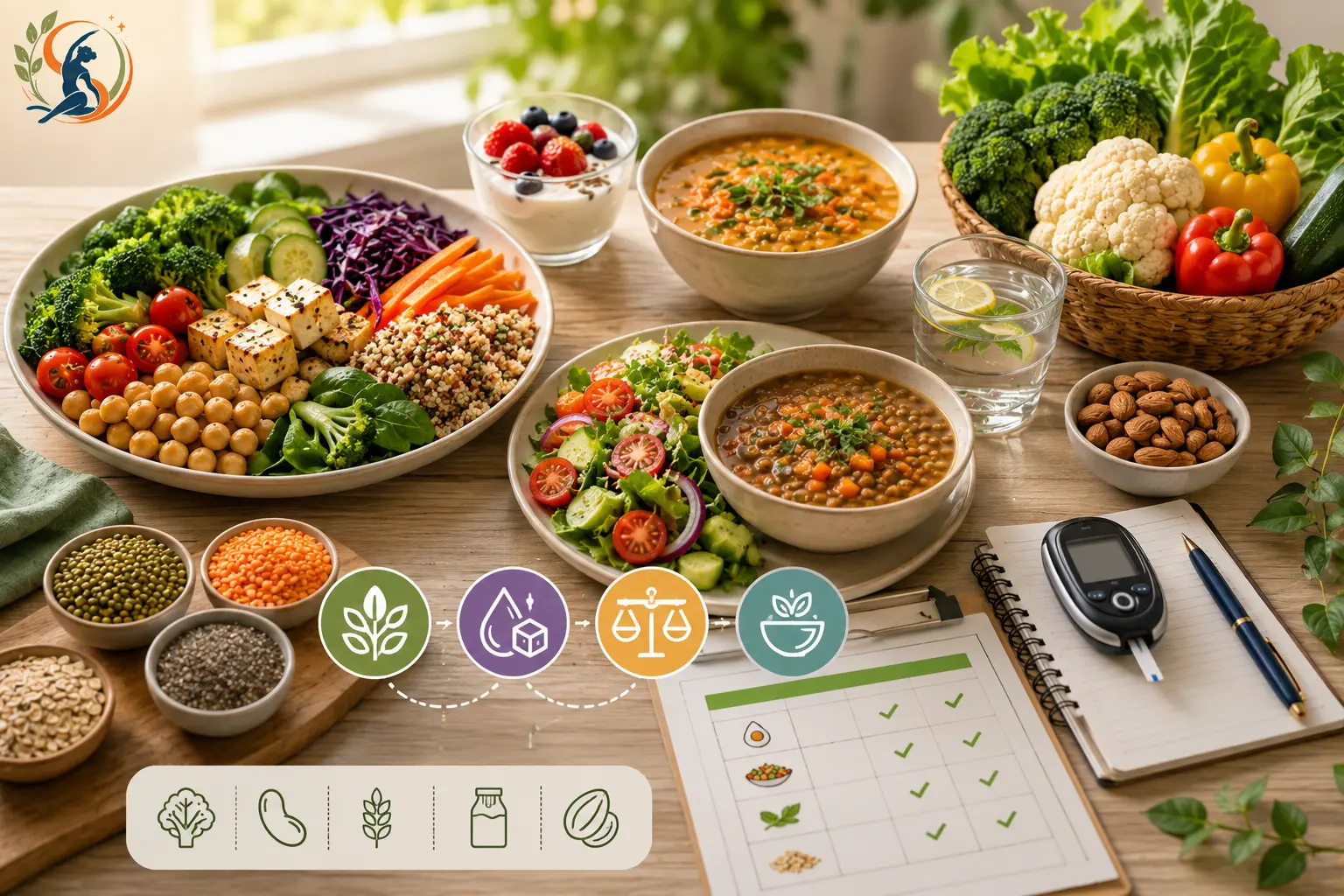
The connection between vegetarian eating and diabetes management deserves a closer look, since so many people search for this exact thing specifically. Research generally supports that a well-planned vegetarian diet for diabetics can genuinely improve blood sugar control, largely because plant-based diets tend to run higher in fiber, which slows sugar absorption into the bloodstream considerably.
A diabetic vegetarian diet meal plan built around low glycemic vegetarian recipes tends to work better than just cutting carbs entirely, since fiber-rich carbs from vegetables, legumes and whole grains behave really differently in the body compared to refined sugar or plain white bread.
Vegetarian diabetic recipes that pair protein with fiber at each meal, lentil soup with a side salad, for example, help keep blood sugar steadier through the day instead of causing those sharp spikes and crashes everyone dreads.
For anyone managing this long term, a diabetic vegetarian meal planner or even a loose weekly template genuinely removes a ton of daily guesswork. Writing out a diabetic friendly meal plan 7 days in advance, even roughly, makes grocery shopping way easier and cuts down the temptation to grab something less blood-sugar-friendly out of pure convenience when you're hungry and unprepared. We've all been there, more than once probably.
Building a Healthy Vegetarian Diet Chart
A healthy vegetarian diet chart honestly doesn't need to be complicated or restrictive to work well long term, no matter how intimidating some of those charts look online with their tiny fonts and endless columns. Structuring meals around one consistent framework, protein, fiber, healthy fat and vegetables, at each meal makes planning feel almost automatic after just a few weeks of practice.
For elderly vegetarians specifically, a 7 day meal plan for elderly vegetarian needs tends to prioritize easier-to-digest proteins like eggs, dairy and well-cooked legumes, along with softer vegetable preparations that stay nutrient dense without demanding a ton of chewing or digestion effort. Calcium and vitamin B12 deserve real attention here too, since absorption naturally declines with age regardless of which diet type someone follows.
Vegetarian Recipes for Diabetics That Actually Taste Good
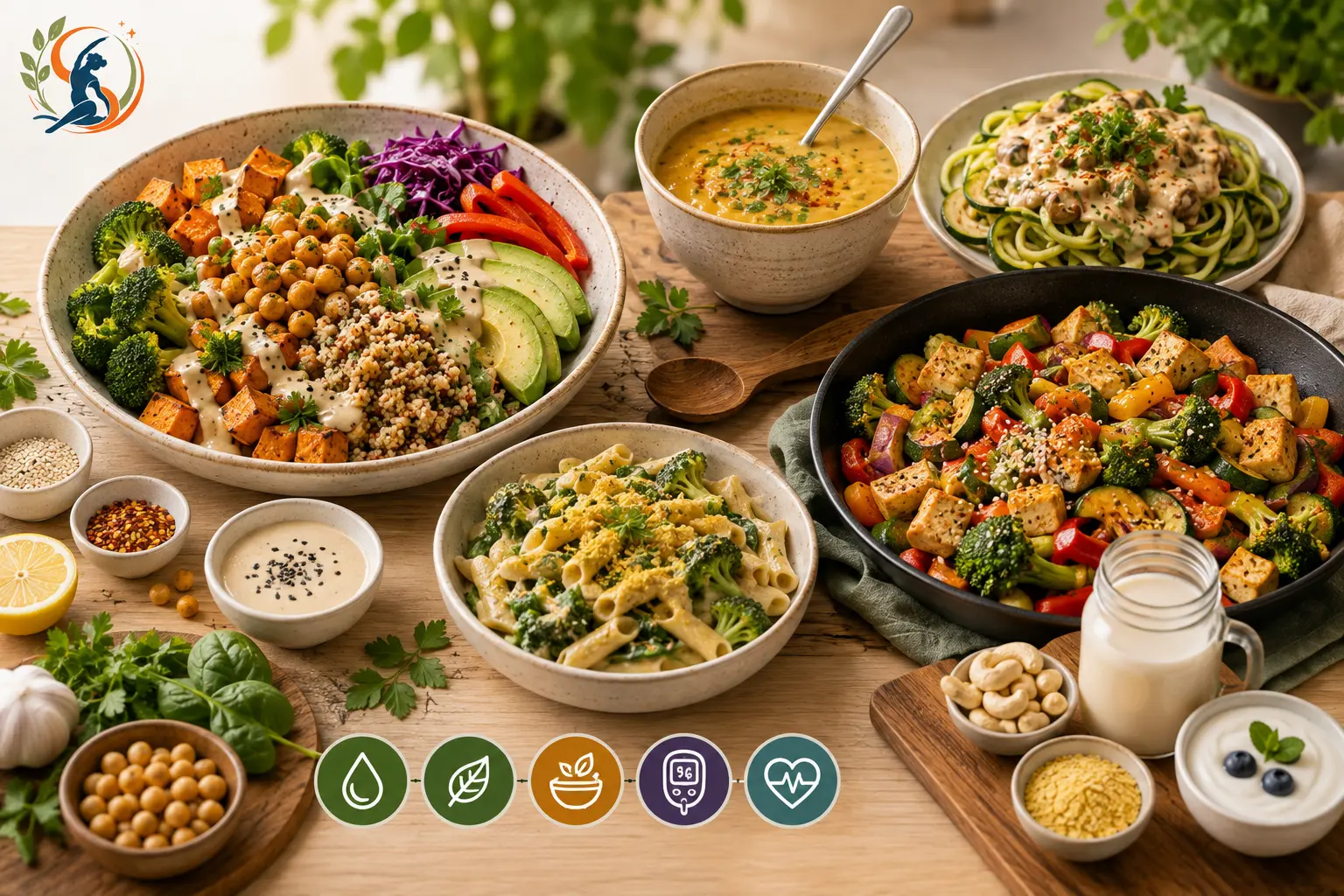
One complaint I hear constantly and I mean constantly, is that vegetarian recipes for diabetics sound restrictive or bland before anyone's even tried them once. That reputation genuinely isn't fair once you start cooking with the right ingredients and seasoning with actual confidence instead of playing it painfully safe.
Roasted vegetable and chickpea bowls with tahini dressing, for example, deliver real flavor while staying low glycemic and diabetes-friendly the whole time. Vegetable recipes for diabetics built around roasting, grilling or sautéing with olive oil and fresh herbs consistently taste better than the steamed, plain versions people assume are the only "allowed" option out there.
Vegan diabetic recipes follow that same exact logic, swapping dairy for coconut milk or cashew-based sauces to keep dishes rich without spiking blood sugar unnecessarily.
Dairy-Free Vegetarian Options
Not every vegetarian avoids dairy, obviously, but plenty do, whether for allergies or just personal preference and honestly both reasons are equally valid. A dairy-free meal plan within vegetarian eating relies on plant milks, dairy-free yogurt and nutritional yeast for that cheesy flavor without any of the actual dairy involved.
This works especially well paired with vegan meal prep habits, since most dairy-free vegetarian meals overlap heavily with fully vegan recipes anyway, more than people realize at first.
Choosing Between Vegan, Vegetarian and Pescatarian
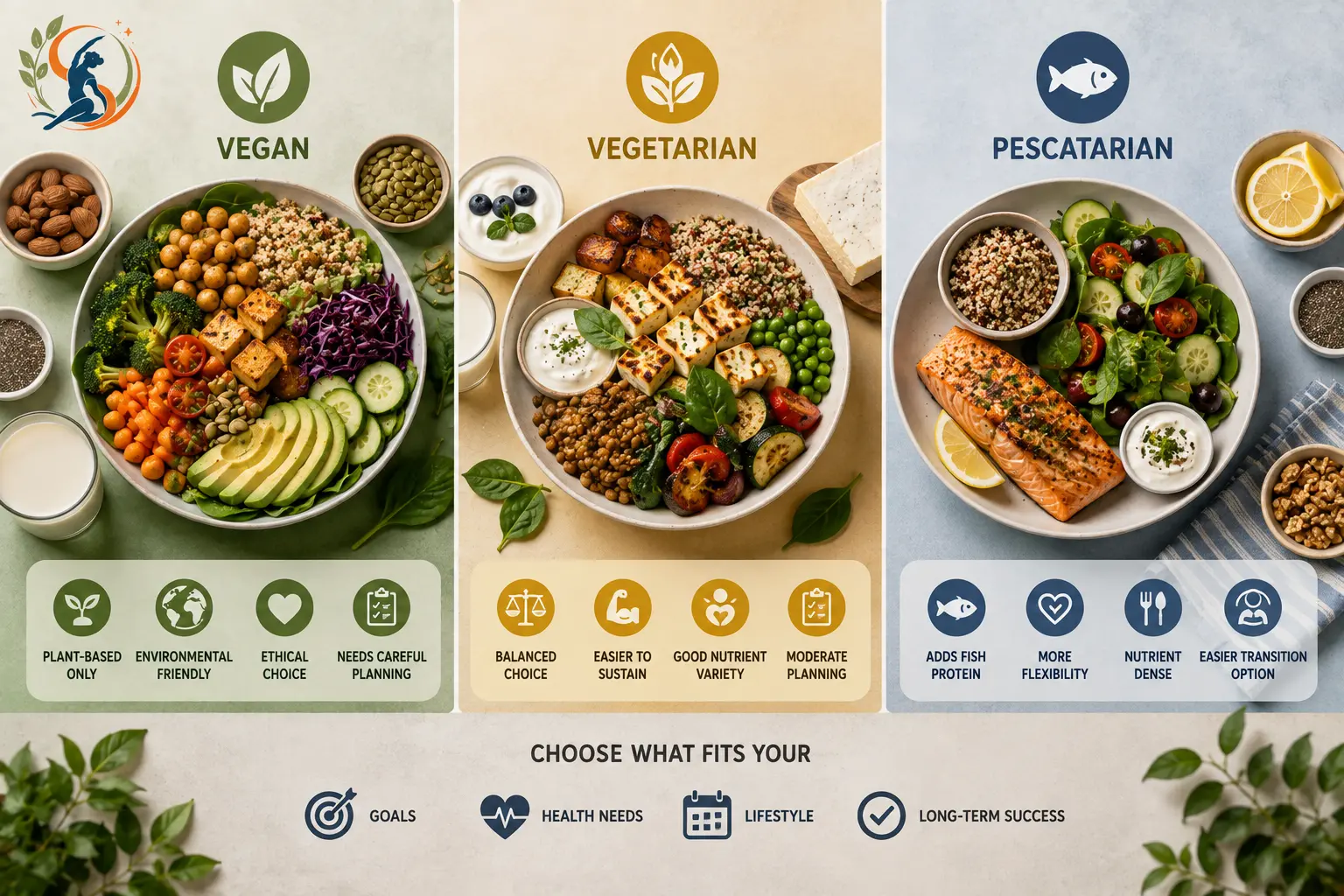
Honestly? There's no single "best" option here and anyone telling you otherwise is probably selling something. It depends entirely on your goals, health needs and what you can actually stick with long term, which is really the whole ballgame if we're being real about it.
Vegan eating offers the most ethical and environmental upside but demands the most planning around dietary restrictions and nutrients. Vegetarian sits in a comfortable middle ground most people find easier to sustain, while pescatarian adds flexibility through fish without going fully back to eating meat.
Frequently Asked Questions
1. How do vegans get enough protein?
Vegans get protein through legumes, tofu, tempeh, seitan, quinoa and nuts. Combining different plant-based protein sources throughout the day, rather than relying on just one, ensures the body gets all essential amino acids needed for muscle repair and overall health.
2. What's the difference between vegan and plant-based?
Vegan typically refers to avoiding all animal products for ethical reasons, including in clothing and products, while plant-based usually focuses purely on diet. Someone eating plant-based may still occasionally consume animal products, unlike a strict vegan lifestyle.
3. Is pescatarian healthier than vegetarian?
Neither is definitively healthier, it depends on individual nutrition needs. Pescatarian eating offers easier access to complete protein and omega-3s through fish, while vegetarian eating can be equally healthy with proper planning around protein and nutrient variety.
4. How do I make a 7 day diet plan?
Start by listing meals you already enjoy, then fill gaps with balanced options covering protein, vegetables and whole grains. Batch cook staples ahead of time, keep snacks simple and adjust portions based on your specific calorie and nutrition goals.
5. What is a good menu for a vegetarian?
A good vegetarian menu includes varied protein sources like beans, tofu or eggs, plenty of vegetables, whole grains and healthy fats. Rotating meals throughout the week prevents boredom while ensuring balanced nutrition across proteins, fiber and essential vitamins.
6. What is the best diet plan for vegetarians?
The best vegetarian diet plan focuses on whole foods, varied protein sources and consistent meal structure rather than following a rigid, one-size-fits-all template. Personalizing portions and food choices to your specific goals matters more than any single generic plan.
Conclusion
Building a vegetarian meal plan that actually works comes down to variety, enough protein and structure that fits your real, messy life, not some rigid template copied off a wellness blog somewhere. Whether you're exploring vegan eating, staying pescatarian, managing low FODMAP needs or working around diabetes, the same core principles apply across the board every time.
Start simple, adjust as you learn what your body actually responds to and give yourself real room to figure it out over time instead of expecting perfection right out of the gate on day one.


Comments (0)
No comments yet. Be the first to share your thoughts!
Leave a Comment