
My high school gym teacher in Ohio called it "the dog stretch." Decades before I'd ever heard the word yoga, actually. Funny how that works out. It wasn't until my thirties, standing in an actual studio, feeling kind of silly, that I connected the dots... that childhood warm up had a real name the whole time. Adho mukha svanasana.
Adho mukha svanasana, better known as the downward facing dog yoga pose, is honestly the most recognizable shape in modern yoga. And also I'd argue one of the most misunderstood. New to the mat or ten years in? Doesn't really matter, this pose keeps showing up regardless.
It ties breath, strength and stillness together in one simple inverted V and I want to actually break it down here, not the polished generic version you find on every other wellness site out there.
So why do teachers, physical therapists and lifelong practitioners keep coming back to this one shape, over and over again? Keep reading, the reason might genuinely surprise you. It surprised me at least.
What Is Adho Mukha Svanasana?
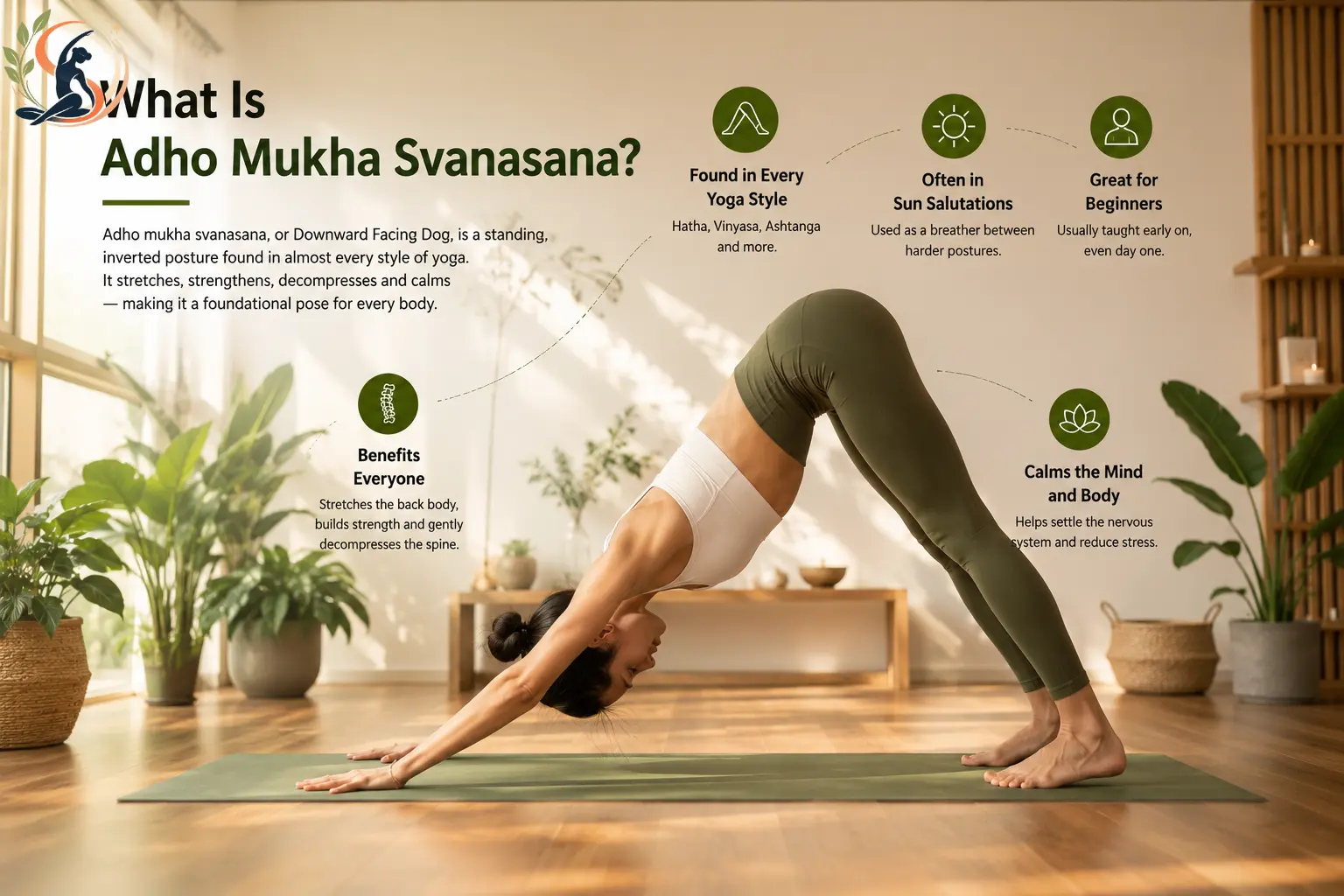
Adho mukha svanasana is a standing, inverted asana that shows up in pretty much every yoga style out there, Hatha, Vinyasa, Ashtanga, you name it, it's there somewhere. In Sanskrit the name roughly translates to "downward facing dog," though most people just call it the dog pose or a down dog stretch in everyday conversation, myself included half the time honestly.
You'll find it tucked inside sun salutations, used as a breather between harder shapes and it's usually one of the first postures beginners get taught. Sometimes literally day one, no warm up required. Here's what makes it stick around though. Versatility mostly, if I had to pick one word for it.
It stretches the whole back body, builds real strength in the arms and shoulders and gives the spine a gentle decompression while settling the nervous system down at the same time. Unlike a lot of the flashier postures out there (looking at you, arm balances) adho mukha svanasana bends to fit almost any body, age or fitness level.
That's honestly the whole reason it earned a permanent spot in classes everywhere, from a quiet home practice on a random Tuesday morning to a packed studio on a Monday night when everyone's stressed about their week.
The Meaning Behind Adho Mukha Svanasana
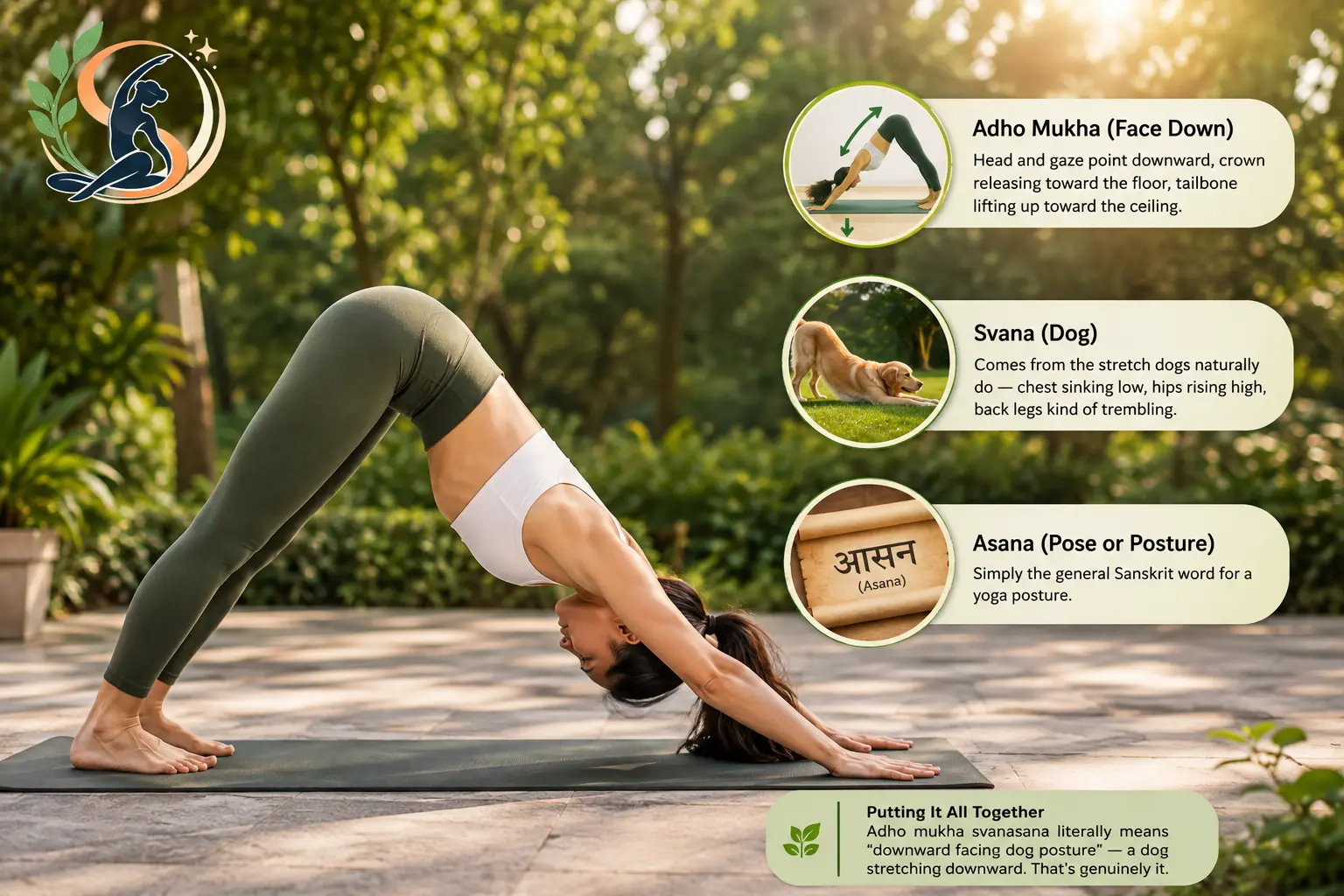
Knowing where the Sanskrit name actually comes from changes how the pose feels. At least it did for me anyway. Every piece of the word means something specific and once that clicks the shape itself starts making a lot more sense too. Weirdly.
Adho Mukha (Face Down)
"Adho mukha" means face downward or downward facing depending on how it's translated. This part of the name is about where the head and gaze point during the pose, crown releasing toward the floor, tailbone lifting up toward the ceiling. That's what gives the pose its signature upside down shape. The one everyone recognizes instantly even people who've never once set foot in a yoga class.
Svana (Dog)
"Svana" just means dog. Simple as that really. The name comes from the stretch dogs naturally do the second they wake up, chest sinking low, hips rising high, back legs kind of trembling with the effort. It's a little playful honestly but weirdly accurate once you actually watch it happen on your own living room floor with your own dog.
Asana (Pose or Posture)
"Asana" is simply the general Sanskrit word for a yoga posture. Put it all together and adho mukha svanasana literally means "downward facing dog posture." Refreshingly literal once you break it apart piece by piece. No hidden meaning here, no mystery, just a pretty accurate honest description.
Putting It All Together
So if someone asks what does adho mukha svanasana mean, the honest answer is exactly what it sounds like. A dog, stretching downward. That's genuinely it, nothing more. Nothing hidden or overly mystical going on here. A lot of Sanskrit asana names actually work this way once you start noticing the pattern which makes them way easier to remember down the line trust me.
Benefits of Practicing Adho Mukha Svanasana
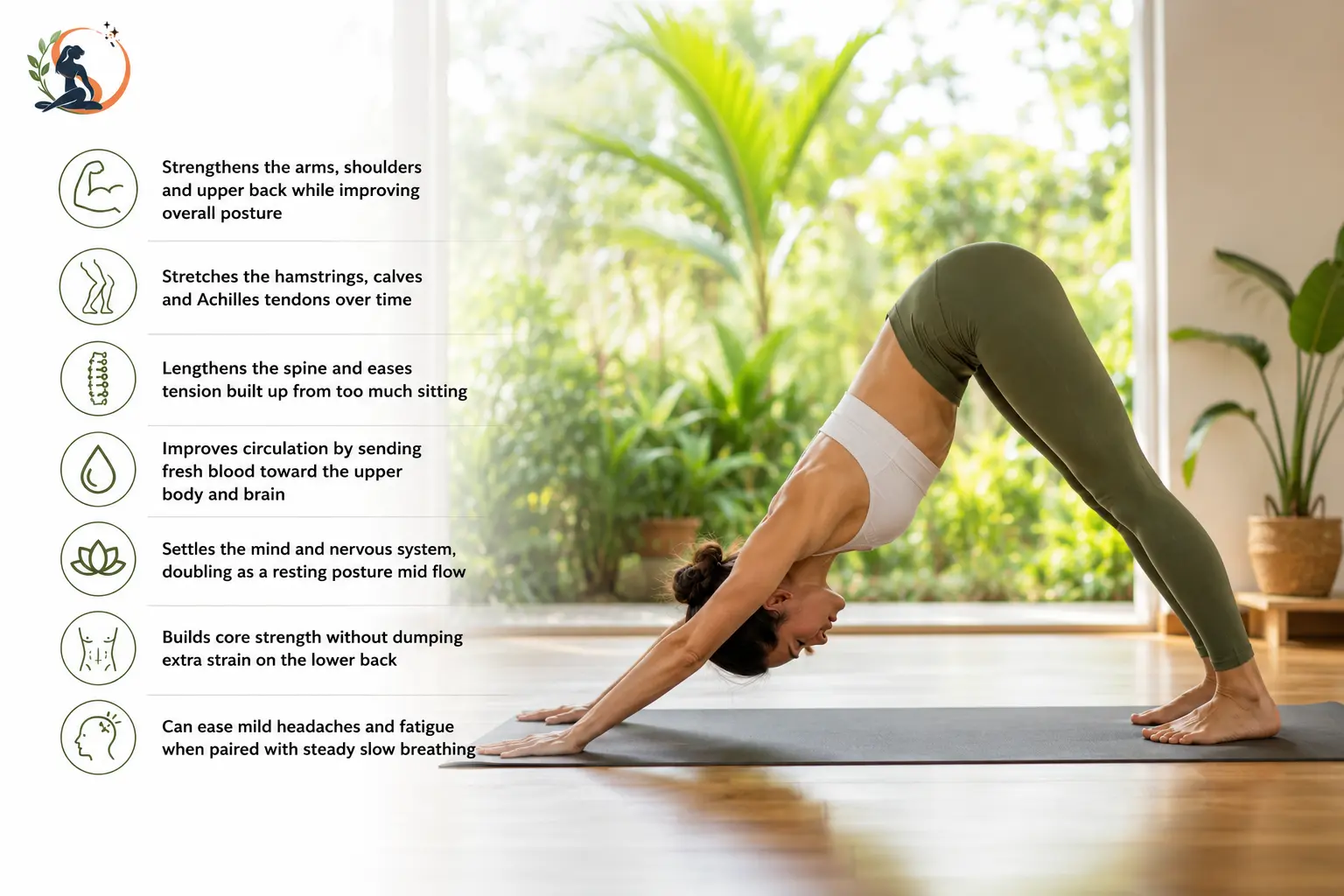
Regular practice of adho mukha svanasana brings a genuinely long list of physical and mental payoffs. That's a big part of why it stays in nearly every sequence a teacher writes, myself included, back when I was still teaching a few classes a week (I don't teach anymore, long story).
Strengthens the arms, shoulders and upper back while improving overall posture
Stretches the hamstrings, calves and Achilles tendons over time
Lengthens the spine and eases tension built up from too much sitting
Improves circulation by sending fresh blood toward the upper body and brain
Settles the mind and nervous system, doubling as a resting posture mid flow
Builds core strength without dumping extra strain on the lower back
Can ease mild headaches and fatigue when paired with steady slow breathing
Beyond that checklist though, there's something quietly restorative about this pose that numbers alone just can't explain. Because your head drops below your heart, blood flow shifts and plenty of practitioners describe a kind of mental reset even after a short hold. I know I have.
More times than I can honestly count. It manages to feel energizing and calming at once somehow, which is exactly why teachers loop back to it so often between harder shapes.
There's a practical everyday side to it too. Honestly the part I care about most these days if I'm being real with you. If you sit at a desk all day, like I do most of the week, adho mukha svanasana pushes back against that forward hunch that creeps into your shoulders and upper back without you even noticing it happening.
A few slow rounds during a lunch break can loosen tight hips, wake up sluggish hamstrings and genuinely change how the rest of your day feels. No exaggeration. Try it before your next 3pm slump and just see for yourself, cant hurt right.
How to Do Adho Mukha Svanasana Correctly
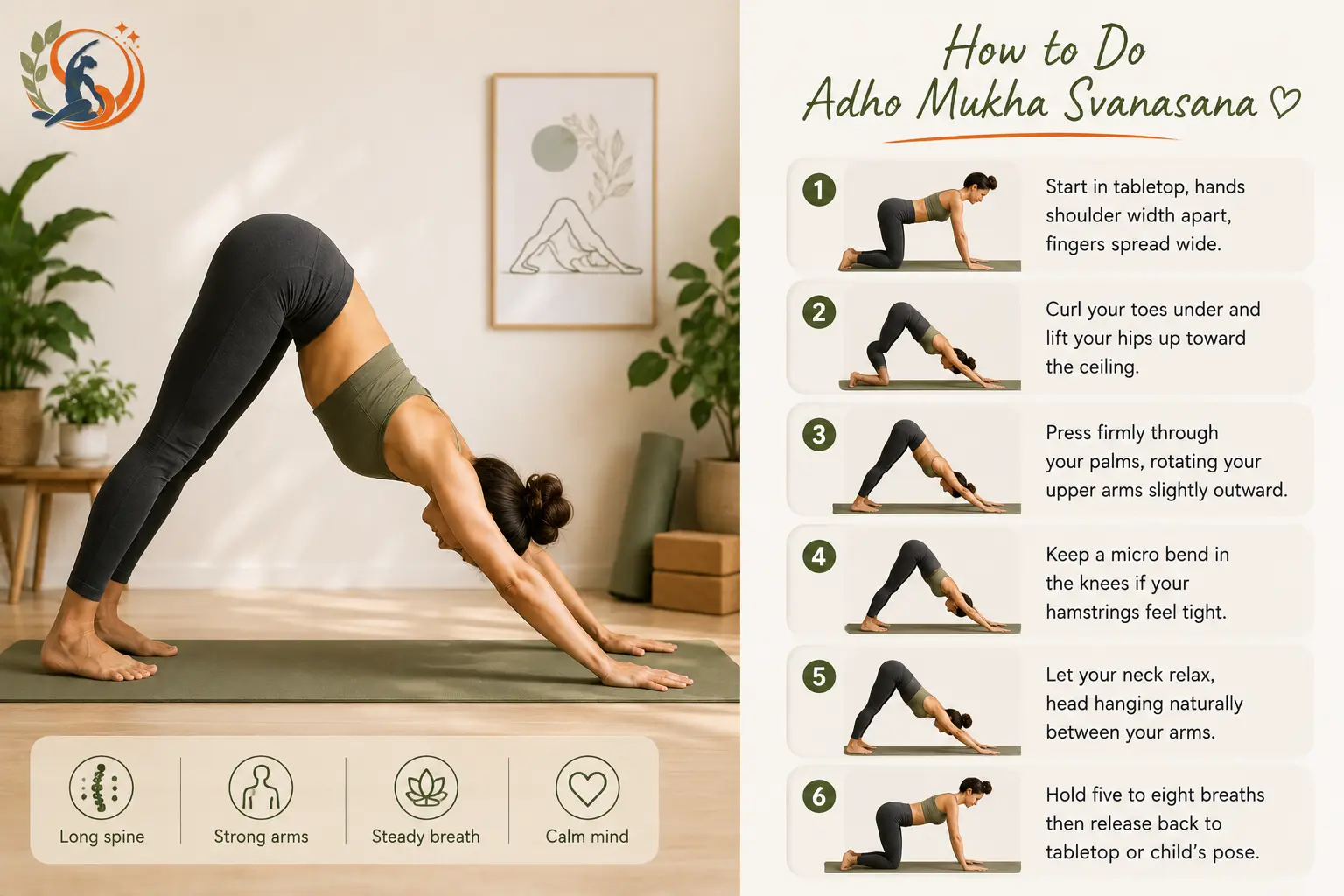
Learning how to do adho mukha svanasana the right way matters a lot more than rushing toward some deeper fancier version. Trust me on this one, I learned it the hard way more than once. Alignment before depth, always. Simple rule but it saves your knees, wrists and shoulders a lot of grief down the road.
Start on all fours, wrists stacked under shoulders, knees under hips. Tuck your toes, lift your hips up and back and straighten your legs slowly, keeping a soft bend in the knees if your hamstrings are protesting (and mine usually are, even after years of doing this).
You're after a long spine here, not necessarily straight legs or heels pinned flat to the floor. That part trips a lot of beginners up honestly, took me forever to unlearn it.
Step-by-Step Instructions
Start in tabletop, hands shoulder width apart, fingers spread wide
Curl your toes under and lift your hips up toward the ceiling
Press firmly through your palms, rotating your upper arms slightly outward
Keep a micro bend in the knees if your hamstrings feel tight
Let your neck relax, head hanging naturally between your arms
Hold five to eight breaths then release back to tabletop or child's pose
Popular Variations Connected to Adho Mukha Svanasana
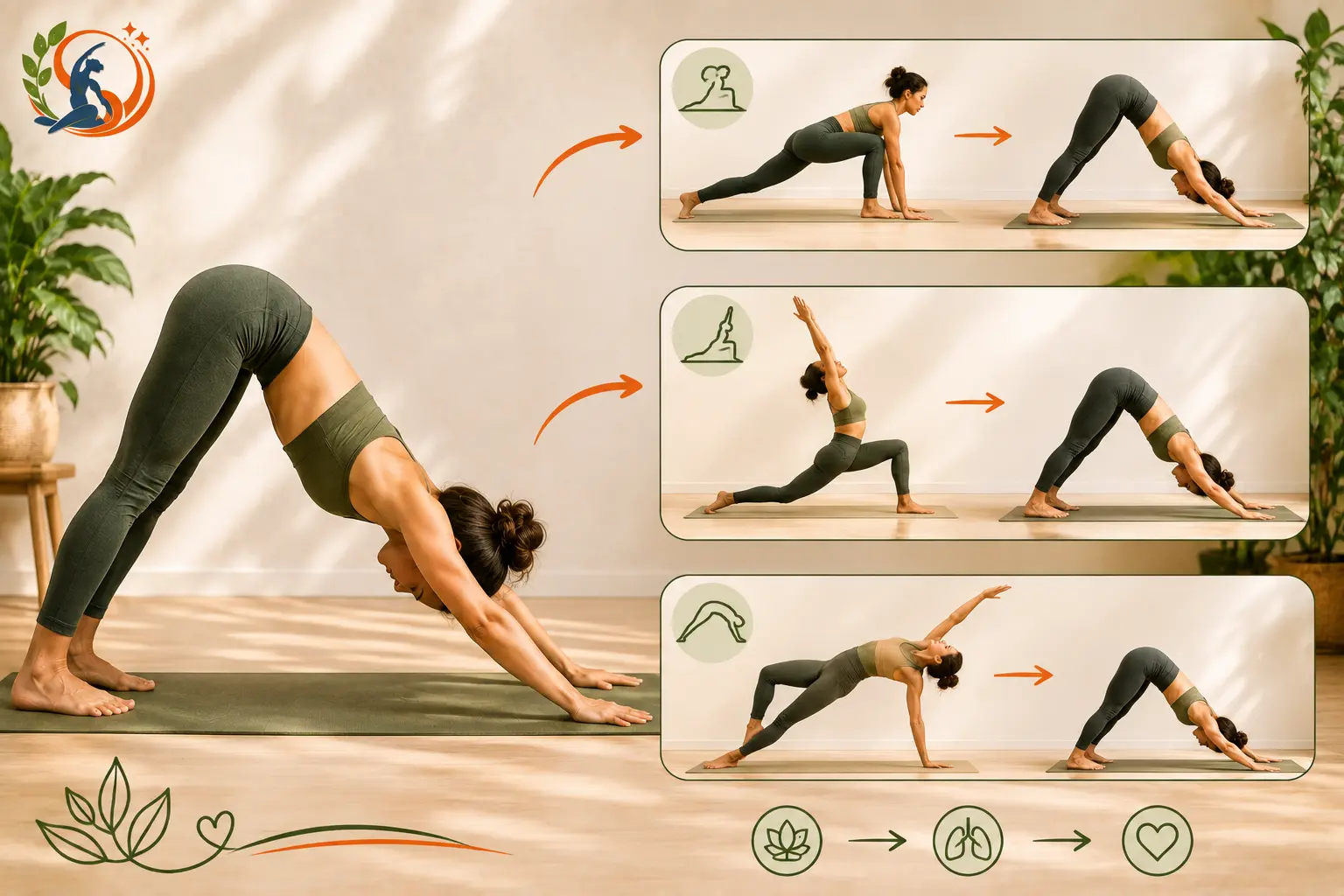
Plenty of yoga sequences pair adho mukha svanasana with other related postures, building smooth transitions that develop both strength and flexibility as you move through a flow, sometimes without you even clocking that it's happening.
Low Lunge to Downward Dog Transition
Moving from a low lunge into adho mukha svanasana is a classic Vinyasa move, one you'll end up doing a hundred times before you even notice you're doing it anymore. It just becomes automatic honestly. Step the back foot up to meet the front, lift the hips and there's your bridge between grounding and lengthening, right there.
Anjaneyasana Flow Connection
Anjaneyasana or crescent lunge, often flows right into or out of adho mukha svanasana during sun salutations. This pairing opens the hip flexors while the downward dog yoga pose balances that out with a good long stretch on the other end. There's a rhythm to it once your body learns the pattern. It really does click eventually, I promise you, it just takes time.
Wild Thing Yoga Posture Extension
For anyone a bit further along the wild thing yoga posture is a fun, slightly wild (pun very much intended) backbend that often springs directly out of adho mukha svanasana. Lifting one leg and rotating the hips open completely changes the shape adding a heart opening element to what started out as a pretty grounding stretch.
Common Mistakes to Avoid in Adho Mukha Svanasana
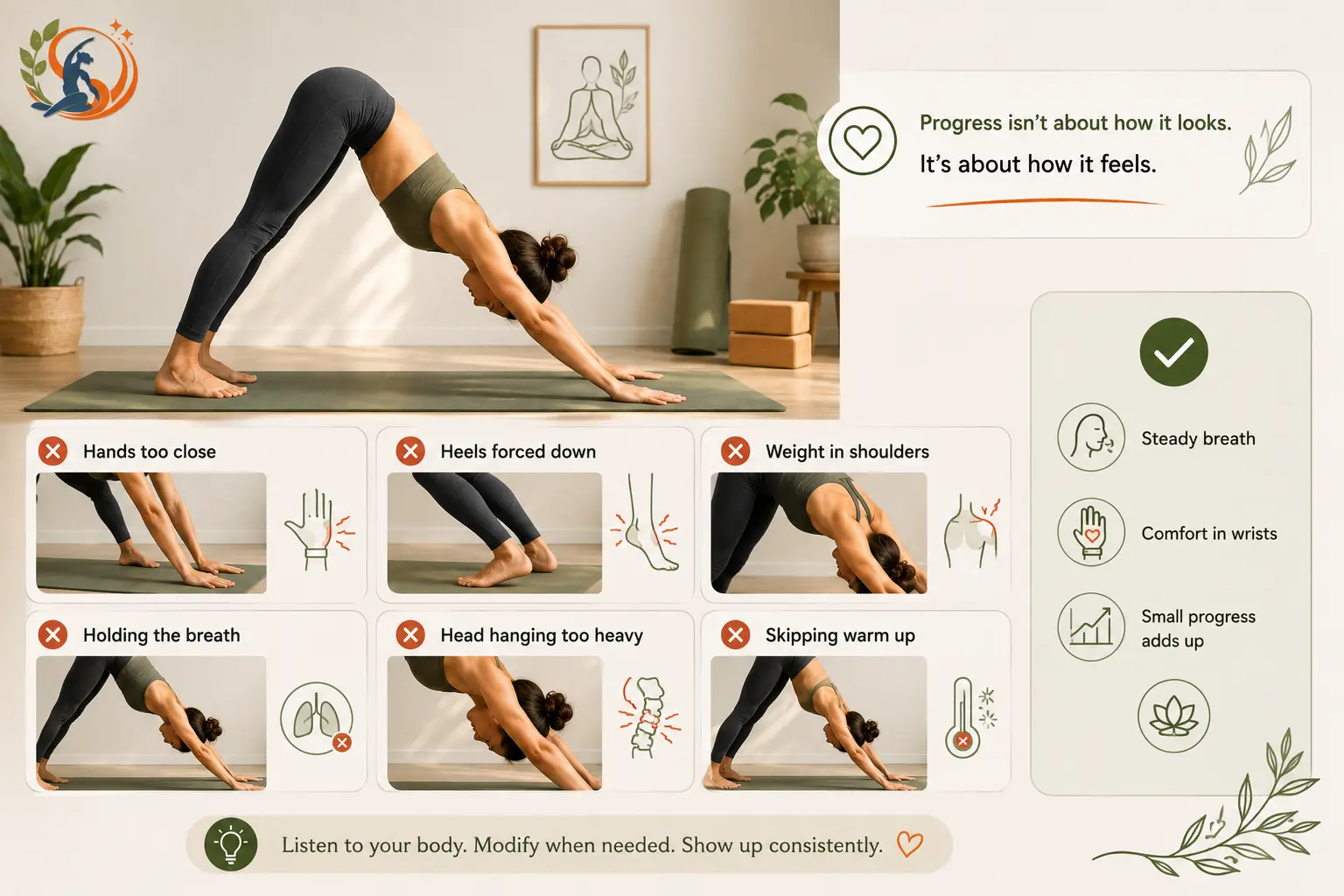
Even experienced folks, myself included on a bad or tired day, fall into habits that quietly chip away at how effective this pose actually is. Catching these early honestly makes a real difference in how the posture feels over time.
Placing the hands too close together, which strains the wrists
Forcing the heels flat before the hamstrings are actually ready
Letting all the weight collapse into the shoulders instead of the arms
Holding the breath instead of keeping slow steady inhales and exhales
Letting the head hang too heavily, which creates unnecessary neck tension
Skipping the warm up and jumping straight into the full shape
Most of these mistakes come down to comparing yourself to whoever's on the mat next to you especially in a crowded class. We've all done it, don't pretend you haven't. Every body is built differently, different proportions, different flexibility, different injury history, so a downward dog yoga pose that looks effortless on one person might need real modification on another. That's fine.
Normal even. The real marker of progress in adho mukha svanasana is how steady your breath feels and how much less strain you notice in your wrists over weeks of just showing up, not whether your shape matches some photo in a magazine somewhere. (oddly specific example but you get the point)
Adho Mukha Svanasana vs Parvatasana
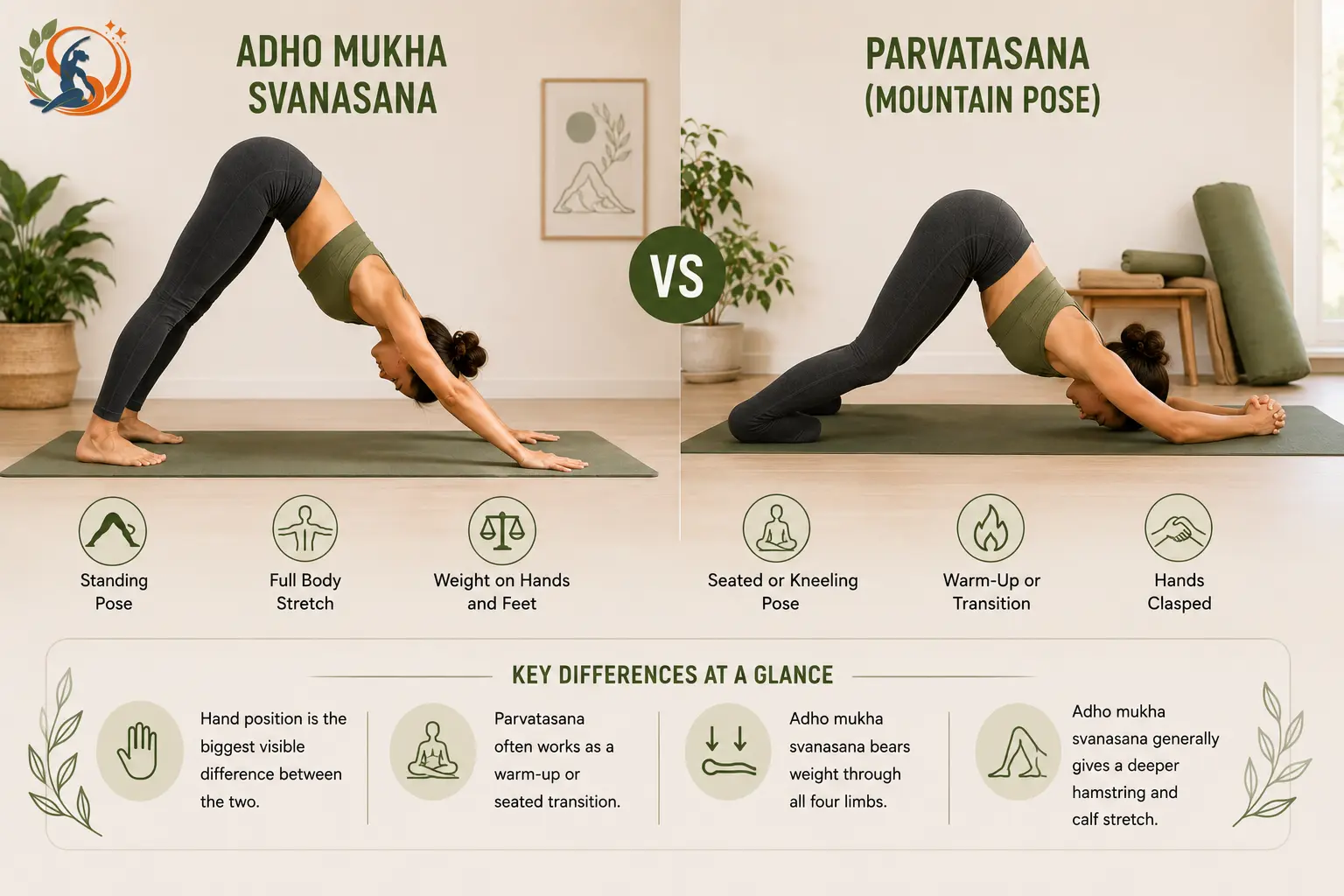
People mix up adho mukha svanasana and parvatasana constantly and honestly it makes sense. Both share that similar inverted V shape at first glance so the confusion tracks. But there are real differences worth knowing once you actually look closer.
Parvatasana, meaning mountain pose in this context, is usually done with the hands clasped together instead of pressed flat and it tends to show up in seated or kneeling sequences rather than standing flows. Adho mukha svanasana on the other hand is a full standing inversion that stretches the entire back body while spreading weight evenly across hands and feet.
Key Differences at a Glance
Hand position is the biggest visible difference between the two
Parvatasana often works as a warm-up or seated transition
Adho mukha svanasana bears weight through all four limbs
Adho mukha svanasana generally gives a deeper hamstring and calf stretch
Adho Mukha Vrksasana: A Related but Different Pose
Another one people confuse with adho mukha svanasana is adho mukha vrksasana, better known as a handstand. Both share that "adho mukha" downward facing prefix, but adho mukha vrksasana flips the entire body upside down onto the hands. Completely different animal honestly, once you actually try both back to back.
Unlike adho mukha svanasana, which keeps your feet grounded and doesn't demand much balance training, adho mukha vrksasana asks for real upper body strength, core control and a certain comfort with being upside down, which no judgment, not everyone has right away. Took me years if I'm being honest with you, still working on it if we're being really honest.
A lot of practitioners actually use adho mukha svanasana as prep work quietly building the shoulder and wrist strength they'll eventually need before ever attempting adho mukha vrksasana.
Tips for Beginners Starting Their Journey
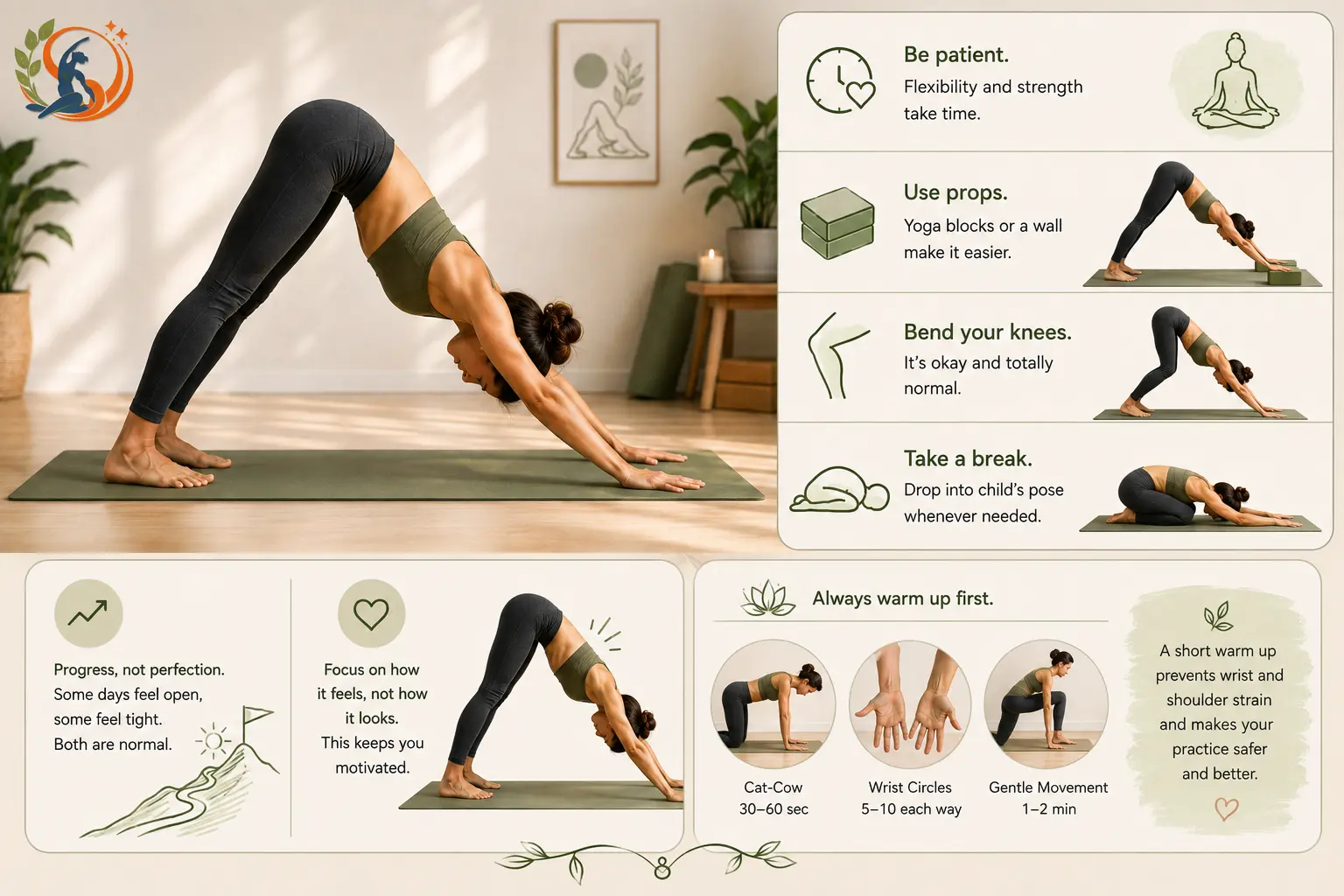
Starting out with adho mukha svanasana can feel intimidating, especially when your wrists or hamstrings are tight and I remember that feeling pretty well even now. Patience matters here more than flexibility or strength ever will on day one. More than people want to hear probably but it's true.
Props help a lot, more than people give them credit for honestly. Yoga blocks under the hands or practicing against a wall, can make the downward dog yoga pose feel far more doable when you're new to it. Bent knees are completely fine early on and there's no shame in dropping into child's pose whenever the shape gets too much. None at all. I still do it sometimes and I'm not sorry about it.
It also helps to treat adho mukha svanasana as a work in progress, not something you either nail or fail. Some mornings your hamstrings feel open and your heels nearly touch the mat. Other days everything's stiff and tight for no clear reason whatsoever.
Both are normal. Paying attention to how the pose feels rather than how it looks tends to keep beginners motivated far longer than chasing some picture perfect shape ever does. One last thing and I really can't stress this enough: always pair adho mukha svanasana practice with a real warm up.
Cat-cow stretches, a few wrist circles, that kind of thing is nothing fancy or complicated. Skipping this step is where most wrist and shoulder discomfort comes from in my experience anyway and a two minute warm up routine usually fixes it entirely. (wish someone had told me that years ago, would've saved my wrists a lot of trouble)
Frequently Asked Questions
1. What is adho mukha vrksasana?
Adho mukha vrksasana is the Sanskrit name for a handstand, where the entire body balances upside down on the hands. It demands real shoulder strength, core stability and confidence with inversions and it is generally considered more advanced than adho mukha svanasana.
2. How to do adho mukha?
Start on all fours, tuck your toes and lift your hips up and back into that inverted V shape. Keep your hands shoulder width apart, knees softly bent if you need to and let your head hang naturally between your arms while breathing steadily throughout.
3. What does Adho Mukha Svanasana mean?
It translates from Sanskrit to "downward facing dog pose." The name describes both the orientation of the body, face and chest angled down and its resemblance to that stretch dogs do naturally which makes it fairly easy to remember once you actually know it.
4. What are the key differences between Parvatasana and Adho Mukha Svanasana?
Parvatasana typically uses clasped hands and shows up in seated or kneeling sequences, while adho mukha svanasana is a standing weight bearing posture with flat palms. It also tends to offer a deeper hamstring and calf stretch than parvatasana does.
5. Can beginners practice adho mukha svanasana every day?
Yes, this pose is generally safe for daily practice since it's low impact and easy to adapt. Beginners should focus on alignment over depth, using bent knees or props whenever needed and just let strength and flexibility build gradually over consistent weeks.
6. Is adho mukha svanasana safe during pregnancy?
It can be safe during early pregnancy with the right modifications, though checking with a doctor or a prenatal yoga instructor first is honestly just the smart move here. Widening the stance and shortening hold times usually helps accommodate a growing belly comfortably.
Conclusion
Adho mukha svanasana is more than just a transition between sun salutations, at least that's how I see it after all these years of practicing it. It's a full body reset, building strength, restoring flexibility and quieting a busy mind, one breath at a time.
Whether you're just learning the downward dog yoga pose, exploring its ties to anjaneyasana and low lunge or refining your alignment after years on the mat like me, there's always something new hiding in this deceptively simple posture. Give it patience, breathe through the awkward parts and honestly? It keeps giving back.


Comments (0)
No comments yet. Be the first to share your thoughts!
Leave a Comment