
If you've been staring at a yoga class schedule trying to figure out what "Hatha" even means, you're not alone. Most people starting out feel exactly that way a little confused, a little intimidated and honestly not sure where to begin.
Here's the good news though. Hatha yoga for beginners is genuinely one of the most accessible things you can do for your body and mind right now. It's slower, gentler and way less overwhelming than most other yoga styles out there. You don't need to be flexible. You don't need experience. You really just need to show up and be willing to try.
I know that sounds simple. But so many people delay starting because they think they need to get flexible first or lose weight first or get "fit enough" for yoga first. None of that is true, especially not for hatha. This practice meets you exactly where you are and that's kind of the whole point of it.
This guide covers everything what hatha yoga actually is, its real benefits, the five core elements, 10 beginner poses with chakra connections, common challenges new students face and how to actually get started without overthinking it to death.
What Is Hatha Yoga, Really?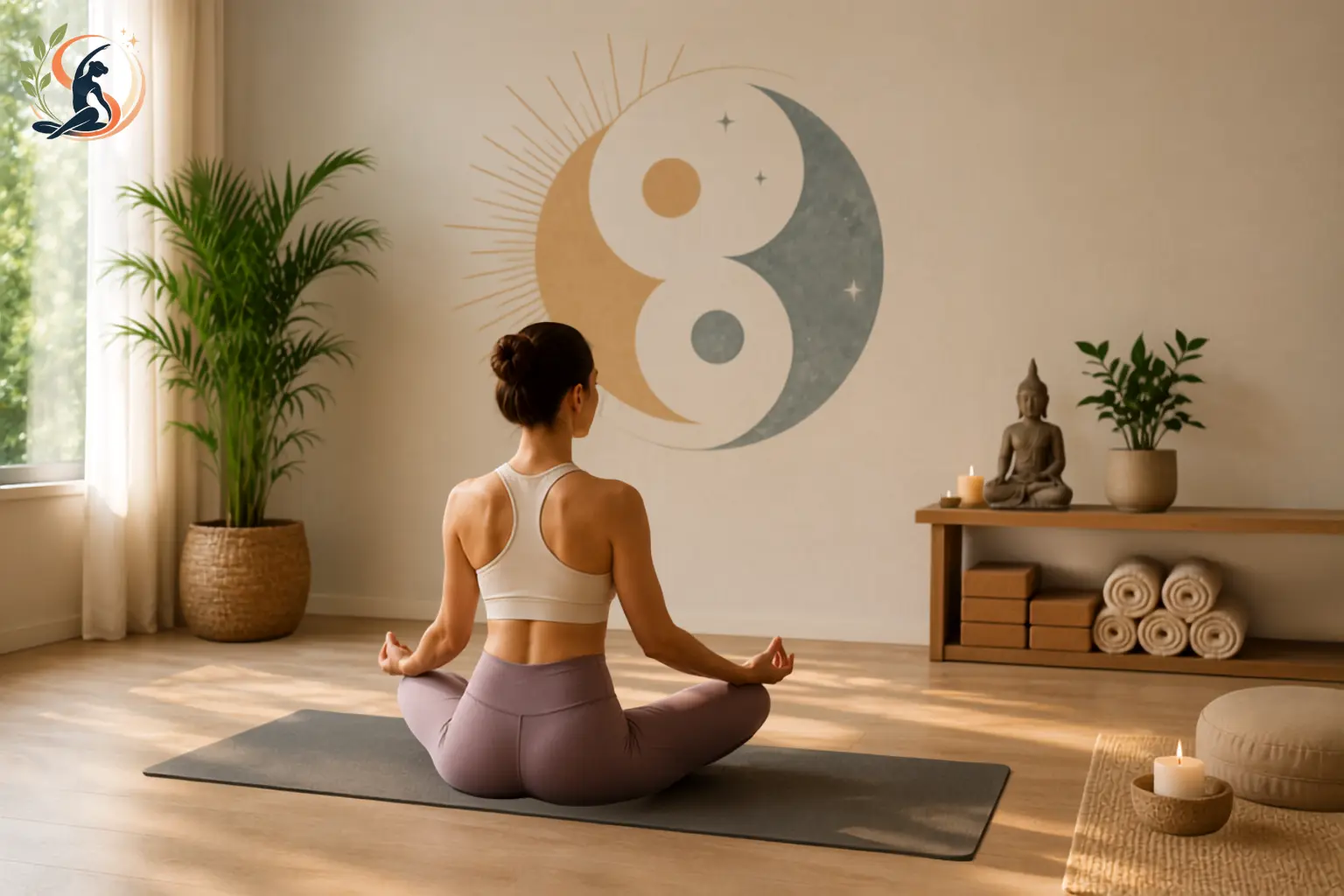
Okay so the word "hatha" comes from two Sanskrit words "ha" meaning sun and "ta" meaning moon. Like yin and yang, the whole practice is built around finding balance between opposing energies in your body and mind. That balance idea runs through everything hatha does.
Hatha yoga has been around since medieval India, where it started as a series of physical purification rituals pretty different from what we practice today. In the mid-20th century, a teacher named T. Krishnamacharya widely called the Father of Modern Yoga and his students completely reshaped it into the physical, pose-based practice most of us recognize now.
Here's where it gets a little confusing though. Technically, "hatha" is a broad umbrella term for any yoga that includes physical poses. So in the widest sense, most yoga styles are technically hatha. But when you actually see "Hatha" listed on a class schedule at your local gym or yoga studio, it means something much more specific, a gentler style where you hold one pose at a time with rest between, instead of flowing nonstop from pose to pose without stopping.
That slower pace is exactly what makes hatha yoga for beginners such a genuinely good fit. You get real time to settle into each position, learn how your body feels in it and actually breathe instead of constantly scrambling to keep up with everyone else in the room.
How Is Hatha Different from Other Yoga Styles?
The most common comparison beginners ask about is hatha versus vinyasa. In vinyasa sometimes called "flow yoga" you move from pose to pose on every single inhale and exhale, creating this continuous flowing rhythm. It's energizing and dynamic, but honestly it can feel completely chaotic if you've never done yoga before.
Hatha is basically the opposite of that. You hold each pose for several breaths, make small adjustments, rest and then move on. That's genuinely it. And that simplicity is exactly why beginners actually stick with it instead of quitting after two classes.
There's also something called "Hatha Flow" which blends both styles with slower transitions but still with some movement between poses. If you spot that on a class schedule, expect something right in between the two.
What Are the Real Benefits of Hatha Yoga?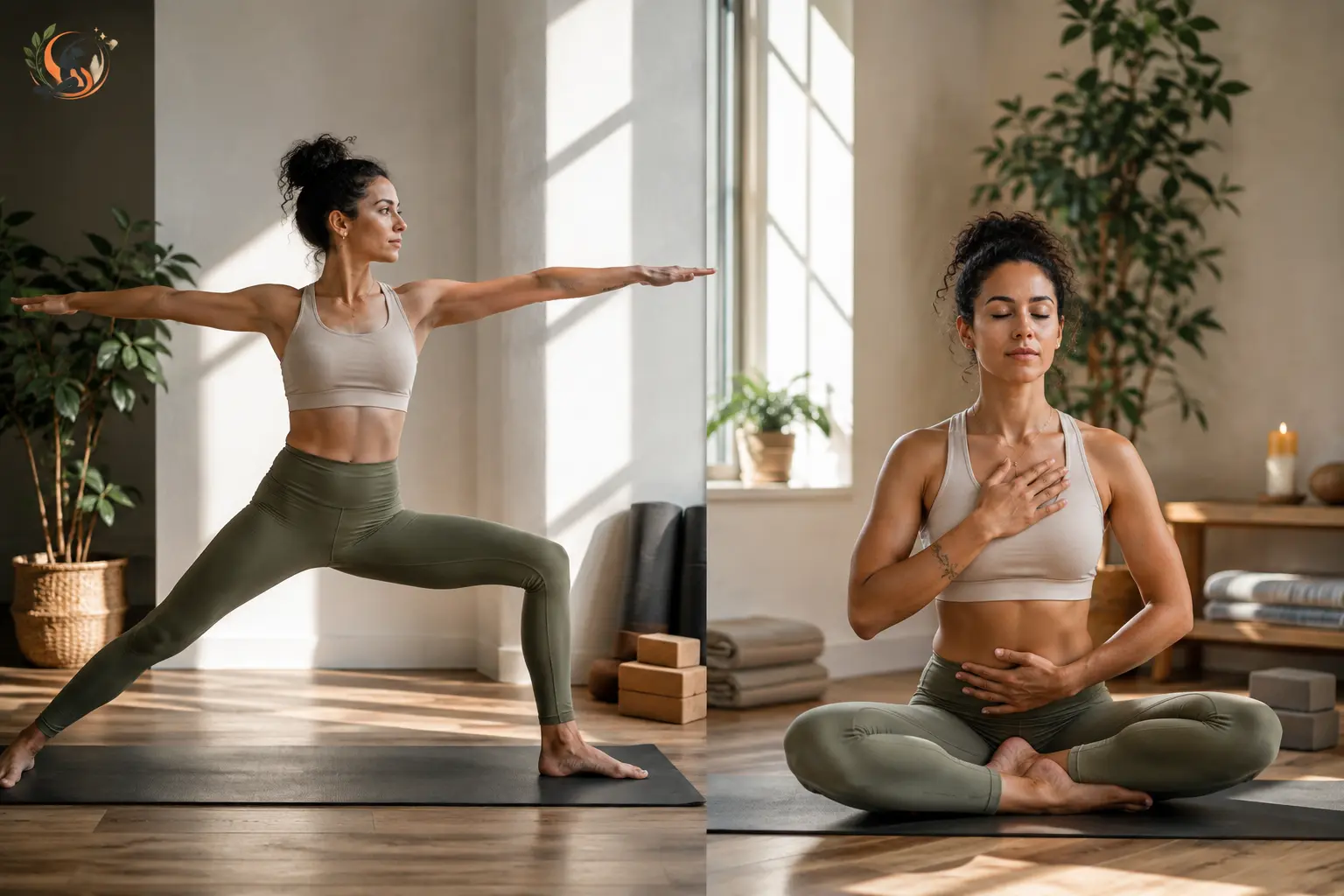
Let's be real about something first. Hatha yoga isn't just stretching and breathing, even though both of those things genuinely matter. There are actual, measurable benefits happening when you practice consistently.
Physical Benefits
You build real strength through hatha especially in your core, legs and upper body just from consistent pose practice over time. Flexibility improves, particularly in your hips, hamstrings and spine, which are the areas most of us have completely neglected from years of sitting at desks. Balance and posture get noticeably better too, because so many hatha poses specifically train your body to stack its joints properly and hold positions with actual control.
Sleep quality often improves for regular practitioners. Part of that comes from the physical relaxation hatha creates in the body and part comes from the breathing and mindfulness elements that genuinely calm your nervous system down before bed. If you've ever struggled to switch your brain off at night, this is worth paying attention to.
Mental and Emotional Benefits
This is honestly the part that surprises most beginners the most. Hatha yoga is legitimately good for your head not in a vague, woo-woo way, but in a real, practical way.
Slow, controlled breathing directly calms your nervous system down. When you focus your attention on your breath and your body during practice, your brain gets a real break from the constant noise of daily life. That kind of intentional rest creates measurable reductions in stress and anxiety over time. It's not magic, it's just your nervous system finally getting a chance to downshift.
Hatha also builds body awareness in a way that sticks with you off the mat. You start noticing when you're hunching at your desk, when you're holding your breath in traffic, when your shoulders have crept up to your ears during a stressful conversation. That awareness, once it develops, genuinely changes how you move through your day.
Spiritual and Well-Being Benefits
Hatha yoga was originally designed as a spiritual practice, built to connect the physical body to energy channels called nadis and energy centers called chakras that run through it. Even if you're not drawn to the spiritual side of yoga at all and plenty of people aren't and that's completely fine, the practice still creates this real sense of grounding and self-connection that's honestly hard to find through anything else.
The 5 Core Elements of Hatha Yoga for Beginners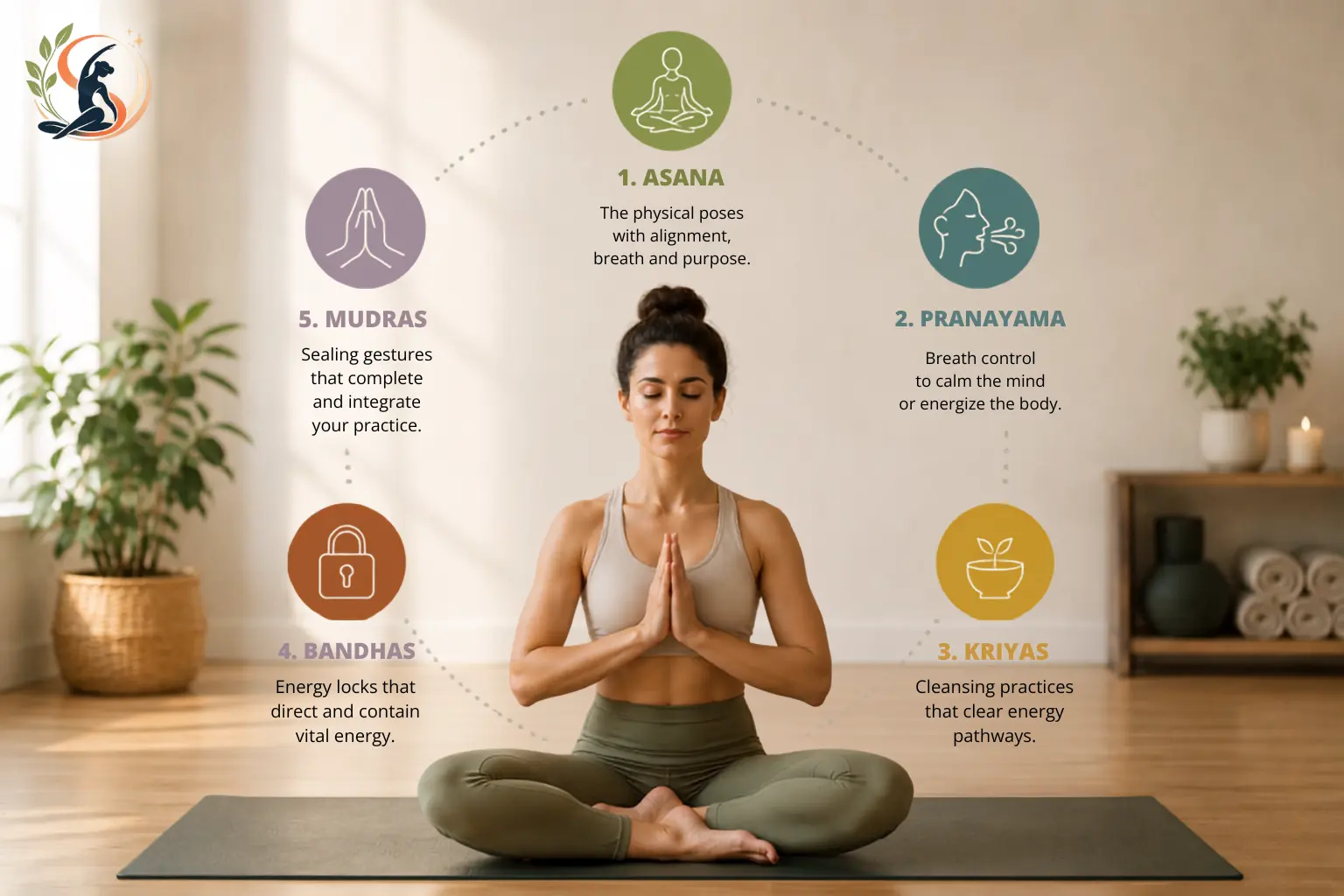
This is the part most beginner guides skip over, which is a shame because understanding all five elements genuinely helps you get more out of every single session. These five pieces work together; they're not separate things.
1. Asana (The Poses)
Asanas are the physical postures the part everyone pictures when they think of yoga. In hatha, they're practiced with real attention to alignment, breath and connecting with the body's energy centers. Each pose has a purpose that goes beyond just targeting a specific muscle group. That deeper purpose is part of what makes hatha yoga for beginners feel different from just a regular stretching class.
2. Pranayama (Breath Control)
Pranayama means intentionally controlling your breath to create a specific effect in your body or mind. There are eight main pranayama practices in hatha yoga altogether. Deep, slow breathing calms your nervous system and mind. Short, sharp breaths like a technique called kapalabhati energize and clear mental fog. Most beginner hatha classes will introduce one or two pranayama techniques per session, so don't feel like you need to memorize all eight right from the start.
3. Kriyas (Cleansing Practices)
Kriyas come from Ayurveda, the ancient Indian system of medicine. These are cleansing techniques designed to clear the body's energy pathways and remove blockages. In a modern hatha class, this might show up as specific breathing exercises that clear the respiratory system or movement sequences that stimulate digestion. The whole idea is to leave practice feeling genuinely cleaner and lighter than when you walked in and it works.
4. Bandhas (Energy Locks)
Bandhas are internal muscular engagements that lock energy into the body during and after practice. The three main ones are mula bandha engaging your pelvic floor, uddiyana bandha drawing your lower abdomen in and up and jalandhara bandha a chin lock. These aren't usually introduced in the very first beginner class and that's fine. But knowing they exist helps you understand there are deeper layers to hatha yoga waiting when you're ready.
5. Mudras (Sealing Gestures)
Mudras are hand gestures and sometimes whole-body positions used to seal in the energy of a completed practice. You've almost certainly seen the classic prayer hands at the end of a yoga class. That's Anjali Mudra. Mudras are the final layer of a complete hatha practice, a conscious way of closing your session and carrying everything you've built into the rest of your day.
How to Set Up and Start Your Practice
Before getting into poses, here's what you actually need to know about the practical setup stuff that most guides breeze past.
Your Practice Space
You genuinely don't need much room at all. Just enough space to lay your mat down and extend your arms and legs in all directions without hitting furniture. A quiet corner of a bedroom works perfectly fine. Try to clear the area as much as you can, especially for balance poses where visual clutter actually makes staying balanced harder. Good lighting helps when natural light is best, but not necessary.
What Equipment Do You Actually Need?
Your yoga mat is the only truly essential piece of equipment. That's genuinely it. Everything else blocks, blankets, straps, bolsters can all be improvised with things you already have at home. A folded blanket works as a bolster. A stack of sturdy books works as a block. A belt or a necktie works as a strap. Please don't let not having expensive props be the reason you delay starting.
As your practice grows, props become legitimately useful not as a sign of weakness or inadequacy, but as tools that help you hold poses correctly while your body is still opening up. There's no shame in using them.
What to Wear
Stretchy, comfortable clothes. Leggings, sweatpants, athletic shorts, sports bras, tank tops all completely fine. The one thing to avoid is big, loose t-shirts, because they flop over your head during forward bends and inversions, which is both annoying and actually makes it harder to breathe properly. Yoga is always done barefoot, so no shoes or socks are needed.
How Often Should You Practice?
Two to three one-hour sessions per week is a really solid starting goal for hatha yoga for beginners. If that feels like too much right now given your schedule, five shorter 20 to 30-minute sessions can actually build the habit faster. Here's the honest truth though the length of each session matters way less than showing up consistently. Even ten minutes on your mat counts and genuinely adds up over weeks and months.
10 Hatha Yoga Poses for Beginners
These are the core hatha yoga poses for beginners. Each one connects to a specific chakra the body's energy centers which is part of what makes hatha yoga feel like more than just physical exercise.
1. Child's Pose (Balasana) Root Chakra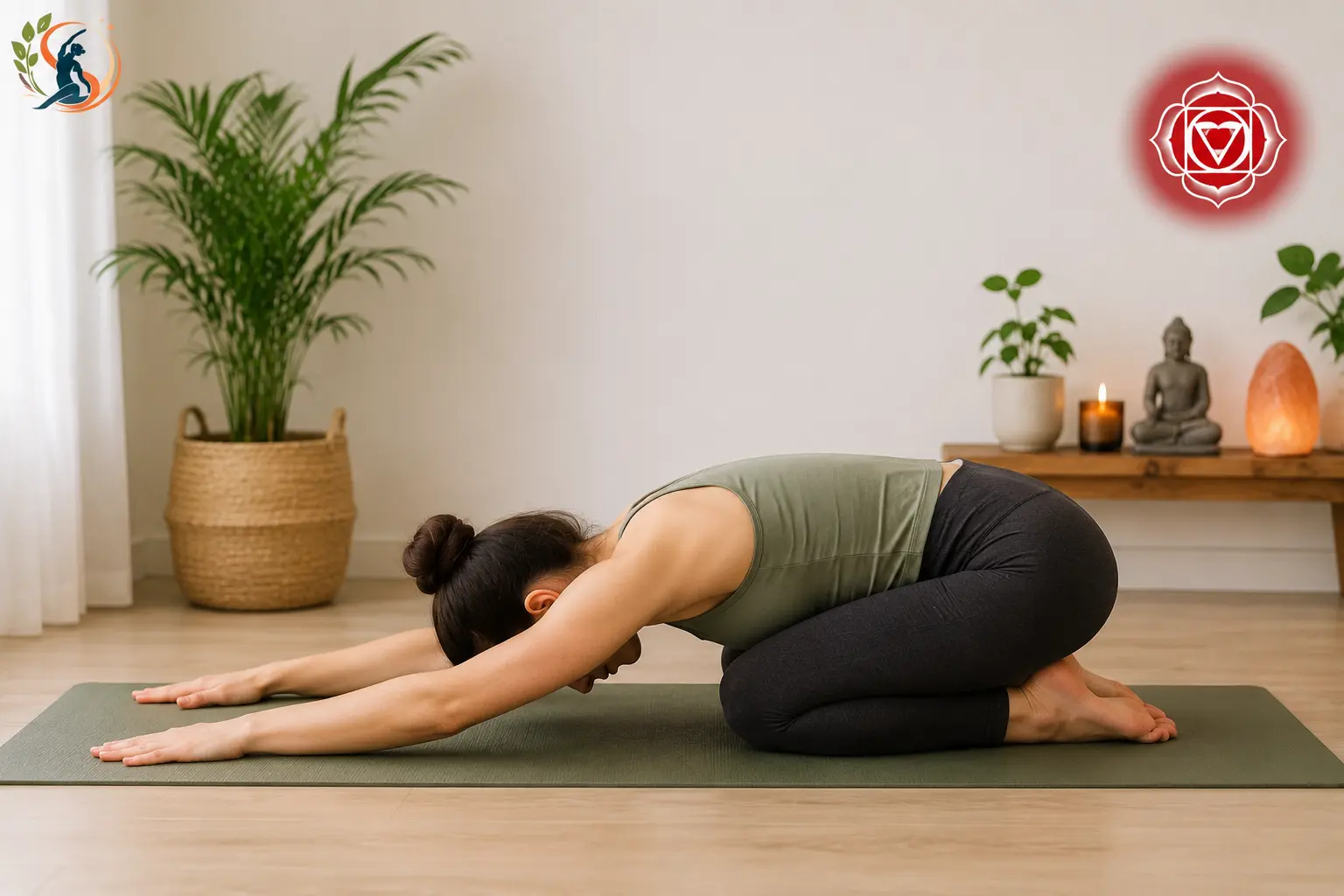
Kneel on your mat, sit your hips back toward your heels and reach your arms forward along the mat. Let your forehead rest on the mat and breathe slowly and deeply, feeling your ribcage expand with each inhale.
This is your reset button in hatha practice. It connects to the Root Chakra, your energy center associated with feeling safe, grounded and supported. Use it any time during class when you need a break. No explanation to anyone required just lower down, breathe and take what you need.
2. Cat/Cow Pose (Marjaryasana-Bitilasana) Sacral Chakra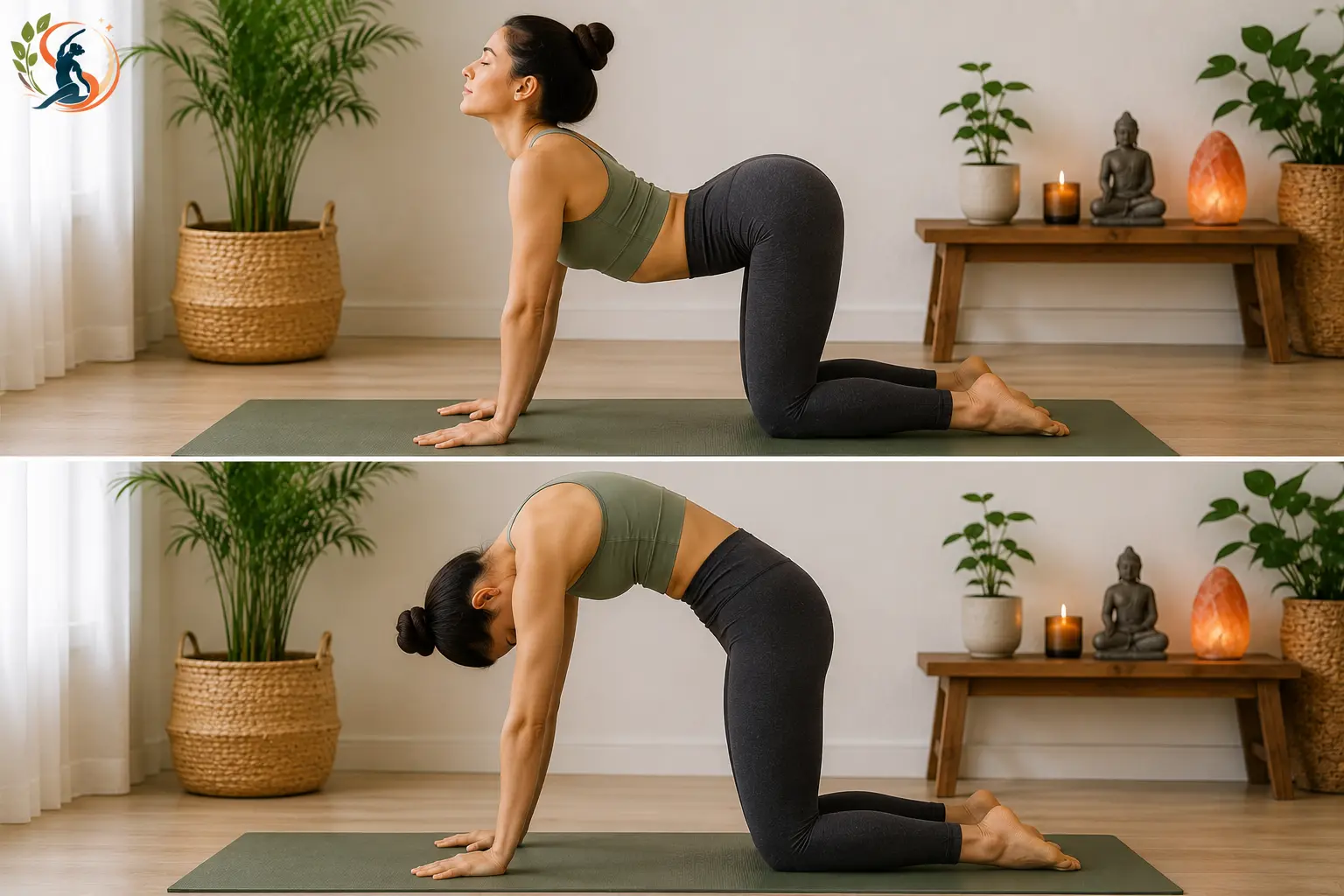
Come onto hands and knees with wrists under your shoulders and knees under your hips. Inhale and drop your belly toward the mat, lifting your chest and tailbone. That's a cow. Exhale and round your spine up toward the ceiling, tucking your chin and tailbone, that's Cat. Move slowly and continuously back and forth, letting your breath lead the movement rather than the other way around.
This pose is essential in hatha yoga for beginners because it teaches the fundamental concept that breath drives movement. If you can truly coordinate the two here, you can apply that skill to more complex sequences later.
3. Downward Facing Dog (Adho Mukha Svanasana) Solar Plexus Chakra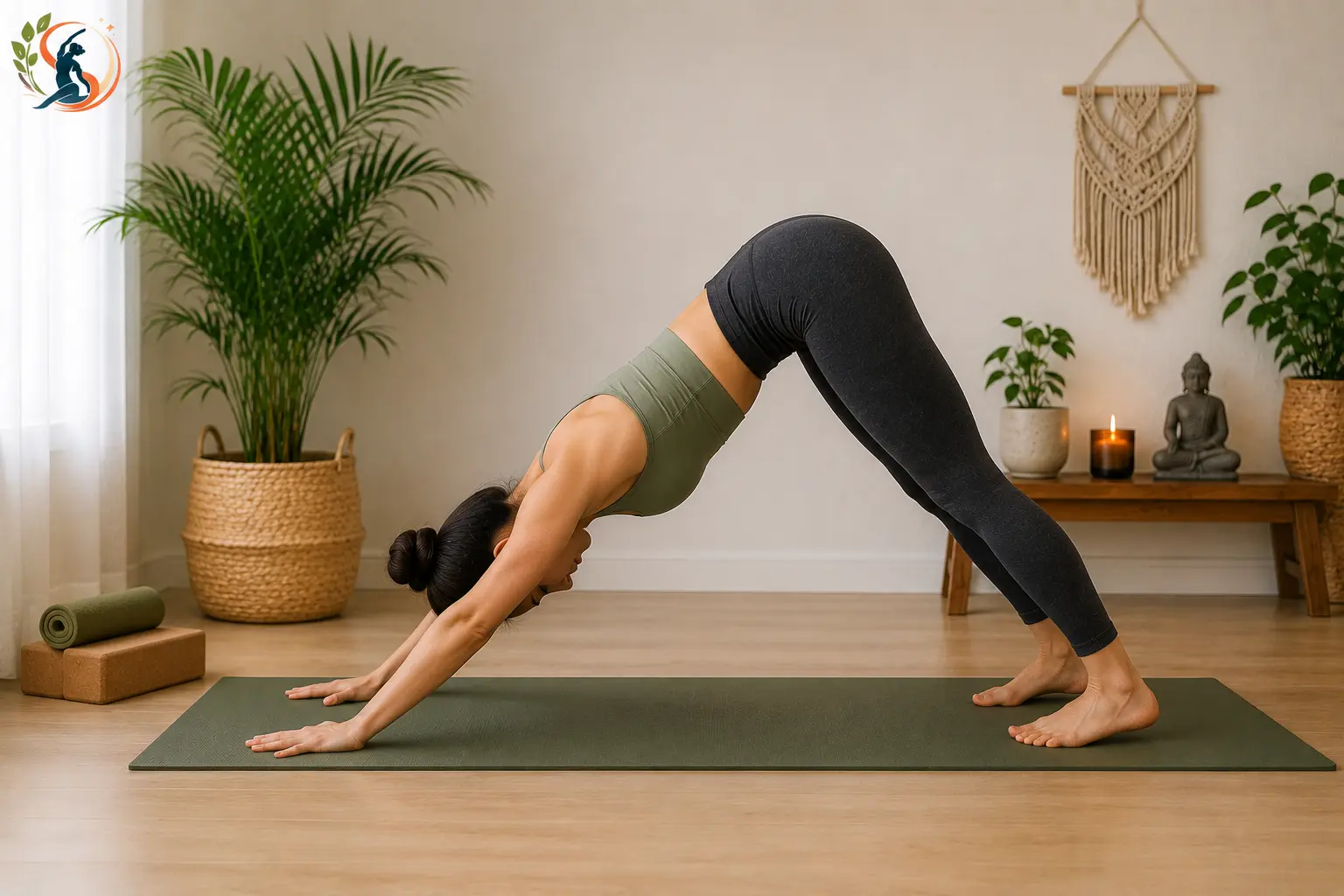
From hands and knees, tuck your toes under and lift your hips up and back into an inverted V shape. Press your hands firmly and evenly into the mat, keep your arms straight and let your heels drop toward the floor. They don't have to touch, especially not when you're just starting out.
If you've only ever heard of one yoga pose, it's probably this one. In hatha practice it functions as a full-body stretch that simultaneously builds arm and shoulder strength. With regular practice it genuinely starts to feel like a resting pose rather than a challenging one.
4. Mountain Pose (Tadasana) Root Chakra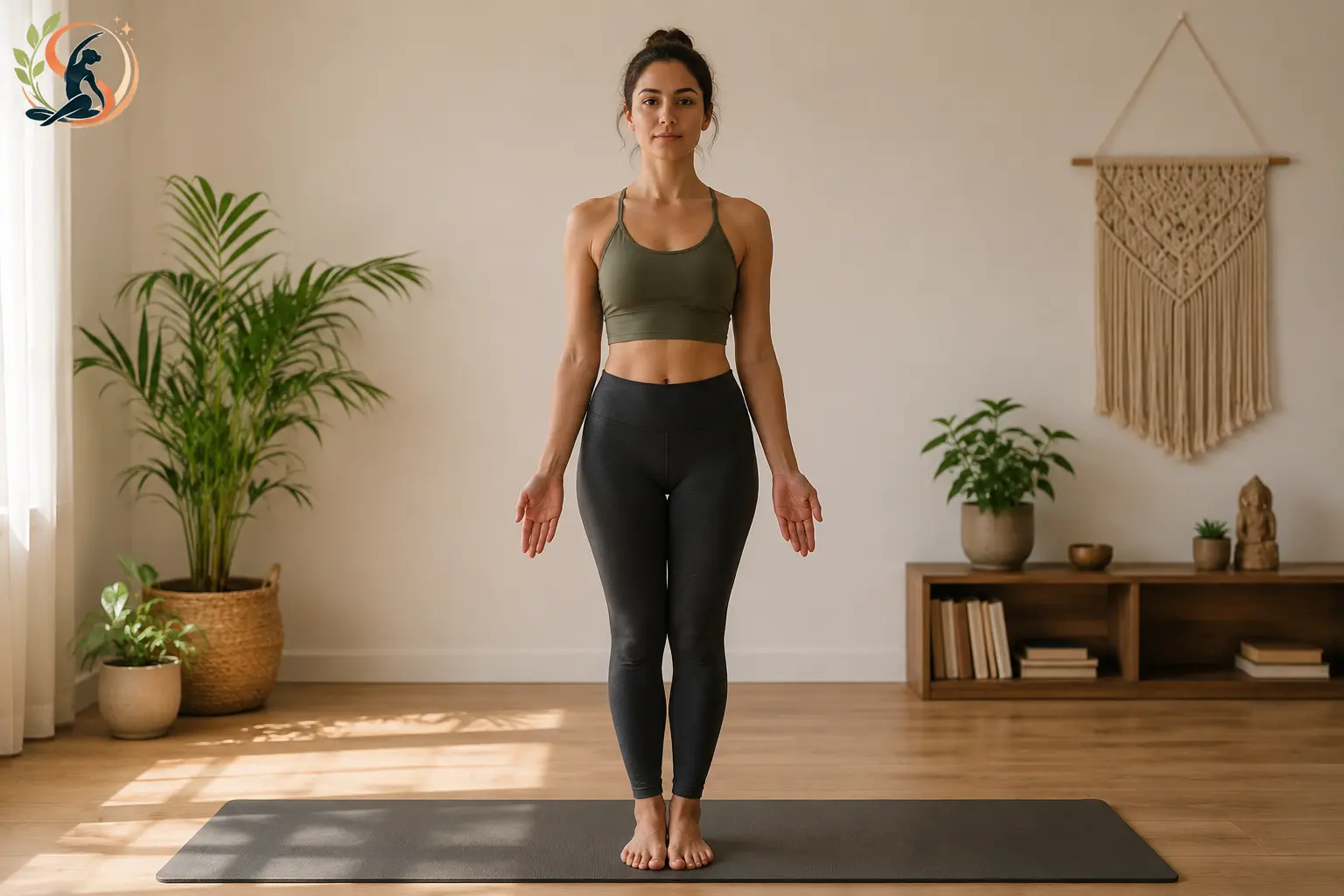
Stand with your feet together or hip-width apart, arms relaxed at your sides with palms facing forward. Stack your joints carefully, knees over ankles, hips over knees, shoulders over hips. Lengthen through the crown of your head and breathe steadily.
Mountain Pose looks like just standing there and a lot of beginners underestimate it completely. It's actually one of the most important foundational poses in all of hatha yoga because it teaches you what proper alignment actually feels like in your body. Everything else you do builds directly from this.
5. Standing Forward Fold (Uttanasana) Sacral Chakra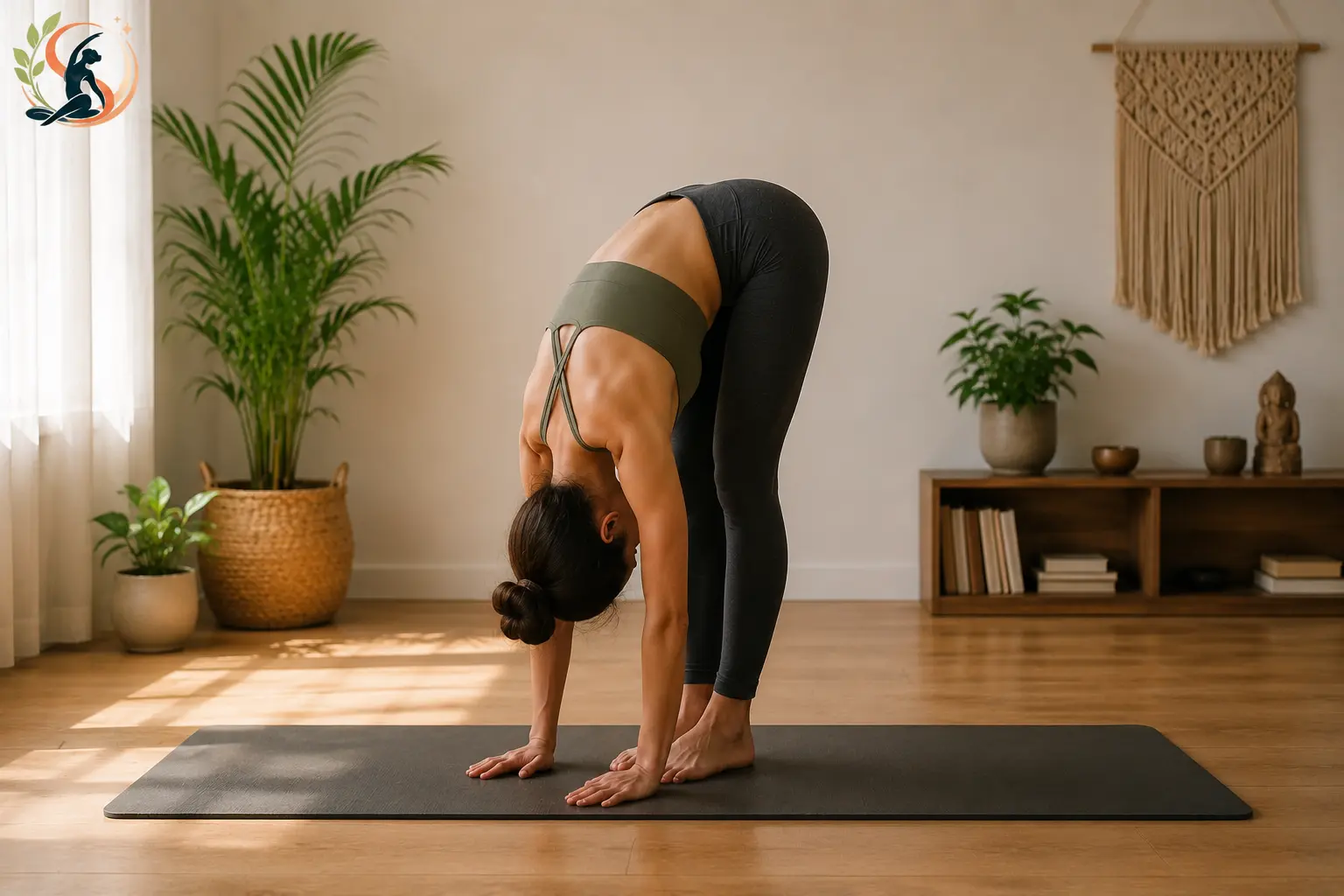
From Mountain Pose, hinge at your hips and fold your upper body forward, letting it hang heavy toward the floor. Bend your knees as generously as you need to, touching your toes is absolutely not the goal here. Releasing tension in your hamstrings and lower back is the whole point.
Tight hamstrings are one of the most common reasons people come to yoga in the first place. Standing Forward Fold is one of the most effective poses for creating more space there, slowly and safely, over time.
6. Tree Pose (Vrksasana) Root Chakra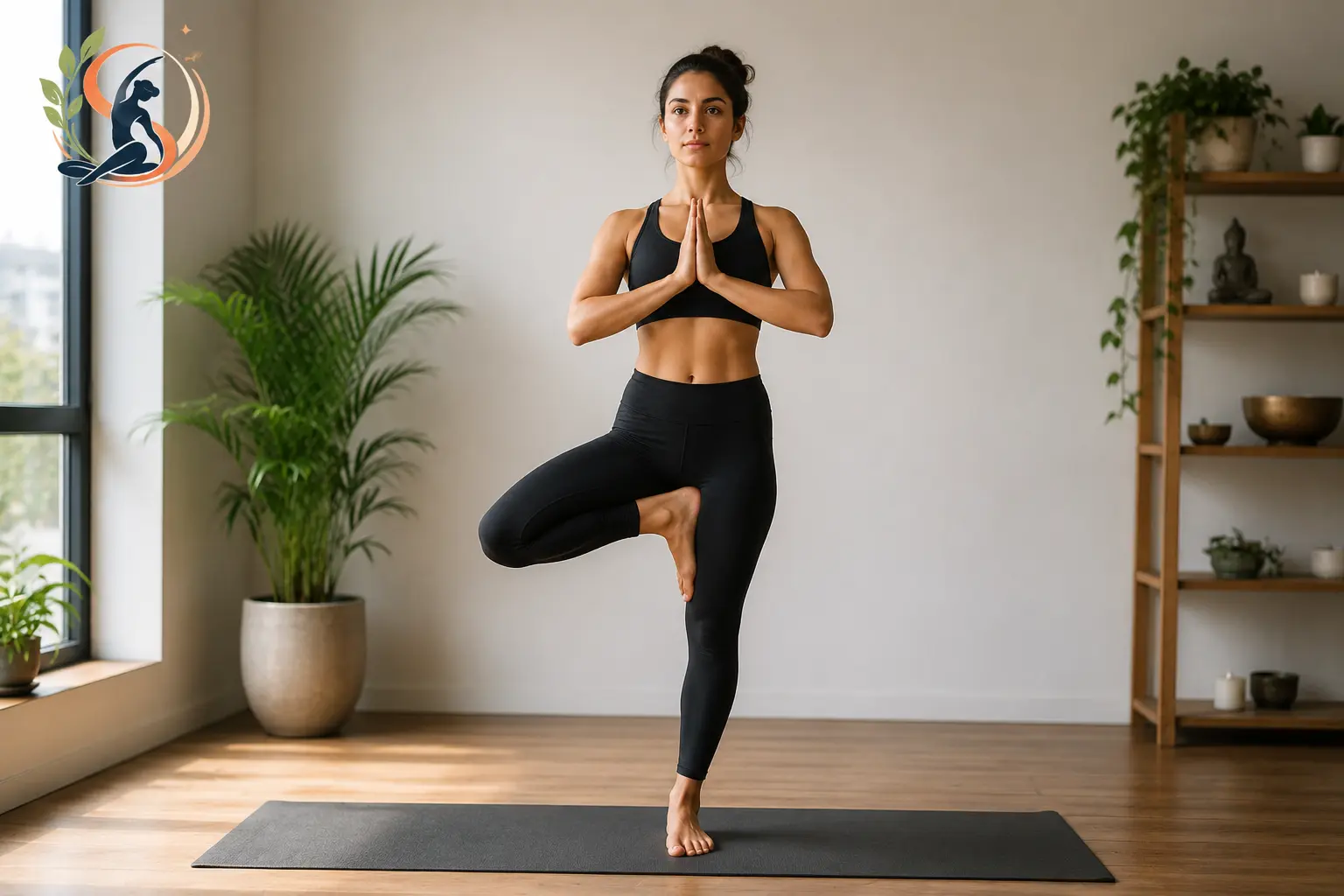
Stand on one foot. Place the sole of your other foot flat against your inner calf or inner thigh never directly on your knee joint. Press your hands together at your chest or stretch your arms overhead. Fix your gaze on a single still point directly in front of you and breathe.
Tree Pose builds single-leg strength, balance and mental focus all at once. It's also a genuinely satisfying progress tracker. Five shaky breaths in this pose when you first start versus five calm, steady breaths six months later shows you exactly how far you've come.
7. Warrior I (Virabhadrasana I) Throat Chakra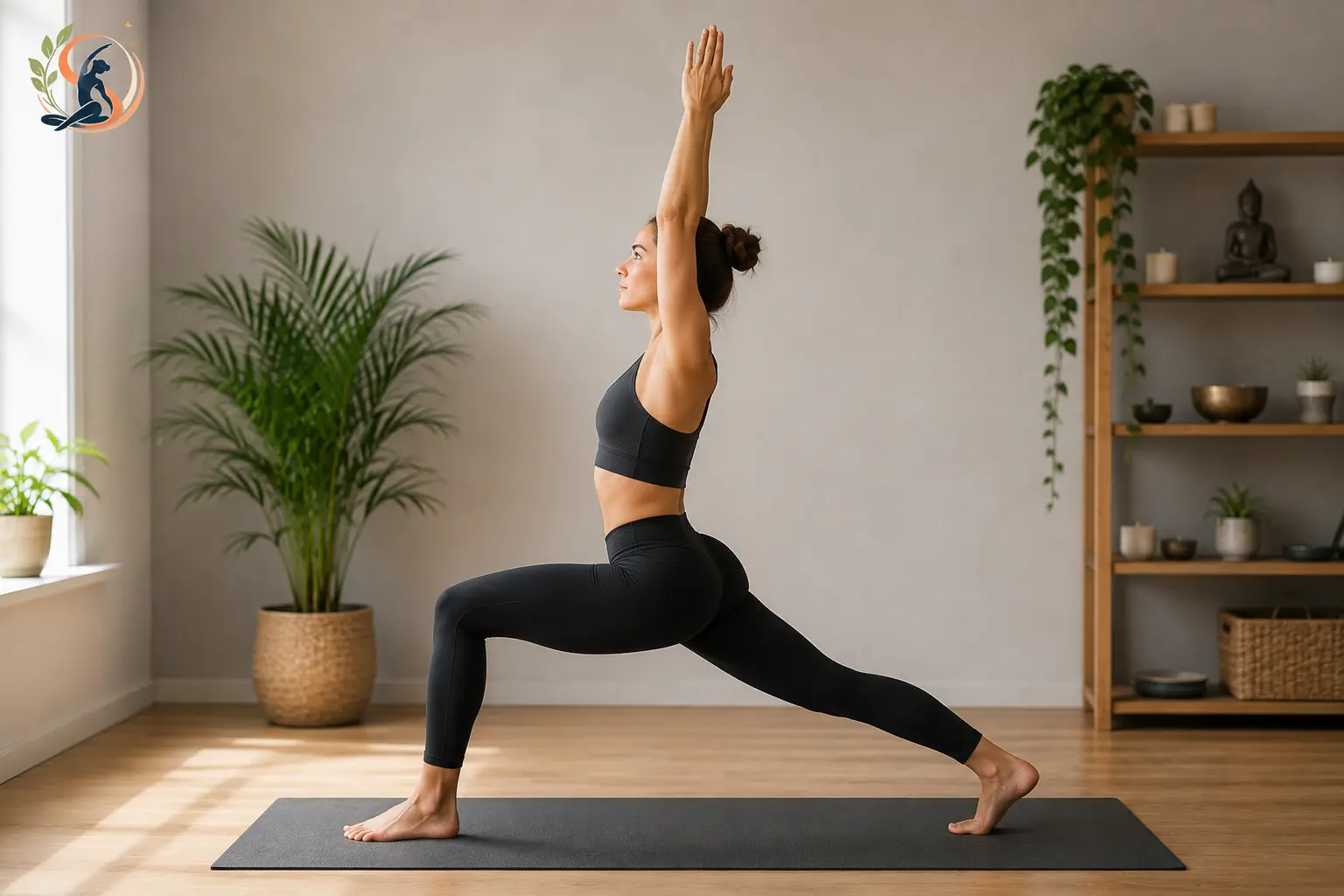
Step one foot forward into a deep lunge, keeping your front knee directly over your ankle. Turn your back foot out to roughly 45 degrees. Square your hips toward the front of the mat as much as you can, then raise both arms straight overhead. Look forward or slightly upward.
Warrior I builds serious leg strength and hip flexibility simultaneously. It connects to the Throat Chakra, the energy center associated with authentic expression and truth. If anxiety is something you work with regularly, this grounding, powerful stance can help you feel noticeably more centered.
8. Warrior II (Virabhadrasana II) Sacral Chakra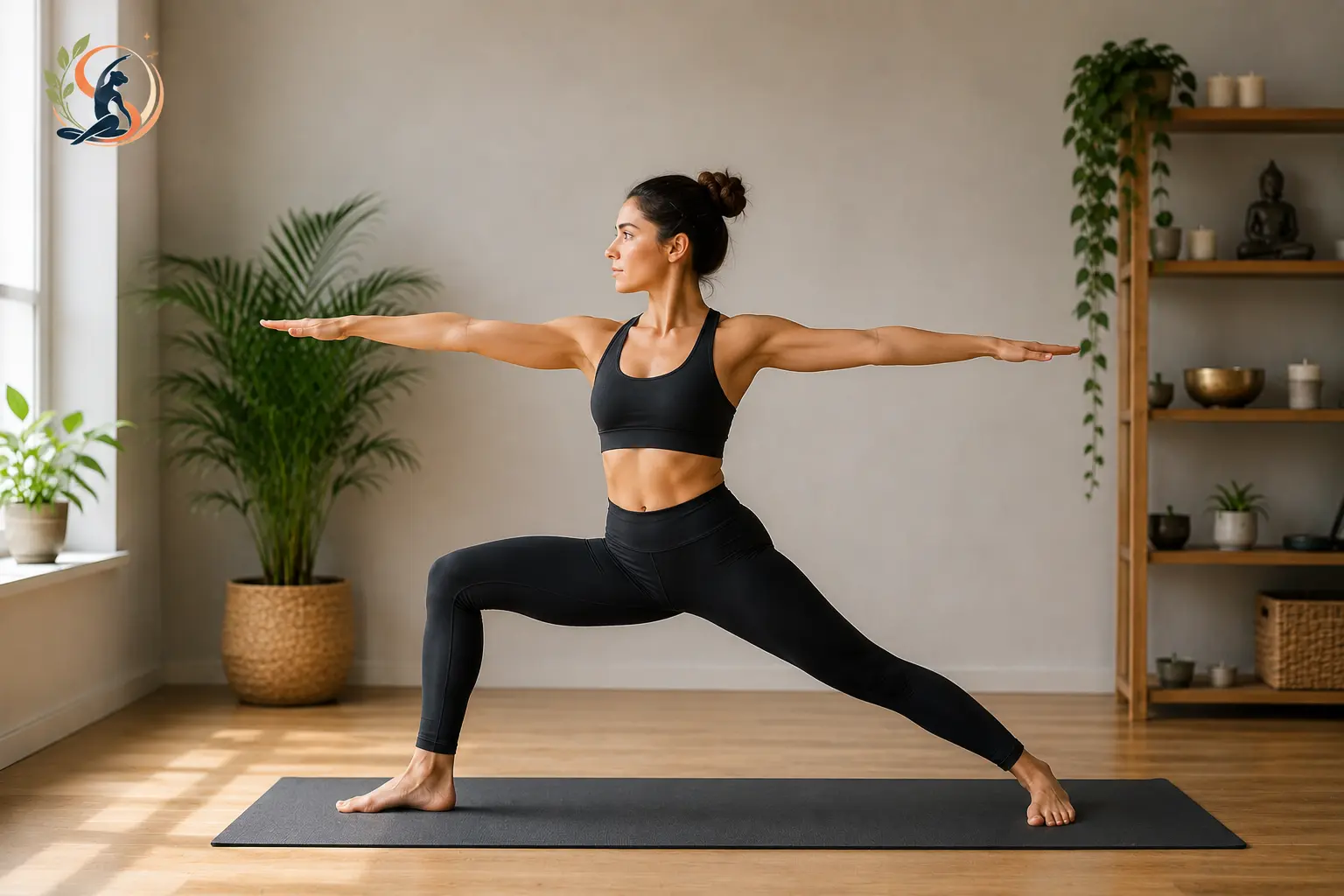
From Warrior I, open your arms wide in opposite directions, front arm reaching toward the front of the mat, back arm reaching behind you. Turn your gaze out over your front fingertips. Front knee stays bent, back leg stays long and engaged.
Warrior II builds lower body endurance and opens the hips in a different way than Warrior I. Moving between the two poses also introduces beginners to the idea of flowing from pose to pose, even within the slower pace of a hatha class.
9. Bridge Pose (Setu Bandhasana) Heart Chakra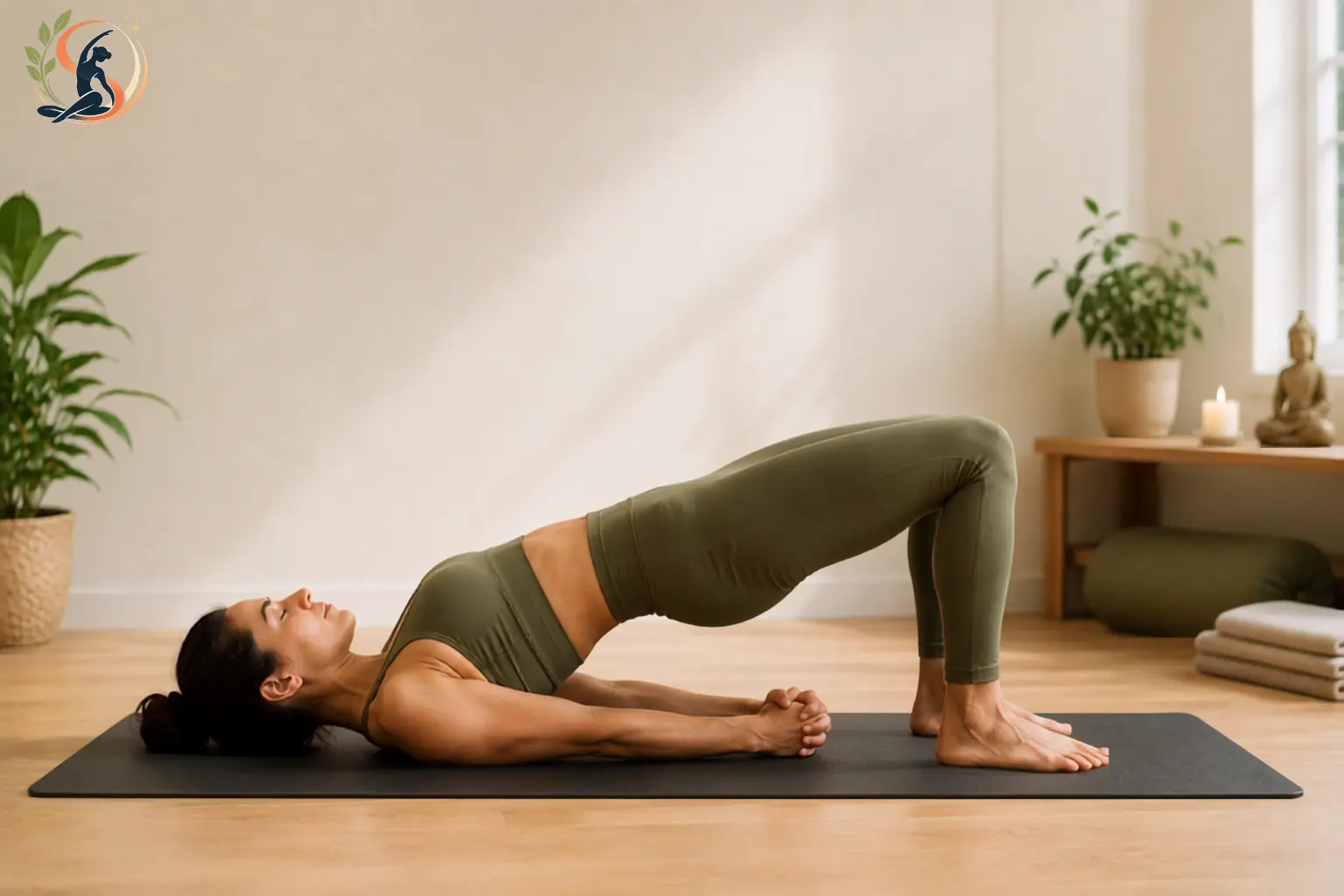
Lie on your back with your knees bent and feet flat on the mat hip-width apart. Press your feet firmly down into the mat and lift your hips toward the ceiling. You can clasp your hands together under your back if that feels comfortable, pressing your arms down for extra support.
Bridge Pose opens the chest and front of the body exactly what the Heart Chakra governs, which is openness and emotional connection. It also serves as a beautiful counterpose to all the forward folding that hatha sequences typically include. Most people find it deeply satisfying to hold.
10. Cobra Pose (Bhujangasana) Throat Chakra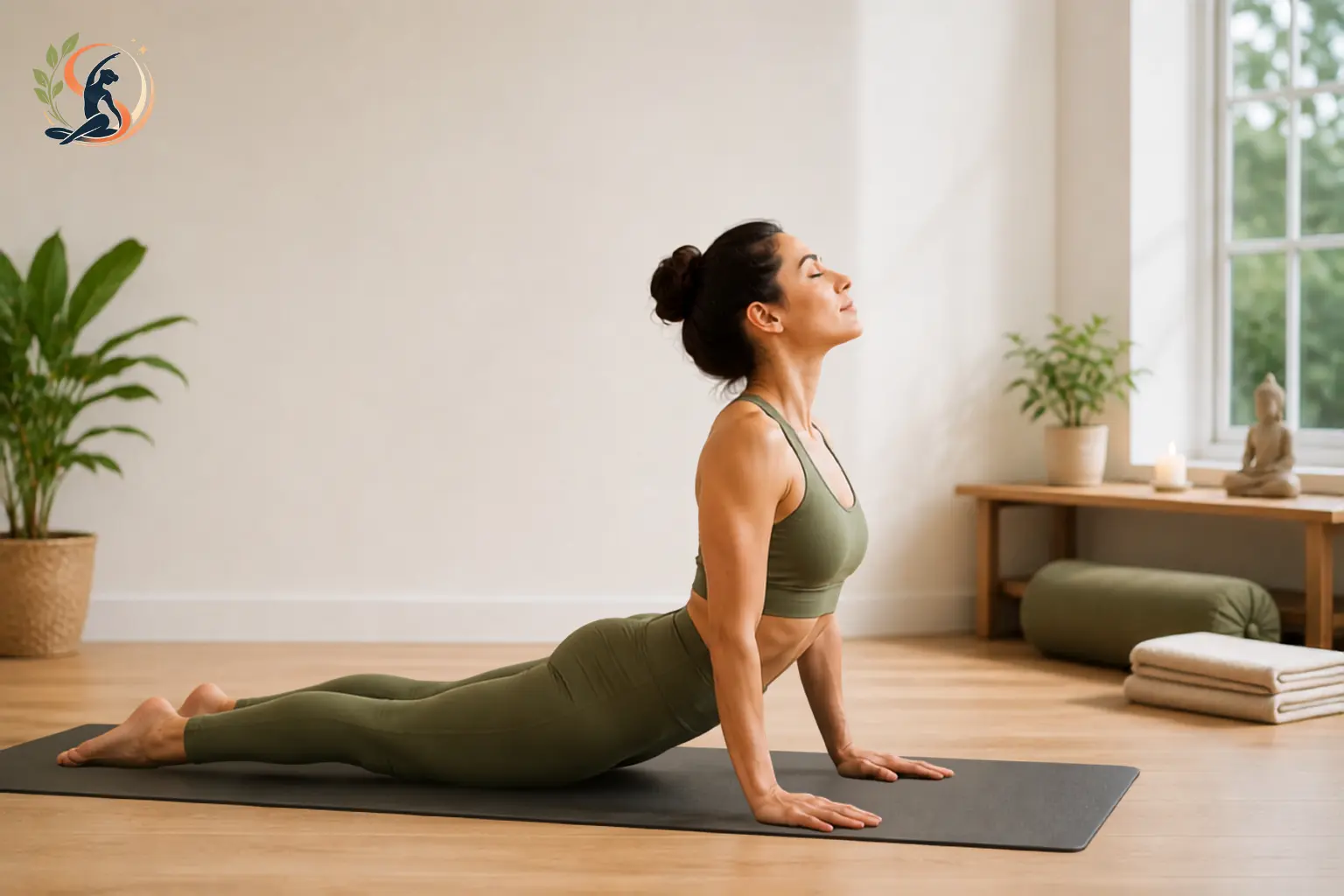
Lie on your belly with your hands placed directly under your shoulders. On an inhale, gently press your hands into the mat and lift your chest, keeping your elbows slightly bent and your shoulders rolled back and down away from your ears. Hold for a few breaths, then slowly lower back down with control.
Cobra is a gentle spinal opener that works beautifully as a closing pose for a beginner hatha sequence. Keep the lift small, especially at first a low Cobra with honest, proper form will do far more good than a dramatic lift with a crunched lower back.
Common Challenges for Beginners (And What to Actually Do About Them)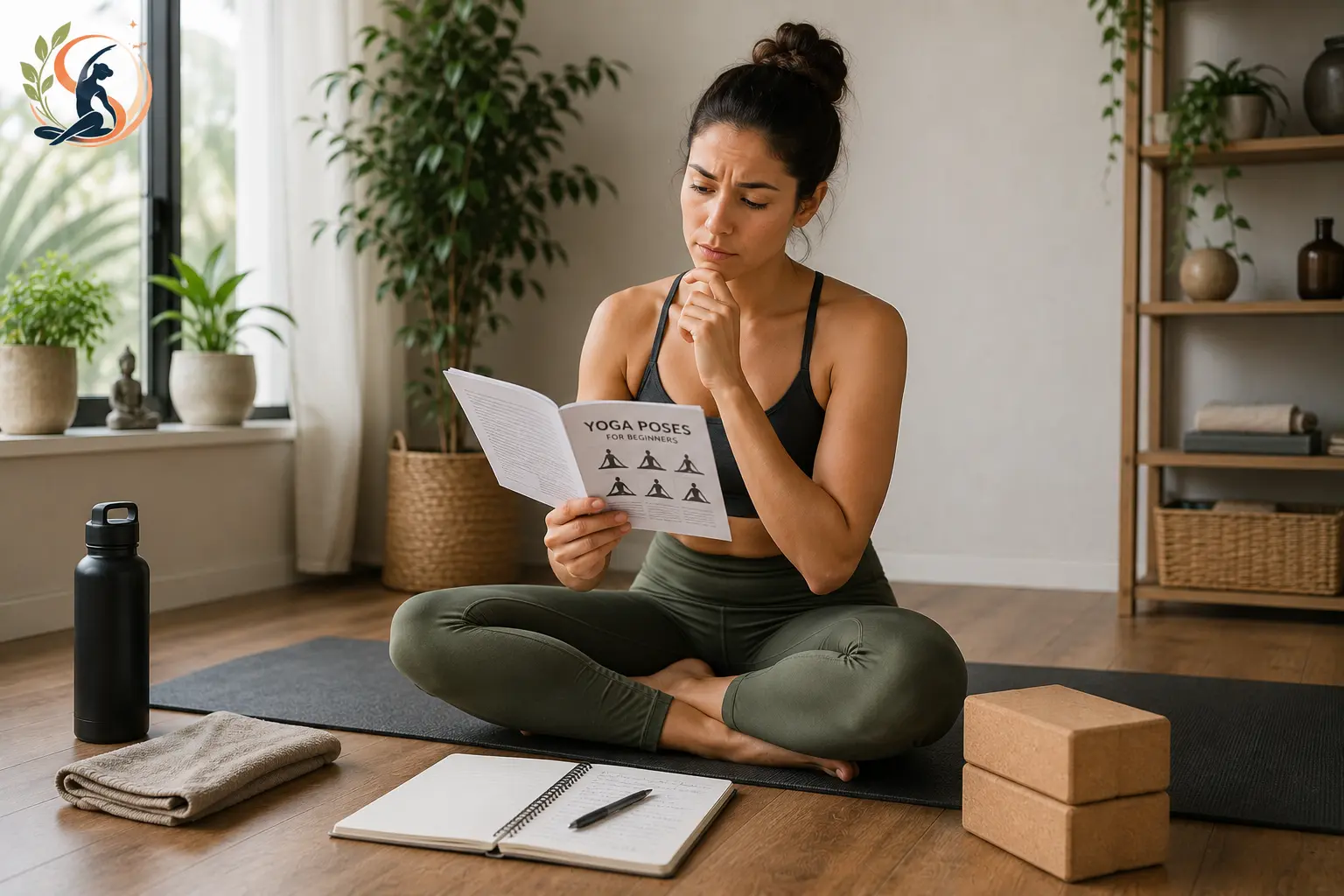
Knowing these challenges exist before you hit them makes them way easier to navigate when they show up and they will.
Physical Stiffness and Limitations
Hatha yoga introduces your body to positions it genuinely isn't used to. Some poses will feel accessible right away. Others will feel nearly impossible at first. Both experiences are completely normal and expected. Don't judge yourself for where your body is today and please don't push past actual pain. Mild stretching discomfort is expected and fine sharp, pinching or joint pain is a clear signal to back off immediately.
Muscle Soreness After Your First Few Sessions
Feeling sore in places you didn't know could get sore after your first few sessions is very common, especially in the hips, hamstrings and inner thighs. An Epsom salt bath can help significantly. Gentle movement the next day often does more than complete rest soreness frequently gets worse if you just lie still and wait it out.
Struggling with Breath Control
Coordinating breath with movement feels awkward and unnatural at first for literally everyone. If you're not sure when to inhale or exhale in a specific pose, just keep breathing steadily and evenly. Whatever you do, don't hold your breath. The breath-movement connection develops naturally with practice, not through trying to force it into place.
Forgetting Poses Mid-Class
You will forget what comes next. You'll look around the room to see what other people are doing. You'll feel behind sometimes. That's completely normal beginner behavior and no one is judging you for it. Over time the sequences become genuinely familiar and you stop thinking about them consciously they just happen.
Building Consistency
Getting on your mat consistently two or three times a week is honestly harder than any individual yoga pose, especially in the beginning. Taking a structured beginner series at a studio with the same class, same days, same people each week is one of the most reliable strategies for building the habit. Once you find a class you genuinely look forward to attending, you'll actually want to show up.
Tips for a Safe and Enjoyable Practice
Take a class in person if you possibly can. Even just one or two in-person sessions is worth it. Your teacher can actually see your alignment, make real adjustments and give you feedback that any video simply cannot provide.
Listen to your body every single session. If something doesn't feel right, modify the pose or rest in Child's Pose. This is one of yoga's most important teachings and it starts on day one.
Always come back to your breath. If you lose track of everything else during a challenging class, your breath is always there waiting to anchor you right back.
Start small and stay consistent. Ten minutes of regular practice genuinely beats an hour-long session once a month. Every single time you show up, even briefly, it counts and accumulates over time.
A Simple 10-Minute Hatha Yoga Routine for Beginners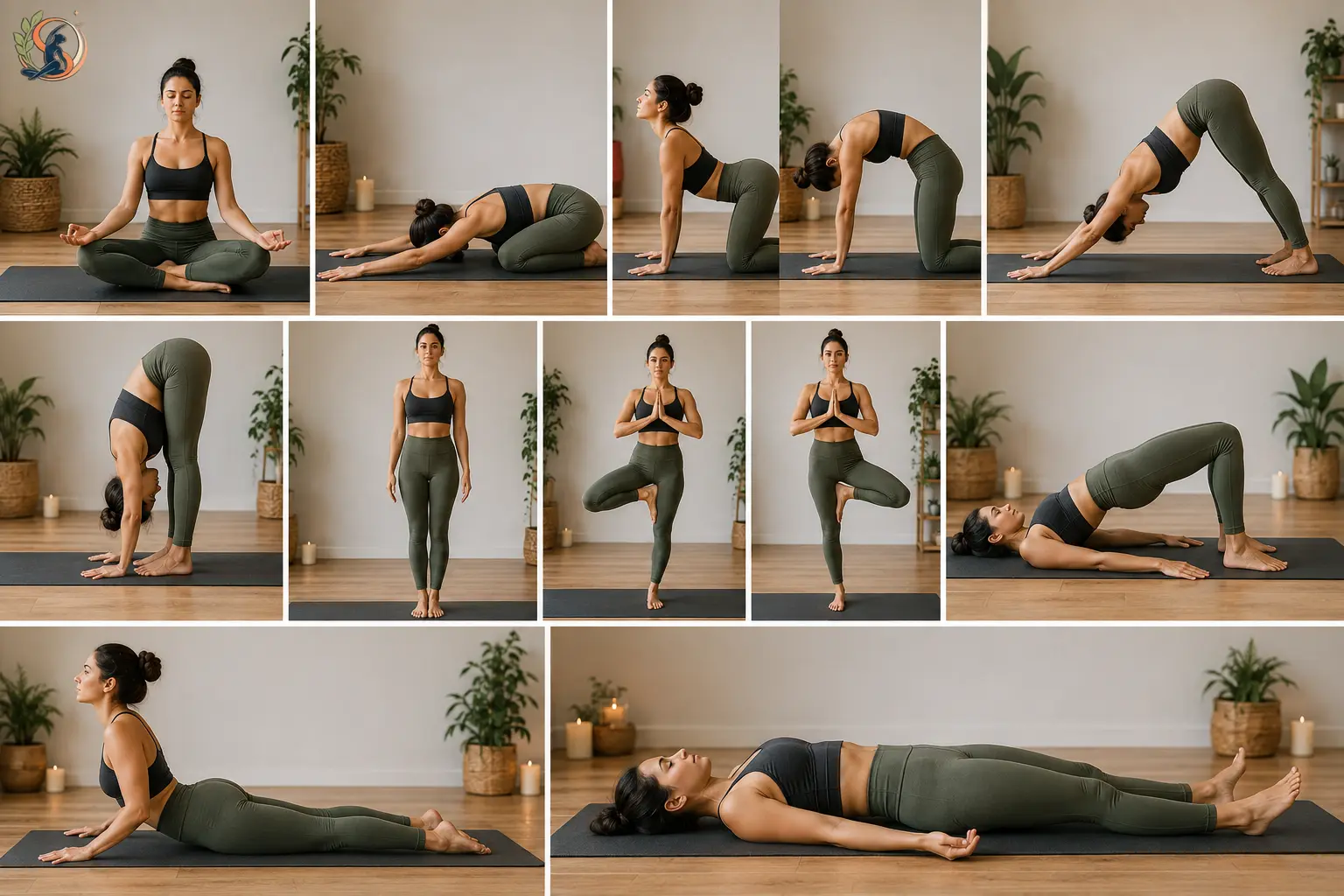
Want to try a sequence at home today? Here's a simple one using every pose from this guide.
Start seated with one to two minutes of slow, deep breathing just letting your body arrive and settle. Move into Child's Pose for three to five breaths. Come onto hands and knees for five full rounds of Cat/Cow, letting your breath lead completely. Press back into Downward Dog and hold for five breaths. Walk your feet to your hands and slowly rise up to Mountain Pose.
Hold and breathe for five full breaths. Fold forward into the Standing Forward Fold and hang for a few breaths. Return to standing and try Tree Pose on each side. Lower to the mat for Bridge Pose, hold five breaths. Finish with Cobra Pose, hold three to five breaths. Then lie flat on your back for two to three minutes in Savasana Corpse Pose letting your body completely absorb the practice.
That's a complete hatha practice. Ten to fifteen minutes. No equipment required beyond a mat and a quiet space.
Frequently Asked Questions
1. What is a basic Hatha Yoga routine for beginners?
Start with a minute or two of deep breathing, flow through Child's Pose and Cat/Cow, build through Mountain Pose, Warriors and Tree, then finish with Bridge and Cobra. Always end with a few quiet minutes in Savasana to let the practice settle.
2. What are the 12 basic Hatha Yoga poses?
Child's Pose, Cat/Cow, Downward Dog, Mountain, Standing Forward Fold, Tree, Warrior I, Warrior II, Bridge, Cobra, Seated Forward Bend and Corpse Pose. These cover the core movement patterns in almost every beginner hatha class across the US.
3. How is Hatha Yoga different from normal yoga?
Most "regular" yoga classes are vinyasa; you flow continuously between poses without stopping. Hatha is slower. You hold each pose for several breaths before moving on, which gives beginners real time to learn alignment and actually feel what each pose is doing.
4. How many poses are in a Hatha class?
A typical 60-minute beginner hatha class works through around 10 to 20 poses, depending on how long each pose is held. Quality of attention in each pose matters far more than getting through a long list.
5. Do I need to be flexible to start Hatha Yoga for beginners?
Not at all. Flexibility is what you develop through practice, not what you need before starting. Every pose in hatha yoga can be modified to meet your body exactly where it is right now.
6. How often should a beginner practice Hatha Yoga?
Two to three times a week is a great starting goal. Even one session a week creates genuine benefits. Short daily practices of 10 to 15 minutes often build the consistency habit faster than trying to do longer sessions less frequently.
Conclusion
Hatha yoga for beginners is genuinely one of the most forgiving, accessible and quietly transformative practices you can start. The slower pace gives you real time to actually learn your own body, your alignment, your breath patterns, your tension habits. The poses build real strength and flexibility without requiring any prior experience or fitness level. And the five elements asana, pranayama, kriyas, bandhas and mudras connect the whole practice to something that goes much deeper than just physical exercise.
You don't need to nail every pose on day one. You don't need to be flexible, strong or experienced before you start. You just need a mat, a quiet space and the willingness to show up. Everything else builds from there, one session at a time.


Comments (0)
No comments yet. Be the first to share your thoughts!
Leave a Comment