
I still remember wobbling through my first triangle pose in a crowded studio class, completely unsure whether my hips were even facing the right direction. My teacher walked over, adjusted my back foot about two inches and suddenly the whole pose just made sense. That tiny fix taught me more than months of just following along ever honestly.
This guide breaks down triangle pose and a handful of other foundational yoga poses every beginner runs into early on, mountain pose, cat-cow, downward dog and warrior pose included. Well cover how to actually do each one, common mistakes and the little alignment cues that make a real difference.
Ready to stop guessing your way through class? Let's get into the poses that actually build your whole practice.
Why Foundational Yoga Poses Matter So Much
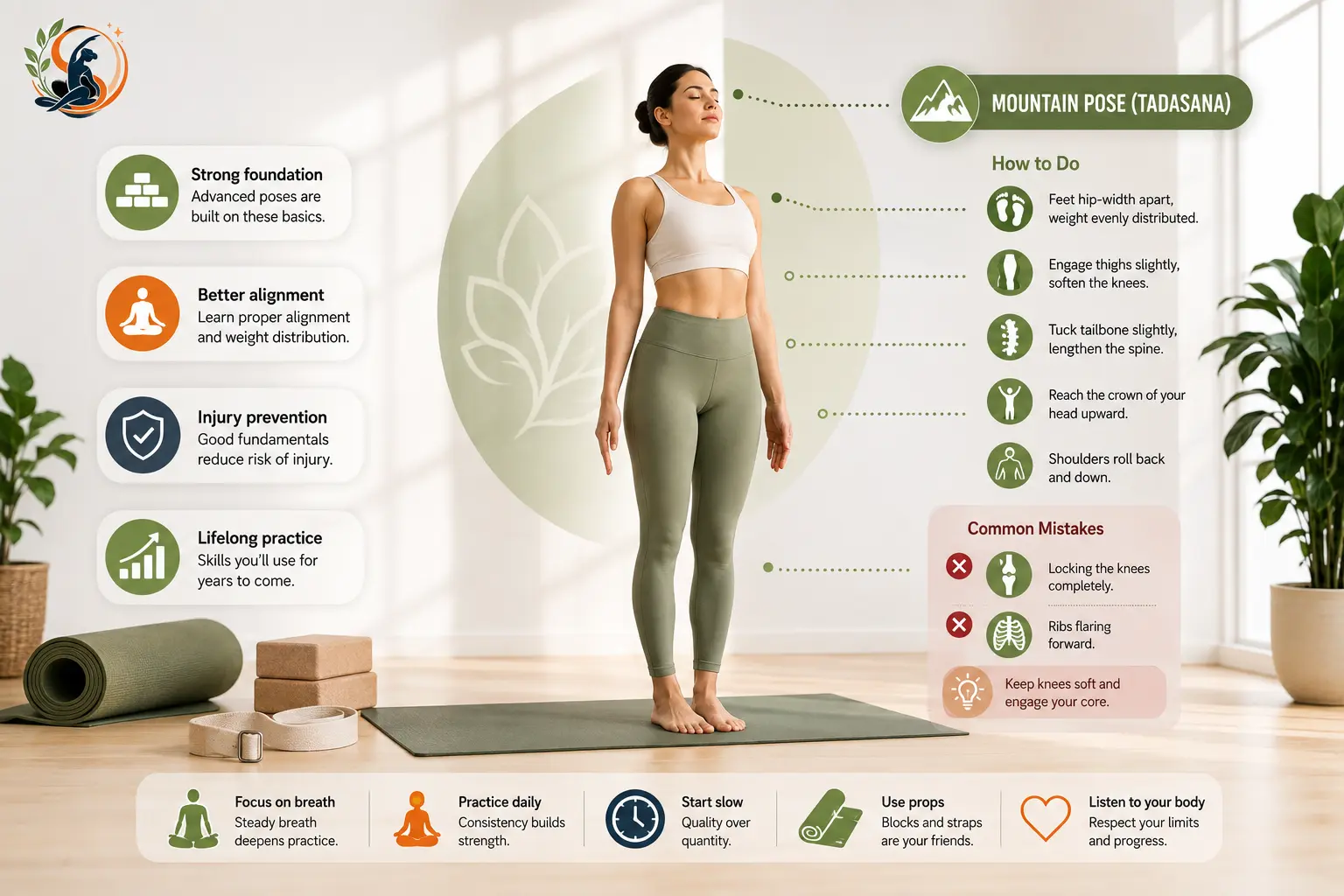
Every advanced pose you'll ever attempt is basically built on these basics, whether people realize it or not. Skip mastering mountain pose or triangle pose early and you'll notice that same wobble show up again later, in harder postures down the road.
Beginner yoga sequence classes almost always circle back to these same five or six poses, for good reason. They're not boring warmups. They're literally teaching your body the joint alignment and weight distribution you'll rely on for years of practice.
Mountain Pose: The Quiet Starting Point
Mountain pose or tadasana, looks like just standing there. It isn't.
How to Do Mountain Pose
Stand with feet hip-width apart, weight spread evenly across all four corners of each foot. Engage your thighs slightly, tuck your tailbone just a touch and reach the crown of your head upward like something gently pulling you taller. Shoulders roll back and down, away from your ears.
Common Mountain Pose Mistakes
Most people lock their knees completely or let their ribs flare forward, throwing off the whole alignment chain from the ground up. Soft knees and a slightly engaged core fix this almost instantly. Honestly, it's one of the easiest corrections in all of yoga.
Cat-Cow Pose for Spine Mobility
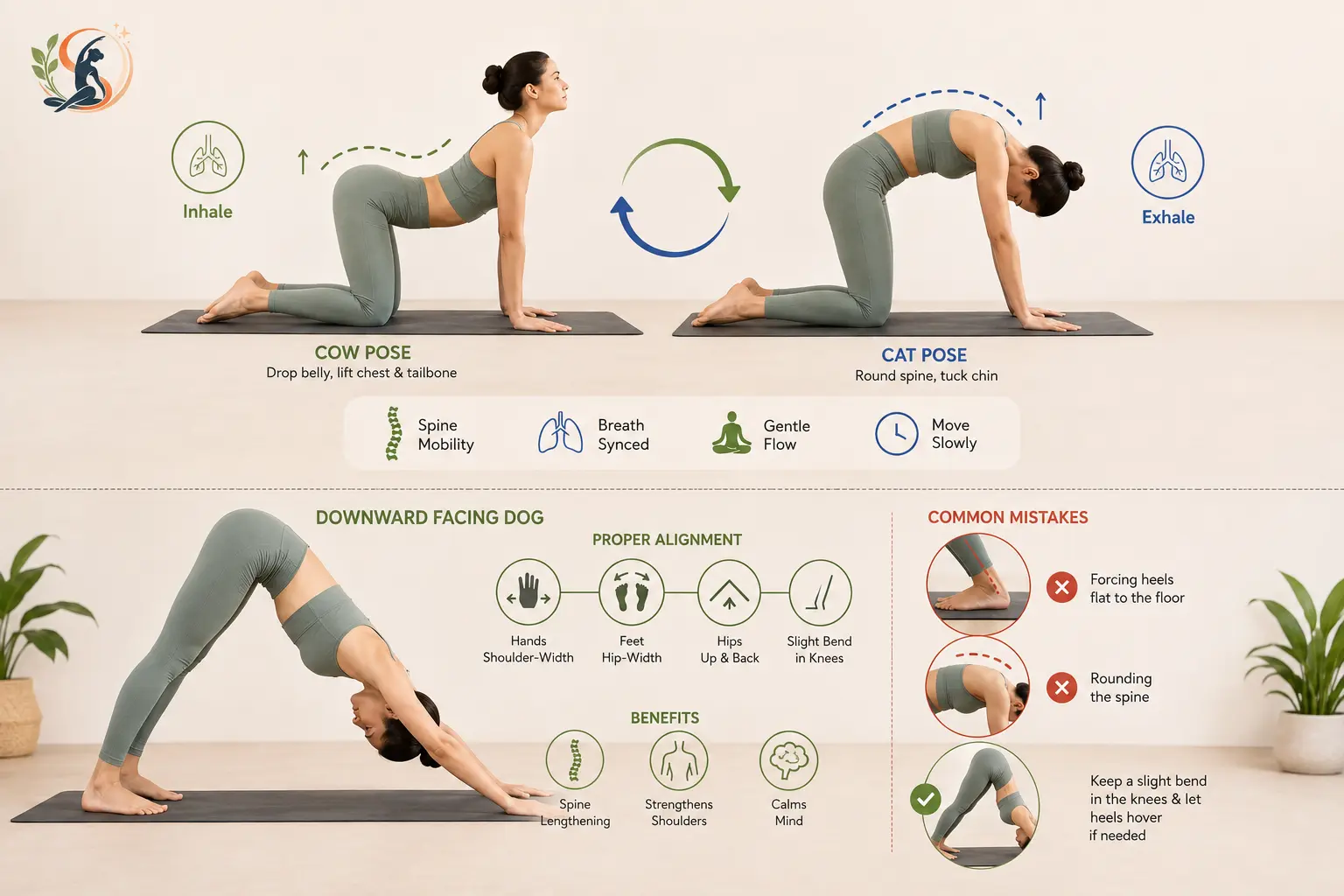
Cat pose yoga and cow pose yoga get taught together so often people just call it cat-cow now, one flowing motion instead of two separate poses.
How to Flow Between Cat and Cow
On an inhale, drop your belly, lift your chest and tailbone, that's a cow. On the exhale, round your spine completely, tuck your chin, that's cat. Move slowly, syncing breath with movement rather than rushing through reps like its some kind of workout.
This gentle flow genuinely warms up your entire spine before deeper poses, which is exactly why almost every class opens with it. If you've ever searched cat vs cow pose yoga reddit threads looking for the "correct" order, don't stress too much over it, most teachers flow both directions depending on the sequence and both cat yoga poses and cow shapes work together either way.
Downward Facing Dog Breakdown
Downward facing dog yoga poses show up constantly. Transitions, rest breaks, entire sequences built around it.
Proper Alignment in Downward Dog
Hands shoulder-width apart, feet hip-width apart, hips lifted up and back to form that upside-down V shape. Bend your knees generously if your hamstrings feel tight, a straight-legged version isn't the goal here, proper alignment is.
Common Downward Dog Mistakes
People constantly force their heels flat to the floor, rounding their spine in the process just to get there. Keep a slight bend in the knees instead and let your heels hover if that's what proper form actually requires for your body.
Warrior Poses Explained
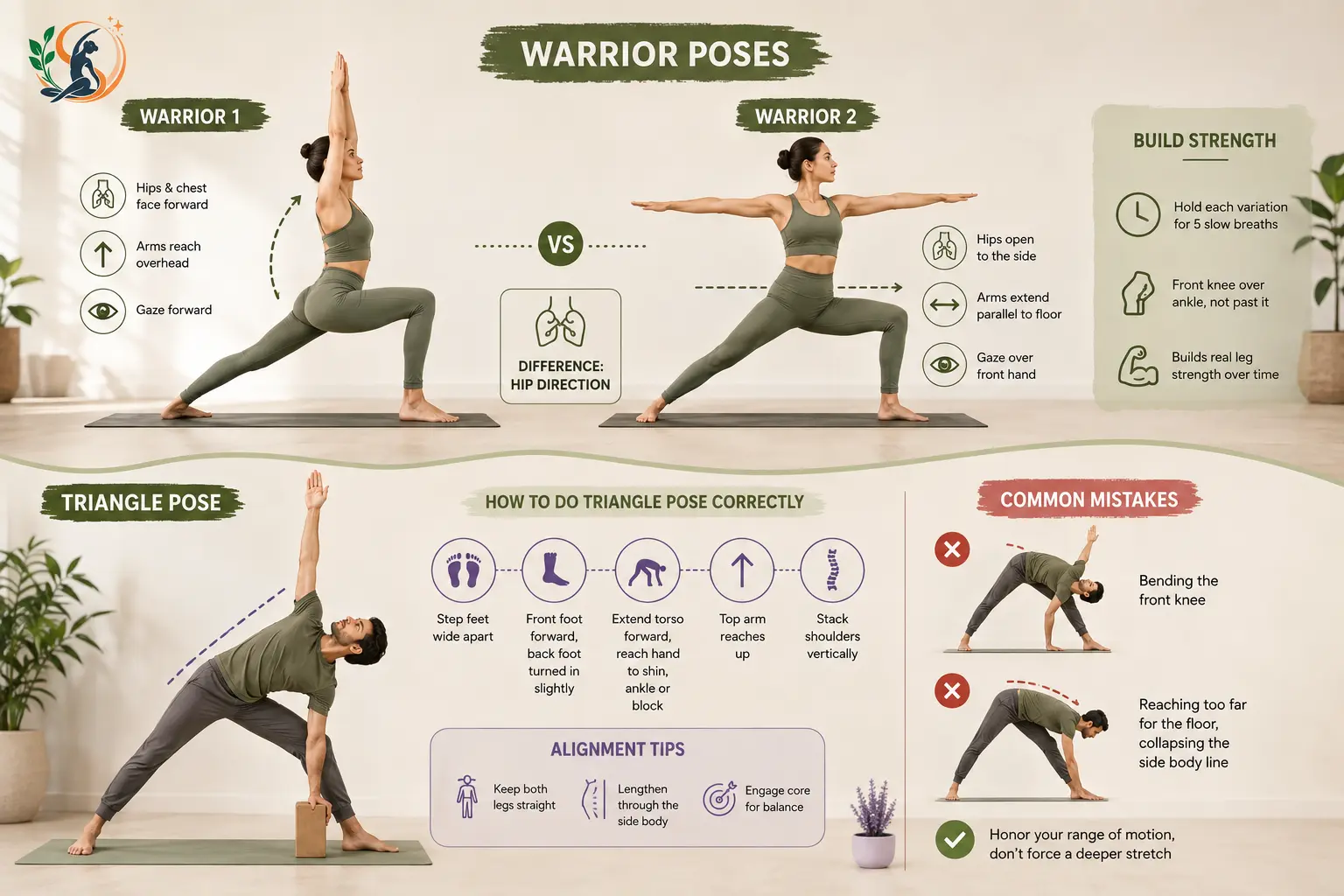
Warrior pose yoga comes in a few versions and honestly, mixing them up is one of the most common beginner mistakes out there.
Warrior 1 vs Warrior 2
Warrior 1 yoga pose faces the hips and chest forward toward the front foot, arms reaching straight overhead. Warrior 2 opens the hips sideways instead, arms extending parallel to the floor, gaze over the front hand. The difference comes down entirely to hip direction. Once you feel that once, you'll never confuse them again, trust me.
How to Build Strength in Warrior Pose
Hold each warrior variation for five slow breaths, focusing on sinking the front knee directly over the ankle, not past it. This builds real leg strength over time, way more than rushing through a quick hold ever will.
Triangle Pose Step by Step
Trikonasana or triangle pose, tends to intimidate beginners more than it should, mostly because it looks harder than it actually is once you break it down properly.
How to Do Triangle Pose Correctly
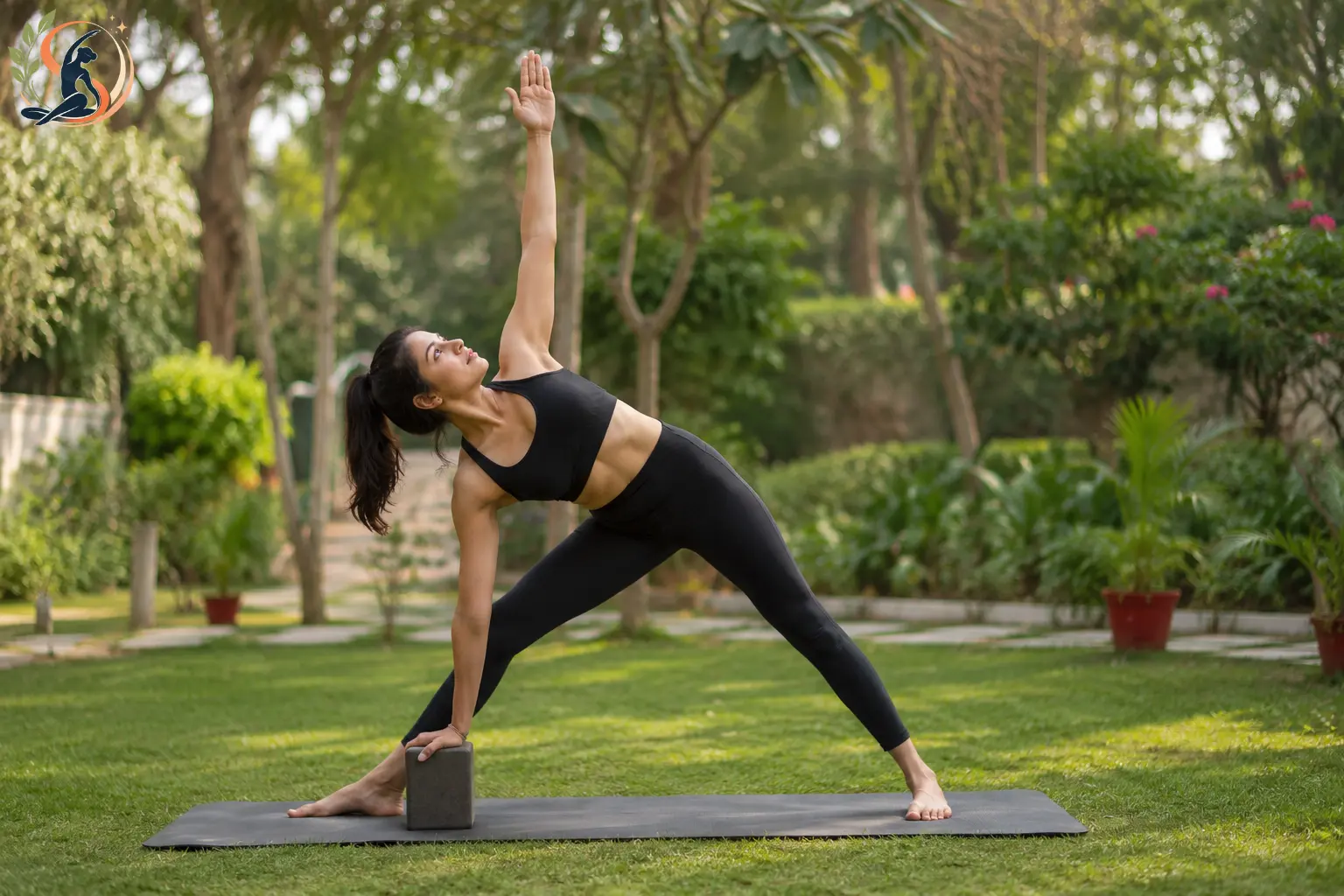
Step your feet wide apart, front foot pointing forward, back foot turned in slightly. Extend your torso forward over the front leg, then reach your front hand down toward your shin, ankle or a block, whatever your flexibility allows that particular day. Your top arm reaches straight up, stacking your shoulders vertically rather than letting your chest collapse toward the floor.
Common Mistakes in Triangle Pose
The biggest one? Bending the front knee when it should stay straight, which collapses the whole pose's structure completely. Another common issue is reaching too far for the floor, sacrificing that straight side-body line just to touch your toes. Utthita trikonasana works best when you honor your actual range of motion instead of forcing a deeper stretch than your body's ready for that day.
Revolved Triangle Pose Variation
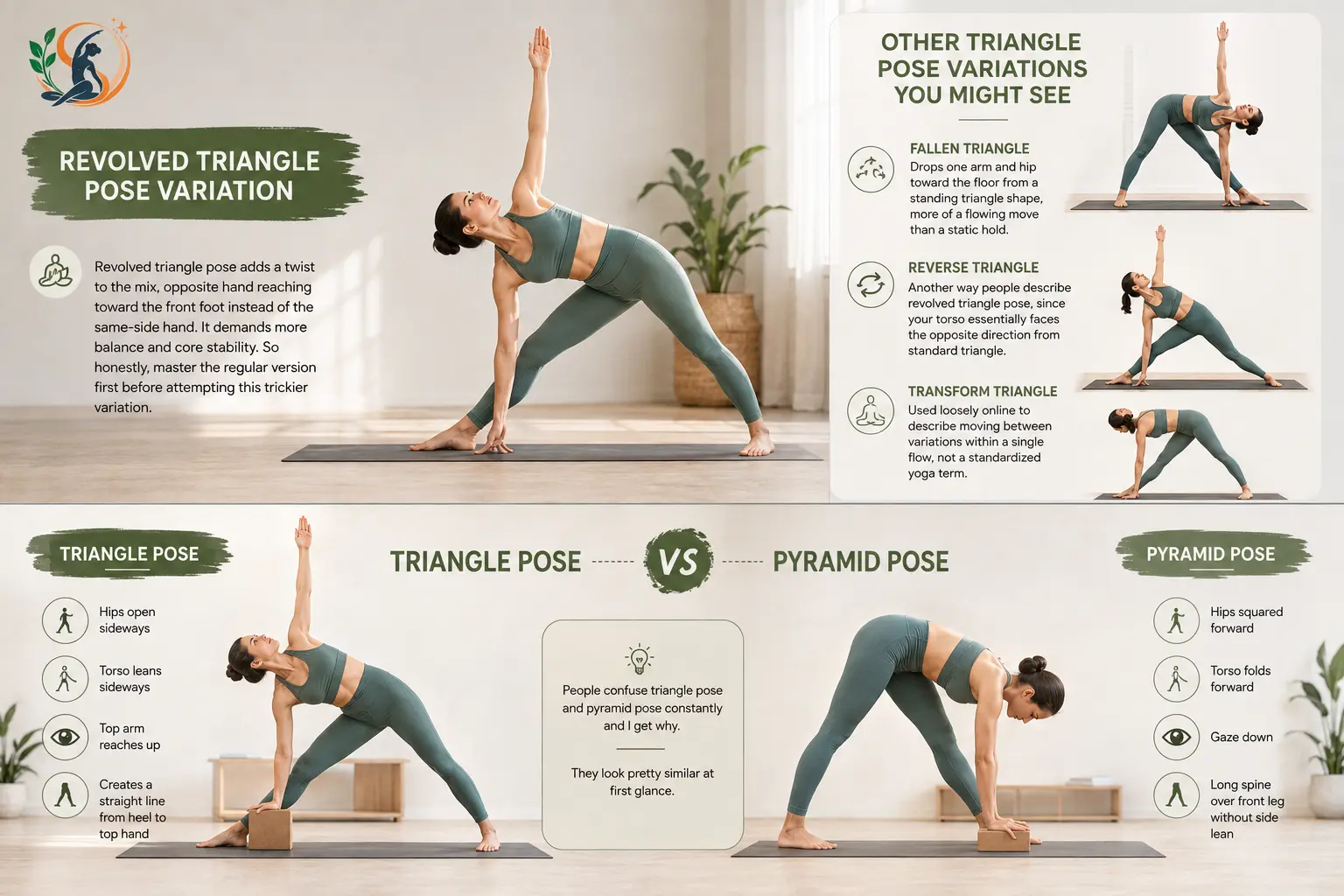
Revolved triangle pose adds a twist to the mix, opposite hand reaching toward the front foot instead of the same-side hand. It demands more balance and core stability. So honestly, master the regular version first before attempting this trickier variation.
Other Triangle Pose Variations You Might See
A few other names float around in yoga classes and forums that are worth knowing. Fallen triangle, sometimes taught as a transition pose, drops one arm and hip toward the floor from a standing triangle shape, more of a flowing move than a static hold. Reverse triangle is another way people describe revolved triangle pose, since your torso essentially faces the opposite direction from standard triangle posture yoga.
You might also see the phrase transform triangle used loosely online to describe moving between these variations within a single flow, though it's not really a standardized yoga term the way trikonasana or utthita trikonasana are.
Triangle Pose vs Pyramid Pose
People confuse triangle pose and pyramid pose constantly and I get why. They look pretty similar at first glance. Pyramid pose keeps the hips squared forward toward the front leg, while triangle pose opens the hips and torso sideways instead. The pyramid also folds the torso down over a straight front leg without that sideways lean triangle pose required.
Other Useful Beginner Poses Worth Knowing
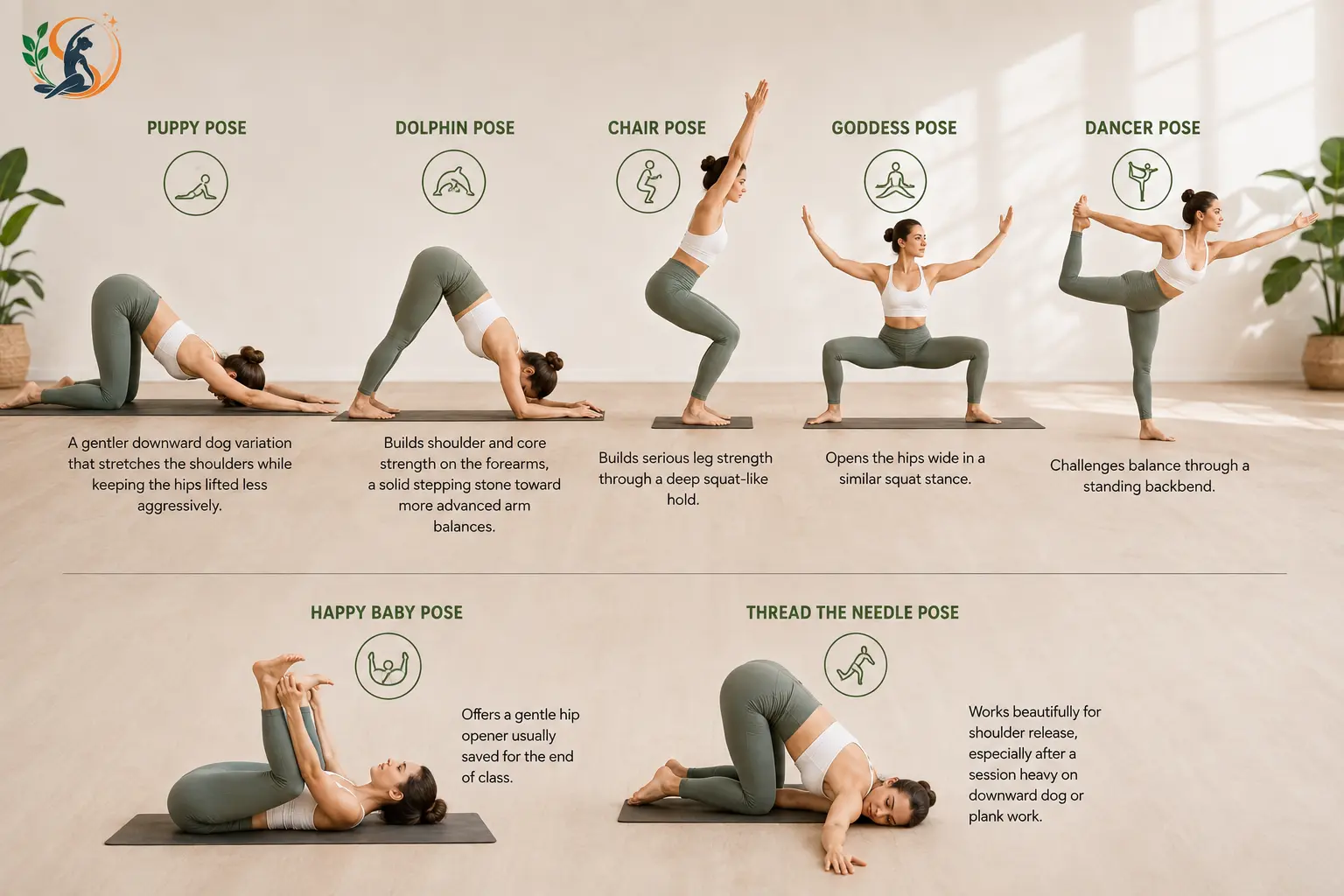
A handful of other foundational poses round out most beginner yoga sequence classes nicely. These yoga poses, dolphin, chair and goddess included show up so often that knowing them early genuinely pays off.
Puppy pose yoga, sometimes called yoga puppy pose or puppy yoga pose depending on which teacher you ask, is essentially a gentler downward dog variation, stretching the shoulders while keeping the hips lifted less aggressively.
Dolphin pose yoga builds shoulder and core strength on the forearms instead of the hands, a solid stepping stone toward more advanced arm balances later on. Chair pose yoga builds serious leg strength through a deep squat-like hold, while goddess pose yoga or yoga goddess pose, opens the hips wide in a similar squat stance.
Dancer pose yoga, which some also call yoga dancing pose, challenges balance through a standing backbend and happy baby yoga pose offers a gentle hip opener usually saved for the end of class.
Yoga thread the needle pose works beautifully for shoulder release, especially after a session heavy on downward dog or plank work.
Weight Distribution and Alignment Cues You'll Hear a Lot
If you've taken more than a couple classes, you've probably heard your teacher repeat the same yoga alignment cues over and over. There's a reason for that repetition. These cues genuinely prevent injury while building the strength each pose is actually designed to develop.
Weight distribution comes up constantly because uneven weight through your feet or hands throws off everything above it, your knees, hips, shoulders, all of it compensating for that initial imbalance.
In triangle pose specifically, keeping weight balanced between your front and back foot, rather than collapsing into the front leg, protects your knee and keeps the whole pose stable. Joint alignment in yoga also matters more than flexibility does, especially early on.
A beginner with modest flexibility but solid alignment will actually build strength and mobility faster and more safely, than someone forcing their body into a deeper stretch without the proper form backing it up.
Yoga Pose Modifications Worth Knowing
Nobody's body looks the same and honestly, pretending otherwise does beginners a disservice. Yoga pose modifications exist for a reason and using them isn't a sign you're doing something wrong.
In triangle pose, using a block under your bottom hand instead of reaching all the way to the floor keeps your alignment correct without forcing your hamstrings into a stretch they're not ready for yet. In warrior pose, shortening your stance slightly makes the pose more stable if your hips feel tight.
Downward dog modifications, like bent knees or hands elevated on blocks, help beginners build strength gradually instead of straining through discomfort just to match what everyone else in class looks like.
How Often Should Beginners Practice These Poses
Consistency matters more than intensity when you're first learning foundational asana breakdown work like this. Practicing these five or six poses two to three times a week builds real muscle memory faster than one long, exhausting session every couple weeks.
Even ten or fifteen minutes running through mountain pose, cat-cow, downward dog and a few rounds of warrior and triangle pose adds up over a month. Your body genuinely remembers these patterns and that repetition is exactly what eventually makes advanced poses feel less intimidating down the road.
Seated Poses That Pair Well With These Basics
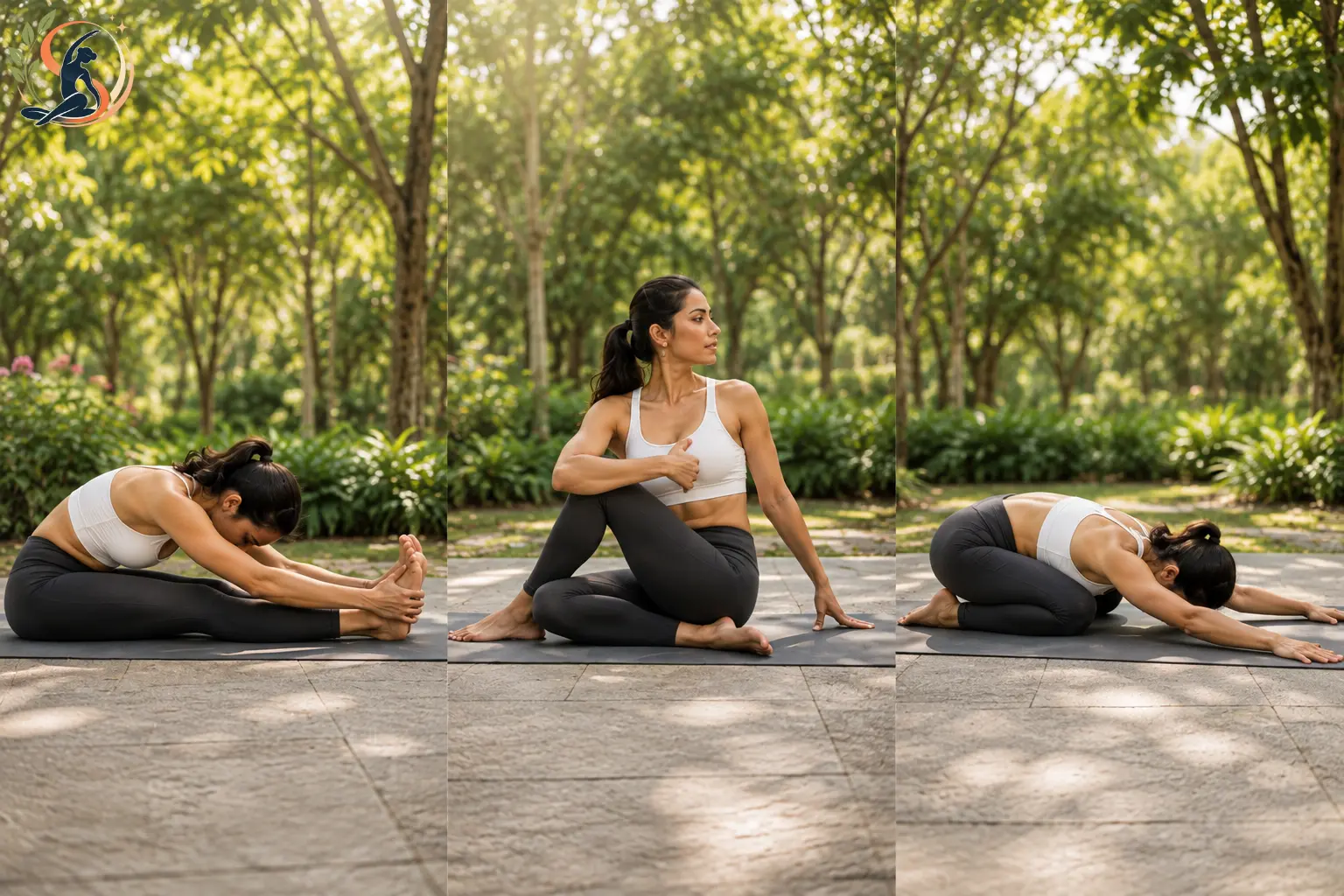
Once standing poses like triangle and warrior feel more comfortable, a lot of classes transition into seated yoga poses to cool things down. These sitting yoga poses stretch out muscles and work hard during standing sequences while lowering your heart rate gradually instead of stopping abruptly.
Simple seated forward folds, gentle spinal twists and thread the needle all work well after a sequence built around triangle pose and warrior variations. They're not flashy, but they genuinely help your body absorb everything the standing poses just worked through, which matters more than people realize when they're rushing to finish class.
Frequently Asked Questions
1. What are the most important yoga poses to learn first?
Mountain pose, cat-cow, downward dog, warrior pose and triangle pose form the foundation most other poses build from. Mastering these five first gives you the alignment and body awareness needed to progress safely into more advanced postures later on.
2. How do you align downward dogs correctly?
Keep hands shoulder-width apart, feet hip-width apart and hips lifted up and back. Bend your knees if your hamstrings feel tight rather than forcing heels flat, since proper spine alignment matters far more than achieving a perfectly straight-legged shape.
3. What's the difference between Warrior 1 and Warrior 2?
Warrior 1 faces the hips and chest forward with arms overhead, while Warrior 2 opens the hips sideways with arms extended parallel to the floor. The core difference comes down entirely to hip and torso direction between the two poses.
4. Why is Triangle Pose so hard?
Triangle pose challenges balance, hip flexibility and side-body alignment all at once, which trips up a lot of beginners. Bending the front knee or overreaching for the floor are common struggles, both of which improve significantly with consistent practice.
5. What are the common mistakes in Triangle Pose?
The most common mistakes include bending the front knee, collapsing the chest toward the floor and overreaching to touch the toes instead of using a block. Keeping the front leg straight and honoring your natural range fixes most issues quickly.
6. What's the difference between Triangle Pose and Pyramid Pose?
Triangle pose opens the hips and torso sideways with a straight front leg, while pyramid pose keeps the hips squared forward and folds the torso down over the front leg. The hip orientation is really the key distinguishing factor here.
Conclusion
Triangle pose and the other foundational yoga poses covered here aren't just beginner exercises to rush through on your way to something flashier. They're the actual backbone of a safe, sustainable practice, teaching your body alignment and awareness that carries into everything else you'll ever attempt on the mat. Take your time with these basics. The rest of your practice will genuinely thank you for it later.


Comments (0)
No comments yet. Be the first to share your thoughts!
Leave a Comment