
I tried eating for your blood type after my sister swore it fixed her bloating and energy crashes completely. Skeptics didn't cover it, honestly. Three months later, I had opinions, some good, some frustrated, some genuinely confused about whether any of it was real.
So you've probably heard someone rave about eating for your blood type at a dinner party and rolled your eyes a little, same as I did. But then curiosity won and I actually tried it myself for real, messy results included.
This isn't some polished success story. It's the honest, occasionally frustrating truth about what happened when I actually gave this diet a real shot for months.
How I Even Stumbled Into This Whole Thing

My sister wouldn't shut up about eating for your blood type for like two months straight. Every phone call, every family dinner, she'd bring it up again. I kept nodding politely while internally rolling my eyes because it sounded like pseudoscience dressed up in fancy packaging. Type O should eat meat, Type A should go vegetarian, whatever. Sounded made up.
But she looked genuinely different. More energy, less bloating, better skin even. So I finally caved and researched it myself instead of just dismissing it outright. Turns out eating for your blood type has this whole history and theory behind it that's more nuanced than I expected walking in, though still controversial as hell within actual nutrition science circles honestly.
The Actual Theory Behind This Whole Diet
The basic idea behind eating for your blood type comes from Dr. Peter D'Adamo's book from the nineties. His theory claims your blood type determines how your body processes different foods based on ancient evolutionary history. Type O supposedly thrives on protein-heavy diets like our hunter-gatherer ancestors. Type A does better with plant-based eating, more agricultural focused.
Type B and AB get their own specific guidelines too, mixing elements from both other types depending on which foods supposedly trigger inflammation or digestive issues. The theory sounds compelling on paper, kind of like it makes evolutionary sense. But mainstream science hasn't exactly validated most of these claims, which created some serious internal conflict for me before I even started eating this way.
What Happened When I Actually Started Type O Eating
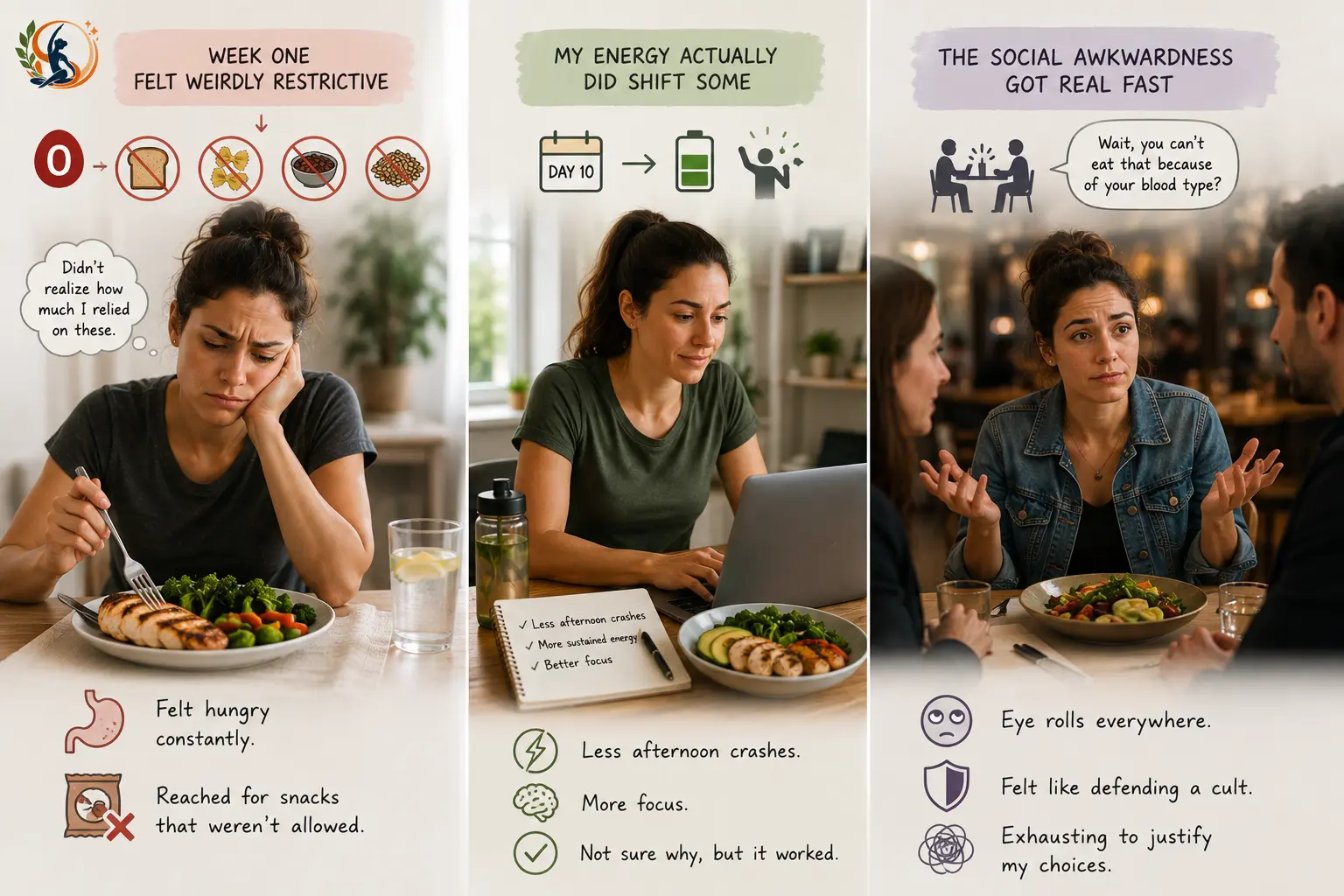
Week One Felt Weirdly Restrictive
Cutting most grains and legumes felt harder than expected immediately. I didn't realize how much of my diet relied on bread, pasta, beans until suddenly avoiding them for eating for your blood type guidelines. Felt hungry constantly those first few days, kept reaching for snacks that weren't technically allowed, honestly struggling more than I expected walking into this.
My Energy Actually Did Shift Some
By day ten, something changed, genuinely. Less afternoon crashes, more sustained energy throughout my workday. Could've been placebo, could've been the extra protein, could've been coincidence entirely. But I noticed it enough to keep going instead of quitting like I almost did during that rough first week honestly.
The Social Awkwardness Got Real Fast
Explaining eating for your blood type to friends at restaurants got old quickly. "Wait, you can't eat that because of your blood type?" Eye rolls everywhere. It felt like defending a cult sometimes, honestly exhausting having to justify food choices constantly to people who thought I'd lost my mind completely somehow.
The Science Skeptics Actually Raise Valid Points
I dove into research articles questioning eating for your blood type pretty extensively, wanting to understand both sides fairly. Multiple studies found zero correlation between blood type and how bodies actually process different foods. Nutritionists mostly agree the diet's benefits come from eating whole foods generally, not from blood type specifically influencing anything meaningfully. If evidence-backed eating is the priority, an anti-inflammatory diet meal plan has far more research behind it than blood type theory ever has.
That honestly bummed me out a little, ngl. I wanted this to be legitimately science-backed, not just another wellness trend riding on pseudo-scientific claims. But still, something was happening in my body that felt real, even if the underlying theory wasn't holding up under actual scientific scrutiny the way proponents claimed it would.
Why I Kept Going Anyway Despite The Doubts
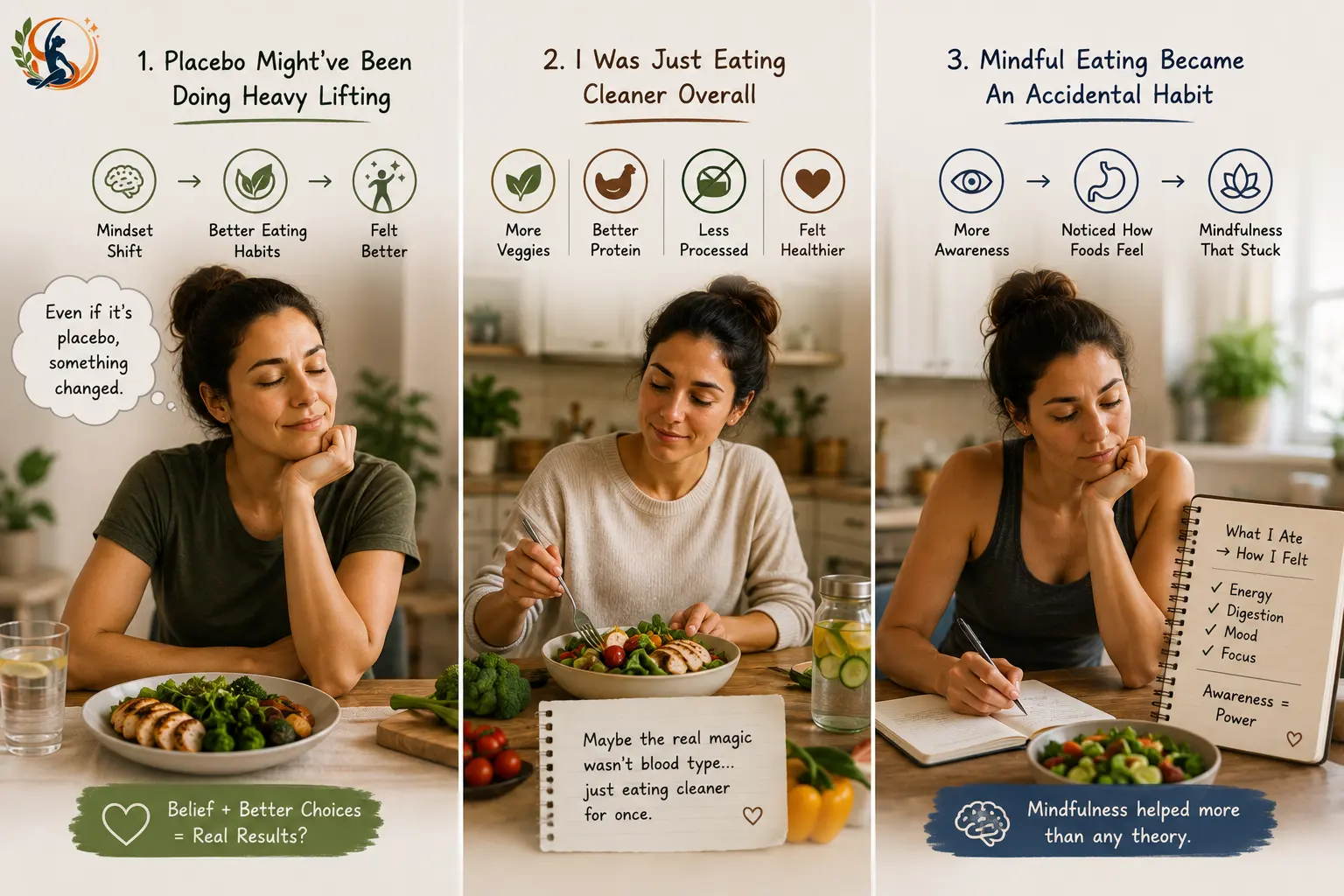
Placebo Might've Been Doing Heavy Lifting
Maybe I just believed hard enough that my body responded regardless of actual science. Placebo effects are real and documented extensively in research. Whatever eating for your blood type triggered in my mindset, something shifted my eating patterns toward more whole foods generally, less processed junk overall.
I Was Just Eating Cleaner Overall
Looking back honestly, I was eating way more vegetables, less processed garbage, more intentional protein choices regardless of blood type specifics. Maybe the real magic wasn't blood type at all, just eating cleaner food consistently for once instead of whatever convenient junk was sitting around my kitchen constantly.
Mindful Eating Became An Accidental Habit
Tracking what I ate for your blood type forced awareness I'd never practiced before. I started noticing how different foods actually made me feel, energy-wise and digestion-wise. That mindfulness alone probably contributed more to feeling better than any blood type theory ever could realistically.
The Digestive Changes That Genuinely Surprised Me
My stomach felt calmer within the first two weeks of eating for your blood type, less bloating after meals specifically. Whether that came from cutting certain foods or just eating more intentionally overall, hard to say definitively. But something shifted digestively that I couldn't ignore or dismiss as coincidence completely honestly speaking here.
Bathroom habits improved too, if we're being fully transparent about bodily functions. More regular, less uncomfortable. Again, fiber intake could increase, could be cutting processed foods, could be genuine blood type magic happening. I genuinely don't know the exact mechanism, just know something positive was occurring consistently throughout those months.
Financial Reality Of Committing To This Diet

Eating for your blood type got expensive fast, not gonna lie about that reality. More organic meat, specialty ingredients, less relying on cheap processed convenience foods. My grocery bill jumped noticeably during those months, probably thirty percent higher than my usual spending habits before starting this whole experiment honestly.
Meal planning became essential just to manage costs realistically. Buying proteins in bulk, prepping vegetables ahead, avoiding impulse purchases at grocery stores helped some. But still, eating this way isn't cheap if you're doing it properly with quality ingredients instead of cutting corners everywhere possible financially throughout the process.
Random Observations From My Months Of Trying
Energy crashes decreased noticeably after the first two weeks of committed eating for your blood type consistently.
Restaurant menus became genuinely stressful to navigate without breaking my specific dietary guidelines constantly while dining out.
Family gatherings created awkward moments explaining why I couldn't eat grandma's famous pasta dish anymore honestly.
Grocery shopping trips took way longer reading labels obsessively checking every single ingredient carefully throughout each visit.
Sleep quality improved somewhat, though I can't confirm if diet specifically caused that or other lifestyle factors.
What I'd Tell Someone Considering This Diet

Research both sides thoroughly before committing fully, understanding scientific skepticism exists around these specific claims.
Track your own symptoms honestly instead of assuming placebo or real results without paying genuine attention.
Budget extra money monthly because quality ingredients following these guidelines cost noticeably more than typical shopping.
Prepare for social awkwardness explaining your choices repeatedly to confused friends and family members constantly.
Focus on whole foods generally, since that alone might explain most benefits regardless of blood type theory.
Where I Landed After Months Of Experimenting
Honestly? I'm still eating for your blood type loosely, though not religiously anymore like those first few months. Picked up habits that genuinely helped more vegetables, better protein choices, mindful eating practices while dropping the strict rules that felt unsustainable long-term for my actual lifestyle and budget realistically speaking here.
The science remains shaky, I'll admit that openly without pretending otherwise. But something about paying closer attention to food, eating more intentionally, cutting processed junk that stuff genuinely improved how I felt regardless of whether blood type specifically mattered scientifically. Maybe that's the real lesson hiding underneath everything else entirely. The structure I ended up missing from strict blood-type eating is closer to what a paleo meal plan actually offers, minus the blood-type framing.
Would I Recommend This To Other People

It depends entirely on what you're seeking from eating for your blood type honestly. If you want scientifically bulletproof nutrition advice, look elsewhere because evidence just isn't strong enough currently. But if you're curious about mindful eating, willing to experiment, open to whatever benefits come from intentional food choices, maybe it's worth trying.
Just don't expect miracles or definitive scientific validation supporting every specific claim within the theory itself. Approach it with healthy skepticism, track your own results honestly, keep what works for your body specifically. That's probably the smartest way to engage with any diet trend, this one included completely without blind faith.
Summary
Eating for your blood type isn't scientifically proven, but my months trying it revealed something interesting: increased mindfulness around food, better energy, improved digestion. Whether that came from blood type theory specifically or just eating cleaner overall remains genuinely unclear. Approach with curiosity and healthy skepticism, track your own results, keep whatever actually works for your unique body and lifestyle.
FAQs
1. Is eating for your blood type actually backed by legitimate scientific research?
Not really, no. Multiple studies found zero correlation between blood type and food processing abilities. Most nutritionists agree benefits likely come from eating whole foods generally, not blood type specifically. Approach claims skeptically while still potentially benefiting from more mindful, intentional eating habits overall.
2. How long should I try eating for your blood type before judging results?
Give it at least four to six weeks minimum for genuine assessment. Your body needs time adjusting to new eating patterns and initial results might reflect adjustment period rather than actual benefits. Track symptoms consistently throughout, noting energy, digestion and overall wellbeing changes honestly.
3. Can eating for your blood type help with weight loss specifically?
Possibly, though not necessarily through blood type mechanisms directly. Weight loss likely results from eating more whole foods, less processed junk, increased mindfulness around portions and choices generally. The blood type framework might just be motivating better eating habits rather than working through claimed biological pathways.
4. Is this diet safe for people with existing health conditions or restrictions?
Consult your doctor first, always, especially with existing conditions like diabetes or kidney issues. Some blood type guidelines recommend eliminating entire food groups, which could create nutritional gaps or complications depending on your specific health situation. Professional guidance matters more than internet diet trends here.
5. What's the biggest downside people experience with eating for your blood type?
Cost and social complexity, honestly, based on my own experience trying this. Quality ingredients following strict guidelines get expensive fast and explaining dietary restrictions to friends and family gets exhausting repeatedly. Weigh these practical challenges against potential benefits before committing seriously long-term.
6. Should I follow blood type eating guidelines strictly or loosely for best results?
Loosely worked better for me personally after initial strict experimentation. Extract genuinely helpful principles, more vegetables, mindful protein choices, less processed food while dropping unsustainable strict rules. Sustainable moderate approaches typically outperform rigid restrictions long-term for most people's actual lifestyle and mental health.
Conclusion
Look, I'm not here to tell you eating for your blood type is scientifically bulletproof, because it's genuinely not based on current research. But something happened during those months that felt real, even if I can't fully explain the mechanism behind it. Maybe it was mindfulness, maybe placebo, maybe just eating cleaner overall. Whatever the reason, approach this diet with curiosity rather than blind faith, track your own honest results and keep whatever actually serves your body regardless of the underlying theory's scientific validity.


Comments (0)
No comments yet. Be the first to share your thoughts!
Leave a Comment