
Fifteen years writing about nutrition and "inflammation" might be the most misused word in the whole business at this point. Ask ten people what an anti-inflammatory diet does inside the body and maybe two give you a real answer. Not their fault, really. Most wellness content explains this one badly or skips the explaining part entirely and jumps straight to a supplement pitch.
So here's the actual breakdown. What inflammation is, in plain terms. Which foods calm it down, based on real research, not vibes. Which foods stir it up. A full meal plan you could start tonight. And a straight answer on whether a 21 day reset does anything a slower approach couldn't.
What Is an Anti-Inflammatory Diet, Really
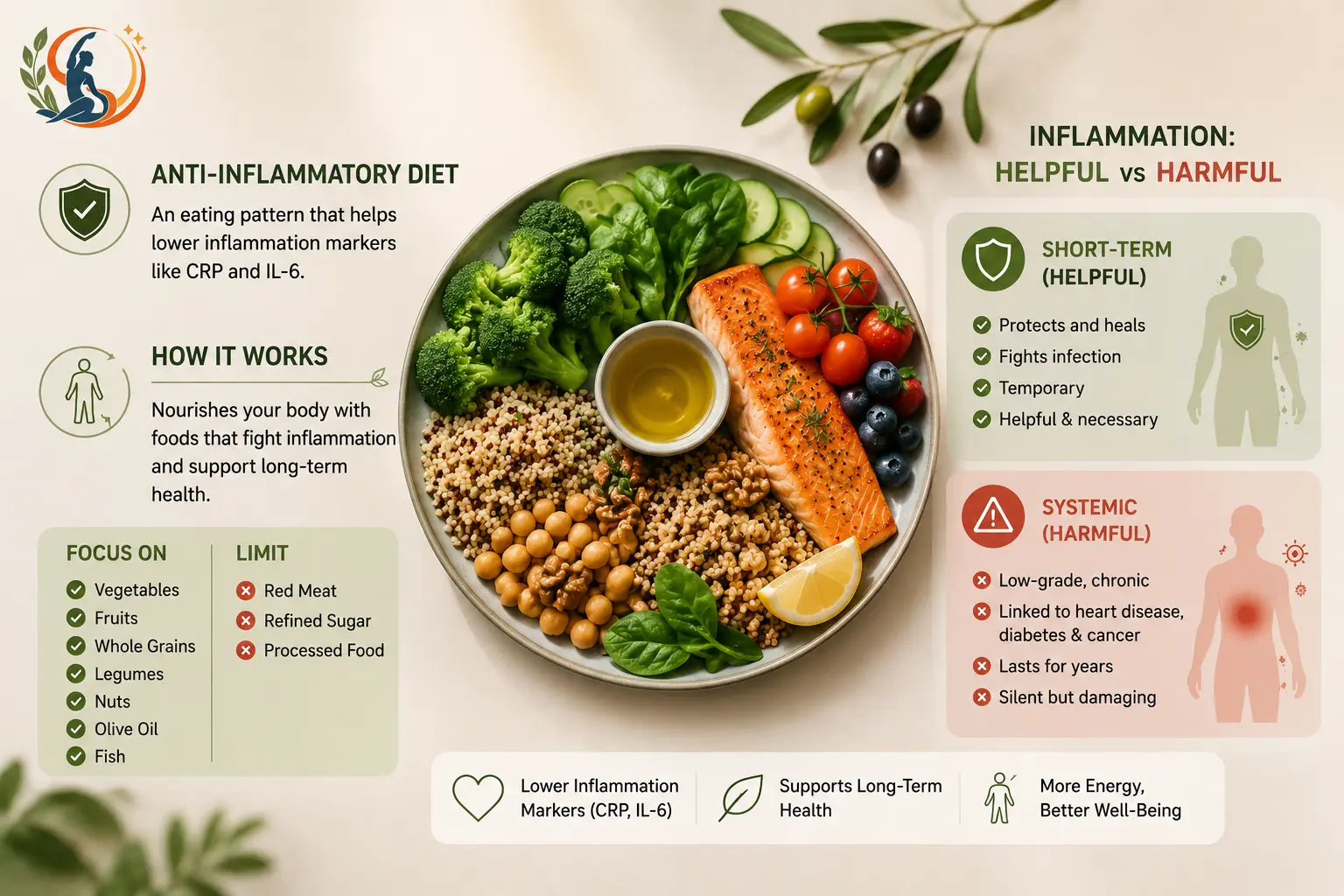
Before any food list means anything, it helps to know what's actually happening in the body that this whole approach is aimed at. In practice it's basically a sharper version of eating more whole foods generally, just with inflammation markers as the specific target.
Anti Inflammatory Diet Definition and How It Works in the Body
An anti-inflammatory diet is an eating pattern built around foods shown to lower measurable inflammation markers in the blood. Mainly C-reactive protein, CRP and a signaling molecule called interleukin-6, IL-6. Heavy on vegetables, fruit, whole grains, legumes, nuts, olive oil, fish. Light on red meat, refined sugar, heavily processed food. Basically the Mediterranean diet with a sharper lens on inflammation specifically, since Mediterranean eating happens to be the most researched anti-inflammatory pattern out there, not even close to a competition.
Systemic Inflammation: The Difference Between Helpful and Harmful
Inflammation itself isn't the villain and that's worth saying upfront before anyone panics. Short-term inflammation is how a cut heals or how your body fights off a cold. Useful. Necessary. Gone in a week or two. Systemic inflammation runs differently, a low-grade state that never fully clicks off, tied to heart disease, type 2 diabetes and certain cancers over years of quiet exposure. That's the version this whole diet's built to target. Not the swelling around a twisted ankle.
Anti Inflammatory Foods List: What to Eat More Of
Once that distinction clicks, the next step's practical. Build a list, go shopping.
The Best Anti-Inflammatory Foods Backed by Research
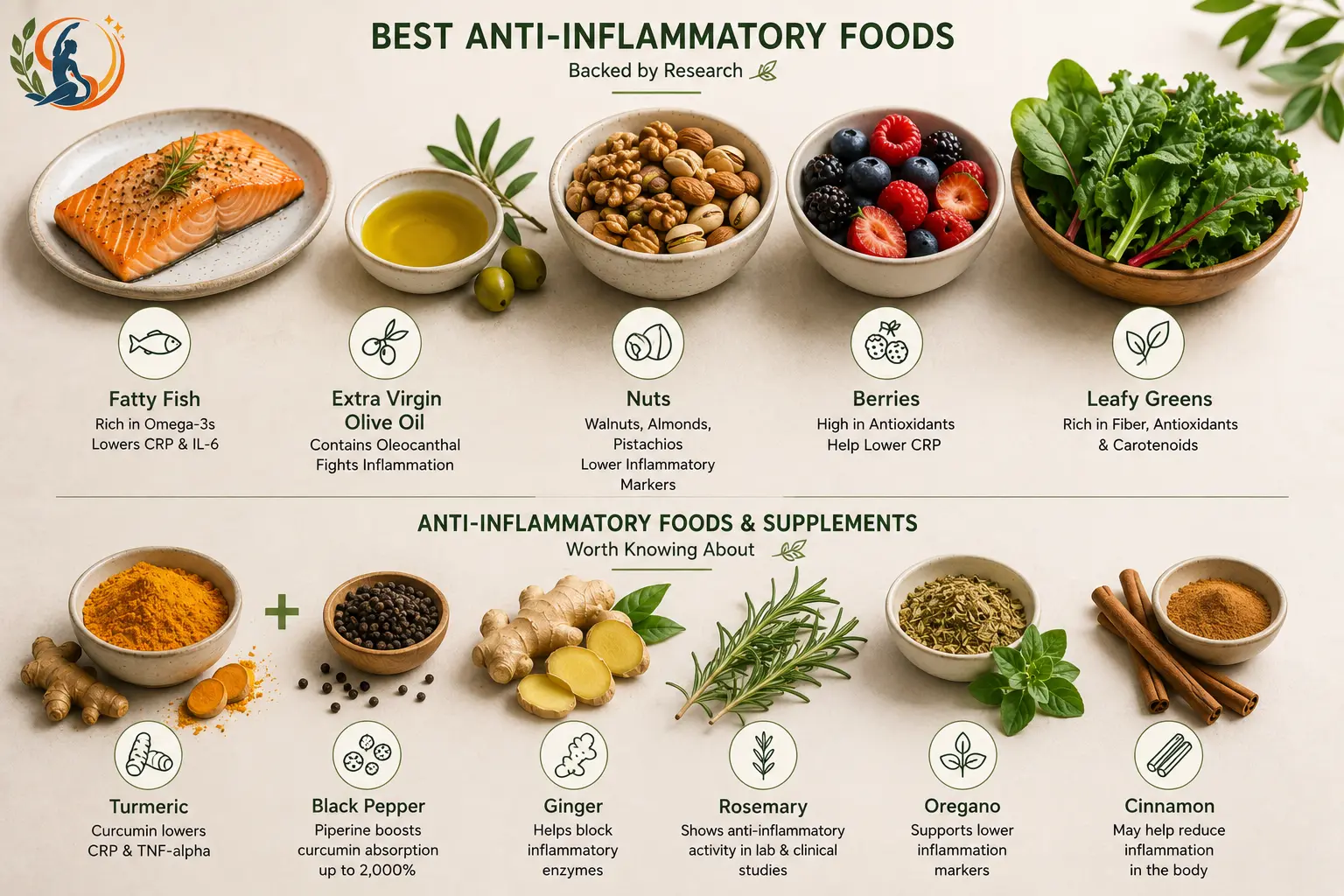
Fatty fish, salmon, sardines, tuna, anchovies, carries omega-3s that lower CRP and IL-6 directly and the Arthritis Foundation recommends three to four ounces at least twice a week. Extra virgin olive oil holds a compound called oleocanthal, which blocks the same COX enzyme ibuprofen targets. A genuinely wild little fact for something sitting in a kitchen cabinet next to the vinegar. Walnuts, almonds and pistachios keep turning up in research tied to lower inflammatory markers, a small daily handful being the amount most studies actually test. Berries, leafy greens and other brightly colored produce bring antioxidants and carotenoids that help lower CRP too, especially when fiber comes from the actual food instead of a capsule.
Anti-Inflammatory Foods and Supplements Worth Knowing About
Turmeric or really its active compound curcumin, is probably the most studied anti-inflammatory spice around, tied to lower CRP and TNF-alpha across research. Pairing it with black pepper matters more than most people realize. Piperine in black pepper can boost curcumin absorption dramatically, some studies put the jump close to 2,000 percent, a strange number for something as basic as a pepper grinder. Ginger runs through a similar pathway, blocking some of the same inflammatory enzymes. Rosemary oregano, cinnamon all show real anti-inflammatory activity too, lab and clinical research both, so none of this is just seasoning for taste. It's doing actual work in the background, quietly.
Inflammatory Foods: What to Cut Back On
Knowing what to add only solves half of this puzzle. The other half's knowing what fights against it.
Foods That Are Consistently Linked to More Inflammation
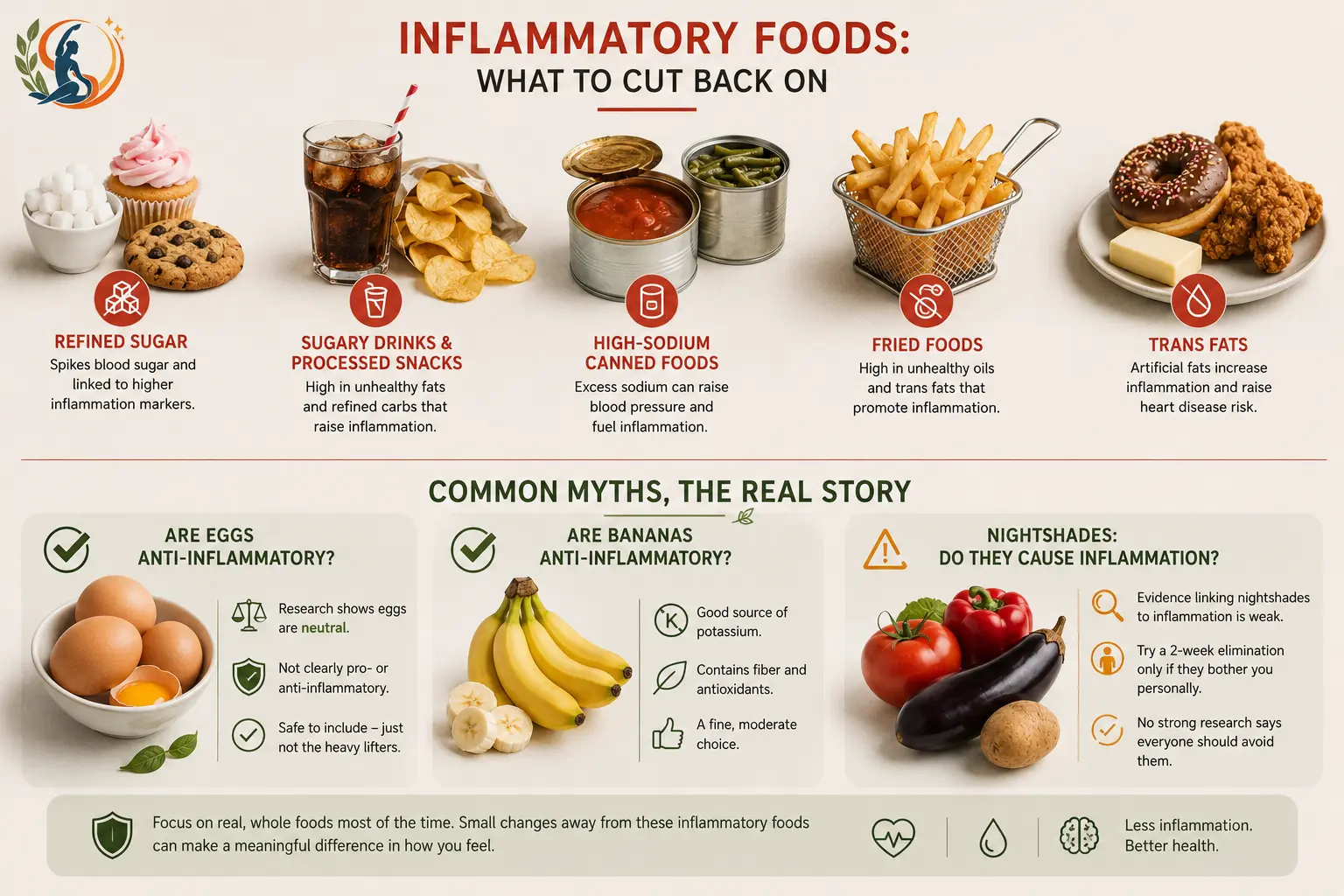
Refined sugar, sugary drinks and heavily processed snacks turn up across research tied to higher inflammation markers, mostly because of the unhealthy fat and refined carbs packed into them. Canned goods and soups carrying heavy sodium are worth swapping for genuinely low sodium snacks if blood pressure is part of what's driving the inflammation. Canned goods, vegetables and soup both, often carry enough sodium to push blood pressure up, an indirect but real strike against cardiovascular inflammation over time. Fried food and anything high in trans fat round out the usual suspects. Nearly every anti-inflammatory guide out there agrees on this short list.
Are Eggs and Bananas Anti-Inflammatory: Clearing Up Common Myths
Are eggs anti-inflammatory? Research actually lands on neutral here. Not clearly pro-inflammatory, not clearly anti-inflammatory either, roughly the same finding red meat gets in several reviews. Eggs don't need to be avoided on this diet. They just aren't doing the heavy lifting fatty fish or olive oil handles. Bananas fare a bit better, bringing potassium, fiber and antioxidants along for the ride, a fine, moderate choice here, even without headline status the way berries or fatty fish get.
One more myth, while we're at it. Nightshade vegetables, tomatoes, peppers, eggplant, potatoes, get blamed for arthritis flares constantly across wellness forums. The actual science behind that claim stays pretty thin, honestly not much there at all. If nightshades genuinely seem to mess with you personally, a two-week elimination test is reasonable enough. There's just no broad research telling everyone to cut them across the board.
A Sample Anti-Inflammatory Diet Meal Plan
Theory's fine, sure, but most people landing here want actual meals. Not another list of approved ingredients to memorize and forget by Thursday.
A Simple One-Day Anti-Inflammatory Diet Menu
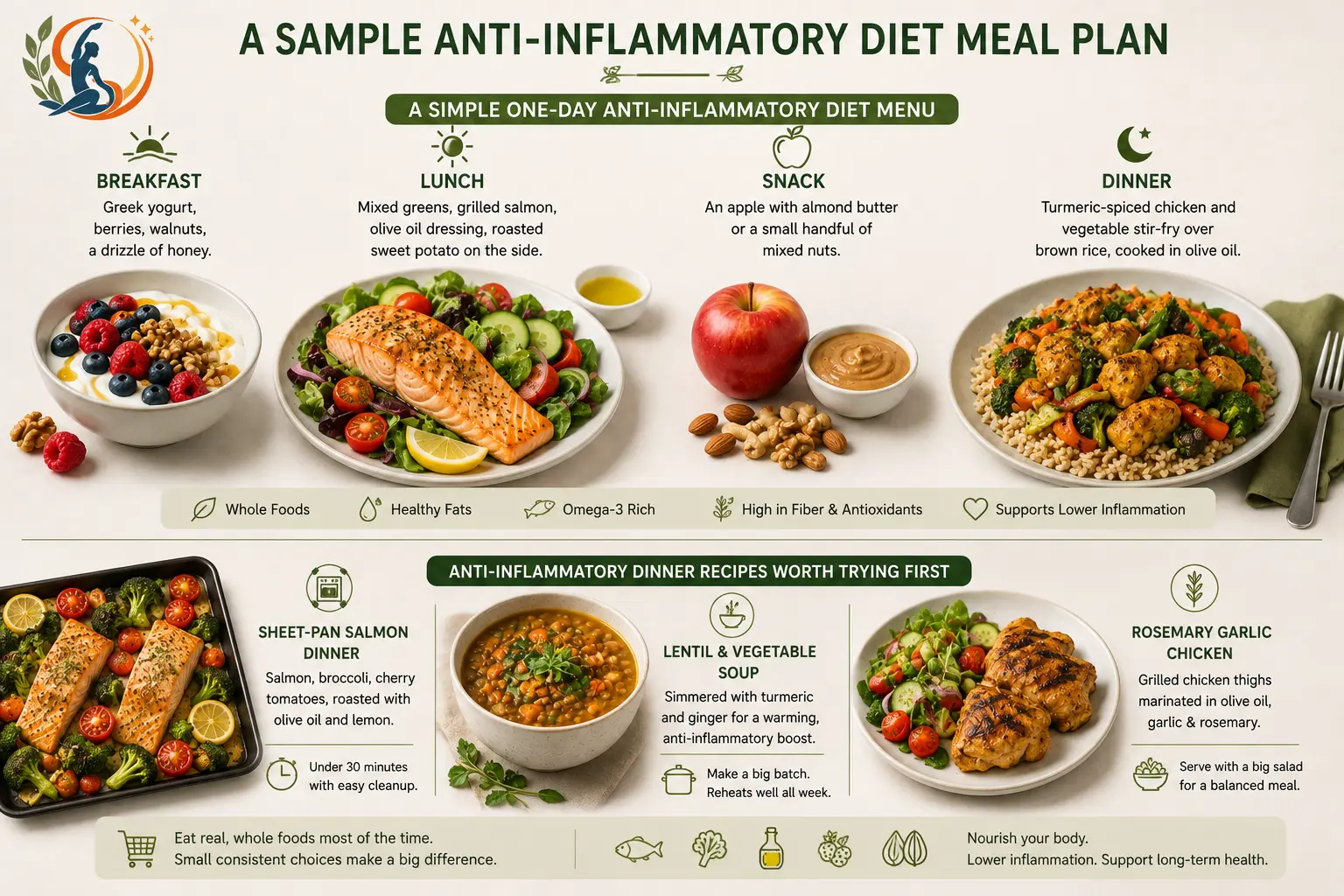
Breakfast: Greek yogurt, berries, walnuts, a drizzle of honey. Lunch: a big salad, mixed greens, grilled salmon, olive oil dressing, roasted sweet potato on the side. Snack: an apple with almond butter or a small handful of mixed nuts. Dinner: turmeric-spiced chicken and vegetable stir-fry over brown rice, cooked in olive oil. One day. Covers most of the core food list without ever feeling like a punishment.
Anti-Inflammatory Dinner Recipes Worth Trying First
A sheet-pan salmon dinner, fillets, broccoli, cherry tomatoes, roasted with olive oil and a squeeze of lemon, handles dinner in under 30 minutes with barely any cleanup after. A lentil and vegetable soup, simmered with turmeric and ginger, makes a big batch that reheats fine through the week without getting boring by day three. Grilled chicken thighs marinated in olive oil, garlic and rosemary, served next to a big salad, rounds out a rotation that still feels fresh a few weeks in.
The 21 Day Anti-Inflammatory Diet: Does a Reset Actually Work
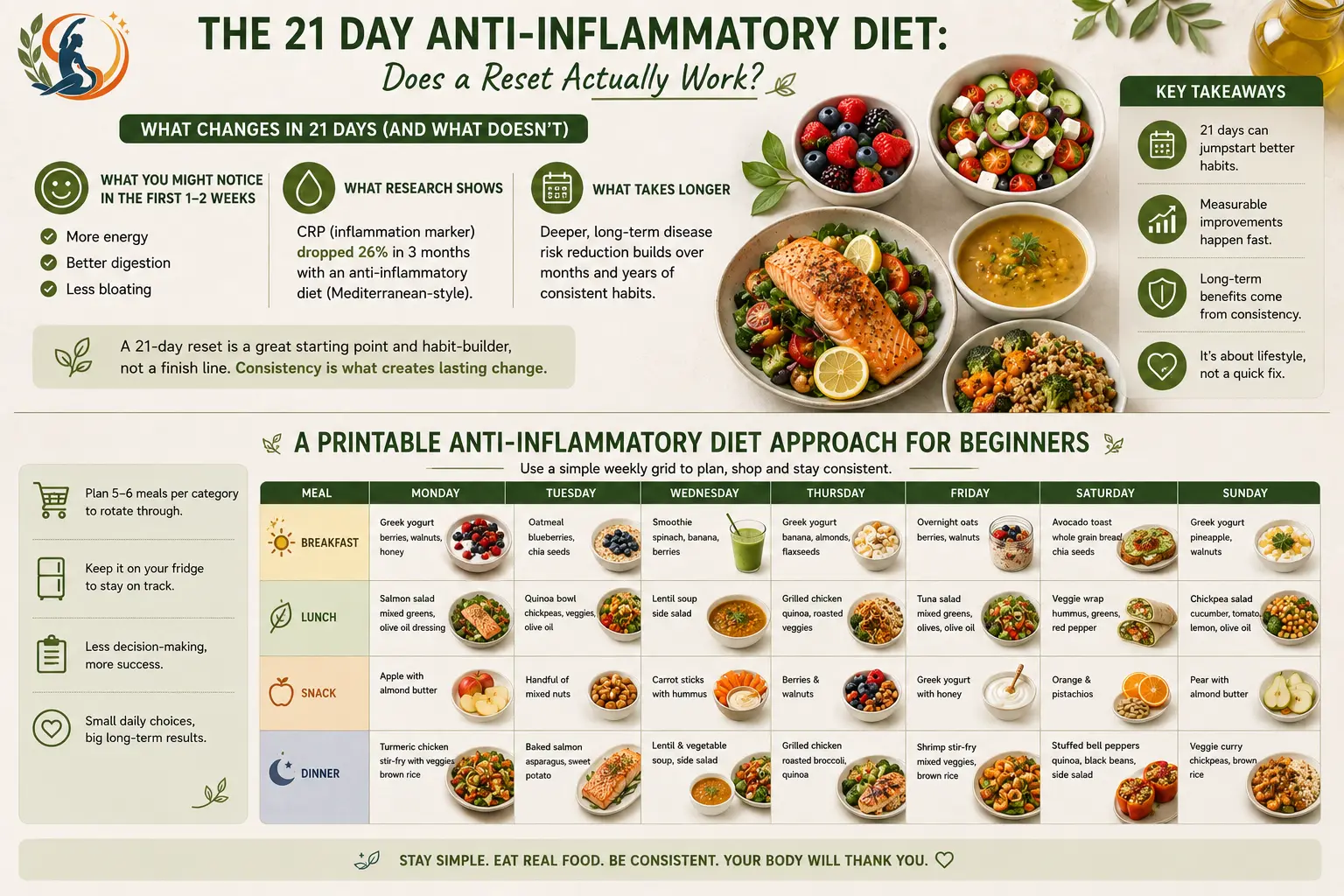
This exact timeframe gets searched constantly and it deserves a straight answer instead of nodding along with whatever marketing built the number in the first place.
What Changes in 21 Days (and What Doesn't)
Subjective changes, more energy, better digestion, less bloating, often show up in the first two weeks for anyone switching off a heavily processed diet. One study tracking a shift from a standard Western diet to a Mediterranean-style anti-inflammatory pattern found CRP dropped 26 percent in just three months. Real proof that measurable change happens fast, though that's closer to twelve weeks than three, worth being precise about. The deeper, long-term disease-risk reduction tied to lower-inflammation eating builds over months and years of actually sticking with it, not one three-week sprint. A 21 day reset is a solid starting point, a real habit-builder. Just not a finish line where inflammation gets solved forever and old habits can quietly creep back in after.
A Printable Anti-Inflammatory Diet Approach for Beginners
A printable plan works best as a simple weekly grid, breakfast, lunch, dinner, snack, five or six meals per category to rotate through. Keep it stuck on the fridge and it cuts down on that daily "what am I even allowed to eat" hesitation that quietly kills good intentions by around day four, almost without fail.
Anti-Inflammatory Diets for Specific Conditions
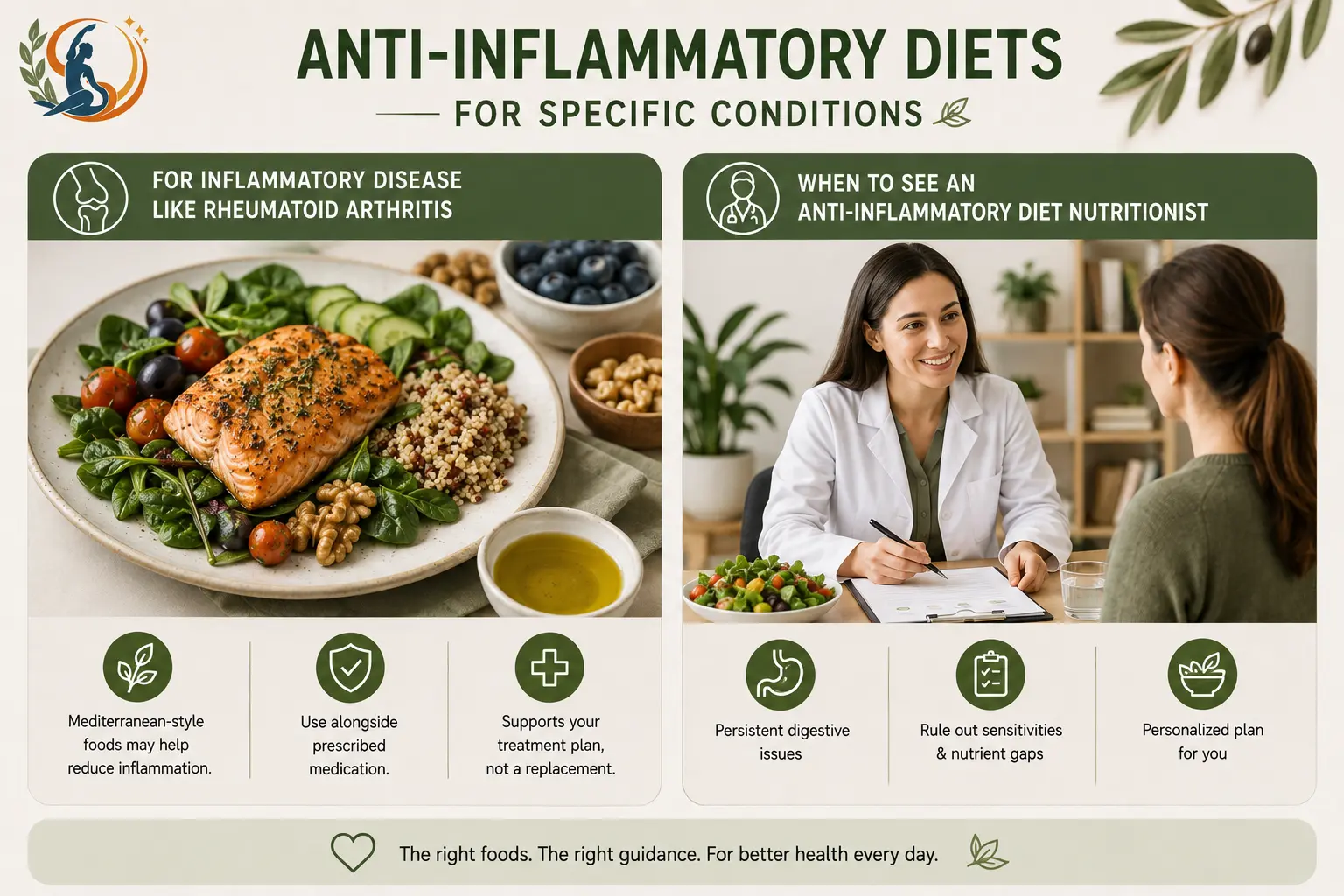
For some people this isn't general wellness chatter. It's about managing a real, diagnosed condition day after day, which changes the stakes considerably. Readers comparing structured elimination diets might also want to see how this stacks up against a paleo meal plan, which cuts a different, stricter list of foods.
Diet for Inflammatory Disease Like Rheumatoid Arthritis
No single required diet exists for inflammatory disease conditions like rheumatoid arthritis, but researchers have flagged specific foods, mostly the same Mediterranean-style list covered above, that may help control the inflammation behind flare-ups and pain. Not a replacement for prescribed medication, that needs saying plainly. A genuinely useful add-on alongside whatever treatment plan a rheumatologist's already built, though.
When to See an Anti-Inflammatory Diet Nutritionist
Anyone managing a diagnosed inflammatory condition or dealing with digestive symptoms that won't budge with general dietary tweaks, benefits from working with an anti-inflammatory diet nutritionist directly. A professional rules out food sensitivities, checks for nutrient gaps and builds a plan around medications or other conditions that a generic online meal plan simply can't account for.
Does an Anti-Inflammatory Diet Help With Weight Loss Too
Often, yes, though that's not really the point of it. The foods that make up this diet, vegetables, lean protein, healthy fats, fiber-rich whole grains, tend to be filling and lower in empty calories than a standard Western diet loaded with refined carbs and added sugar. Weight loss here usually shows up as a side effect of eating more whole food and less processed food. Not because any single ingredient is secretly torching fat behind the scenes.
Anti-Inflammatory Diet Food Delivery: Is It Worth It
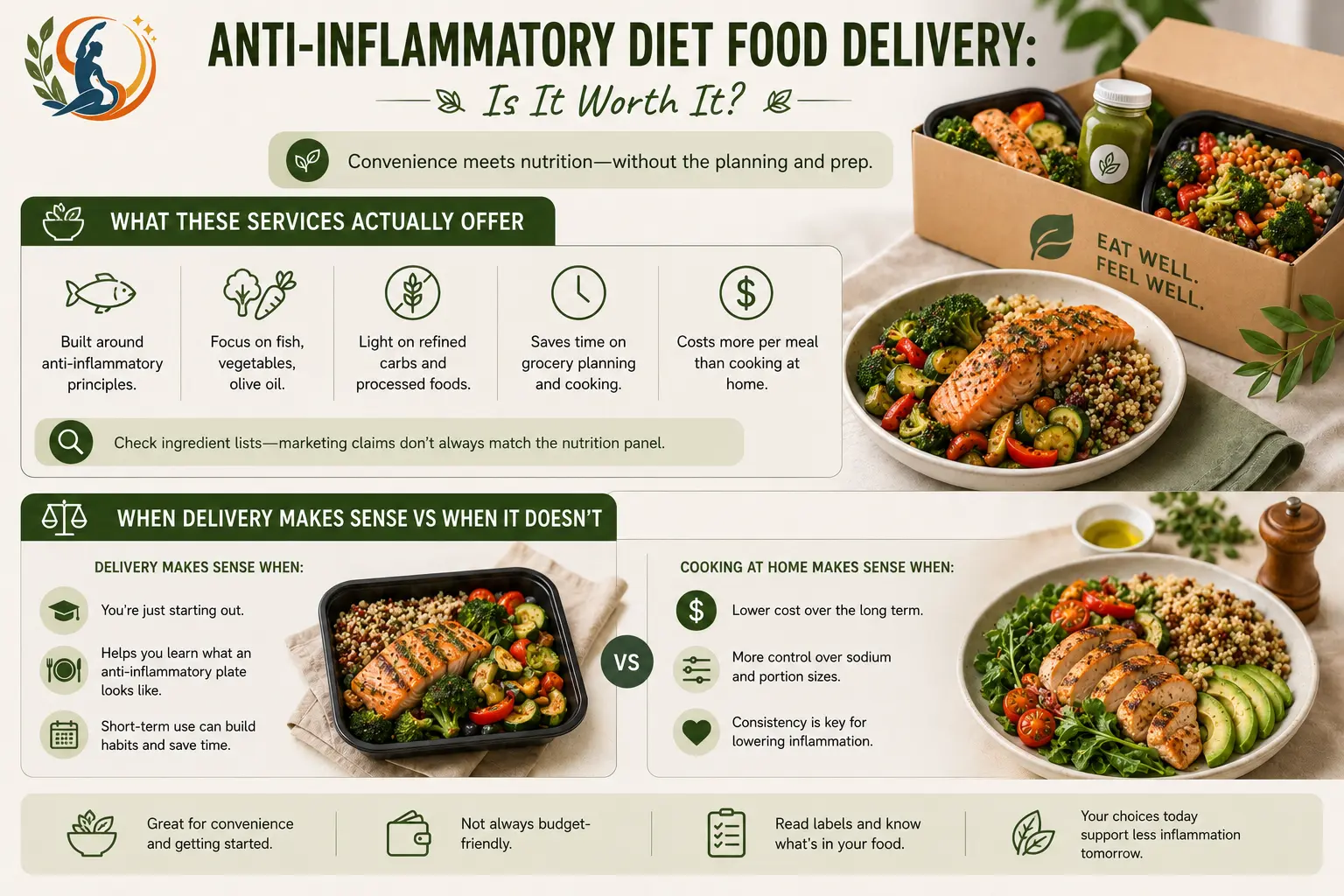
Cooking every meal from scratch isn't realistic for everyone and that gap is exactly what anti-inflammatory diet food delivery services are trying to fill.
What These Services Actually Offer
Several delivery companies now build menus specifically around anti-inflammatory principles, heavy on fish, vegetables, olive oil, light on refined carbs and processed ingredients. Works well for someone who wants the benefits minus the grocery planning and cook time, though it typically costs noticeably more per meal than making the same thing at home would. Worth checking the actual ingredient list before assuming a "wellness" label automatically fits the food list covered earlier. Marketing language doesn't always match what's printed on the nutrition panel underneath.
When Delivery Makes Sense vs When It Doesn't
For someone just starting out, a few weeks of delivery meals can genuinely help learn what an anti-inflammatory plate looks like in practice, almost like training wheels. Long term, cooking at home usually costs less and hands back more control over sodium and portion size, both of which matter for inflammation nearly as much as the ingredients themselves.
Frequently Asked Questions
1. What is the best anti-inflammatory meal plan?
A Mediterranean-style plan built around fatty fish, olive oil, vegetables, fruit, whole grains and nuts, with limited red meat and processed food, has the strongest research behind it. It's flexible enough to adapt to most tastes while still targeting measurable inflammation markers effectively.
2. What are the 7 anti-inflammatory foods?
Fatty fish, extra virgin olive oil, leafy greens, berries, walnuts and almonds, turmeric and fiber-rich whole grains consistently show up across research as strong anti-inflammatory choices. Together they cover omega-3s, antioxidants, healthy fats and fiber, the main categories driving inflammation reduction.
3. What is the most anti-inflammatory food to eat?
Fatty fish like salmon often gets top billing due to its concentrated omega-3 content, directly linked to lower CRP and IL-6. Extra virgin olive oil is a close second, thanks to oleocanthal, a compound that works similarly to ibuprofen in the body.
4. What is the 21 day anti-inflammatory diet?
It's a structured three-week reset built around anti-inflammatory foods, meant to jumpstart new habits and produce noticeable changes in energy and digestion. Measurable inflammation markers can improve within weeks, but lasting disease-risk reduction requires sticking with the pattern well beyond the initial 21 days.
5. Are eggs anti-inflammatory?
Research shows eggs have a largely neutral effect on inflammation markers, similar to red meat. They're not harmful on an anti-inflammatory diet and don't need to be avoided, but they don't provide the same measurable anti-inflammatory benefit as fatty fish or olive oil.
6. What foods cause inflammation in the body?
Refined sugar, sugary drinks, fried food and heavily processed snacks are consistently linked to higher inflammation markers. High-sodium canned goods and foods high in trans fat also contribute, mainly through their impact on blood pressure and overall cardiovascular strain.
Conclusion
An anti-inflammatory diet meal plan was never about chasing one miracle superfood, no matter what a headline somewhere wants you to believe. It's a pattern, repeated. More fish, olive oil, vegetables, nuts, whole grains. Less sugar, processed food, fried food. Backed by real, measurable drops in markers like CRP and IL-6, not just a feeling. A 21 day reset is a fine way to start, but the real payoff builds over months of actually sticking with it, not one three-week sprint followed by a slide back to normal. Start with one meal. Let the rest build from there, on its own time.


Comments (0)
No comments yet. Be the first to share your thoughts!
Leave a Comment