
My uncle got told by his doctor to "watch his sodium" a few years back and his first reaction was basically panic. No more chips? No more anything with flavor? That's what he assumed, anyway, sitting in his car in the parking lot texting me about it.
Turns out that's not really how it works. There are plenty of low sodium snacks out there that still taste like something and you don't need to live off plain rice cakes for the rest of your life.
This guide walks through real sodium numbers, what food labels actually mean, low salt snacks worth buying or making and a few low cal foods that double as fat free snacks. So you're not guessing your way through the grocery aisle anymore, squinting at tiny print in the cereal section.
Why Low Sodium Snacks Matter for Your Health
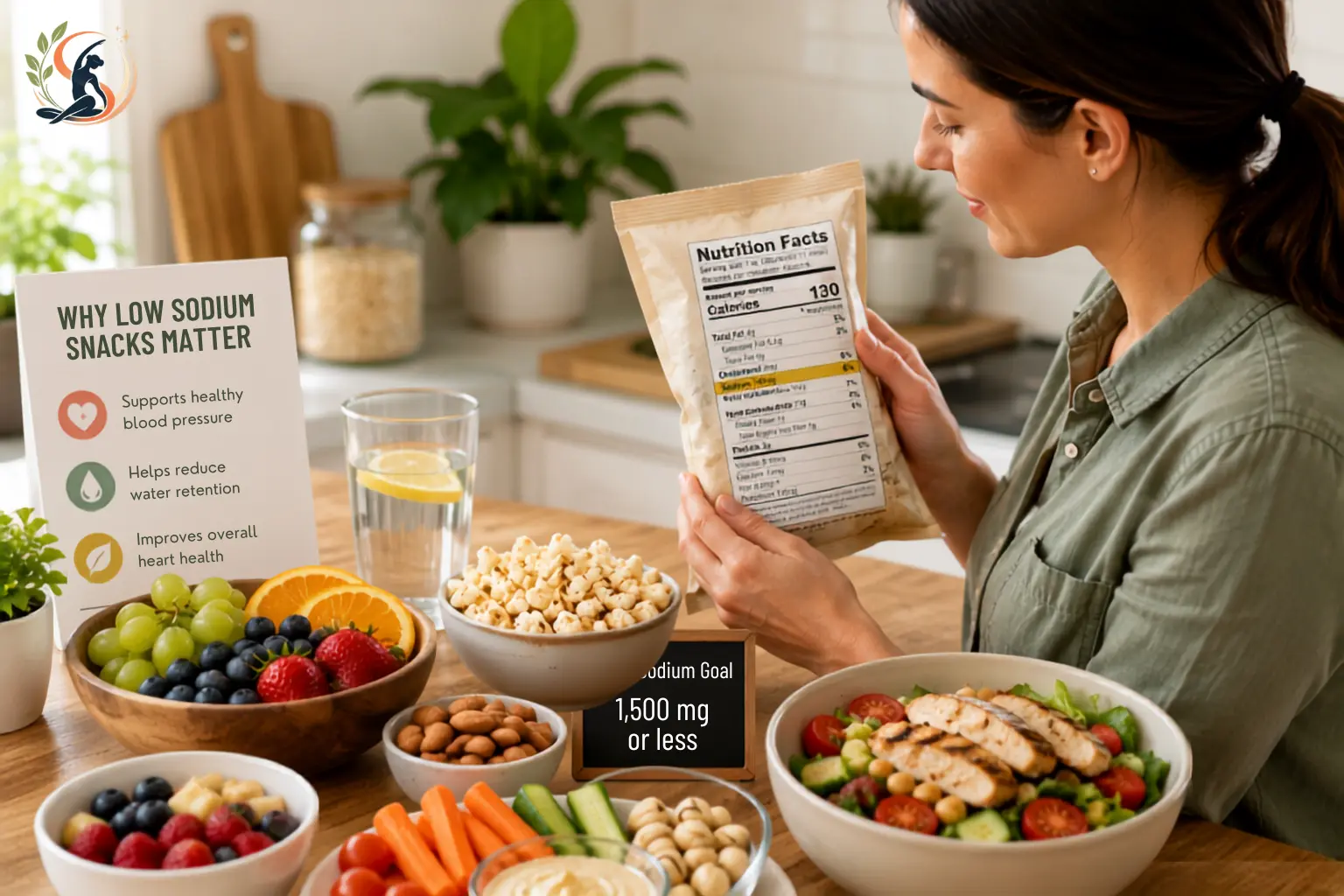
Sodium isn't the enemy exactly. Your body needs some of it. The problem is that most people get way more than they need and that extra amount adds up fast without anyone really noticing until a doctor points it out. Sodium reduction is also one pillar of a broader anti-inflammatory diet meal plan, if inflammation is the bigger concern.
Sodium Intake Guidelines You Should Actually Know
The FDA sets 2,300 milligrams a day as the general daily value on nutrition labels, which works out to roughly one teaspoon of table salt for your entire day, spread across every meal and snack. The American Heart Association actually recommends going lower than that, closer to 1,500 milligrams a day, especially for anyone managing blood pressure already.
Here's the uncomfortable part. The CDC estimates that around 90 percent of Americans go over the 2,300 milligram mark regularly, with average intake sitting closer to 3,400 milligrams a day. That's not a small overshoot. It's nearly one and a half times the recommended limit, mostly hiding in processed foods and restaurant meals rather than the salt shaker on your table.
How Sodium Affects Blood Pressure Management
Extra sodium makes your body hold onto more water and that added fluid puts more pressure on your blood vessel walls. Over time, that's a big part of blood pressure management or the lack of it and it's exactly why doctors bring this up so often with patients who already run a bit high.
The good news is sodium is one of the easier things to actually control, way more than genetics or age, both of which you're stuck with no matter what. Swapping a few daily snacks for lower sodium versions can make a real dent without needing to overhaul your entire diet overnight.
How to Read Labels for Low Sodium and Low Cal Foods
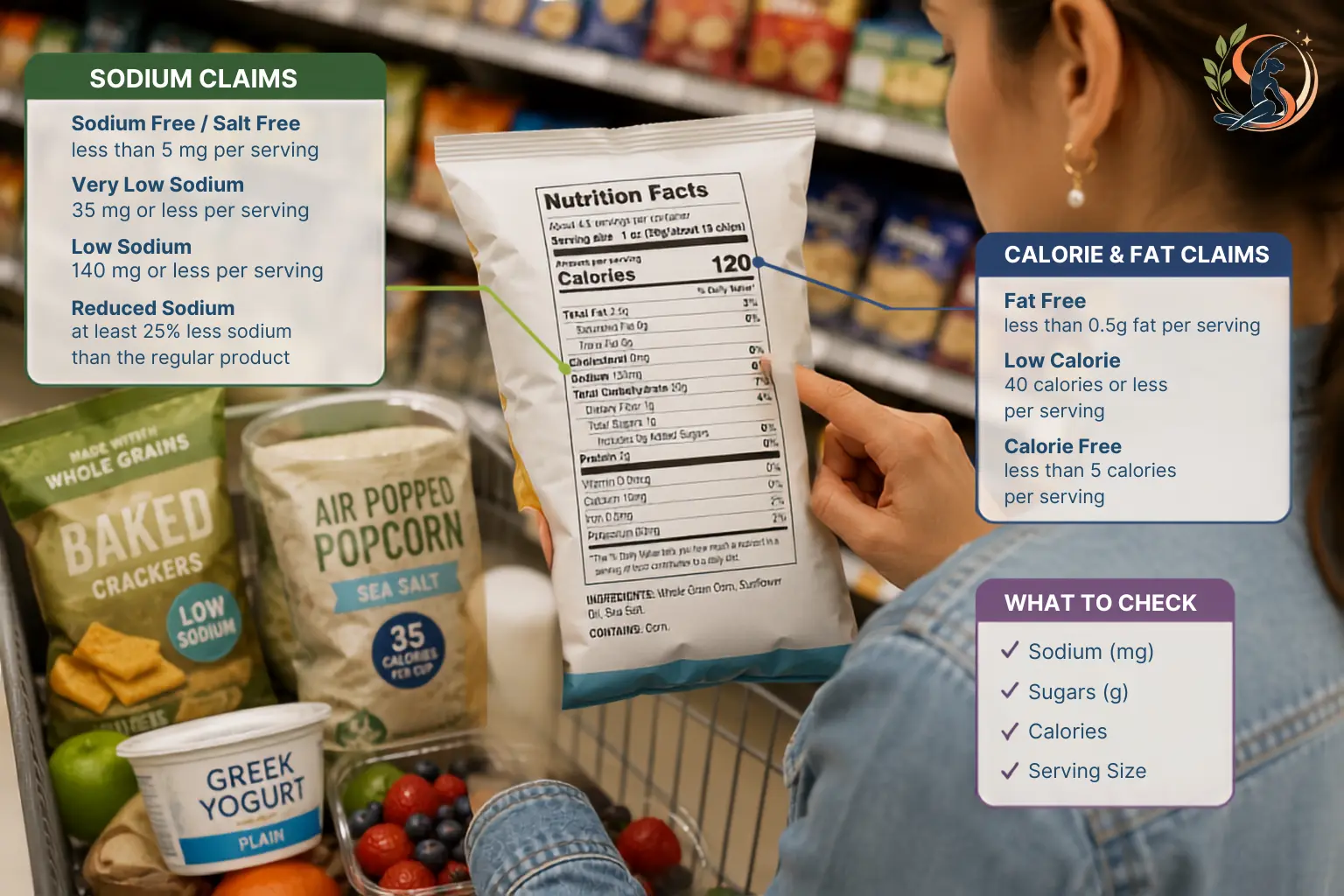
Grocery store labels throw around a lot of terms and most people just trust whatever's printed in big letters on the front of the bag without a second thought.
What "Low Sodium" Actually Means on a Label
The FDA actually regulates these terms, so they're not just marketing fluff dreamed up in a boardroom. "Sodium free" or "salt free" means less than 5 milligrams per serving. "Low sodium" means 140 milligrams or less per serving. "Very low sodium" sits at 35 milligrams or under. Anything labeled "reduced sodium" just means at least 25 percent less than the regular version, which sounds better than it sometimes actually turns out to be.
That last one trips people up constantly. A "reduced sodium" soup can still be pretty salty, it's just less salty than an already-salty original recipe. Always flip to the actual milligram number per serving instead of trusting the front-of-package claim by itself.
Low Calorie and Fat Free Snacks: What the Claims Mean
Similar rules apply here. "Fat free" means less than half a gram of fat per serving, not zero exactly, just close enough that it rounds down to nothing. "Low calorie" generally means 40 calories or less per serving and "calorie free" means under 5 calories, which is where you get foods that are basically 0 calories in practice, even if not technically zero on paper.
The catch with a lot of fat free snacks is that manufacturers often add sugar or sodium back in to make up for the flavor lost when fat gets removed. Reading both the sodium line and the sugar line together gives you a much clearer picture than checking just one number and calling it done.
Best Low Sodium Snacks You Can Buy or Make
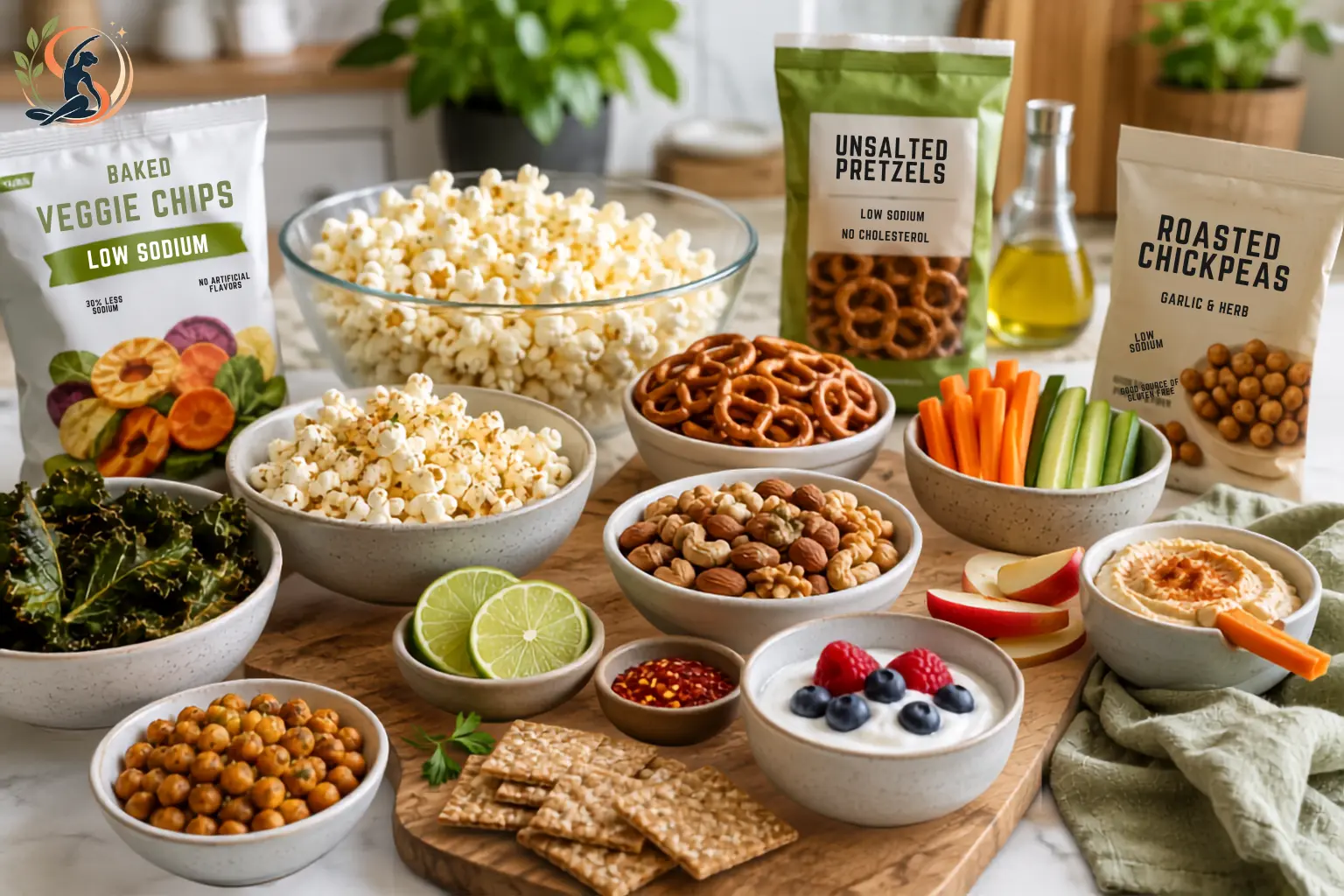
Once you know what to look for, finding decent low sodium snacks gets a lot easier, whether you're buying them or making them yourself at home.
Low Sodium Chip Alternatives
Regular potato chips can carry 150 to 200 milligrams of sodium per small serving and it's rare that anyone actually stops at one serving, let's be honest. Baked vegetable chips, unsalted popcorn with a bit of nutritional yeast for flavor and homemade kale chips with just a touch of olive oil all work as solid low-sodium chip alternatives. Unsalted pretzels are another decent swap, since the crunch factor is similar without the heavy salt coating baked into every bite.
Healthy Salty Snacks Without the Sodium Overload
You don't have to give up the salty craving entirely either, which is honestly a relief to hear for most people. Roasted chickpeas seasoned with garlic powder and a tiny pinch of salt, air-popped popcorn with lime and chili powder instead of salt or lightly salted nuts in small portions all scratch that itch just fine. Healthy salty snacks like these lean on spices and acid, like lime or vinegar, to build flavor instead of dumping in sodium to do all the work by itself.
Low Sodium Foods List: Naturally Low Sodium Options
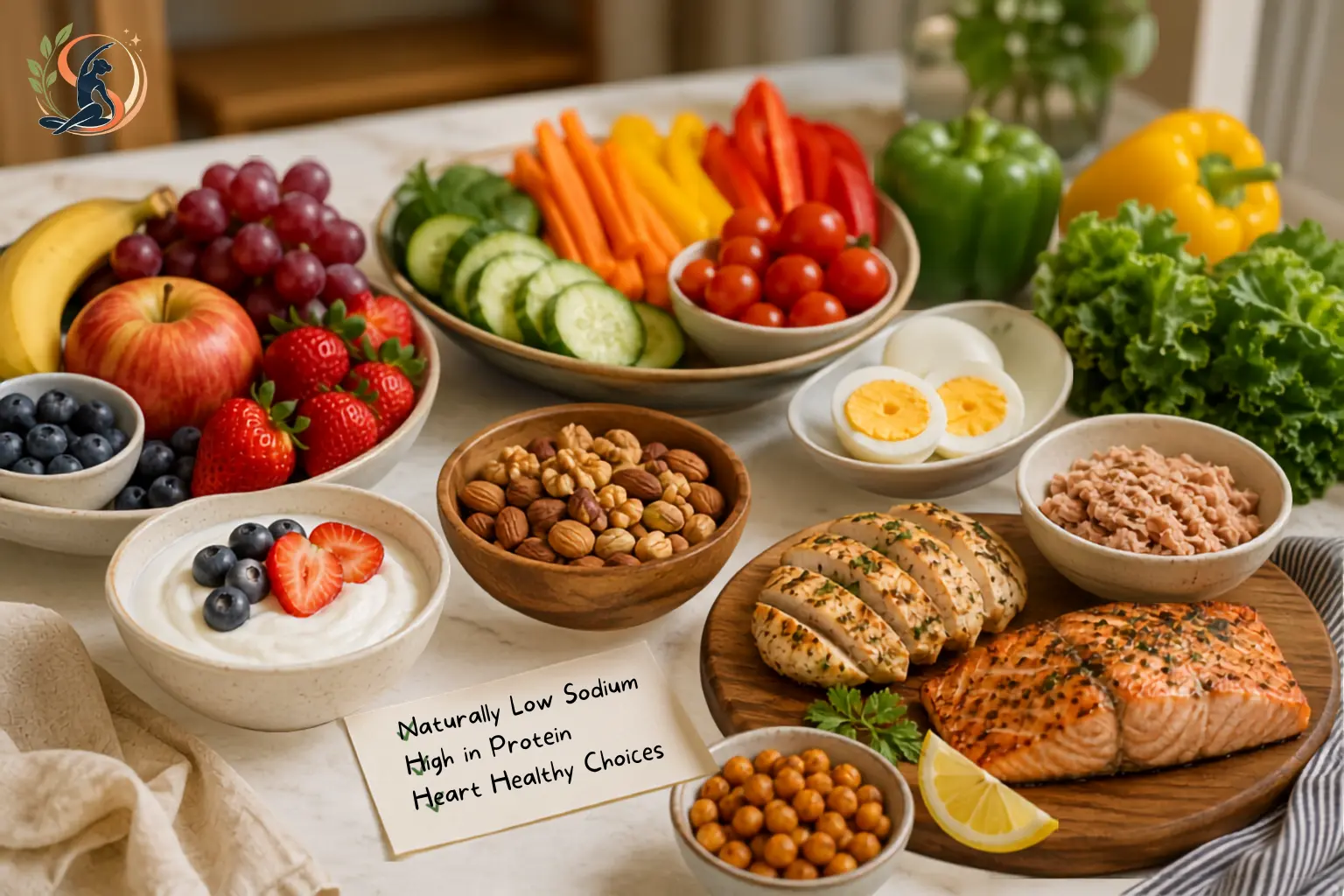
Some foods don't need any label reading at all, since they're naturally low in sodium to begin with, straight from the ground or the tree, no processing plant involved.
Low Sodium Fruits and Vegetables
Most fresh fruit falls into this category automatically. Apples, bananas, berries and melon are all low sodium fruits with next to nothing added by nature. Fresh vegetables like cucumber, bell peppers, carrots and zucchini are foods with little sodium too, as long as they're not drenched in a salty dip right afterward.
This is really the easiest part of any low sodium foods list to stick to, since fresh produce doesn't come with an ingredient label to second-guess in the first place.
High Protein Low Sodium Foods
Protein is trickier, since a lot of processed protein sources, deli meat, cheese, canned beans, lean hard on sodium for preservation and shelf life. Plain Greek yogurt, unsalted nuts, low-sodium canned tuna and a hard-boiled egg are all high protein low sodium foods that don't come with a hidden sodium bomb attached to them. Fresh cooked chicken or fish, seasoned yourself at home, beats almost any packaged protein snack on the sodium front, hands down, every time.
Snacks That Are Basically Calorie Free
Some snacks are so low in both sodium and calories that they barely register as a food decision at all, which is honestly kind of freeing once you notice it.
Foods That Are Basically Free Snacks
Celery sticks, cucumber slices and lettuce wraps all sit so low in calories that they function almost like a snack 0 calories in practice, even though nothing's ever truly at zero on a technical level. These work great for anyone who wants to snack without thinking too hard about portion size or guilt afterward.
Low Calorie Salty Snacks Worth Trying
Seaweed snacks, a small serving of pickles or a few dill pickle spears bring that salty craving satisfaction while staying genuinely low in both sodium and calories, as long as you check the sodium line since pickles can vary a lot brand to brand. Low calorie salty snacks like these work well specifically because the volume of food is high while the actual calorie count stays pretty low the whole time.
DASH Diet Snacks and Heart-Healthy Eating
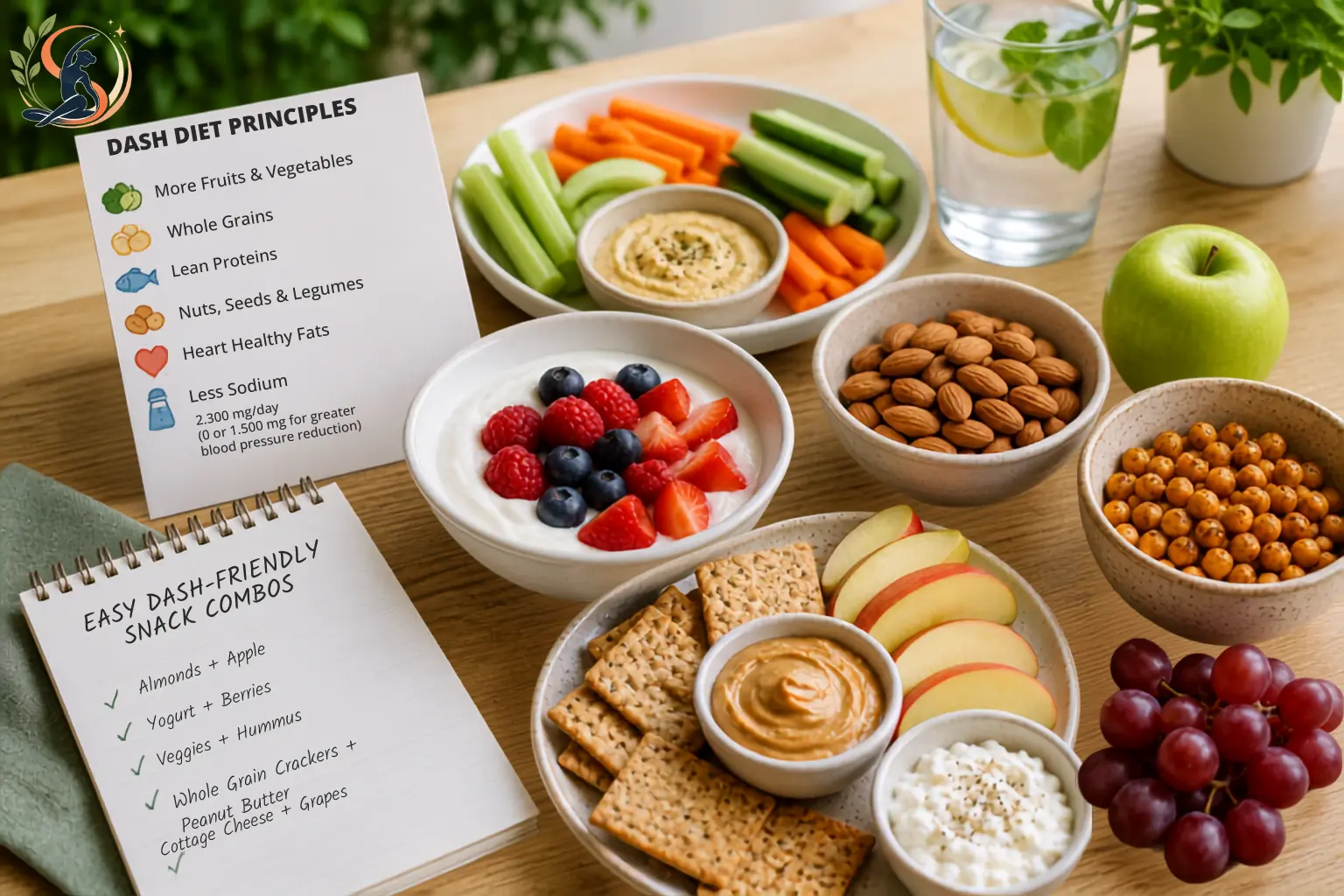
The DASH diet was actually built around exactly this problem, lowering sodium without making food boring or joyless in the process.
What the DASH Diet Actually Recommends
DASH stands for Dietary Approaches to Stop Hypertension and it was designed specifically to lower blood pressure through food choices rather than medication alone. The plan leans heavily on fruits, vegetables, whole grains and lean protein, while capping sodium around 2,300 milligrams a day or 1,500 for a stricter version aimed at bigger blood pressure drops.
The research behind this isn't small either. The landmark DASH-Sodium trial followed 412 adults and found that combining the DASH diet with lower sodium intake dropped systolic blood pressure by an average of over 10 points in people with higher starting blood pressure and in some cases the drop was closer to 20 points. That's a bigger effect than a lot of people expect from diet alone, no medication involved, just food choices repeated daily over a few weeks.
Easy DASH-Friendly Snack Combos
A handful of unsalted almonds with an apple, plain yogurt with fresh berries or whole grain crackers with unsalted natural peanut butter all fit neatly into DASH diet snacks without much thought required on a busy day. These heart-healthy snack combos work because they pair fiber and protein together, which keeps you full without needing a salty, processed snack to feel satisfied afterward.
Low Sodium Fast Food Options and High Sodium Traps
Eating out makes this whole thing harder, no question about that, but it's not impossible with a bit of know-how going in. The same label-reading habit matters on the road too — see best road trip snacks for gas-station-specific picks.
Low Sodium Fast Food Options When You're Out
Grilled chicken without sauce, a plain baked potato, side salads with dressing on the side and plain oatmeal at breakfast chains all run lower in sodium than most fast food defaults on the menu board. Low sodium fast food options do exist, they're just rarely the first thing listed or advertised, so it helps to check nutrition info on the restaurant's app or website before you actually order.
Common Foods That Are Sneaky High in Sodium
Some high sodium foods don't even taste salty, which is exactly what makes them sneaky in the first place. Bread, cereal and even sweet baked goods can carry surprising amounts of sodium as a preservative, not as a flavor choice at all. Canned soups, frozen dinners and deli meat are the more obvious offenders, sometimes carrying half a day's sodium limit in a single serving alone.
When comparing similar low sodium products at the store, checking milligrams per serving side by side usually reveals bigger gaps than you'd expect between two boxes that look nearly identical on the shelf.
Making Low Sodium Snacking an Actual Habit
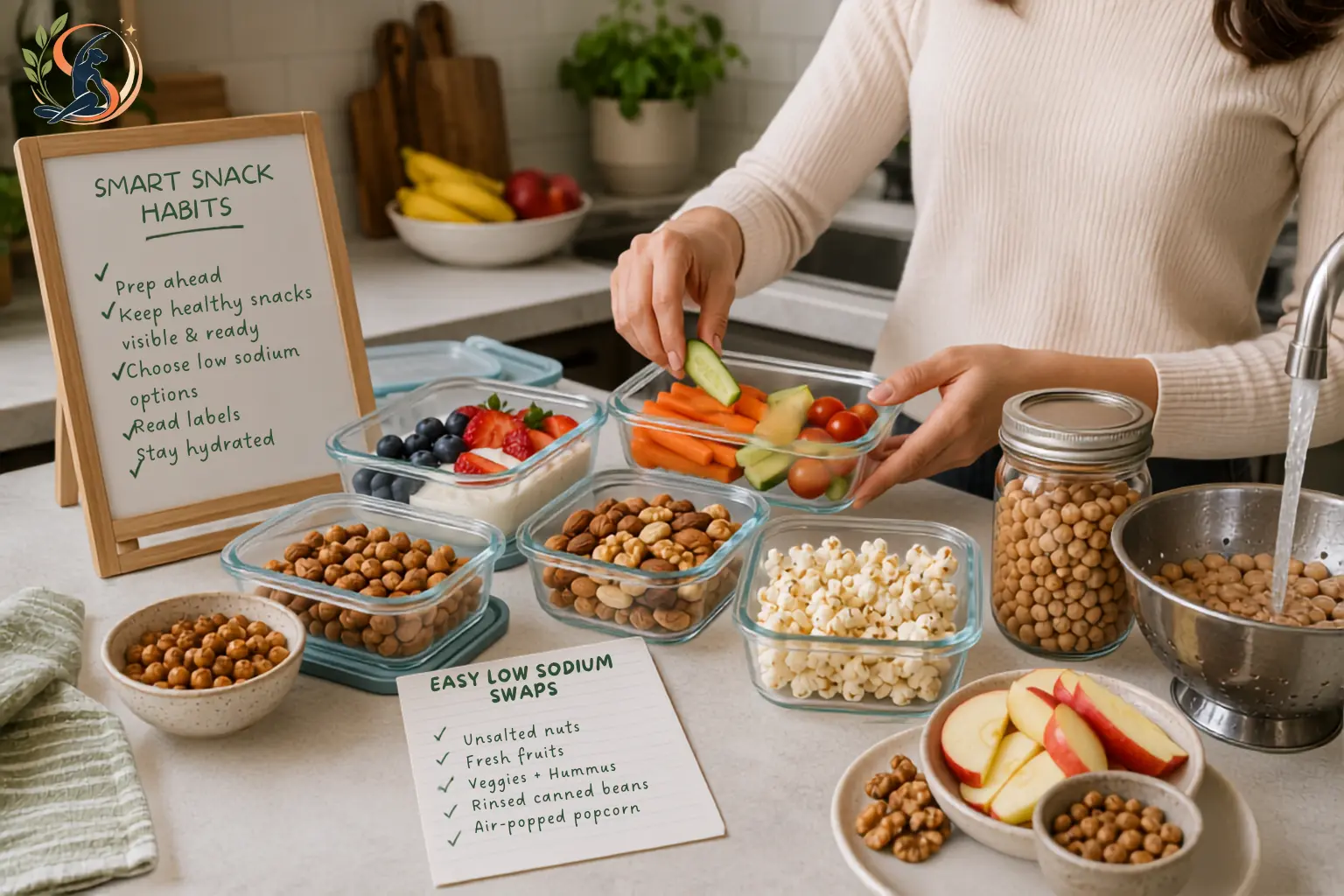
Knowing the right foods is one thing. Actually reaching for them at 3 pm on a stressful Tuesday is a different challenge entirely and that's where most good intentions quietly fall apart. The same prep-ahead principle is covered in more depth in this guide to healthy snacks for work.
Prep Ahead So the Easy Choice Is the Healthy One
Portioning out unsalted nuts, cutting up vegetables or rinsing canned beans to cut their sodium content all take a few minutes, but they need to happen before hunger hits, not during. If a low sodium snack is already sitting in the fridge ready to go, it competes fairly against the chip bag in the pantry. If it's not ready, the chip bag wins basically every time, no contest at all.
Rinsing Canned Foods Cuts Sodium More Than People Expect
This one's a small trick that a lot of people never hear about and it costs nothing extra. Rinsing canned beans, canned vegetables or canned tuna under water for about thirty seconds can cut their sodium content noticeably, since a good chunk of the added sodium sits in the packing liquid rather than the food itself. It doesn't take the sodium to zero, but it's a genuinely easy way to lower the number without buying a different product or changing your whole shopping list around.
Frequently Asked Questions
1. What snacks are naturally low in sodium?
Fresh fruit like apples and berries, raw vegetables like cucumber and carrots, plain unsalted nuts and plain yogurt are all naturally low in sodium. These foods skip the preservatives and added salt found in most packaged snacks, so no label reading is really required.
2. How much sodium should you have per day?
The FDA's general daily value is 2,300 milligrams, while the American Heart Association recommends closer to 1,500 milligrams for better blood pressure control. Most Americans actually consume around 3,400 milligrams a day, well above either recommended limit.
3. What are good low-sodium alternatives to chips?
Baked vegetable chips, unsalted popcorn, homemade kale chips and unsalted pretzels all work as solid low-sodium chip alternatives. Adding spices like paprika, garlic powder or chili powder brings back flavor without relying on sodium to do the heavy lifting.
4. What snacks have the lowest sodium?
Fresh fruit and raw vegetables sit at the very bottom of the sodium scale, often under 5 milligrams per serving. Plain nuts without added salt and homemade snacks made without a salt shaker also land extremely low compared to packaged options.
5. What are 11 foods low in sodium?
Apples, bananas, berries, cucumbers, bell peppers, plain yogurt, unsalted nuts, fresh chicken, fresh fish, hard-boiled eggs and plain oats all qualify as low sodium foods. None of these need heavy processing, which is exactly why their sodium content stays naturally low.
6. Which snacks are high in sodium?
Regular potato chips, pretzels, deli meat, canned soup and processed cheese are among the highest sodium snacks around. Some of these carry over 500 milligrams per small serving, making them easy to overdo without realizing how much sodium adds up.
Conclusion
Low sodium snacks don't have to mean bland or boring, even though that's usually the first fear people have when a doctor brings up the topic. A little label reading, a shift toward naturally low sodium foods and a few smart swaps for your salty cravings covers most of the work and the research backs up why it's worth the effort.
Whether you're managing blood pressure, following a DASH-style approach or just trying to eat a bit cleaner day to day, there's a snack here that fits without asking you to give up flavor entirely.


Comments (0)
No comments yet. Be the first to share your thoughts!
Leave a Comment