
Okay so, on the first morning of my 200 hour yoga training, I remember standing there in my little rented room in Rishikesh at like 5:40 AM, mat rolled under my arm, genuinely asking myself why I thought quitting my job for this was a good idea. I hadn't slept properly, the ceiling fan in my room made this weird clicking noise all night and I kept thinking, what if everyone else here is way more advanced than me and I just embarrass myself in front of thirty strangers.
Three weeks later I'm sitting through a philosophy class, half-listening because my hips are aching from that morning's practice and out of nowhere the teacher says something about attachment and letting go that just... hit different. I actually teared up a little, which, if you'd told me that a month earlier I would've laughed at you. My roommate from Germany noticed and just quietly slid a tissue over without saying a word about it, which somehow made it worse and better at the same time.
Anyway, If you're here, you're probably where I was curious, a bit scared, wondering if a yoga 200 hour training is one of those things everyone hypes up online but actually kind of overrated or if it's genuinely worth the money and the time off. I'm not going to give you the shiny brochure version of this.
I did mine, I've talked to a bunch of people who've done theirs at different schools and I want to just tell you straight what it actually is, who it's actually for and what nobody really warns you about before you sign up. So let's just get into it. No fluff, no "transform your life in 200 hours" nonsense plastered everywhere. Just what I wish someone had told me over a cup of chai before I booked mine.
What exactly is Yoga 200 Hour Training

Technically, a yoga 200 hour training is the base-level certification most yoga alliances around the world accept as the minimum to call yourself a teacher. Usually it's three to four weeks if you do it the intensive way, like I did or it stretches out over a few months if there's a part-time option and you've got a job or kids you can't just walk away from.
But honestly calling it "a certification" makes it sound way more boring and administrative than what it actually feels like while you're in it.
What nobody tells you going in at least nobody told me is how little of it is actually about nailing poses. Yeah you'll practice, a lot, probably more than you've ever practiced in your life. But so much of a proper yoga 200 hour training is really about the why behind it.
Why does the hip open that way, why do we breathe like this, how do you explain a pose to someone whose body doesn't move like yours does. It's less about you being impressive on the mat and more about you understanding what's actually happening, which, honestly, took me longer to get than I'd like to admit.
The Core Structure of a 200 Hour Yoga Teacher Training
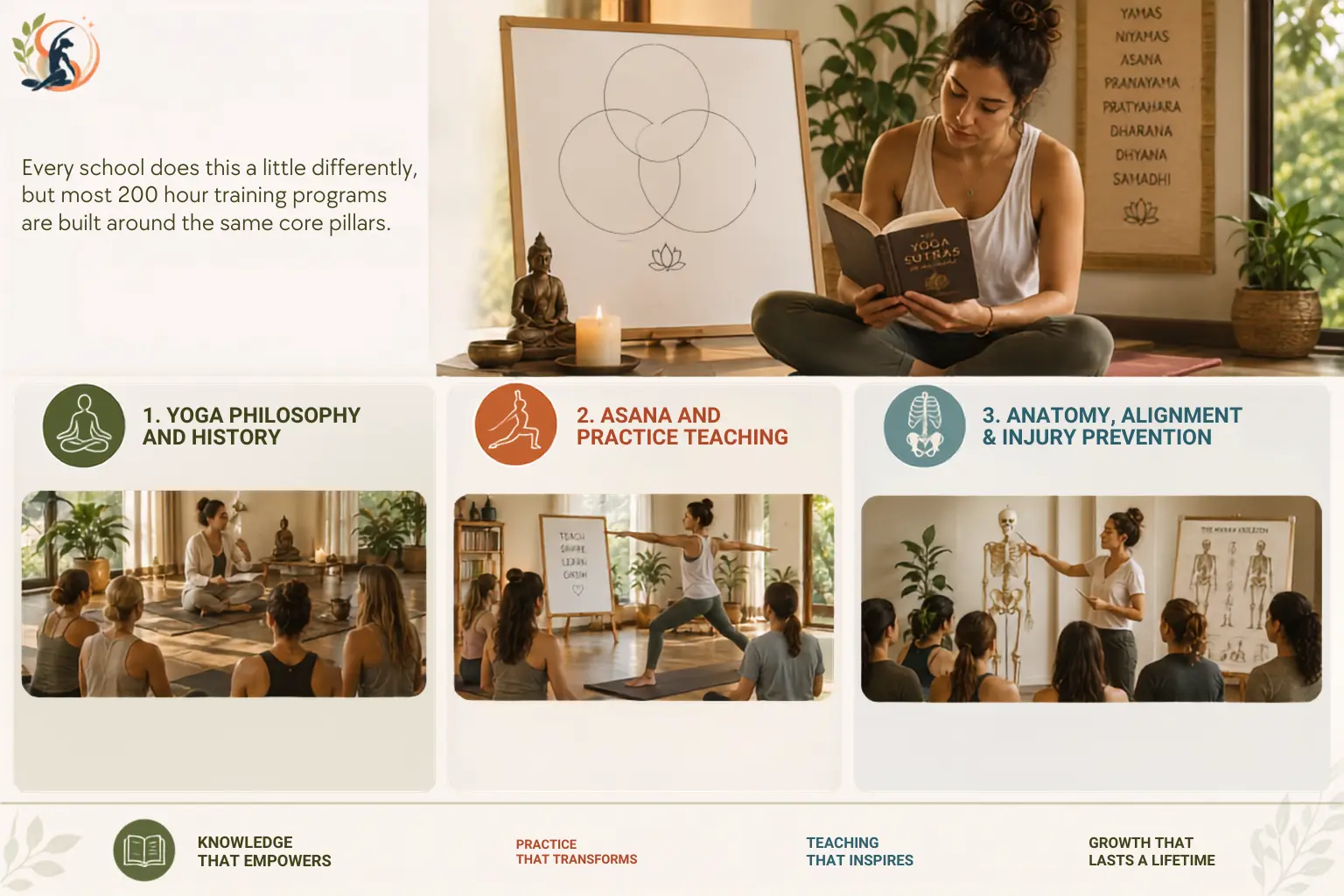
Every school does this a little differently, some lean way more into philosophy, some barely touch it and just drill asana all day but most decent 200 hour yoga training programs are built around the same handful of pillars, just weighted differently depending on the school and the tradition.
Yoga Philosophy and History
This part genuinely wrecked me a little, in a good way. We went through the Yoga Sutras, the eight limbs, where all of this actually came from way before it became a thing you see on someone's Instagram story with a green juice next to it. It's not dry textbook stuff either, not the way it was taught to us anyway. It kind of quietly rearranges how you look at your own life, not just your practice, which I did not see coming.
Asana and Practice Teaching
This is the bit everyone pictures, right, doing poses all day. And sure, you do a lot of that. But the real gut-punch moment is when they split you into small groups and make you actually teach each other. I forgot half my sequence the first time I taught, went completely blank mid-sentence, everyone just kind of waited while I stared at my own notes like they were written in another language. Mortifying. Also, weirdly, one of the best things I did that month.
Anatomy, Alignment and Injury Prevention
This is where I realized I genuinely did not understand my own body at all before this. Like, at all. You learn how joints actually move, why some poses are a bad idea for certain bodies no matter how good they look on someone else, how to modify safely instead of just cranking someone deeper because it photographs well. It's the least "fun" part on paper, ironically it's probably the part I use most now that I actually teach.
Who Should Consider a 200 Hour Yoga Training
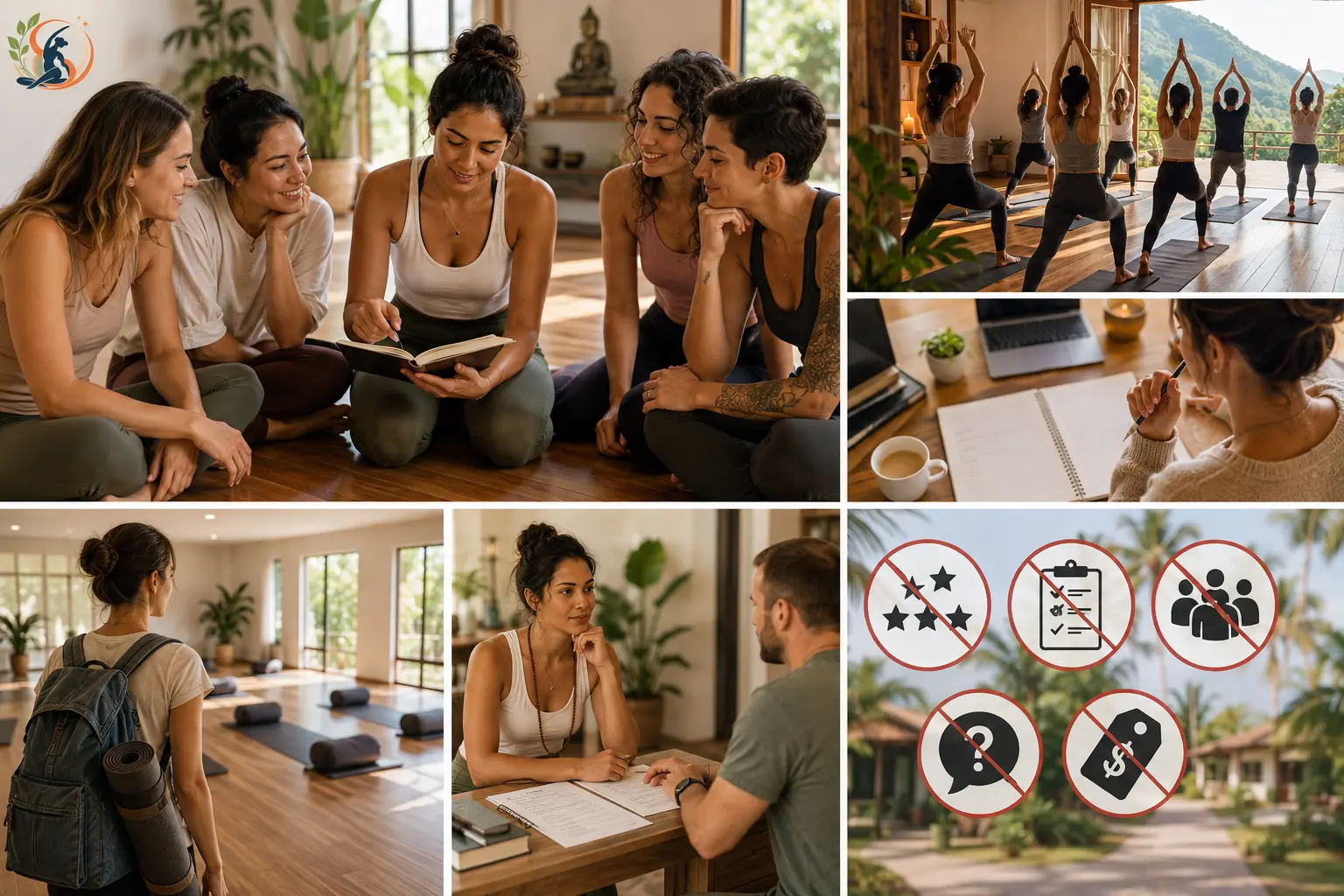
You do not need to touch your toes. You don't need years of practice. I want to say that upfront because it stopped me from signing up for almost a year, this weird idea that I wasn't "ready." Here's who I actually saw thrive in mine, based on the people I trained alongside for a month:
People a year or two into casual practice who want more depth, not just more flexibility
Folks going through some kind of career reset, even if teaching isn't really the plan
Fitness instructors adding something real to what they already offer clients
Someone going through a rough stretch of life who just needs structure and stillness for a bit
The genuinely curious ones who want more than a Sunday morning studio class can give them
How to Choose the Right 200 Hour Yoga Training School
This is honestly where I almost messed up. Not every yoga 200 hour training is remotely the same and the difference between a solid school and a mediocre one is not something you can tell from the website photos, trust me, I nearly picked one based on how nice their pool looked. I actually had two schools open in browser tabs for about a week, going back and forth, before a friend who'd already done hers talked me out of the pretty one.
Location's nice, sure and the tradition matters too Hatha, Ashtanga, Vinyasa, Yin, whatever draws you but it's worth knowing a good yoga 200 hour training can happen in some plain concrete building in a busy city just as easily as some dreamy mountain retreat with good lighting.
What actually matters is boring stuff. Teacher-to-student ratio. How experienced the lead teachers actually are, not just how many followers they have. Whether the school's properly registered. A gorgeous location run by underqualified staff just gets you a nice photo and a certificate that doesn't mean much once you're standing in front of real students.
Red Flags to Watch For Before You Enroll
Reviews that all sound weirdly similar, posted around the exact same week
No real breakdown of hours across philosophy, anatomy, teaching practice
Class sizes so big you'll basically never get personal feedback from anyone
Vague, dodgy answers when you directly ask about alliance registration
Prices way lower than everyone else nearby, for reasons nobody can quite explain
A Day in the Life During 200 Hour Yoga Training
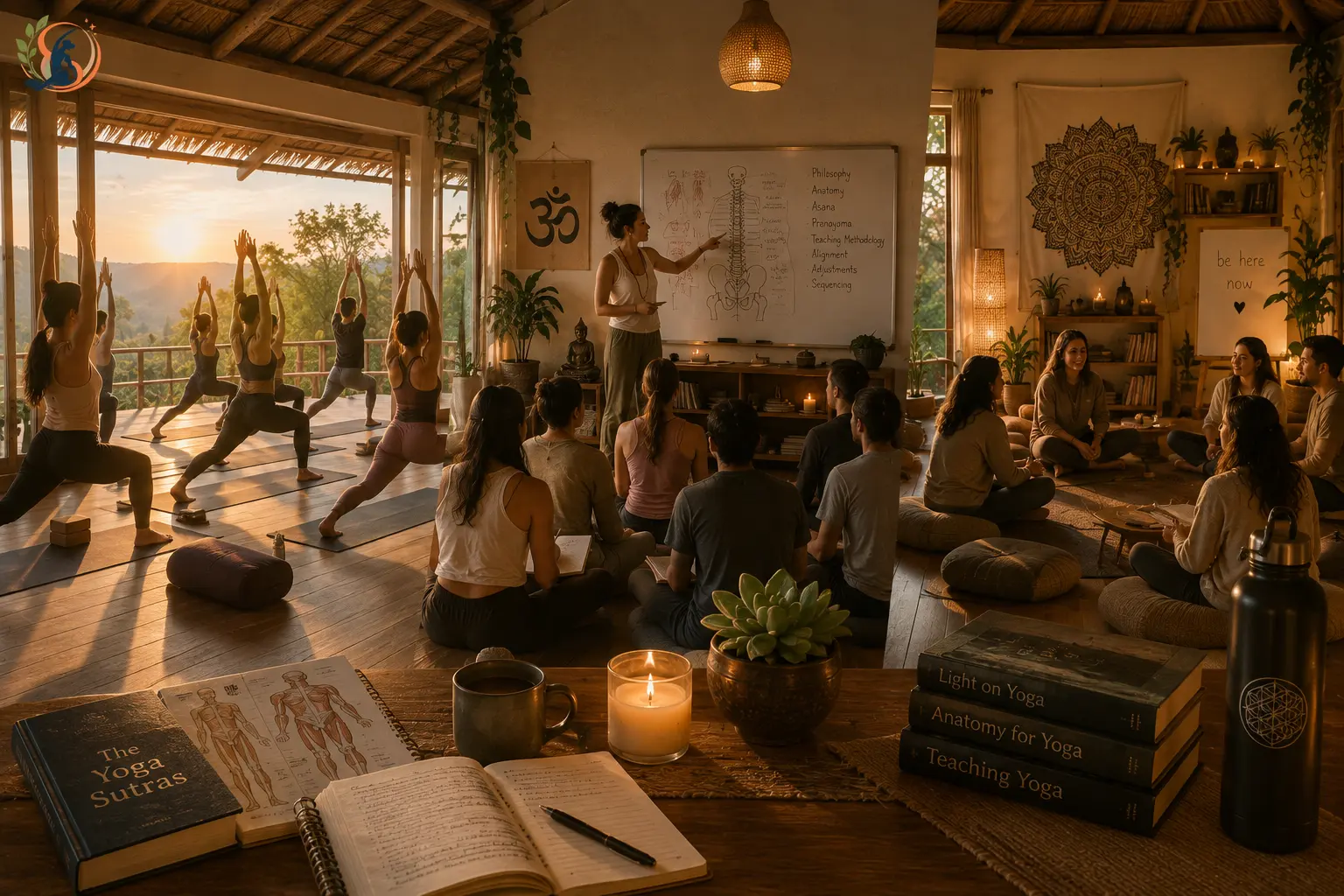
Everyone asks this and expects some dreamy, incense-and-birdsong answer. It's peaceful, sometimes, but mostly it's just... a lot. More structured, more tiring than people picture in their head before they go.
Morning Practice
Most mornings started before sunrise, honestly earlier than I've ever willingly woken up for anything in my life. A couple hours of asana, then breathwork. First few days I hated it. By week two I was weirdly setting my alarm early on my own, which I still don't fully understand.
Afternoon Theory Sessions
This is where your brain just gets hammered, honestly. Philosophy, anatomy, teaching methods, back to back. Around week two almost everyone in my group hit this wall where it all just felt like too much information at once. Totally normal apparently, they warned us about it and it still hit hard.
Evening Reflection and Rest
Evenings were softer. Sometimes a gentle practice, sometimes just sitting around talking through what we'd learned. By the time I got back to my room I was tired in that good, earned kind of way, not the scrolling-my-phone-till-2am kind of tired I was used to before.
Real Benefits of Completing Your 200 Hour Yoga Training
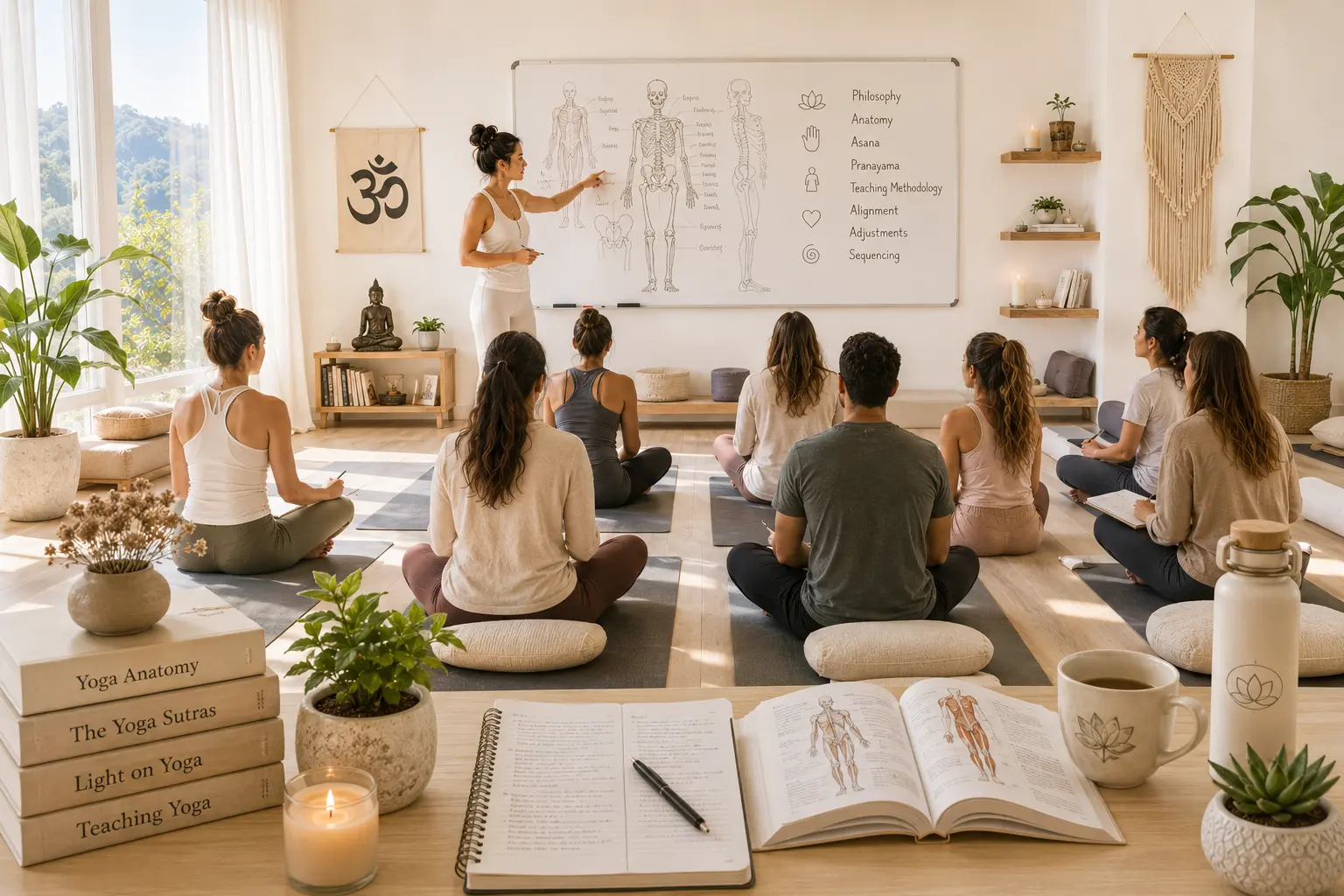
Beyond the actual piece of paper, which does matter if teaching's the goal, a yoga 200 hour training gave me a bunch of stuff I honestly didn't see coming:
A way more informed personal practice, even setting teaching aside completely
Body awareness that quietly follows you into regular life, not just on the mat
A tight little group of people who went through something intense with you and just get it
Actual practical tools for stress that go past the usual "just breathe" advice
A legit, recognized qualification if you do decide to teach down the line
Some graduates specialize further from here see how to become a meditation teacher for a related but distinct certification path.
Challenges You Might Face During Training
Nobody talks about this part enough and honestly it bugs me a little, cause I think it sets people up wrong. A yoga 200 hour training is not all incense and inner peace, not consistently anyway. There are genuinely hard days, physically and emotionally and knowing that going in helps more than you'd think.
You get tired fast, especially week one. Emotionally raw too sometimes, because a lot of training pushes you outside your comfort zone on purpose, through partner work, public speaking, hours of sitting with your own thoughts whether you want to or not. It's not designed to be easy. That's kind of the whole point, actually.
Common Struggles and How to Handle Them
Soreness and exhaustion early on, which does ease up as your body catches up
Homesickness or just feeling weirdly emotional, more common than anyone admits out loud
Sanskrit terms and sequences that refuse to stick, until suddenly around week three they just do
Group friction, since you're basically living with the same people for a month straight
That nagging "am I even good enough for this" feeling, which almost everyone quietly has at some point
Is a 200 Hour Yoga Training Really Worth It
People ask me this a lot and my honest answer is, it depends what you're actually expecting. If you think you'll walk out ready to open your own studio and confidently teach a packed class, that's probably not realistic after just 200 hours, for most people anyway. But if you want a real, solid, foundational experience that deepens your practice and gives you an actual recognized starting point, then yeah. Genuinely worth it.
What I didn't expect was how much it messed with, in a good way, my patience and my relationship with my own body. The certificate matters if teaching's your goal, sure, but the personal shift that comes out of a 200 hour yoga training honestly mattered just as much to me, maybe more, if I'm being fully honest about it.
Life After Your 200 Hour Yoga Training

Coming home was its own weird adjustment, one nobody warns you about either. You spend a month in this little bubble, early mornings, shared meals, constant learning and then you land back in your normal life, traffic, emails, a fridge that doesn't have the same simple food you got used to eating every day.
Give yourself some grace here. Fitting all that back into a busy, regular life takes actual time and that's completely fine. Some people jump straight into teaching, picking up a class or two at a local studio or just starting small with friends. Others take months before they feel ready to stand in front of a room.
Both are fine, there's no timeline you're supposed to hit. What actually matters is that you keep practicing, keep learning, let it settle into your life slowly instead of expecting some overnight transformation.
A yoga 200 hour training is a starting point, not the whole story and every teacher I've talked to says the real learning starts once you're actually teaching and messing things up in real time.
If you do end up teaching, it helps to remember you don't need all the answers, you just need to be a few steps ahead of the people in front of you. The training gives you the language and the tools. The confidence, that part comes later, slowly, through actual classes and actual awkward first attempts.
For readers who go on to the next level, this 300 hour yoga teacher training account covers what changes once the basics are already in place.
Frequently Asked Questions
1. Do I need prior yoga experience before starting a 200 hour training?
Not really, though a few months of casual practice beforehand helps a lot. Most schools recommend some familiarity with basic poses first, so you're not learning fundamentals and doing an intensive training at the exact same time, which gets overwhelming fast.
2. How physically demanding is a 200 hour yoga training?
More demanding than your average studio class, honestly. Two practice sessions most days, plus hours of sitting through theory. Expect real fatigue, especially that first week. Most people adjust within several days once their body sort of catches up.
3. Can I teach yoga professionally right after completing my 200 hour training?
Yes, a certified 200 hour training lets you register with most yoga alliances and start teaching. That said, a lot of new teachers spend a bit of time building confidence first, assisting others or teaching smaller classes before running a full session solo.
4. How much does a 200 hour yoga training typically cost?
Honestly it varies a ton depending on country, school reputation and where you're staying, anywhere from a few hundred to a few thousand dollars. Compare curriculum quality and teacher experience, not just price, cheaper doesn't always mean better here.
5. Is online 200 hour yoga training as good as an in-person one?
Online gives you flexibility, which matters a lot if you've got work or family to juggle. But in-person training gives you hands-on correction and that group bond that's genuinely hard to replicate through a screen, no matter how good the setup is.
6. Is there an age limit for joining a 200 hour yoga training?
Not really, most schools welcome anyone from late teens to their sixties or beyond. What matters more than age is your general health and willingness to modify poses. Talk to the school directly if you have specific physical concerns.
Conclusion
A yoga 200 hour training isn't just a piece of paper, it's a genuinely uncomfortable, deeply worthwhile month that quietly reshapes how you move, think and teach. Some days you'll question why you even signed up, sore and homesick and other days something clicks that you didn't know you were missing.
That's how it went for me. It won't hand you instant confidence the moment you get certified, but it gives you a real foundation to build on. If you're on the fence, stop overthinking the perfect moment and just book it. It's worth every early alarm and sore muscle.


Comments (0)
No comments yet. Be the first to share your thoughts!
Leave a Comment