
I get asked this question a lot, usually by someone who just came out of a really good meditation retreat and is now convinced this should be their life's work. I get it. Meditation does that to people. It did it to me too, years ago and I still remember thinking, half seriously, "I could do this for a living."
So if you are here because meditation changed something for you and you want to pass that on, good. That instinct matters more than people give it credit for. But I am not going to sugarcoat this. Becoming a meditation teacher takes actual work and there is a lot of confusing, contradictory information out there about how to do it properly.
I have spent years in this space, trained under a few different schools of thought and honestly changed my mind about some of this stuff more than once. So let me just walk you through what I actually know, not what sounds good on a course sales page.
What Does a Meditation Teacher Do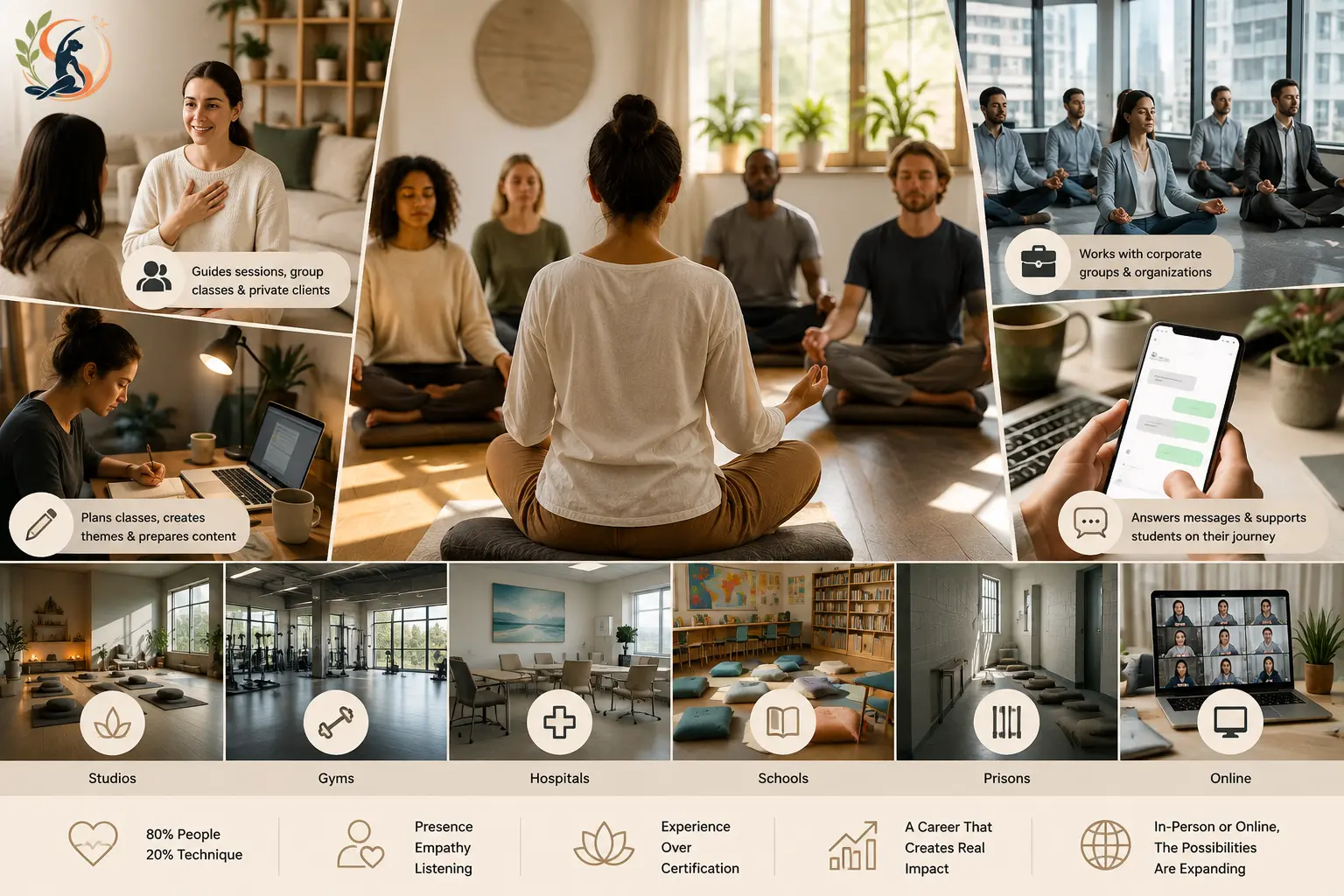
New teachers often start by writing their own version of a guided meditation script, before ever leading a live class. Here is something that surprised me early on. Teaching meditation is maybe twenty percent about meditation technique and eighty percent about people. You can know every breathing method in the book, but if you cannot read a room, none of it matters.
A meditation teacher guides sessions, group classes, private clients, sometimes corporate groups who are only there because HR told them to show up. But the real job happens in the moments you cannot plan for. Someone starts crying halfway through a body scan.
Someone gets irritated because their mind will not settle and they think that means they are failing. You will deal with this constantly and no certification really prepares you for it. Experience does.
Daily Responsibilities
Most days for me look like a mix of teaching a class or two, answering messages from students who are stuck on something and prepping whatever theme I am working with that week. Some weeks I am also writing, because a lot of teachers end up doing content work on the side, whether that is a newsletter, a YouTube channel or just posts that help people between sessions.
Where Meditation Teachers Work
Studios, obviously. Gyms are increasing. I have taught in a hospital conference room once, which was a strange and oddly moving experience. Schools bring in teachers now too and even a few prisons run meditation programs, which I think gets overlooked constantly when people talk about this career.
And then there is the whole online world, teaching over Zoom, which honestly is where a huge chunk of the growth in this field has come from over the last several years. I resisted it for a long time. I was wrong to resist it.
Do You Need Certification to Teach Meditation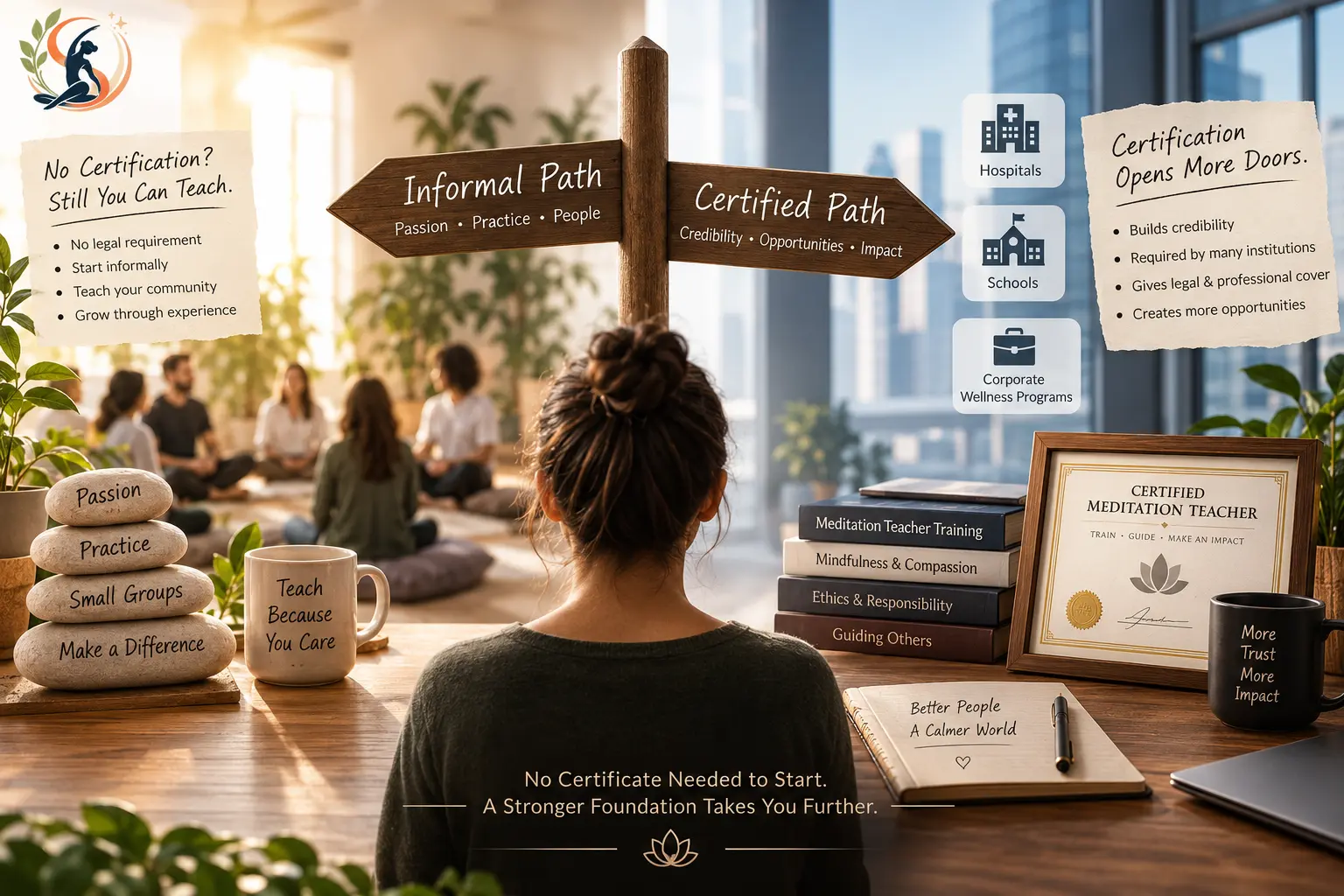
Short answer, no. There is no law in the United States saying you need a license to teach meditation. Anyone can technically hang out a shingle and call themselves an instructor tomorrow.
Longer answer and this is the part people do not want to hear: not having certification will quietly limit you. I know teachers who never got certified and do fine teaching friends or a small local group. But the moment you want to work with a studio, a school or any kind of corporate client, they are going to ask what training you have. And "I meditate a lot" is not going to cut it in that conversation.
When Certification Matters Most
Hospitals, schools, corporate wellness programs, these places have liability people breathing down their necks and a certificate from a known program gives them cover. It also just makes you sound credible when someone questions your background, which happens more than you would think, especially from skeptical corporate HR types who have sat through one too many wellness fads.
Teaching Without Formal Credentials
That said, I want to be fair here. Plenty of respected teachers started informally, teaching a handful of people out of genuine passion long before any certificate entered the picture. If that is where you are right now, that is fine. Just do not be surprised when, a year or two in, someone asks about your training and you wish you had gotten ahead of it.
Meditation Teacher Certification Options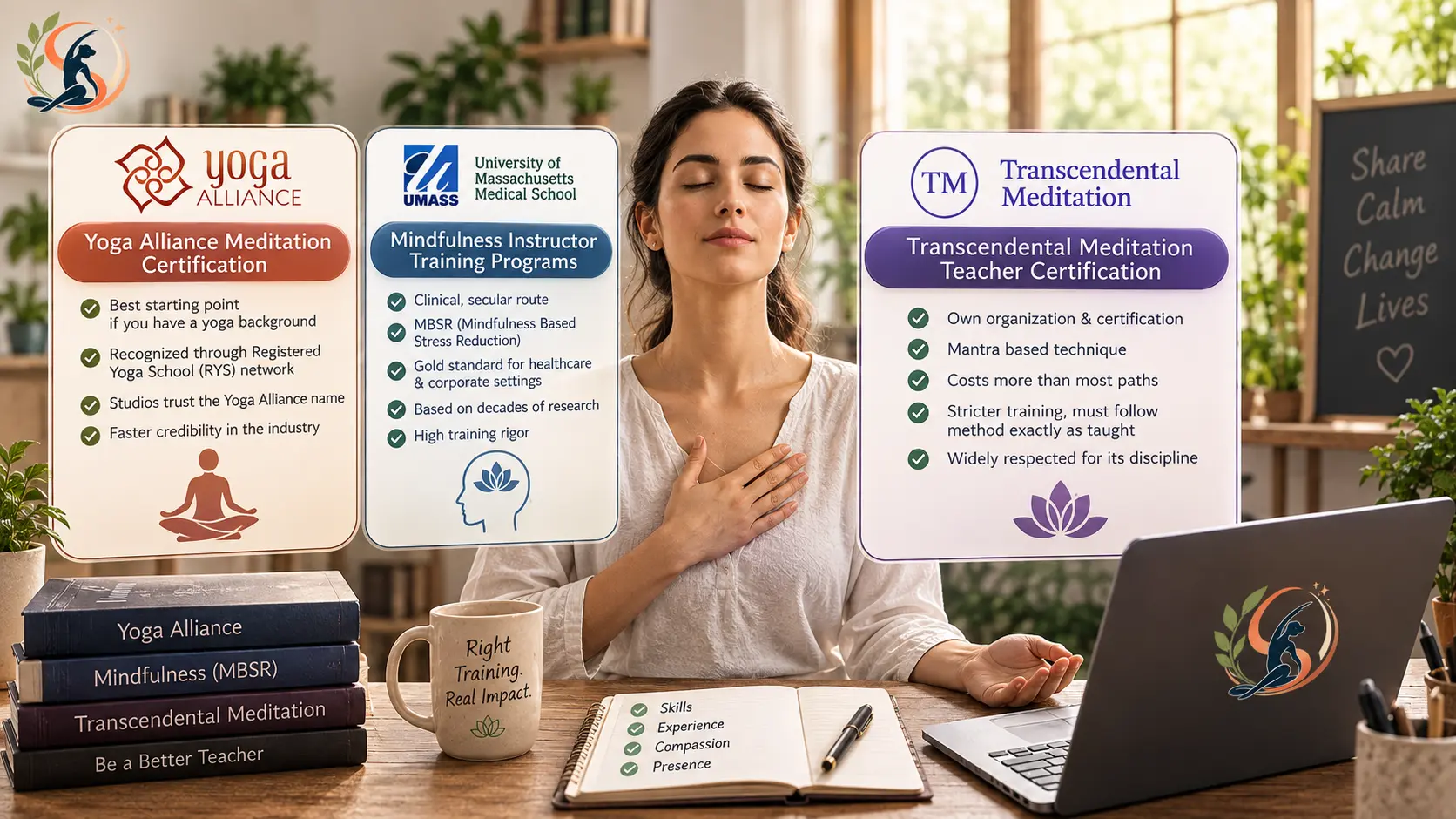
There is no single official body running this whole industry, which trips a lot of beginners up. I get emails asking "which certification is THE certification" and the answer is there is not one. There are a few solid paths and which one fits depends on where you want to end up teaching.
Yoga Alliance Meditation Certification
If you already have a yoga background, this is probably your easiest on ramp. Yoga Alliance recognizes meditation focused training through its Registered Yoga School network and studios that already trust the Yoga Alliance name will trust your meditation credential faster because of it.
Mindfulness Instructor Training Programs
This is the more clinical, secular route. Mindfulness Based Stress Reduction, MBSR for short, came out of the University of Massachusetts Medical School decades ago and it is still the gold standard if you want to work in healthcare or corporate settings. I trained in this one myself and honestly, the level of rigor surprised me compared to some of the more casual meditation courses floating around online.
Transcendental Meditation Teacher Certification
TM runs its own separate world entirely. Its own organization, its own certification, its own mantra based technique. It costs more than most other paths and the training is stricter about sticking to the method exactly as taught. I do not personally teach TM, but I respect how disciplined the training is.
How Long Does It Take to Become a Certified Meditation Teacher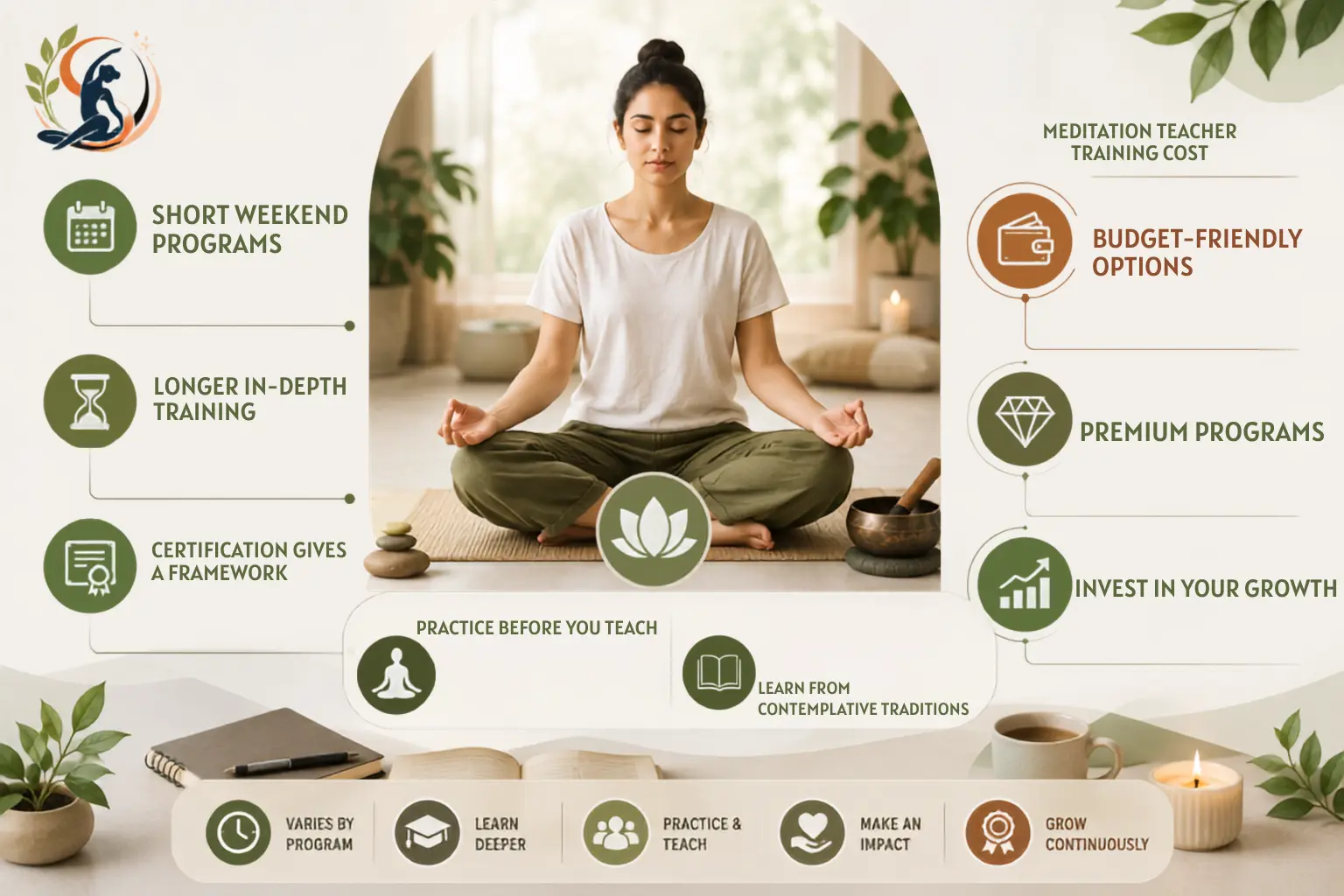
Depends entirely on the path. I wish I had a cleaner answer for you, but there really is not one number that applies across the board.
Short Weekend Programs
Some programs run over a single weekend. Fine for a starting point, not much more than that. I would not recommend stopping here if you actually want to build a career out of this, but as an introduction, they do have value.
Longer In-Depth Trainings
A proper two hundred hour certification usually takes three to twelve months depending on your pace. MBSR training specifically runs several months and involves supervised teaching hours, which, honestly, was the part that actually made me a better teacher. Reading about technique only gets you so far. Teaching in front of someone while being watched and critiqued is a different animal entirely.
Meditation Teacher Training Cost
People avoid asking about this directly, but let us just talk numbers plainly.
Budget-Friendly Options
Online basic certifications run two hundred to eight hundred dollars usually. I would not judge anyone for starting here, especially if money is tight. Just know these tend to be seen as introductory by employers, not a full professional credential.
Premium Programs and What You Get
The more established programs, MBSR, Yoga Alliance, TM, tend to run two thousand to five thousand dollars, sometimes higher for advanced levels. It is a real investment, no way around that. But if you are serious about teaching full time, most teachers I know recouped that cost within their first year or so of steady clients.
Building Your Mindfulness Facilitation Skills
Certification gives you a framework. It does not give you skill. That comes from actually teaching, messing up, adjusting and teaching again. Teachers working with more advanced students may eventually cover energy-center practices like Sahasrara chakra meditation too.
Practice Before You Teach
I tell every new teacher the same thing. Do not even think about teaching until you have sat with your own practice consistently for at least six months, ideally a year. You cannot guide someone through something you have never actually sat with yourself and students can tell the difference immediately, even if they cannot articulate why.
Learning From Contemplative Education Traditions
Contemplative education blends reflective practice with academic study and it is worth digging into even if you never enroll formally. Naropa University and Brown University both run serious programs in this space. I audited a course once just out of curiosity and it completely changed how I explain concepts to my own students now, years later.
How Much Do Meditation Teachers Earn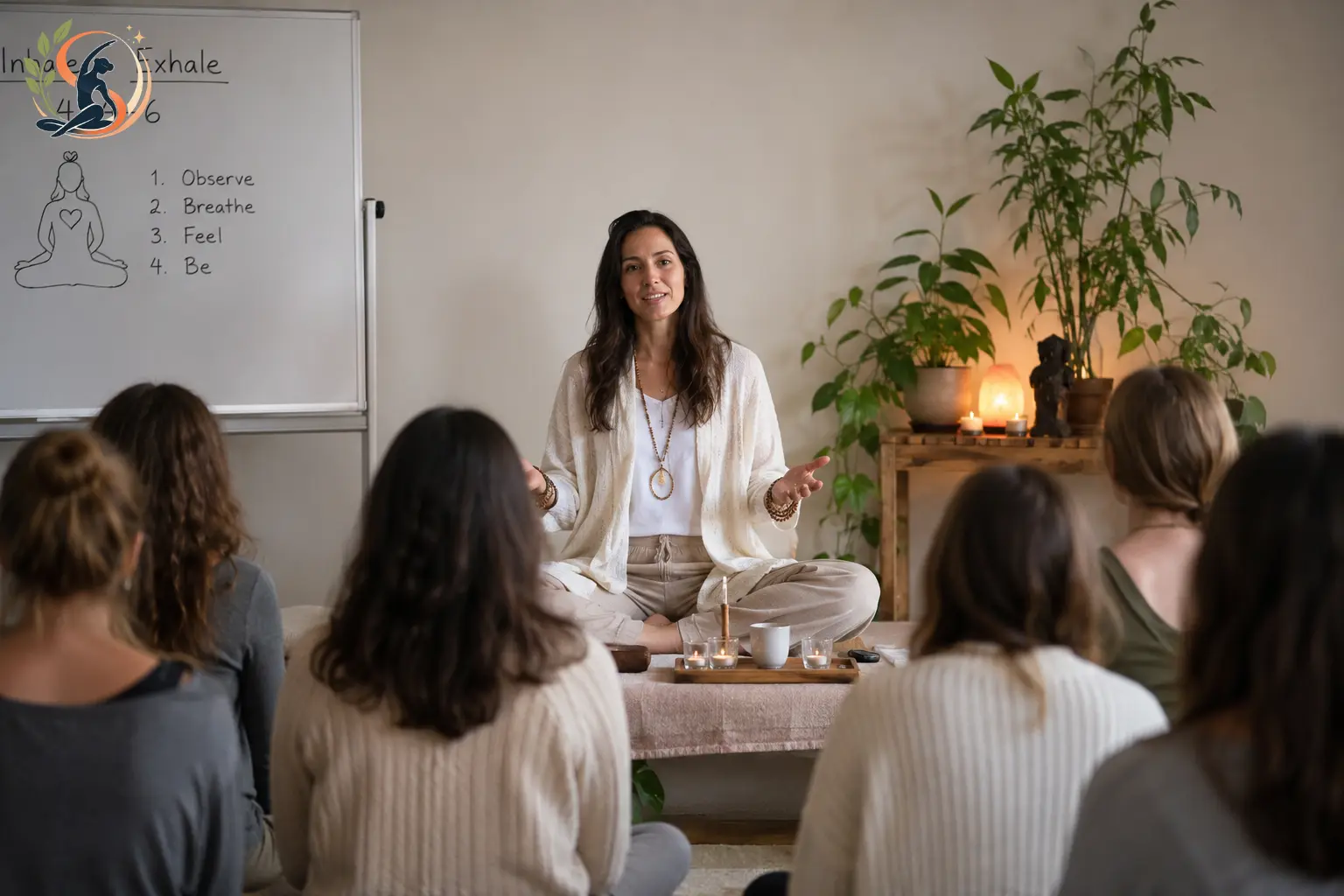
This varies more than most people expect and I will be honest, it took me a while to build up to a sustainable income doing this.
Freelance vs Studio Employment
Studio work in the U.S. typically pays twenty five to sixty dollars per class. Freelance, once you have your own client base, can run seventy five to one hundred fifty dollars a session, more in cities like New York or Los Angeles where people are willing to pay a premium.
Corporate and Wellness Program Rates
Corporate work pays the best by a decent margin. Companies hiring for employee wellness often pay one hundred to three hundred dollars a session and full time corporate wellness roles land somewhere between fifty thousand and eighty thousand dollars a year, plus benefits. This is the direction a lot of teachers eventually move toward once they have enough experience under their belt.
Best Mindfulness Workshops for Teachers
You do not stop learning once you are certified or at least you should not. I still attend workshops through the Mindfulness Center at Brown University and the UCLA Mindful Awareness Research Center most years. The Search Inside Yourself Leadership Institute also runs solid sessions specifically aimed at teachers who want to sharpen their own skills, not just students who are new to meditation.
Famous Meditation Teachers Who Shaped the Field
Jon Kabat Zinn is probably the name you will hear most, since MBSR essentially built the bridge between meditation and mainstream American healthcare. Thich Nhat Hanh's influence on how Western teachers approach mindful breathing is still everywhere, decades after his early books came out. Jack Kornfield trained as a Buddhist monk before co founding Spirit Rock Meditation Center in California and honestly, his early recordings are still some of the best teaching material out there, in my opinion.
Famous Female Meditation Teachers Worth Knowing
Sharon Salzberg basically shaped how loving kindness meditation is taught in the West today, through the Insight Meditation Society. Tara Brach blends psychology and Buddhist practice in a way that made her podcast one of the most listened to in the space. Sylvia Boorstein, whose warm, almost grandmotherly teaching style, introduced a lot of people, myself included, to how approachable this practice can actually be.
Steps to Start Your Own Meditation Teaching Career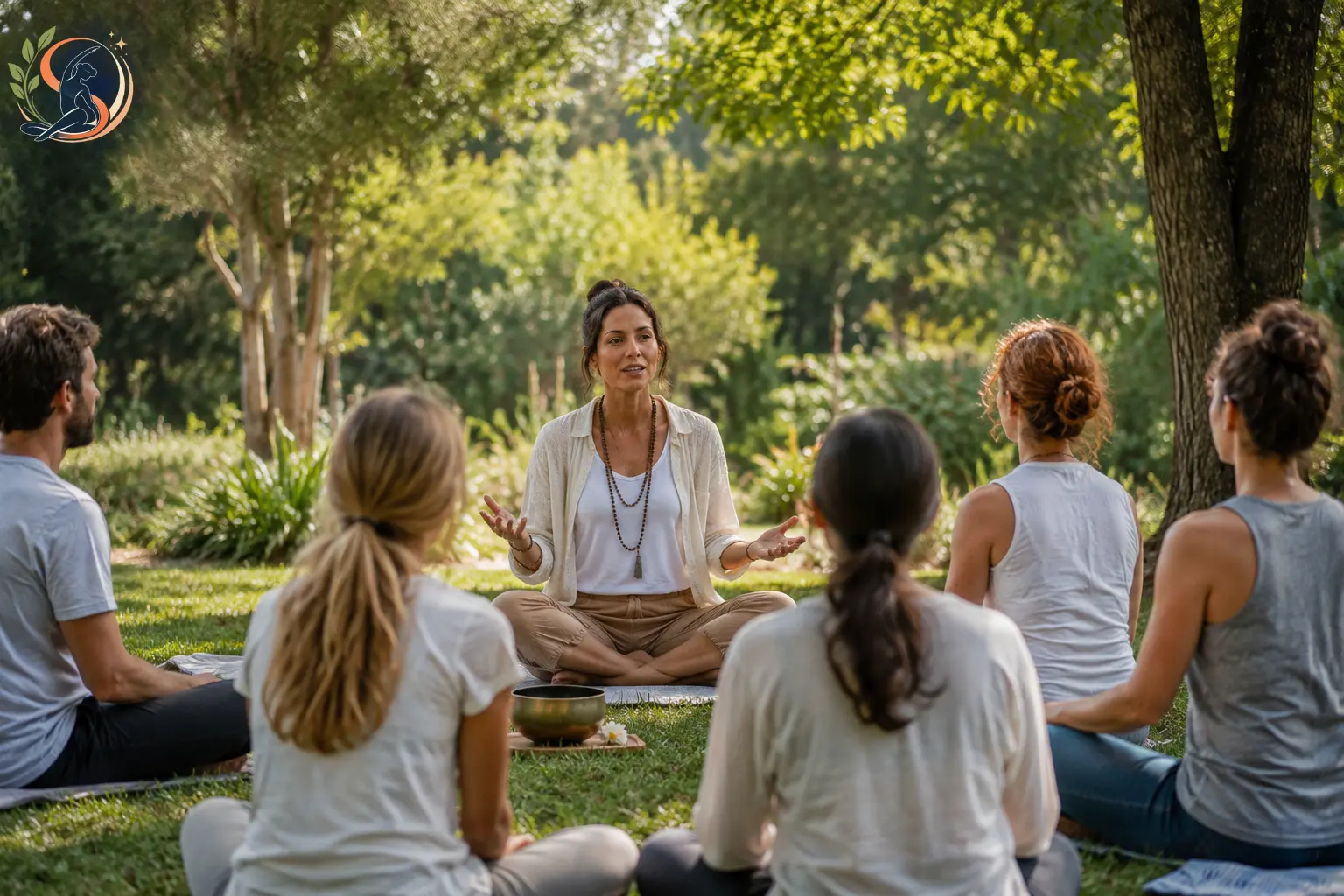
Once training is done, here is roughly how it played out for me and for most teachers I know personally.
Getting Your First Students
Start small and I mean genuinely small. Teach friends, coworkers, whoever will sit still for twenty minutes. It is not glamorous, but it is where you actually learn to teach and it gives you honest feedback before money is involved. Partnering with a local studio that already has students walking through the door saves you the slow grind of building an audience from nothing.
Growing Your Reputation
Word of mouth still beats everything else in this field, even now. Ask students who liked your class to tell a friend. Share short clips of your teaching online so people get a feel for your style before ever booking a session. From there, workshops, online courses, maybe a retreat eventually, once you have a base of regulars who keep showing up week after week.
Frequently Asked Questions
1. How long does it take to become a certified meditation teacher?
It depends on the program you pick. Weekend courses take a few days, while thorough certifications like MBSR training take three to twelve months, including supervised teaching hours. If you want a real professional credential, plan on at least a few months minimum, not a weekend.
2. Do you need certification to teach meditation?
Not legally, no. Meditation teaching has no license requirement in the U.S. But most studios, schools and corporate clients expect certification before hiring you, so while it is not required by law, it is often required in practice if you want steady paid work.
3. How much do meditation teachers earn?
It varies a lot. Studio classes often pay twenty five to sixty dollars each, while private or corporate sessions can run seventy five to three hundred dollars. Full time corporate wellness roles typically pay fifty thousand to eighty thousand dollars a year, depending on experience and location.
4. What is the difference between a meditation teacher and a mindfulness instructor?
Meditation teachers often lean on spiritual or contemplative traditions, while mindfulness instructors usually stick to secular, evidence based methods like MBSR. In practice, a lot of teachers blend both, but the label usually hints at which audience or setting they were trained to work with.
5. Can I become a meditation teacher without a yoga background?
Yes and honestly most of the best teachers I know did not come from yoga at all. MBSR, TM certification and standalone mindfulness programs do not require yoga experience. What actually matters is consistent personal practice and finishing a legitimate training program.
What is the average meditation teacher training cost?
It ranges quite a bit. Basic online certifications run two hundred to eight hundred dollars, while established programs like MBSR, Yoga Alliance or TM training usually cost two thousand to five thousand dollars. The pricier programs tend to include mentorship and supervised hours, which most employers actually notice.
Conclusion
I will be honest, nobody becomes a great meditation teacher quickly and I do not think that is a bad thing. It gives you time to actually get good at this instead of faking your way through it.
If you are serious, start building your own practice now, pick a certification path that fits where you want to end up and start teaching, even if it is just two friends on a Tuesday evening. Everything else, the paid clients, the reputation, the corporate contracts if you want them, tends to follow once you put in the actual time. That part, at least, has never changed in this field.


Comments (0)
No comments yet. Be the first to share your thoughts!
Leave a Comment