
Fifteen years coaching people through stretching routines and here's the thing nobody believes until they try it. Most people hold their stretches for about five seconds, bounce a little, call it done. That's not really stretching. Barely even a warning shot to the muscle, honestly.
This guide covers the two stretches people ask me about most, the butterfly stretch and the cobra stretch, plus the actual science behind how long to hold a stretch, when to do it and how to build a full-body routine that doesn't eat up your whole morning. Just what actually works, based on real guidelines, not gym folklore passed down from someone's old high school coach.
What Is Flexibility Training (And Why It's Not Just for Athletes)
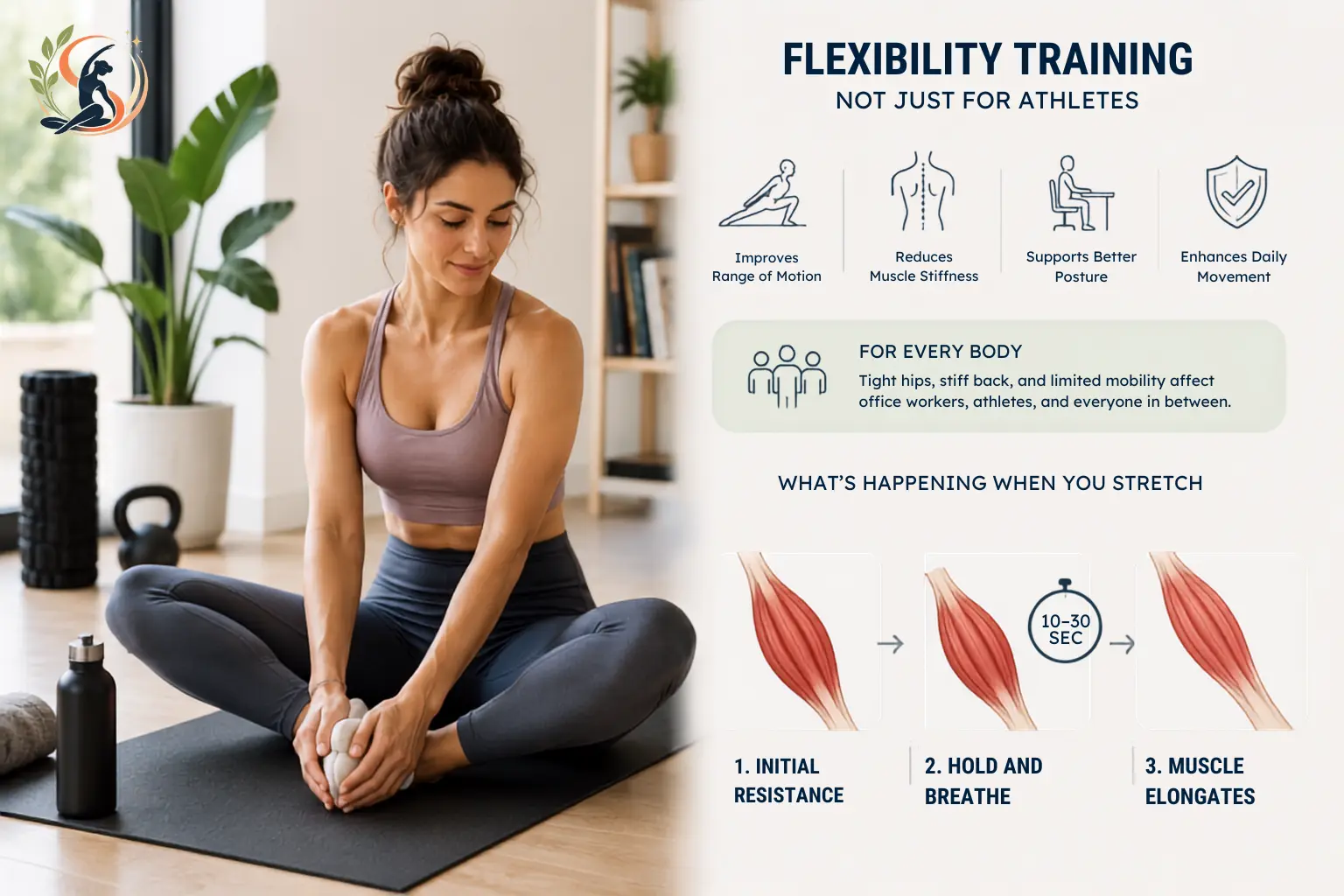
Flexibility training gets treated like an afterthought a lot of the time. Something you squeeze in for two minutes after the real workout's already done. Backwards, honestly, once you actually understand what it's doing for you.
Flexibility Training vs Just "Being Flexible"
Flexibility training is the deliberate, repeated practice of moving joints and muscles through their full range of motion, on purpose, not just whatever happens to feel loose that day. Being naturally bendy is genetics, mostly. Flexibility training's a skill you build regardless of your starting point, same as strength training builds muscle regardless of how strong you were at 20.
Here's something worth knowing and it surprises a lot of people the first time they hear it. Stretching alone, especially static stretching, doesn't have particularly strong research behind it for preventing injury or reducing next-day soreness, despite decades of gym class telling everyone otherwise. What it does reliably do is improve range of motion over time. Still valuable. Just for a different reason than most people assume walking in.
This matters for everyone, not just dancers or gymnasts. Tight hips and a stiff lower back show up in office workers just as often as athletes, sometimes more, since sitting all day does a real number on hip flexibility specifically.
Muscle Elongation - What's Actually Happening When You Stretch
Muscle elongation is the actual physical process happening during a stretch, the muscle fibers and connective tissue around them lengthening under tension. Not instant, either. Your nervous system resists the stretch at first, which is exactly why holding it matters way more than how far you push into it on the first try.
Give it time, ten to thirty seconds and that resistance starts easing off, letting the muscle actually lengthen instead of just tensing up against you the whole time.
Static vs Dynamic Stretching - When to Use Each
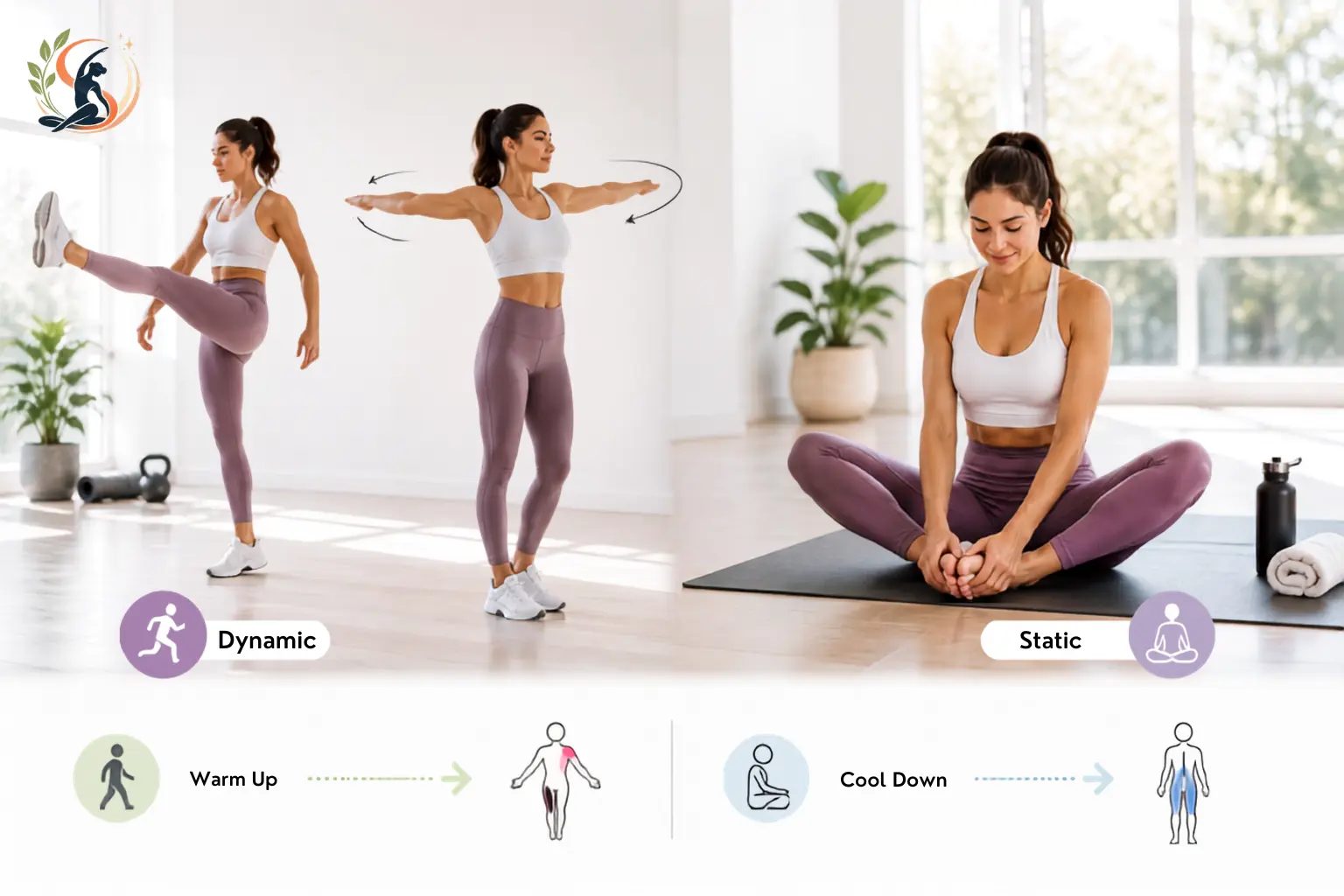
This is where a lot of people get it backwards and honestly, it's an easy mistake to make since both types get lumped together as just "stretching" in most people's heads.
Should You Stretch Before or After a Workout
Dynamic stretching, moving stretches like leg swings or arm circles, works best before a workout. Warms the muscle up while still moving it through range of motion, which preps the body for activity without the temporary strength dip static stretching can cause right before lifting or sprinting.
Static stretching, the kind where you hold a position still, like the butterfly stretch, works best after a workout, once muscles are already warm. Save the long, held stretches for the cool-down. Save the moving stretches for the warm-up. Mixing that order up, honestly, is probably the single most common mistake I see in gyms, week after week, year after year.
Is It Bad to Stretch Cold Muscles
Yes, generally and this one's worth taking seriously. Cold muscle fibers are stiffer and less pliable, so pushing a deep static stretch on a cold muscle raises the risk of a strain rather than lowering it. A short warm-up, even just five minutes of light walking or marching in place, makes a real difference before diving into deeper stretches.
Stretch-Hold Duration Guidelines You Should Actually Follow
This is the part most people skip entirely and it's honestly the most useful piece of the whole puzzle, if you ask me.
How Long Should a Full-Body Stretch Routine Take
The American College of Sports Medicine recommends holding each static stretch for 10 to 30 seconds, repeating it 2 to 4 times, aiming for about 60 seconds of total stretch time per muscle group. Doing this at least 2 to 3 days a week covers general flexibility maintenance. Older adults tend to benefit from slightly longer holds, closer to 30 to 60 seconds, since muscle stiffness naturally increases with age.
For a genuine full-body stretch routine hitting the major muscle groups, hips, hamstrings, back, shoulders, chest, calves, budget around 15 to 20 minutes total. Enough time to properly hold each stretch without rushing through it just to check a box and move on with your day.
The Butterfly Stretch - How to Do It and What It's Good For
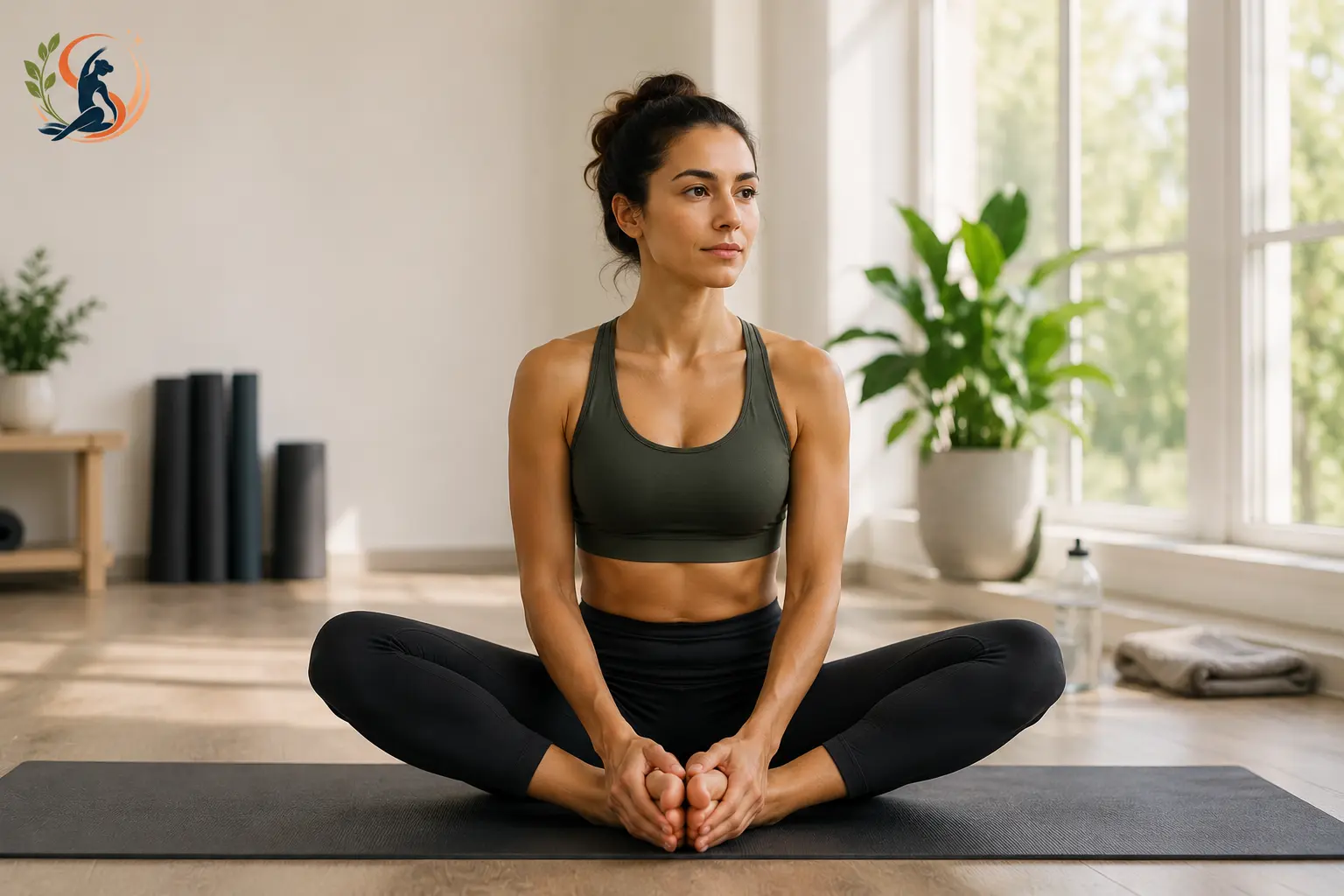
The butterfly stretch is one of the most requested stretches I get asked about, probably because it looks simple but people still manage to do it wrong constantly, more than you'd think.
Butterfly Stretch Exercise Step by Step
Sit on the floor with your back straight. Bring the soles of your feet together in front of you, knees falling out to the sides, forming that classic butterfly position. Hold your feet with both hands and gently press your knees toward the floor using your elbows, not by forcing with your hands.
Keep your back straight rather than hunching forward and hold for 20 to 30 seconds. This butterfly stretch exercise targets the inner thighs, hips and groin specifically, areas that get tight fast from sitting, driving or any activity involving a lot of hip flexion.
What Is the Butterfly Stretch Good For
Genuinely one of the best options for opening up tight hips and inner thighs, which matters more than people realize for lower back pain specifically. Tight hip adductors can pull on the pelvis and contribute to lower back tension, so loosening them up here often eases discomfort somewhere else entirely, further up the chain than you'd expect.
It's also a common pre-run or pre-cycling stretch, since both activities rely heavily on hip mobility and a common go-to for anyone dealing with everyday stiffness from a desk job. Tight hip adductors often show up alongside a tight psoas, so it's worth stretching both.
Butterfly Pose in Yoga and Beyond
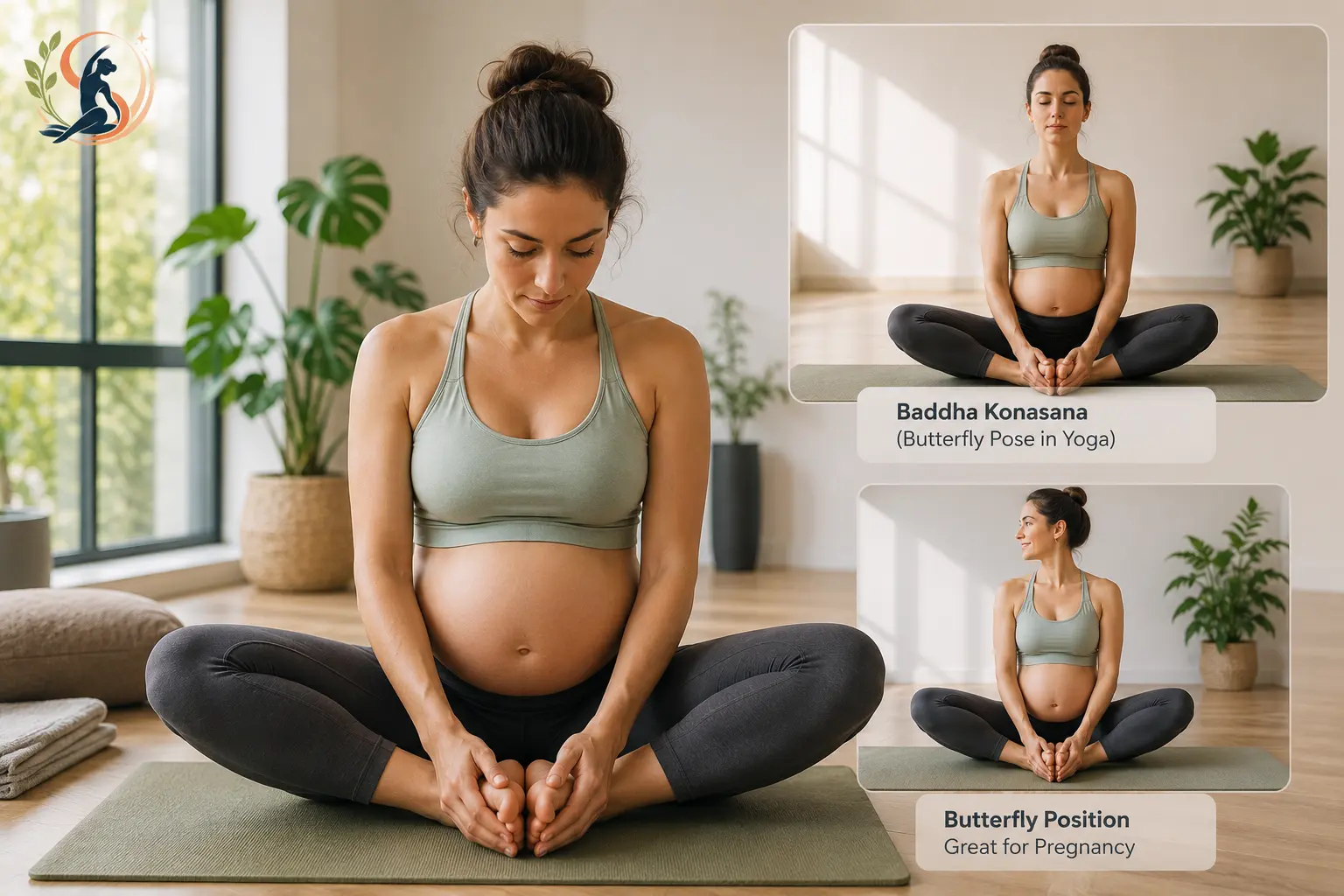
The butterfly shows up under a few different names depending on where you learned it, which trips people up when they're searching for it online, more often than you'd expect.
Butterfly Pose Yoga vs Basic Butterfly Position
In yoga, this same position is usually called Baddha Konasana or Bound Angle Pose, though most people just search for butterfly pose yoga instead. The yoga version tends to emphasize breath and a longer, gentler hold, sometimes several minutes, compared to the shorter static hold used in a typical fitness warm-up or cool-down.
Both versions use the identical basic butterfly position, feet together, knees out. The difference is really just intent and duration. Meditative and long in yoga. Functional and shorter in a general stretching routine.
Is Butterfly Position Good for Pregnancy
Generally, yes and it's a staple in most prenatal yoga classes for exactly this reason. The butterfly position gently opens the hips and inner thighs, which can help with the pelvic mobility needed for labor later on and it's low-impact, no pressure on the belly at all.
That said, pregnancy hormones loosen ligaments throughout the body, which means it's easier to overstretch without realizing it. Keep the stretch gentle, skip the bouncing and check with your doctor or a prenatal instructor if you're dealing with any pelvic pain already, since that changes the picture quite a bit.
The Cobra Stretch - How to Do It Safely
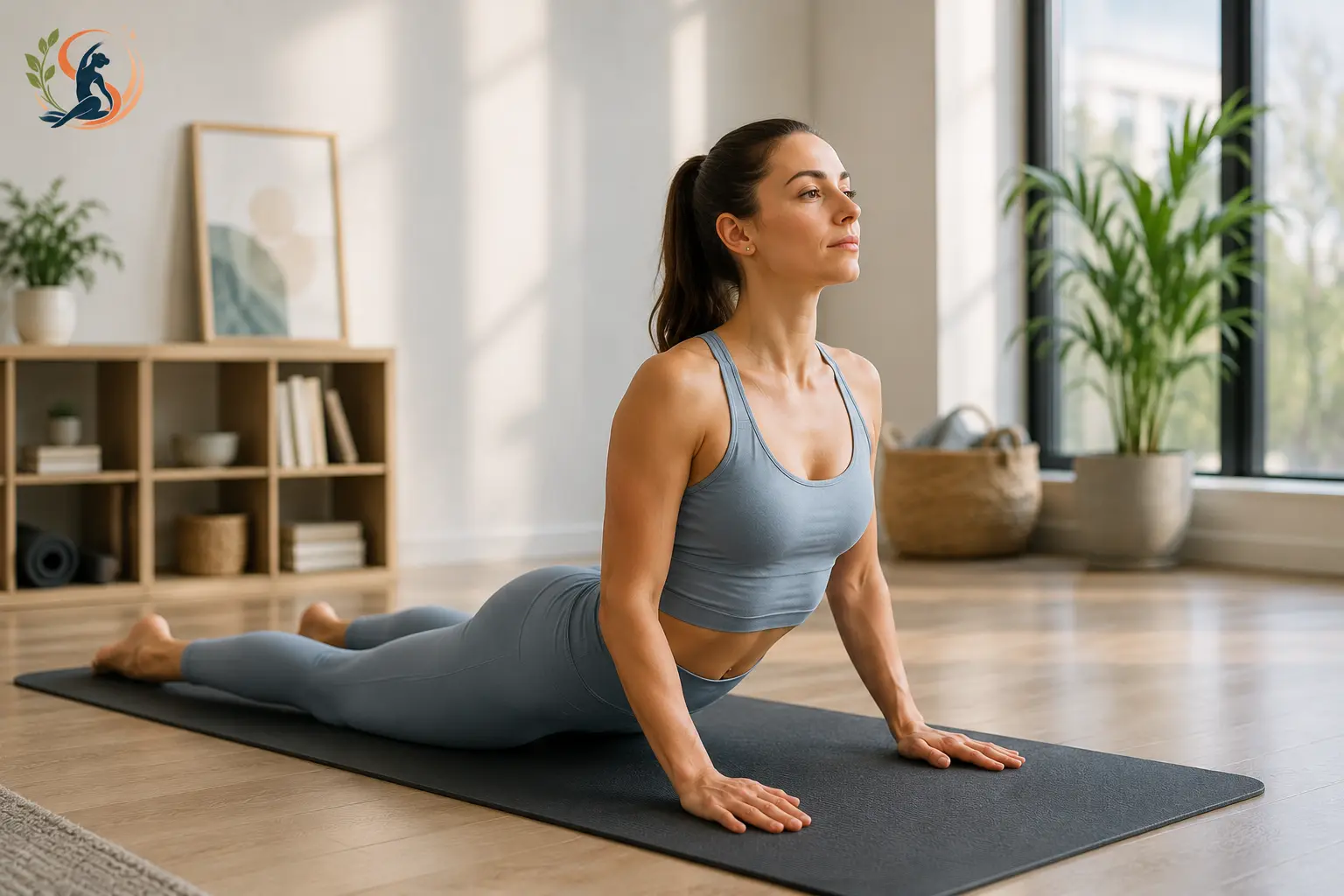
The cobra stretch gets requested almost as often as butterfly, usually by people dealing with a stiff lower back or long stretches of desk time, day after day.
Cobra Stretch Step by Step
Lie face down on the floor, hands placed under your shoulders, legs extended straight back with the tops of your feet on the floor. Press through your hands and lift your chest off the ground, keeping your hips and lower body pressed into the floor the whole time. Keep your elbows slightly bent rather than locked straight.
Hold for 15 to 30 seconds, breathing steadily, then lower back down slowly. The cobra stretch targets the chest, abdominals and front of the shoulders, while gently extending the spine, the opposite motion of the forward hunch most of us hold all day at a desk or steering wheel.
Is Cobra Stretch Good for Sciatica
Genuinely depends on the cause behind the sciatica, so it's worth being careful here rather than giving a blanket yes. For sciatica caused by a bulging disc pressing backward, the cobra's spinal extension can sometimes ease pressure and reduce symptoms, since it shifts the disc's position slightly.
But for sciatica caused by spinal stenosis or certain other structural issues, that same extension can actually make things worse. If you're dealing with real sciatic pain, checking with a doctor or physical therapist before adding cobra stretches to your routine is the smart move. Not something to guess your way through based on a blog post, even a fairly detailed one like this.
Building a Daily Stretching Routine
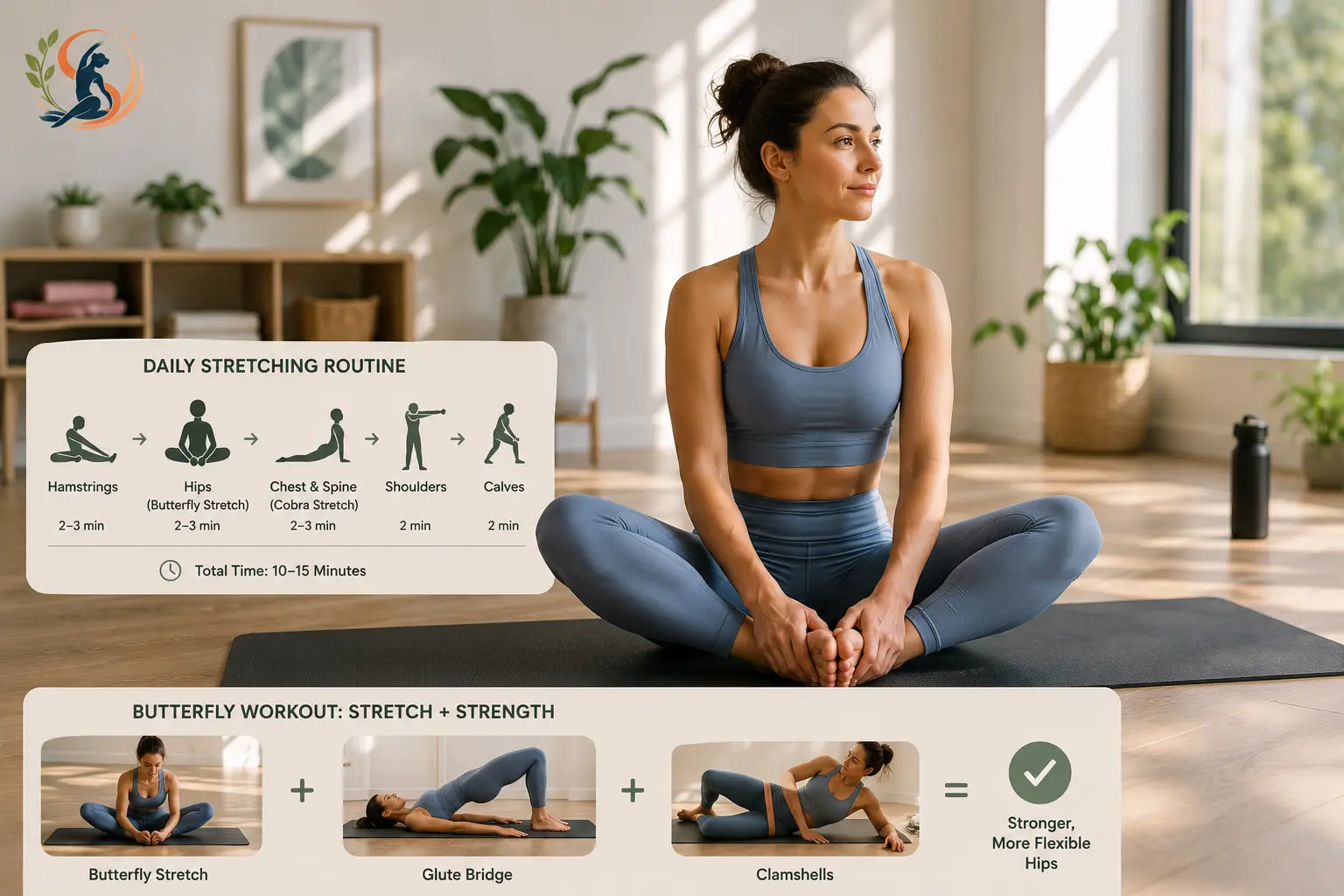
A routine only works if it's actually repeatable, which means it needs to fit into a normal day without feeling like a second workout tacked onto the first one. For the upper-body half of a full routine, see this guide to stretching the trapezius and easing shoulder tension.
A Simple Daily Stretching Routine for Beginners
A solid beginner's daily stretching routine covers five or six spots: hamstrings, hips through the butterfly stretch, chest and spine through the cobra stretch, shoulders and calves. Ten to fifteen minutes total, done most days of the week, beats an occasional hour-long stretch session that only happens once a month and gets forgotten right after that.
Consistency matters more than intensity here. Flexibility builds gradually, over weeks, not during one deep, painful session that leaves you sore and discouraged the next day.
What Is a Butterfly Workout (Combining Stretch and Strength)
A butterfly workout usually refers to pairing the butterfly stretch with hip-focused strength moves, like glute bridges or clamshells, rather than the stretch on its own. The idea is building strength and flexibility together in the same muscle group, since flexible-but-weak hips don't actually solve much on their own, not long term anyway. Pairing the stretch with a few strengthening moves gives a more complete result than stretching alone ever manages by itself.
Frequently Asked Questions
1. What is flexibility training?
Flexibility training is the deliberate practice of moving muscles and joints through their full range of motion, usually through regular stretching. It's a trainable skill, not just something you're naturally born with and it benefits everyone from athletes to office workers dealing with tight hips.
2. Is cobra stretch good for sciatica?
It depends on the cause. Cobra can ease sciatica caused by certain disc issues since it shifts pressure off the nerve, but it can worsen sciatica caused by spinal stenosis. Anyone with real sciatic pain should check with a doctor before adding it to their routine.
3. What is a butterfly workout?
A butterfly workout usually pairs the butterfly stretch with hip-strengthening moves like glute bridges or clamshells. The idea is combining flexibility with strength in the same muscle group, since loose but weak hips don't fully solve mobility or lower back issues on their own.
4. Is butterfly position good for pregnancy?
Yes, generally and it's common in prenatal yoga for opening the hips and improving pelvic mobility. Pregnancy hormones loosen ligaments though, so stretch gently without bouncing and check with a doctor or prenatal instructor if you have any existing pelvic pain.
5. Should you stretch before or after a workout?
Dynamic, moving stretches work best before a workout since they warm up muscles without reducing strength. Static, held stretches like butterfly or cobra work best after, once muscles are already warm, since that's when deeper static holds are both safer and more effective.
6. Is it bad to stretch cold muscles?
Yes, generally. Cold muscles are stiffer and more prone to strain during a deep static stretch. A short warm-up, even five minutes of light movement, makes stretching safer and more effective than starting cold straight from the couch.
Conclusion
Butterfly and cobra aren't complicated stretches, but doing them well, holding long enough, keeping proper form and timing them right around a workout, makes a real difference most people never bother with. A short daily routine, built around real guidelines instead of guesswork, beats an occasional long session every time. Start with these two, add a few more spots as it becomes a habit and give it a few weeks before judging whether it's actually working for you.


Comments (0)
No comments yet. Be the first to share your thoughts!
Leave a Comment