
Roll your shoulders right now. Go on, actually do it. Hear a crunch? Feel a knot sitting somewhere between your neck and shoulder blade? That's probably your trapezius, asking for attention it's not getting. Most people never think about this muscle until it's already tight, achy and making it a little painful to turn your head without wincing first.
Stretching of the trapezius sounds simple enough and mostly, it is. But a lot of people stretch the wrong spot, at the wrong time, without ever fixing what's actually causing the tightness.
This one covers what the trapezius does, why it gets so cranky from modern life and which stretches and shoulder mobility exercises genuinely help. Not just the ones that feel nice for five minutes and change nothing by Thursday.
What Is the Trapezius and Why Does It Get So Tight

A Quick Look at Trapezius Anatomy
The trapezius is a large, kite-shaped muscle running from the base of your skull, across both shoulders, down the middle of your upper back. Usually split into three sections. Upper traps, lifting your shoulders and helping move your neck. Middle traps, pulling your shoulder blades together. Lower traps, pulling your shoulder blades down and back.
Most tightness people complain about sits in that upper section, right along the top of the shoulder and side of the neck. That's the part doing most of the work every time you hunch forward at a screen, which, let's be honest, is most of the day for a lot of us.
The middle and lower sections tend to get weak instead of tight, since they barely get used properly once your posture's already collapsed forward. That mismatch, an overworked top half and an underused bottom half, is a big chunk of why the tightness sticks around even after a decent stretch.
How Desk Life Turns Into Tight Traps
Sitting for hours keeps the upper traps in a constant, low-level contraction, even when you're not consciously tensing anything. Your shoulders creep toward your ears without you noticing and the muscle just stays braced there. Do that daily for months and the muscle adapts, staying tight even once you finally stand up and try, genuinely try, to relax.
Tight Trapezius or Actual Trigger Points: The Difference Matters
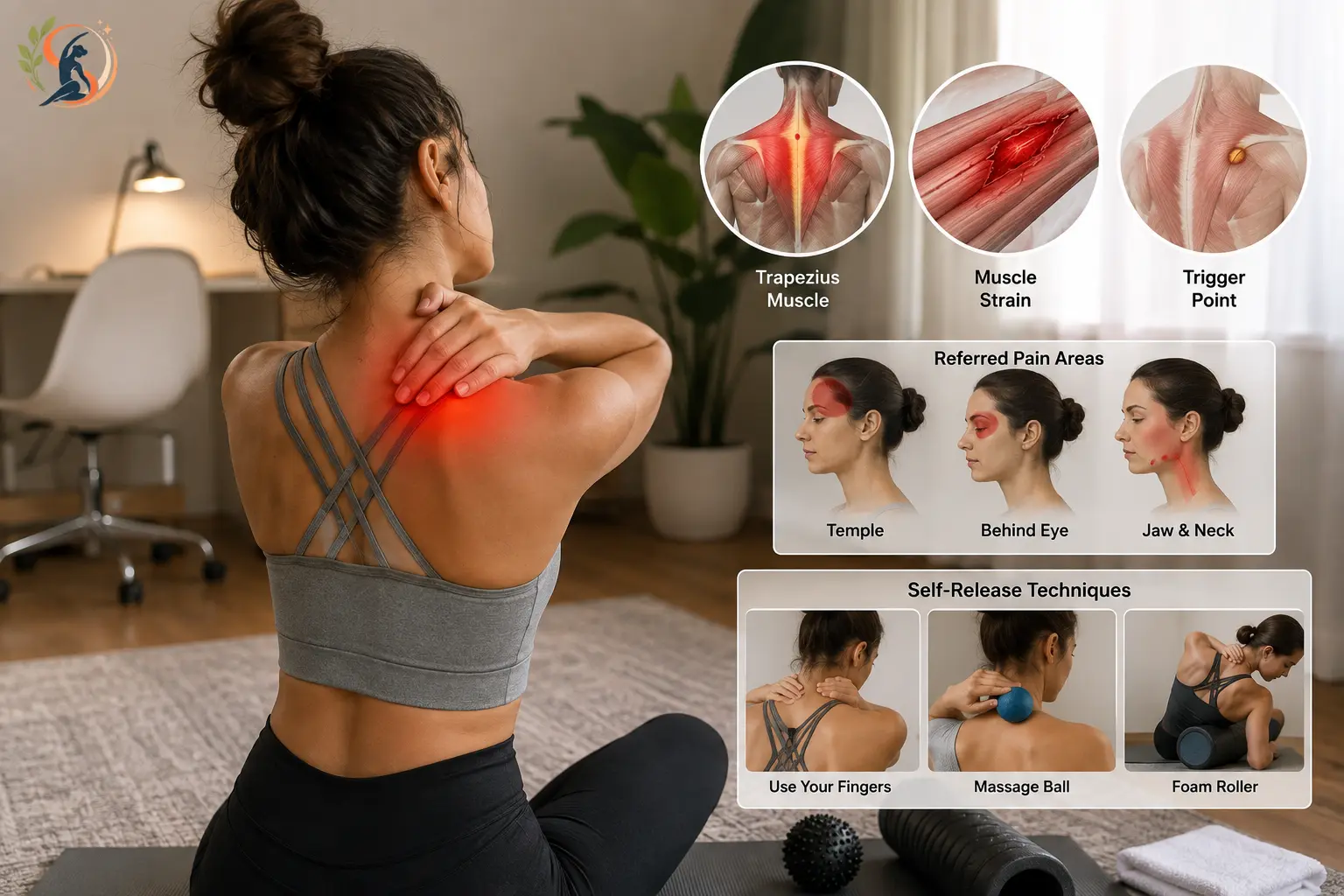
Most articles skip this part entirely and it's worth slowing down for. Not all trapezius tightness is the same thing. Treating a trigger point like ordinary tightness or the other way around, is a big reason a lot of stretching routines quietly go nowhere.
Strain, Tightness and Trigger Points Aren't the Same
A general tight trapezius is exactly what it sounds like. Muscle fibers shortened from overuse or bad posture, achy in a fairly even way across the area. A trapezius strain is different and more serious.
An actual tear in the fibers, graded from mild, healing in roughly two to four weeks, to more severe, which can run six to eight weeks or longer with real rehab behind it. Trigger points are their own category too. Small, hyperirritable knots inside the muscle that can send pain somewhere else entirely. Not just the spot you'd expect.
Why Trigger Points Cause Headaches and Jaw Pain
Here's something worth knowing that general stretching guides basically never mention. Trigger points in the upper trapezius can refer to spots that seem completely unrelated. The temple.
The back of the eye. The angle of the jaw. Dizziness, in some cases. Ever had a tension headache that seemed to come out of nowhere? There's a real chance it traced back to a trigger point sitting quietly in your traps the whole time, not your head at all.
Self-Releasing a Trigger Point at Home
Steady pressure with your fingers, a massage ball or a foam roller directly on the tight spot, held for 20 to 30 seconds until it eases slightly, is a reasonable place to start on your own. Some research on manual therapy techniques found sustained pressure held up to 90 seconds gave better short-term relief than shorter presses, though even 20 to 30 seconds is a fine starting point. Shouldn't feel like a fight, this. Steady, tolerable pressure. Not gritted-teeth intensity.
Worth knowing too. Trigger points caused by repetitive strain, heavy lifting at work, overhead movement at the gym, hours of scrolling, often won't fully resolve until whatever's causing them actually changes. Release the knot without touching the cause and it's usually back within a week or two, sometimes sooner.
The Real Causes Behind Upper Back and Shoulder Tightness

Postural Dysfunction and Tech Neck
Postural dysfunction is really just a fancier way of describing what happens when your body adapts to bad habits over time. Looking down at a phone for hours, a pattern often called tech neck, pushes your head forward and shoulders inward.
The trapezius and neck muscles end up working overtime just holding your head up in that position, since forward head posture puts noticeably more strain on these muscles than a neutral one ever would.
Stress and the Trapezius Connection
Emotional stress genuinely shows up in this muscle more than almost anywhere else in the body. Some research on muscle activity under stress found the trapezius gets fewer of its normal "rest" moments during high-stress stretches, meaning it stays partially contracted longer than it otherwise would.
A lot of people physically raise their shoulders slightly when anxious, without ever clocking that they're doing it. Over time, that habit layers right on top of the tightness poor posture already caused. Doesn't replace it. Just piles on.
Upper Crossed Syndrome, Explained
Upper crossed syndrome is a specific pattern researchers have studied for decades now. Happens when the upper traps and chest muscles get tight and short, while the muscles between your shoulder blades and front of your neck get weak and stretched out.
Result: rounded shoulders, a head that juts forward, a hump-like curve at the base of the neck. Extremely common in office workers and anyone glued to a phone most of the day and a big part of why stretching alone sometimes just doesn't fix it for good.
The name comes from the visual pattern the tight and weak muscles form when mapped out. Tight muscles running diagonally across the back of the neck and down through the chest, weak muscles running the opposite diagonal through the upper back and front of the neck, crossing into an X shape.
Understanding that pattern explains why so many people stretch for months without lasting relief. They're only ever hitting the tight half of that X. Never touching the weak half holding everything out of position in the first place.
Releasing Tight Traps From Sitting at a Desk
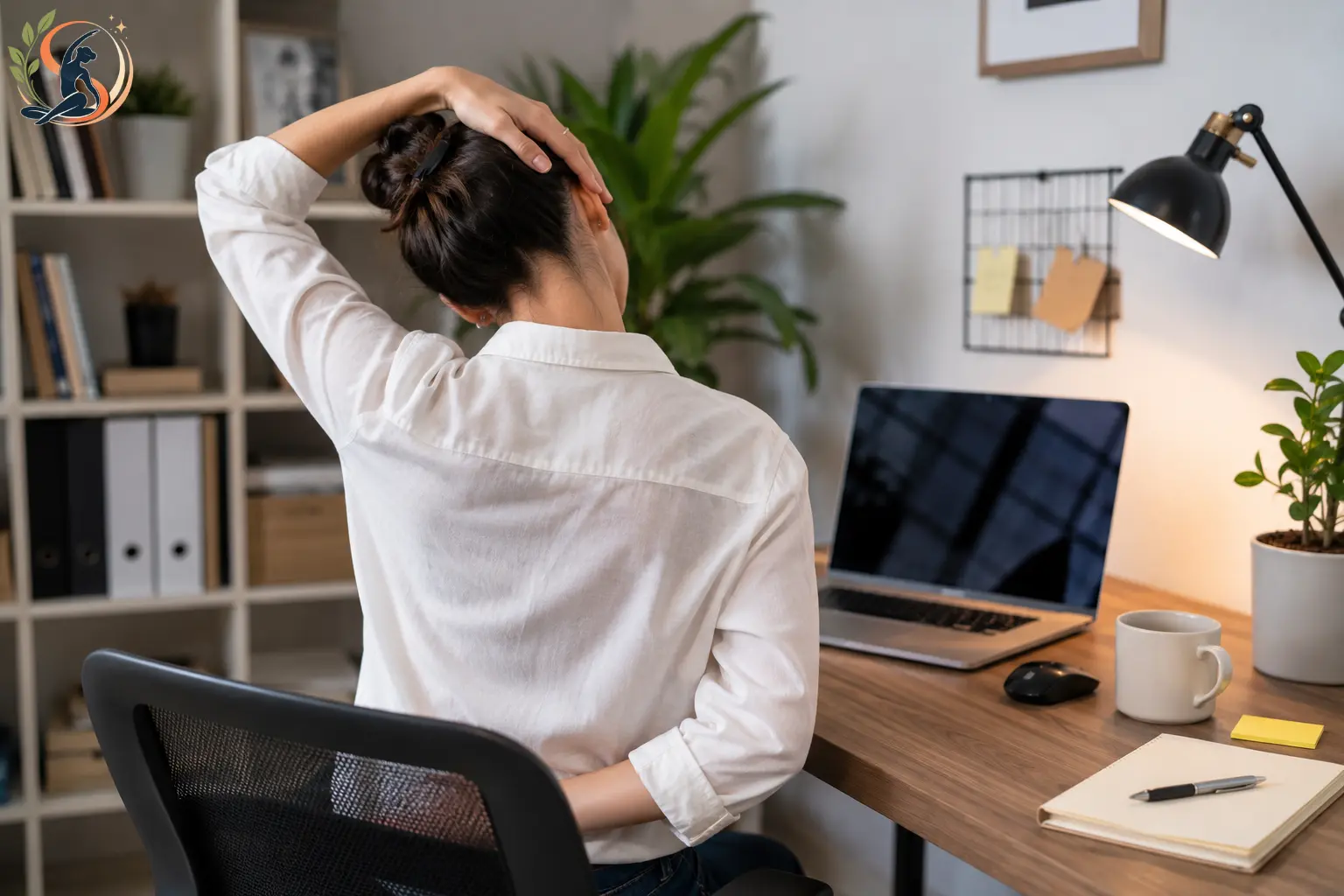
Simple desk posture stretches, done consistently, make a real difference here. More than people expect from something this small and unglamorous.
A Few Stretches You Can Do Without Leaving Your Chair
Sit tall, place one hand on top of your head, gently tilt your ear toward your shoulder on the same side. Hold 20 to 30 seconds, switch sides. One of the simplest, most effective upper trap tightness relief moves out there. Takes almost no space, no equipment.
A chin tuck helps too. Sit upright, gently pull your chin straight back like you're making a double chin on purpose, hold a few seconds, release. Sounds a little silly, sure. But it directly counters the forward head position building tension in the first place.
Micro-Breaks That Actually Help
Every 30 to 45 minutes, stand up, roll your shoulders back and down, pull your shoulder blades together for a few seconds. This tiny habit interrupts the constant low-level bracing that builds up over a long sitting stretch. Adds up more than most people give it credit for, over a full workday.
Stretching of the Trapezius: Step-by-Step Moves
The Classic Upper Trap Stretch
Sit or stand tall. Reach one arm behind your back, let it hang there. With your other hand, gently pull your head away from that side, tilting your ear toward the opposite shoulder. Hold 20 to 30 seconds per side. Targets the exact spot most desk workers describe as their worst knot. The one that flares up right around Thursday afternoon, without fail.
Doorway Chest Stretch for Rounded Shoulders
Stand in a doorway, forearms resting on either side of the frame, elbows bent around 90 degrees. Step forward gently until you feel a stretch across your chest. Matters more than people expect, since tight chest muscles are half of what pulls your shoulders forward to begin with. Stretching the traps without loosening the chest tends to only ever solve half the problem.
Readers wanting a yoga-based hip opener to pair with this can look at bound angle pose, which targets a different but equally common tight spot.
Shoulder Blade Mobility Exercises
Shoulder blade mobility exercises, sometimes called scapular retractions, involve squeezing your shoulder blades together, holding a few seconds, releasing slowly. Sets of 10 to 15 through the day build awareness of where your shoulders actually sit, which helps stop them drifting forward again between stretching sessions. For a fuller flexibility routine beyond the shoulders, this **butterfly stretch and cobra stretch guide** covers hips and spine too. For a fuller flexibility routine beyond the shoulders, this butterfly stretch and cobra stretch guide covers hips and spine too.
Shoulder Mobility Exercises to Build Long-Term Relief
Strengthening the Muscles That Get Weak
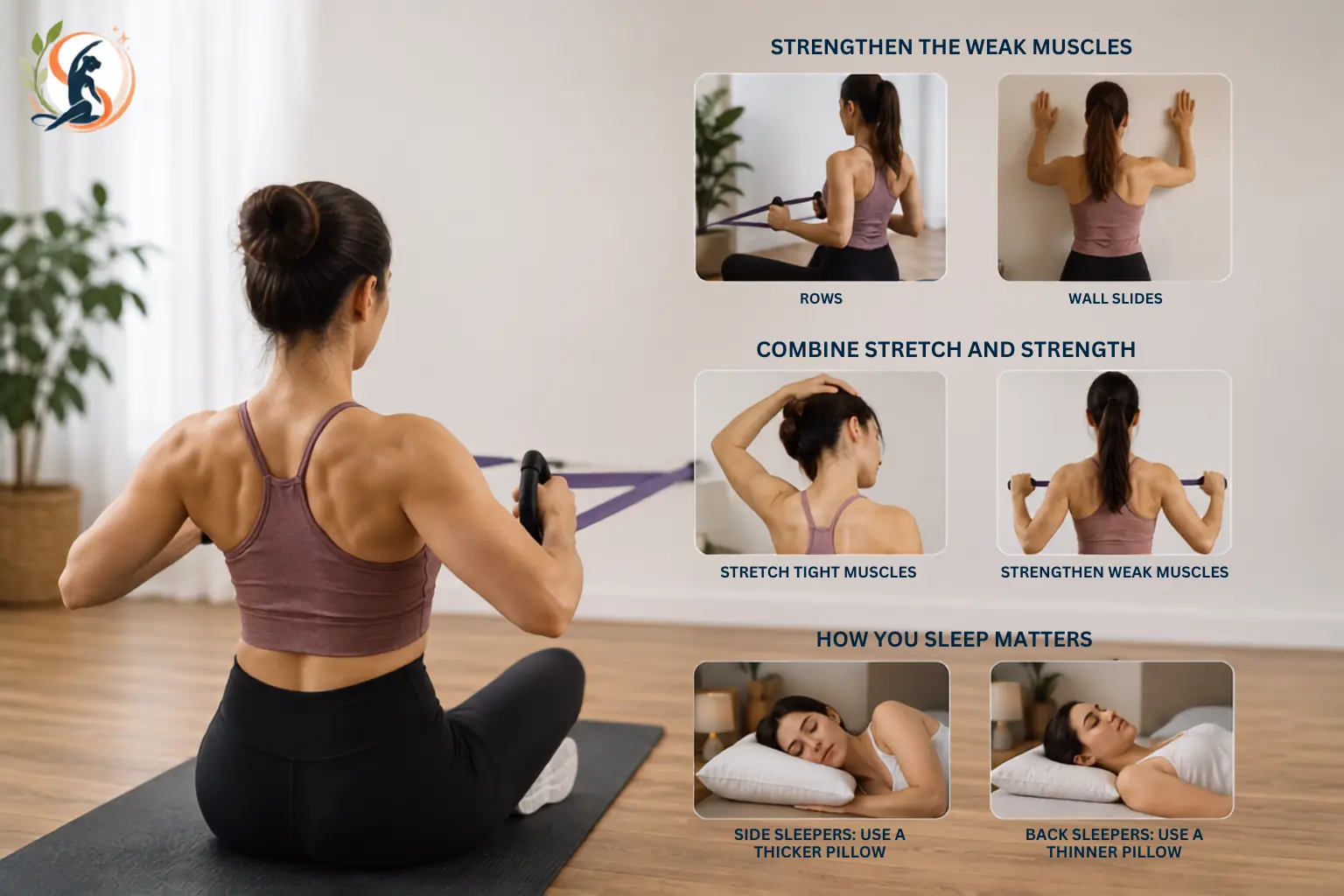
Stretching loosens tight muscles. Won't fix the weak ones pulling you out of position in the first place, though. Rows, band or light dumbbells either way, target the middle and lower traps directly, the muscles usually needing strengthening most in this whole pattern.
Wall slides, sliding your arms up and down a wall while keeping your lower back flat against it, build the same kind of stability without any equipment at all.
Combining Stretch and Strength
Lasting relief tends to come from doing both together, not picking one and hoping it covers everything. Stretch the tight upper traps and chest. Strengthen the weaker middle traps, rhomboids, deep neck muscles. Tight hips deserve the same attention as tight traps see this psoas stretch guide for the hip-flexor equivalent of this routine.
Keep at it consistently rather than one big session a month. Most people notice a real shift within two to three weeks of sticking with this combination, though the exact timeline shifts depending on how long the tightness took to build in the first place.
How You Sleep Affects Trapezius Tension Too
Sleeping on your stomach with your head turned to one side puts a lot of strain on the neck and upper traps overnight, often undoing whatever progress you made stretching during the day.
A pillow keeping your neck roughly level with your spine, whether you're a back or side sleeper, cuts down on a good chunk of that overnight strain. Side sleepers generally do better with a slightly thicker pillow to fill the gap between ear and shoulder. Back sleepers usually need something thinner instead.
A Few Mistakes Worth Avoiding
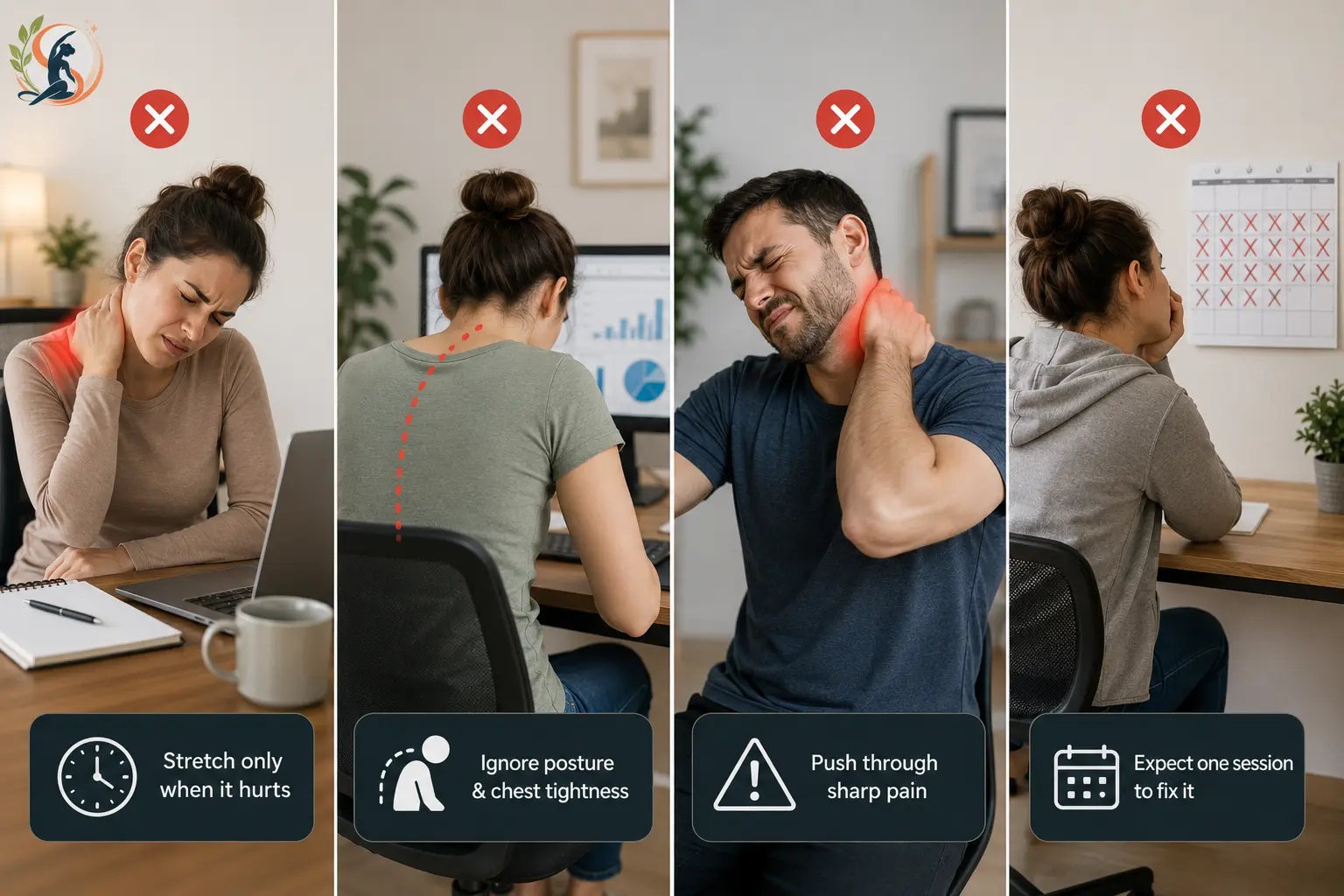
Stretching only once it already hurts is a common one. Tightness builds gradually, so a stretch reached for only during a flare-up misses most of the benefit that comes from doing it consistently, before things get bad.
Ignoring the chest and posture side of things is another. Stretching the traps without addressing forward head posture or tight chest muscles is a bit like mopping a floor while the tap's still running. Tightness keeps coming back because the actual cause never got touched.
Pushing through sharp pain instead of stopping, worth mentioning too. A gentle pulling sensation during a stretch, normal. Sharp, shooting or radiating pain, not normal and that's a sign to stop and check in with a doctor or physical therapist rather than push further alone.
Expecting one stretching session to undo months or years of desk posture is worth naming honestly too. Tight traps built up gradually, through thousands of small moments of hunching forward and they tend to loosen the same way. Gradually. With consistent effort, not one dramatic fix on a random Sunday afternoon.
Frequently Asked Questions
1. What causes upper back tightness?
Poor posture, long hours at a desk, tech neck from looking down at phones and emotional stress are the most common causes. Muscle imbalances like upper crossed syndrome, where some muscles get tight while others get weak, often make the tightness feel constant rather than occasional.
2. What stretches help rounded shoulders?
A doorway chest stretch, combined with shoulder blade squeezes and upper trap stretches, tends to work best. Rounded shoulders usually involve both tight chest muscles and weak upper back muscles, so addressing both sides gets better results than stretching alone ever will.
3. How do you release a tight trapezius?
Gentle neck tilts, chin tucks and doorway chest stretches, done consistently rather than occasionally, tend to bring the most relief. Pairing these stretches with posture breaks throughout the day and some light strengthening work speeds up the process noticeably.
4. What are the symptoms of a tight trapezius?
Common signs include a dull ache between the neck and shoulder, stiffness turning the head, tension headaches and a visible hump or rounded posture at the base of the neck. Tingling, numbness or radiating pain down the arm is different and worth checking with a doctor.
5. How do you sleep to relax your trapezius?
Sleeping on your back or side with a pillow that keeps your neck level with your spine reduces strain overnight. Stomach sleeping with your head turned to one side tends to make trapezius tension worse rather than better, even if it feels comfortable at first.
6. Should you massage a strained trapezius muscle?
Gentle massage can help with everyday tightness, but a genuinely strained or injured trapezius needs rest first, since deep pressure on an acute injury can sometimes make things worse. When in doubt, especially with sharp pain or reduced movement, a physical therapist is a safer first step than self-massage.
Conclusion
Stretching of the trapezius works best as part of a bigger picture, not a quick fix reached for once it already hurts. Loosen the tight spots, strengthen the weak ones, fix the posture habits feeding the whole cycle and give it a few consistent weeks before expecting real change. Most people find that once they treat the actual cause instead of just the symptom sitting on top of it, the tightness stops coming back nearly as often as it used to.


Comments (0)
No comments yet. Be the first to share your thoughts!
Leave a Comment