
You stand up after a few hours at your desk and your hip just... doesn't open up right away. Not painful. Just tight, the kind where you need a few steps before it loosens on its own. Nine times out of ten, that's your psoas talking. And a psoas stretch is usually the first thing people go looking for once they've worked out which muscle is actually the culprit.
Here's the thing, though. Before you tack one more stretch onto a routine that isn't really working, it helps to understand what this muscle does, why it gets so tight in the first place and which stretches are worth the ten minutes versus which ones just feel nice for a second and change nothing at all.
What Even Is the Psoas?
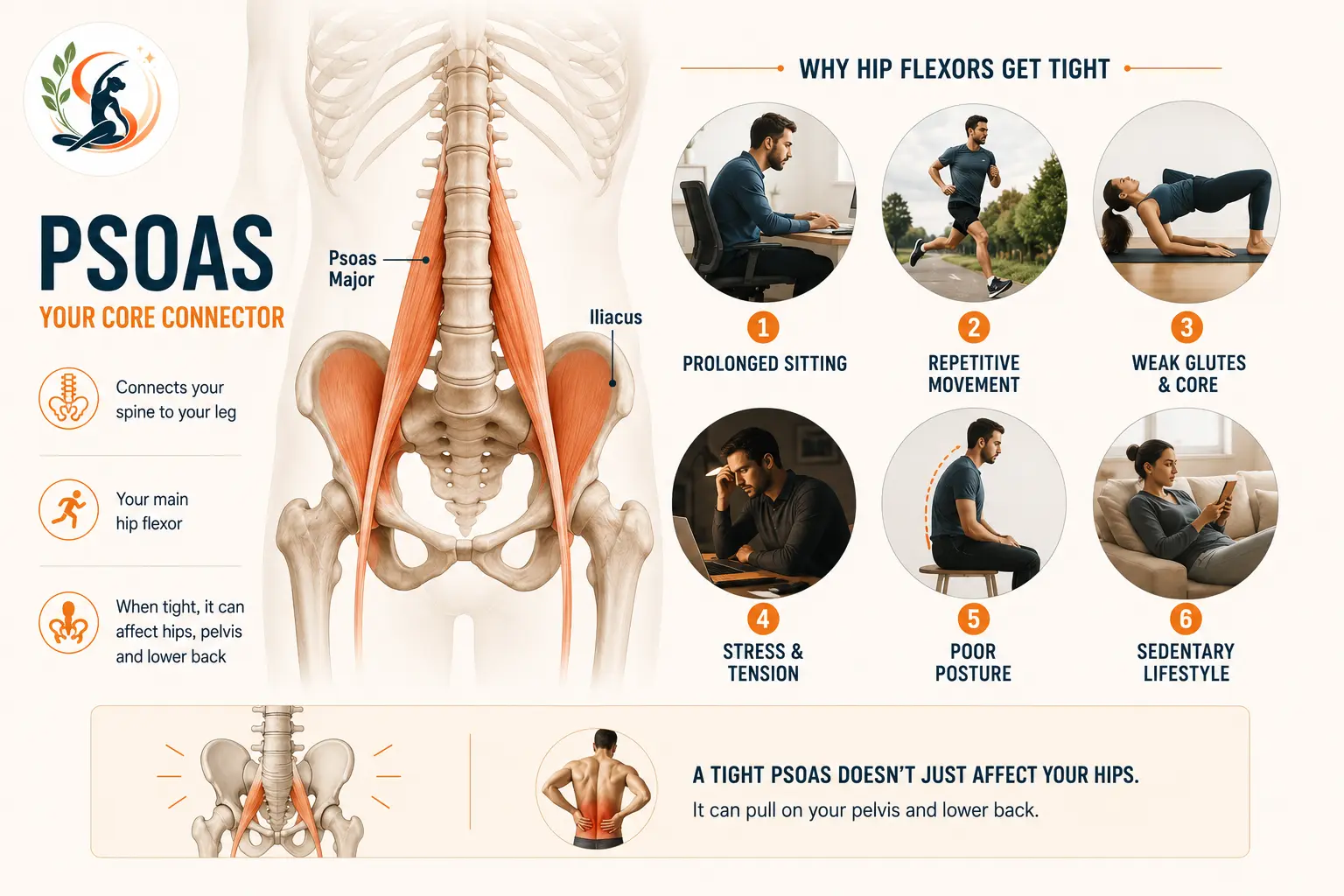
So the psoas major is a long muscle running from your lower spine, through your pelvis and attaching near the top of your thigh bone. There's a smaller muscle riding alongside it called the iliacus and together people usually just call the pair the iliopsoas.
Whatever name you use, this is your main hip flexor. Lift your knee to walk, step up onto a curb, drop into a lunge. This thing is doing most of the work every time. Here's the part that tends to catch people off guard the first time someone explains it. The psoas is basically the only muscle in your body that connects your spine directly to your leg.
Nothing else really pulls double duty like that. So when it tightens up, it's not just a hip problem. It can drag on your pelvis and your lower back at the same time. Honestly, that's probably why so many people go looking for a psoas stretch expecting hip relief and end up a little surprised their lower back feels better too.
Sitting is the main culprit here, unsurprisingly. Your hip stays bent for hours when you sit and the psoas just sits there shortened the whole time. Do that five days a week for a few years and the muscle starts treating that shorter length as its new normal. It stops fully lengthening out even once you're back on your feet.
Fine, But Why Are My Hip Flexors Always Tight?
A few patterns keep showing up here, over and over.
Long stretches of sitting is the obvious one and it's still the biggest one by a wide margin. Desk job, long commute, an evening parked on the couch scrolling your phone. All of it keeps the hip flexed for hours and that alone is the single biggest reason hip flexors stay chronically tight for so many people.
Run or cycle or do anything with repetitive leg movement and your hip flexors are working nonstop with every stride or pedal stroke. Skip the stretching and that repeated use shortens the muscle over time. Kind of why a hip flexor stretch for runners looks a little different from a general one.
Runners just need more emphasis on that front-hip stretch, given how hard those muscles are already grinding away all day. Weak glutes and a weak core play a bigger role than most people give them credit for. When those muscles aren't doing their share of stabilizing the pelvis, the hip flexors quietly step in and cover for them.
And an overworked muscle tends to stay tight, kind of like it's bracing for the next round. Stress is the one that surprises people most. Because the psoas sits so deep in the core, some practitioners think it responds to emotional tension a bit like your shoulders creeping up toward your ears when you're stressed out.
No hard proof behind this one, more an observation passed around than an actual study, but plenty of people notice their hips feel tighter during genuinely rough stretches of life. Take it for whatever it's worth.
Posture plays into it too. Slouching or an anterior pelvic tilt where the hips tip forward, changes the resting length of the psoas. It can end up shortened even while you're just standing there, not only while sitting.
The Symptoms Nobody Connects Back to the Psoas
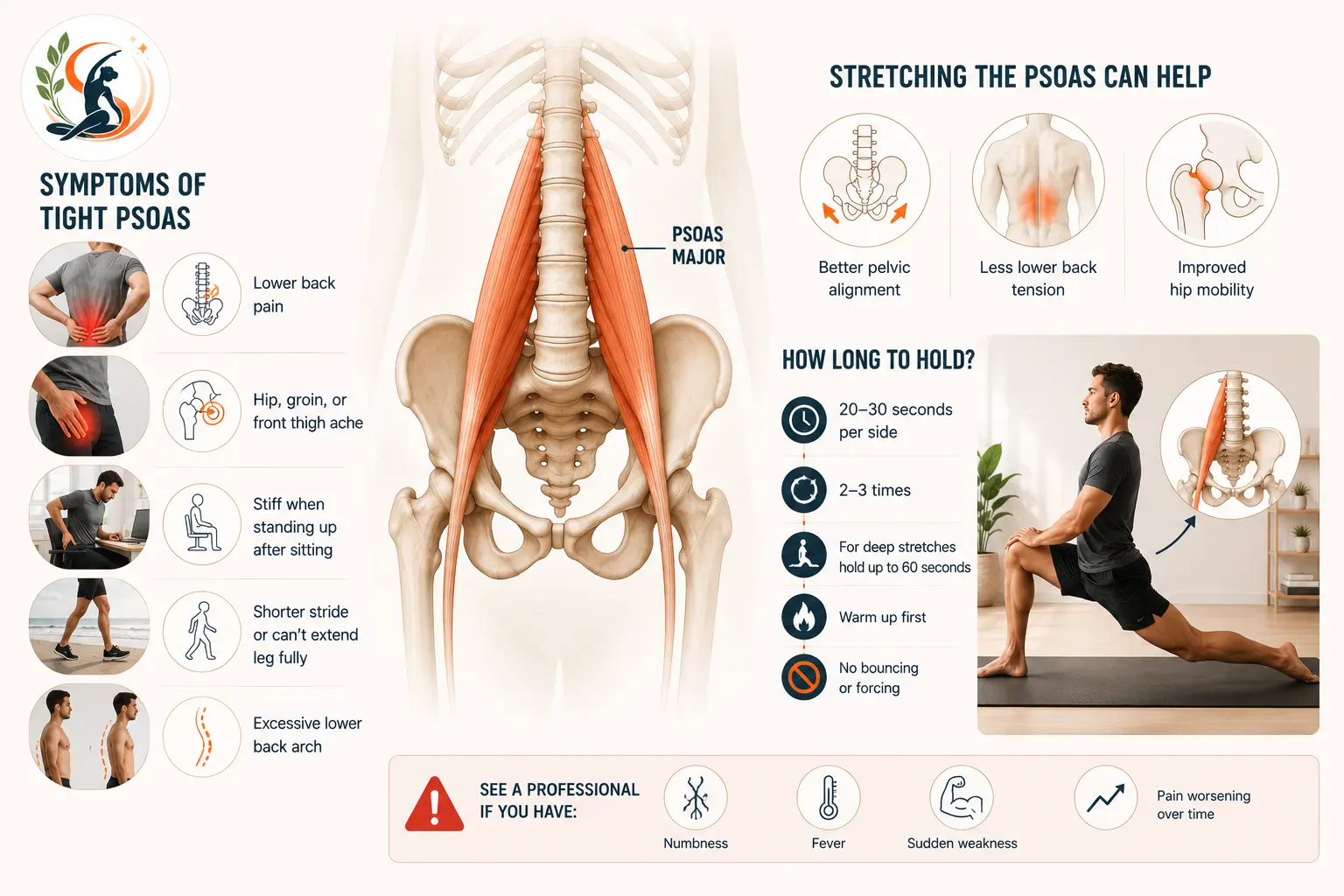
This part's kind of interesting, honestly, because tight psoas symptoms show up in spots you wouldn't expect at all.
Lower back pain, especially right where your spine meets your pelvis
A dull ache in the hip, groin or front of the thigh
That stiff, slightly awkward feeling standing up after sitting a while, like your hip hasn't quite caught up with the rest of you yet
A shorter stride when walking or trouble fully extending a leg behind you
A lower back that looks a bit more arched than usual in photos, which weirdly enough can be a sign the psoas is pulling your pelvis forward without you ever clocking it
One quick note here, because it's worth saying clearly. Numbness, fever, sudden severe weakness or pain that keeps getting worse week after week. None of that is something a stretch is fixing. That's a doctor or physical therapist conversation, not a search-and-stretch situation, no matter how tempting it is to just try one more YouTube video first.
So What Does Stretching the Psoas Actually Do?
A psoas stretch works by extending the hip, basically the reverse of what the muscle does when it flexes. Done consistently, that can help with pelvic alignment by easing the forward pull the psoas puts on your pelvis, take some pressure off chronic lower back tension and support better hip mobility over the long run.
Here's the bit most articles conveniently leave out, though. Static stretching, holding a position for 20 or 30 seconds, does loosen the muscle temporarily. It just doesn't always stick around.
Some physical therapists and somatic movement folks point out that a lot of psoas tightness comes from your nervous system keeping the muscle in a guarded, shortened state, not just the tissue itself being physically short.
That's a decent chunk of why stretching alone can feel like it "doesn't hold," no matter how many times a day you do it. Pair it with some core and glute strengthening and the change actually tends to stick.
How Long Should You Hold the Stretch, Really?
Most physical therapists land somewhere around 20 to 30 seconds per hold, two or three times a side. For deeper stretches, something like a low lunge, a longer hold around a minute works better, especially once your hips have already warmed up a bit.
Bouncing in and out of it or forcing it deeper doesn't get you there any faster. Mostly it just raises your odds of straining something you didn't mean to.
Stretches Actually Worth Adding to Your Routine
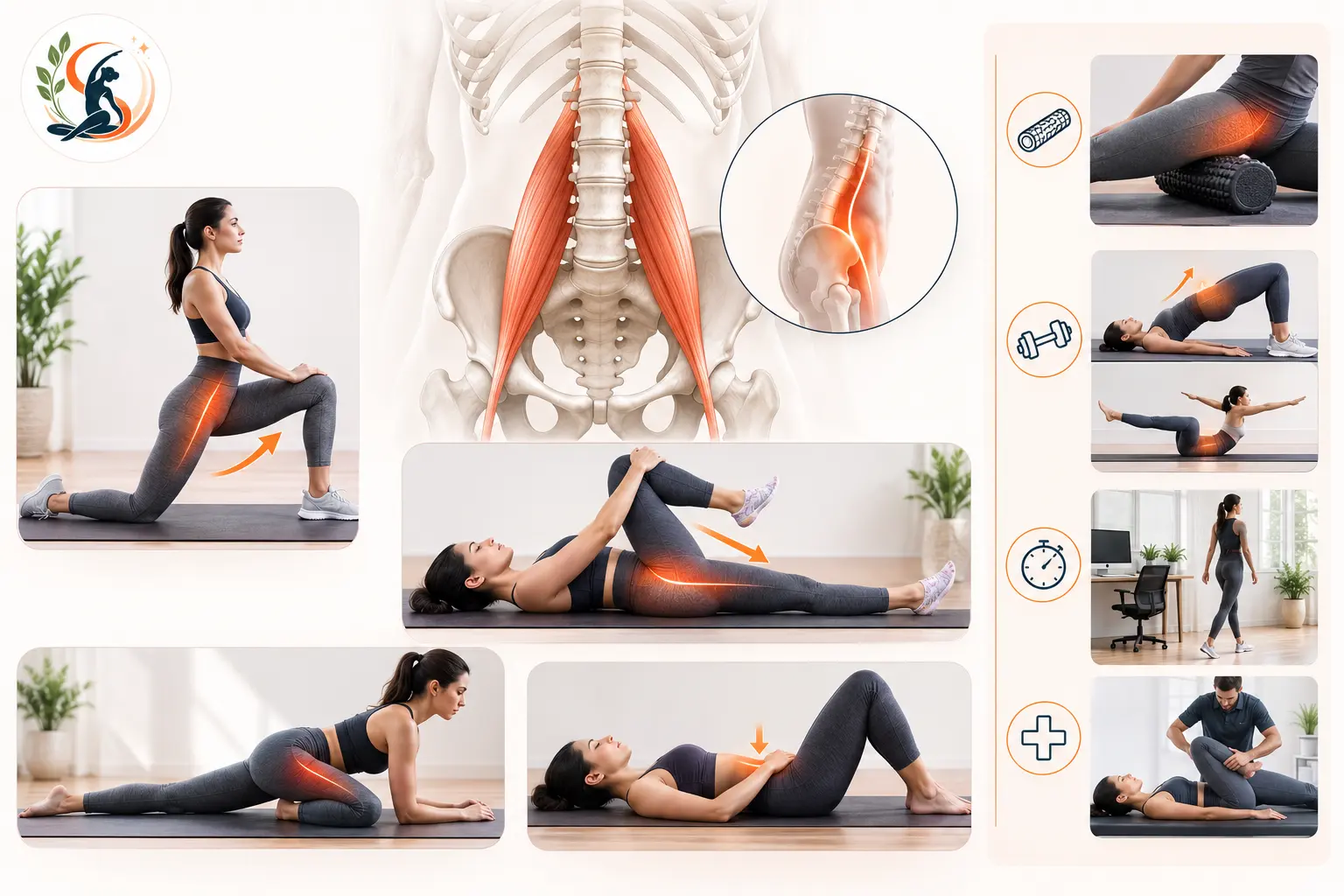
The kneeling hip flexor lunge is probably the easiest place to start. Half-kneeling position, one knee down, the other foot planted in front of you. Shift your hips forward gently while keeping your torso upright, until you feel it along the front of the hip on the kneeling side.
Hold 20 to 30 seconds, then switch. It isolates each hip on its own, which matters because most people are noticeably tighter on one side than the other. Nobody's symmetrical. That's just how bodies work, turns out. The butterfly stretch is a gentler, seated way to work the same hip-opening angle if the kneeling lunge feels like too much.
The supine psoas stretch is the gentler cousin, good for the days your hips feel especially cranky. Lie flat on your back, both legs extended and hug one knee toward your chest while the other leg stays flat on the floor. Hold anywhere from 30 seconds to a full minute. You'll feel it through the front of the hip on the straight-leg side.
A low lunge, sometimes labeled a lizard pose variation, goes a step deeper. From a low lunge with one foot forward, lower down onto your forearms. Hips squared forward instead of twisted to one side, back leg fully extended. Hold one to two minutes if you can manage it, then switch. Works best once the kneeling lunge starts feeling almost too easy.
And then there's constructive rest position, which isn't really a stretch so much as a release. Lie on your back, knees bent, feet flat and just let your lower back settle naturally instead of forcing it flat against the ground. A few minutes here before bed does a quiet amount of good for a psoas that's been contracted all day without you noticing.
It's Not Just About Stretching, Unfortunately
Stretching is one piece of this, not the whole thing, no matter how much we'd all like that to be true.
Foam rolling along the front of the hip and upper thigh helps release the surrounding fascia, even though the psoas itself sits too deep for a roller to actually reach. Building up your core and glutes with something like bridges or dead bugs takes some of the load off a psoas that's been quietly compensating for weaker muscles around it.
And if you sit for a living, standing up and walking around every 30 or 45 minutes probably does more for your hip mobility over time than any single stretch, no matter how well you do it.
If tightness or pain has been hanging around for weeks rather than days, a physical therapist or a good massage therapist can work with the psoas more precisely than you probably can on your own with a foam roller and good intentions. The same 'stretching alone isn't the whole fix' logic applies to a tight trapezius too see this guide for the upper-body version.
How Long Does It Actually Take to Feel a Difference
Depends a lot on how long the tightness has been building and how consistent you're actually being about all this. Some people feel noticeably looser after just one session, especially if the tightness came from one long flight or car ride rather than years of habit.
Tightness built up over a decade of desk work takes longer. Usually a few weeks of regular stretching and strengthening before it starts feeling like an actual shift, rather than relief that fades by the next morning.
Give it three or four weeks before deciding whether it's working. Judging after two days isn't a fair test of much of anything, honestly.
Mistakes That Quietly Undo All Your Progress
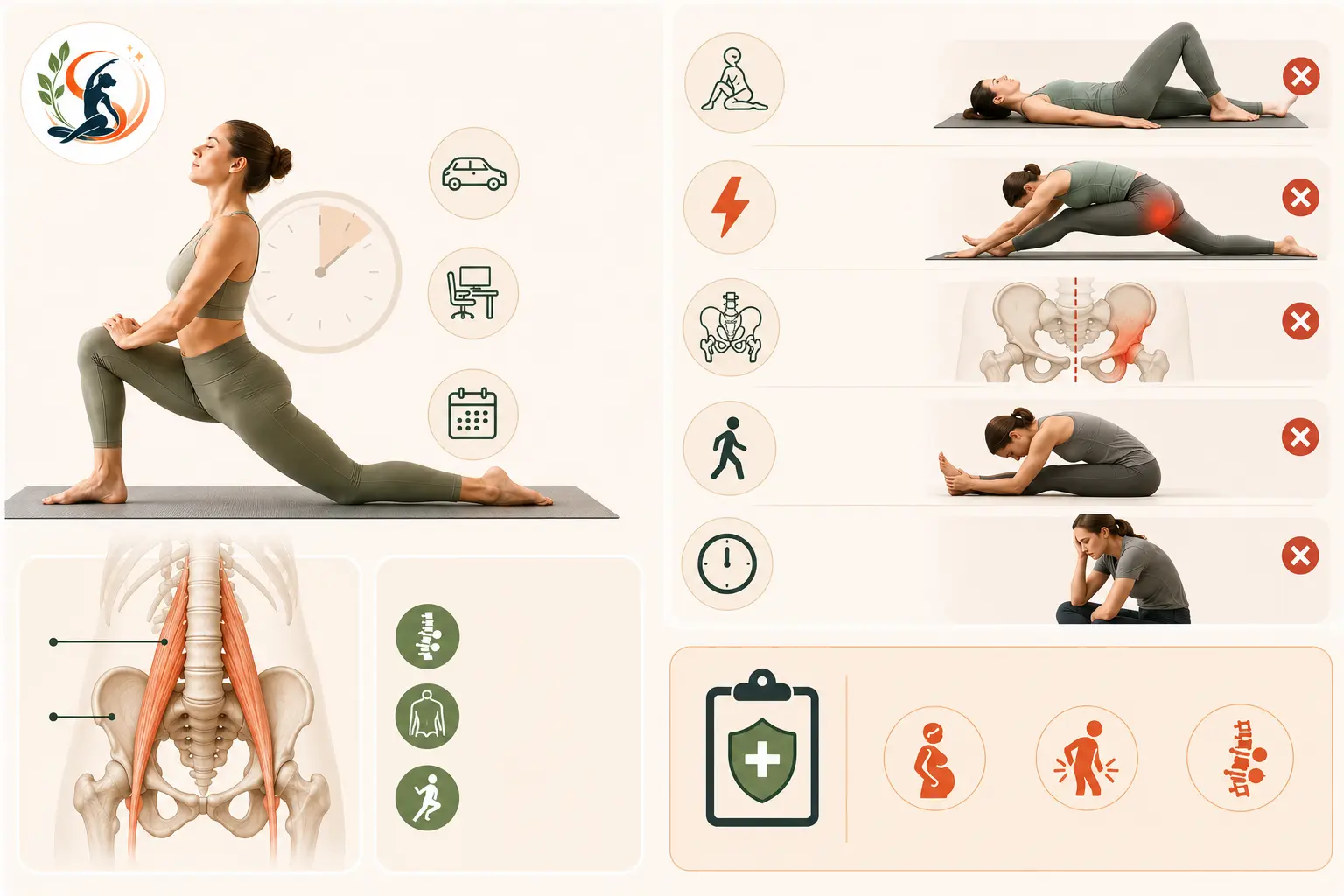
Only stretching and never strengthening: If your psoas is tight because your core and glutes aren't pulling their weight, stretching it just puts you right back where you started the second you stand up and start moving again.
Forcing a deeper stretch before your body's ready: Discomfort is a normal part of stretching. Sharp pain isn't and pushing through that usually just aggravates a muscle that's already irritated.
Ignoring the tighter side: Since most people have one hip noticeably tighter than the other, spending equal time on both without adjusting means the tight side never really catches up to the looser one.
Skipping the warm-up: Deep hip stretches work a lot better on a body that's already moved a little first. Even a short walk before stretching makes the exact same stretch feel noticeably better, which sounds almost too simple to be true, but it holds up.
Expecting overnight results for tightness that took years to build: One session isn't undoing a decade of sitting at a desk. Consistency counts for a lot more than intensity here, even though intensity feels more productive in the moment.
One more thing worth saying plainly and this one actually matters. Pregnant, recovering from a hip or back injury or dealing with something like a diagnosed disc issue? Run any new deep hip stretching past a doctor or physical therapist first.
Not every position here suits every situation and it's a five-minute conversation that can save you a real setback down the line.
Frequently Asked Questions
1. Why are my hip flexors always tight?
Mostly it comes down to long hours of sitting, which keeps the psoas shortened most of the day. Running, cycling, weak glutes or core muscles and even ongoing stress can pile on top of that, part of why the tightness sometimes feels like it's coming out of nowhere.
2. How do you release tight psoas?
A mix of stretching, core and glute strengthening and regular movement breaks throughout the day works best. Stretching alone gives temporary relief, but pairing it with some strength work and standing up more often actually produces results that stick around longer.
3. How long should you hold a hip flexor stretch?
Most physical therapists suggest 20 to 30 seconds per hold, done two or three times per side. Deeper stretches like a low lunge can be held a little longer, closer to a minute, once your hips are already warmed up.
4. What is the fastest way to release the psoas?
There's no real instant fix here, but pairing a kneeling hip flexor stretch with some foam rolling and a short walk beforehand tends to bring the quickest noticeable relief. Anything deeper and more lasting still takes weeks of actual consistency.
5. What are the symptoms of a tight psoas?
Lower back pain, hip or groin discomfort, stiffness after sitting and a shorter stride when walking are all common. Some people also notice their lower back looks more arched than usual, which can be a sign the psoas is pulling on the pelvis.
6. What does stretching psoas do?
It extends the hip, the opposite of what the muscle does when it flexes. Consistent stretching can ease lower back tension, support better pelvic alignment and help restore hip mobility that gets lost from years of sitting.
Conclusion
A tight psoas isn't something one perfect thirty-second stretch fixes forever, as much as we'd all like that to be true. It responds to a mix of consistent stretching, a bit of core and glute work and just moving more throughout your day instead of staying folded into a chair for hours on end.
Pick two of the stretches above, do them most days for a few weeks and pay attention to how your lower back and hips actually feel by the end of the day. That tells you more than anything else in this article, honestly.


Comments (0)
No comments yet. Be the first to share your thoughts!
Leave a Comment