
I've coached strength training for over fifteen years, and if there's one muscle group people underestimate, it's the back. Everyone chases a bigger chest or bigger arms (our upper body dumbbell workout guide has you covered there), then wonders why their posture's rounding forward and their shoulders ache after a long day hunched over a desk. The fix really isn't complicated, either. A handful of solid dumbbell back exercises, done consistently, can rebuild that strength without you ever touching a barbell or a cable machine.
This guide covers everything which muscles you're actually working, the best dumbbell back workout moves for both upper and lower back, a full routine you can run at home, and the mistakes I see beginners make over and over again in the gym. Let's get into it.
Why Train Your Back With Dumbbells
Dumbbells aren't just a backup plan for when the squat rack's taken. For back training specifically, they've genuinely got an edge over machines and barbells.
Benefits of Dumbbell Back Workouts Over Machines
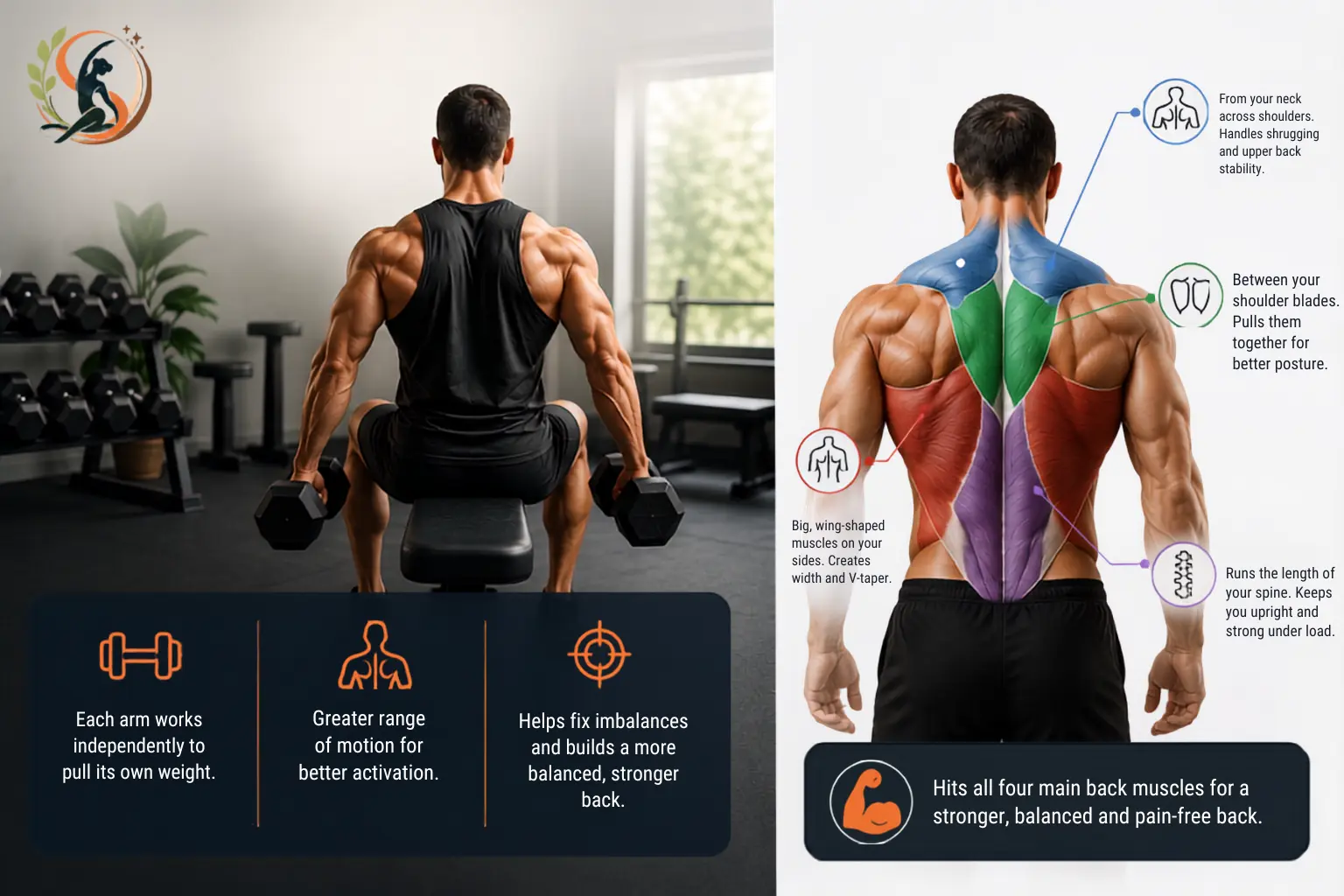
Because each arm works independently, dumbbell back workouts force both sides of your body to actually pull their own weight literally. A barbell or machine lets your stronger side quietly take over without you noticing, which over the years can leave you noticeably uneven. Dumbbells also let you move through a bigger range of motion, since your arm isn't locked onto some fixed bar path. That's a big part of why so many coaches, myself included, lean on back exercises with dumbbells even when a full gym setup is sitting right there.
Back Muscle Anatomy Made Simple
You don't need a kinesiology degree to train your back well, but knowing what you're actually working helps a lot. Your lats are the big, wing-shaped muscles on your sides that give you that V-taper look everyone wants. Your traps run from your neck down across your shoulders and handle shrugging plus upper back stability. Your rhomboids sit between your shoulder blades and pull them together. Your erector spinae runs the length of your spine and keeps you upright under load. A good dumbbell back workout hits all four, not just the flashy lats everyone's obsessed with.
How to Warm Up Before a Dumbbell Back Workout
Cold muscles and heavy rows just don't mix well, no matter how tempting it is to skip straight to the good stuff. A short warm-up makes a real difference in how the rest of your session feels.
Quick Warm-Up Routine
Spend three to five minutes on light cardio, just enough to get your heart rate up and the blood actually moving. Follow that with arm circles, band pull-aparts if you've got one lying around and a few slow bodyweight rows using a table edge or doorframe. This primes your shoulders and upper back without wearing you out before the real work even starts.
Common Mistakes to Avoid Before You Start
The biggest mistake I see, over and over, is skipping the warm-up entirely and jumping straight to heavy weight. A close second is rounding the lower back on the very first rep of a session, before the body's actually ready to stabilize under load. Take an extra two minutes here, seriously. It's cheap insurance against a pulled muscle that could sideline you for weeks.
Best Dumbbell Back Exercises for Upper Back
These are the moves that build real thickness and width across your upper back and honestly, they belong in nearly every back routine with dumbbells.
Bent-Over Row
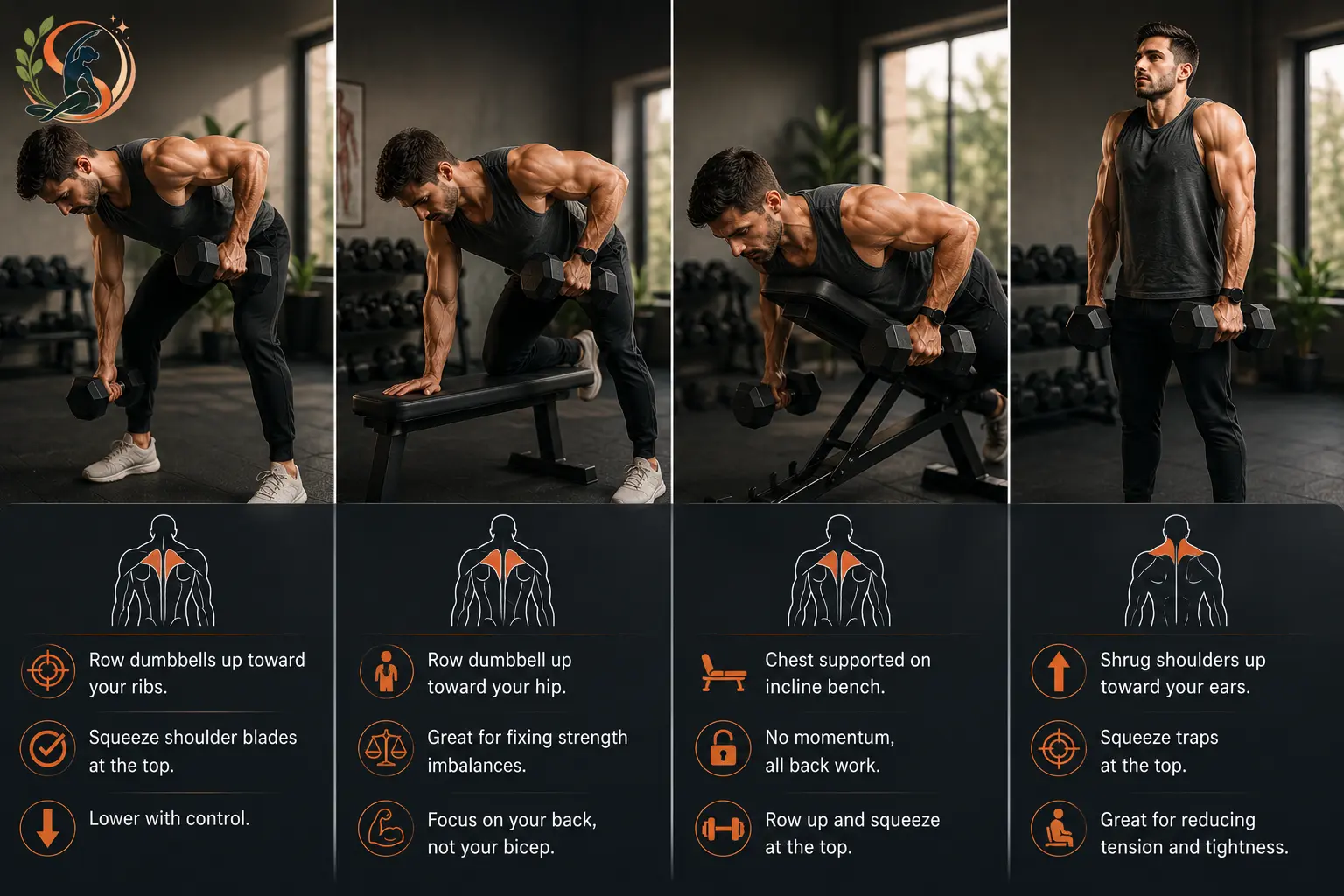
Hinge at your hips with a slight bend in your knees, keep your back flat and let the dumbbells hang below your shoulders. Pull both weights up toward your ribs, squeezing your shoulder blades together at the top, then lower with control instead of just dropping them. This is one of the best dumbbell back exercises for overall thickness and it's usually the first one I teach new clients, hands down.
One-Arm Dumbbell Row
Plant one knee and hand on a bench, let the working arm hang straight down and row the dumbbell up toward your hip. Because you're working one side at a time, this back exercise using dumbbells is excellent for fixing strength imbalances between your left and right side, which most people have without realizing it. Aim to feel the pull in your back, not your bicep.
Chest-Supported Row
Lie face-down on an incline bench with a dumbbell in each hand, arms hanging straight toward the floor. Row both weights up together, keeping your chest pressed into the bench the entire time. Removing the ability to cheat with momentum makes this one of the more honest back exercises hand weights can offer, since your back muscles have to do literally all the work here.
Dumbbell Shrugs
Stand tall holding a dumbbell in each hand at your sides, then simply shrug your shoulders straight up toward your ears and squeeze at the top. This isolates your traps directly and makes a simple addition to any dumbbell back workout, especially if you sit at a desk most of the day and carry tension right in that spot, which a lot of us do.
Best Lower Back Dumbbell Exercises
Your lower back rarely gets trained on purpose, which is exactly why it tends to end up the weak link during heavier lifts.
Romanian Deadlift (RDL)
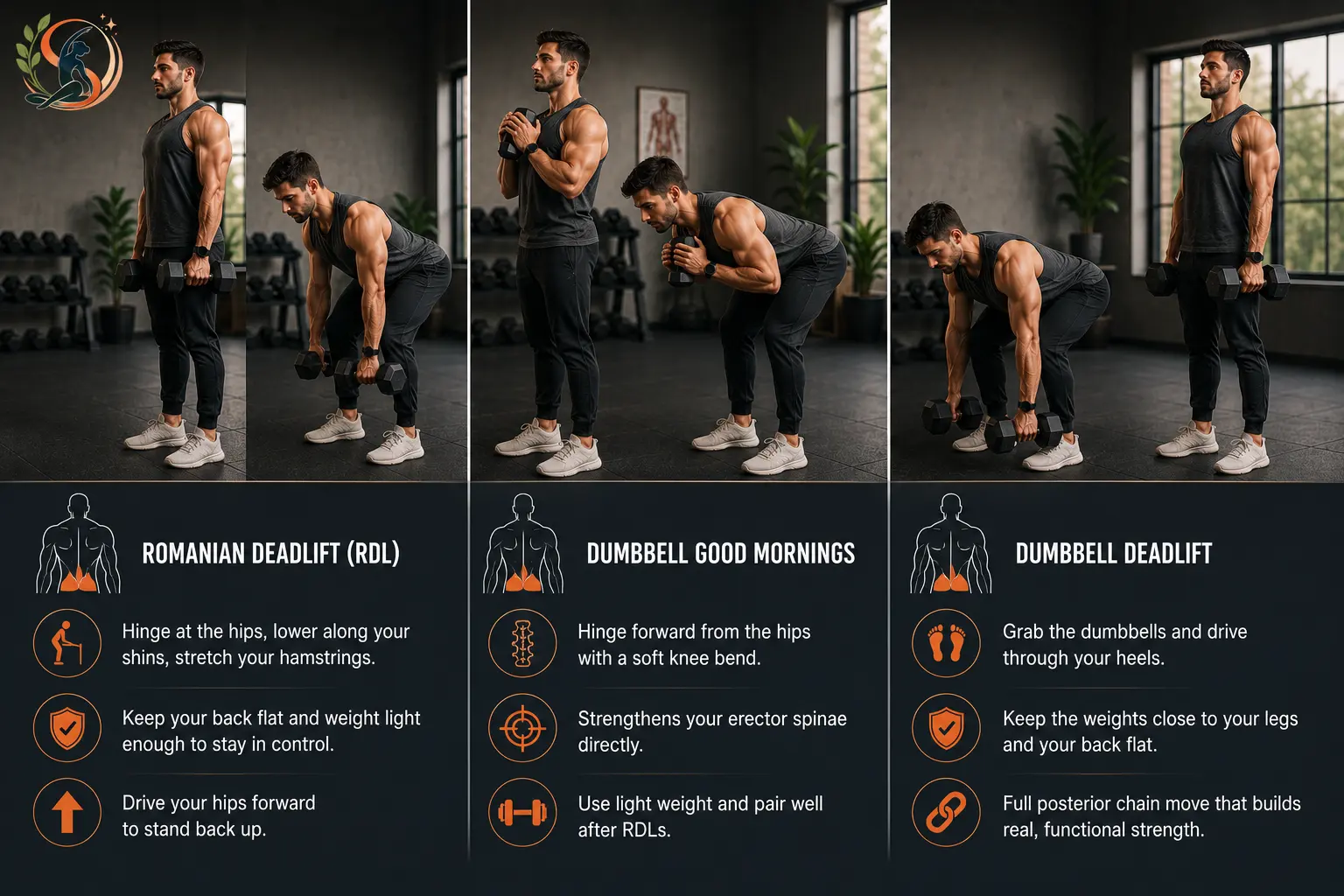
Hold a dumbbell in each hand in front of your thighs, then hinge at the hips while keeping your knees only slightly bent. Lower the weights along your shins until you feel a real stretch through your hamstrings, then drive your hips forward to stand back up. This is one of the safest lower back exercises dumbbell training has to offer, as long as you keep the weight light enough to actually maintain a flat back throughout.
Dumbbell Good Mornings
Hold a single dumbbell against your chest or rest light dumbbells on your shoulders, then hinge forward from the hips with a soft knee bend, keeping your spine neutral. This one strengthens your erector spinae directly and pairs well as an accessory move after RDLs, using noticeably lighter weight than you'd use for a row.
Dumbbell Deadlift
Set two dumbbells on the floor just outside your feet, hinge down to grab them and stand up by driving through your heels while keeping the weights close to your legs the whole way up. This is a full posterior chain move and it's one of the more underrated lower back dumbbell exercises for building real, functional strength that actually carries over into everyday life.
Dumbbell Lat Exercises You Can Do at Home
If you don't have access to a lat pulldown machine, don't sweat it; dumbbells can still get the job done just fine.
Lat Pulldown Alternatives With Dumbbells
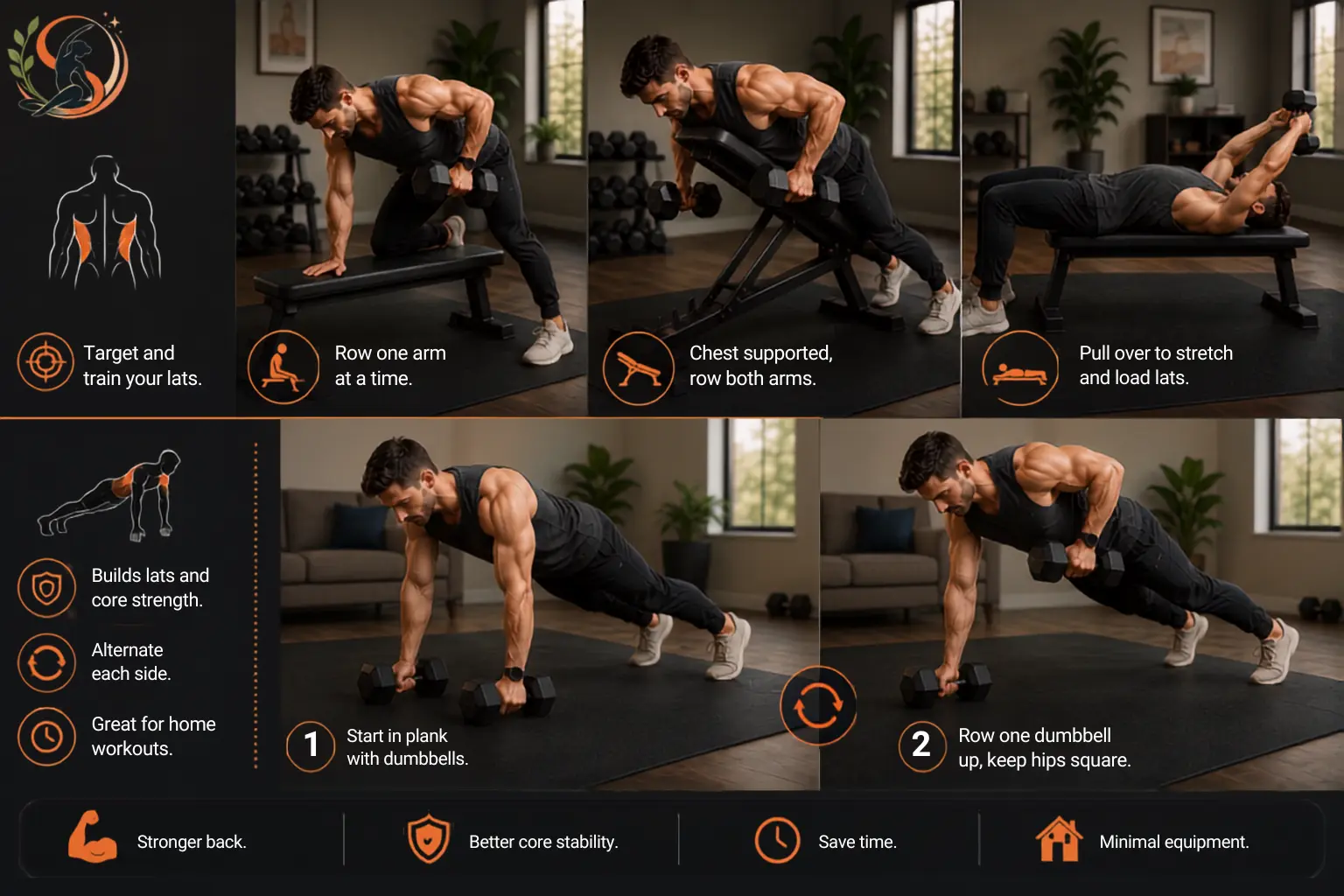
The single-arm row and the chest-supported row both work as solid lat pulldown alternatives, since they pull your arm from an overhead-ish position down toward your body, which mimics that same general movement pattern. A dumbbell pullover, lying on a bench with one dumbbell held overhead and lowered behind your head before pulling it back up, also stretches and loads the lats directly and it's a move most people never try.
Renegade Rows for Lats and Core
Start in a plank position with a dumbbell in each hand, then row one weight up toward your hip while keeping your hips as square to the floor as you can manage. Alternate sides. This move trains your lats and your core stability at the same time, which makes it a favorite for home dumbbell back exercises when you're short on time and equipment both.
Full Home Dumbbell Back Workout Routine
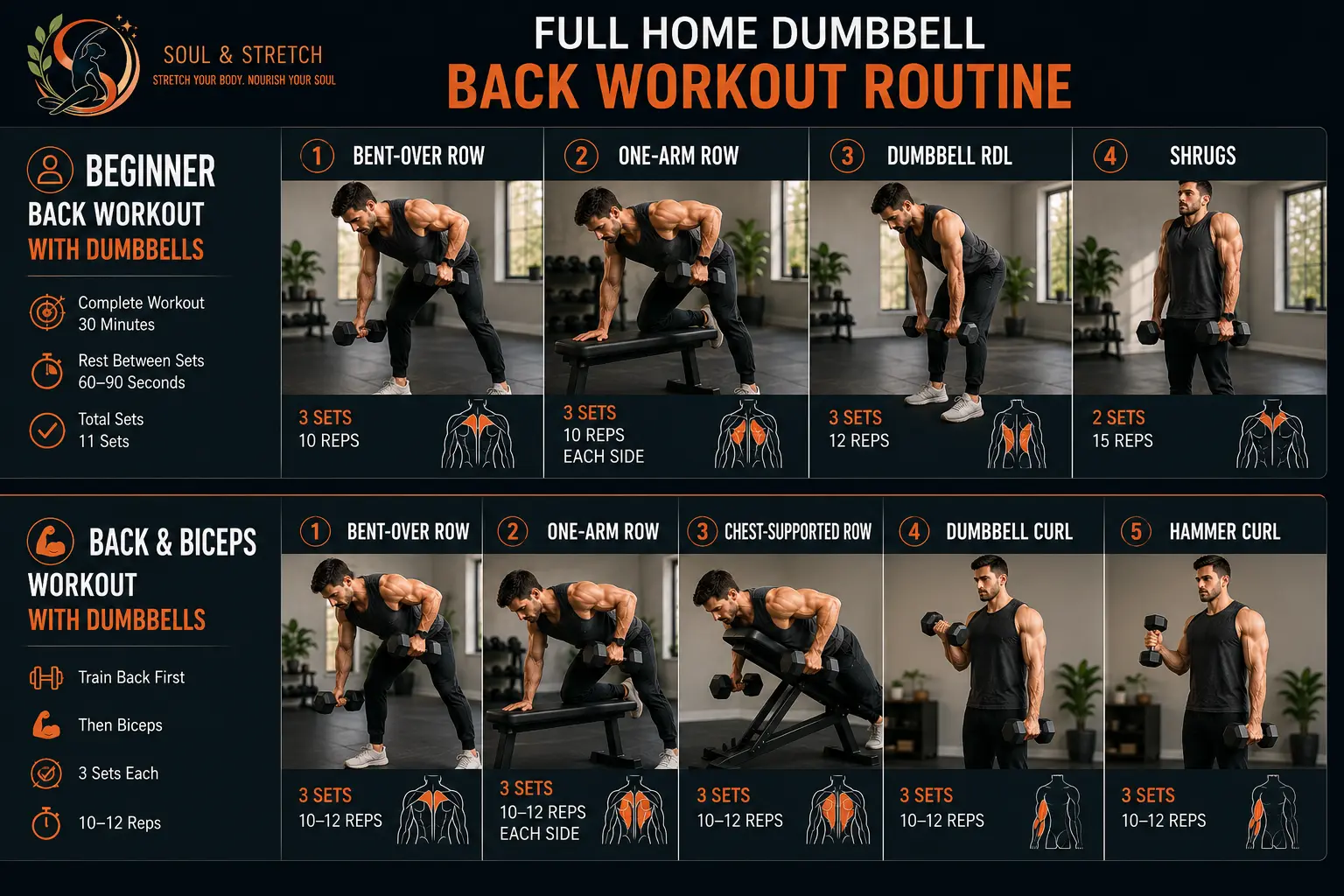
Here's an actual back workout with dumbbells you can run start to finish, no guesswork needed, whether you're at home or in a gym.
Beginner Back Workout With Dumbbells
Start with bent-over rows for 3 sets of 10 reps, followed by one-arm rows for 3 sets of 10 reps per side. Add dumbbell RDLs for 3 sets of 12 reps, then finish with shrugs for 2 sets of 15 reps. Rest 60 to 90 seconds between sets. This db back exercises routine takes about 30 minutes total and covers your entire back from top to bottom, no filler exercises included.
Back and Biceps Workout With Dumbbells
Since your biceps assist in nearly every rowing movement anyway, pairing them together just makes sense. Run your back exercises first, bent-over rows, one-arm rows, chest-supported rows then finish with bicep curls and hammer curls for 3 sets of 10 to 12 reps each. Training back and biceps together also means your arms are already warm from all that pulling, so the curls tend to feel noticeably stronger than they would on a separate day. Pair this with a proper chest exercises with dumbbells session on a different day for a balanced push-pull split.
Sets, Reps and Weekly Frequency
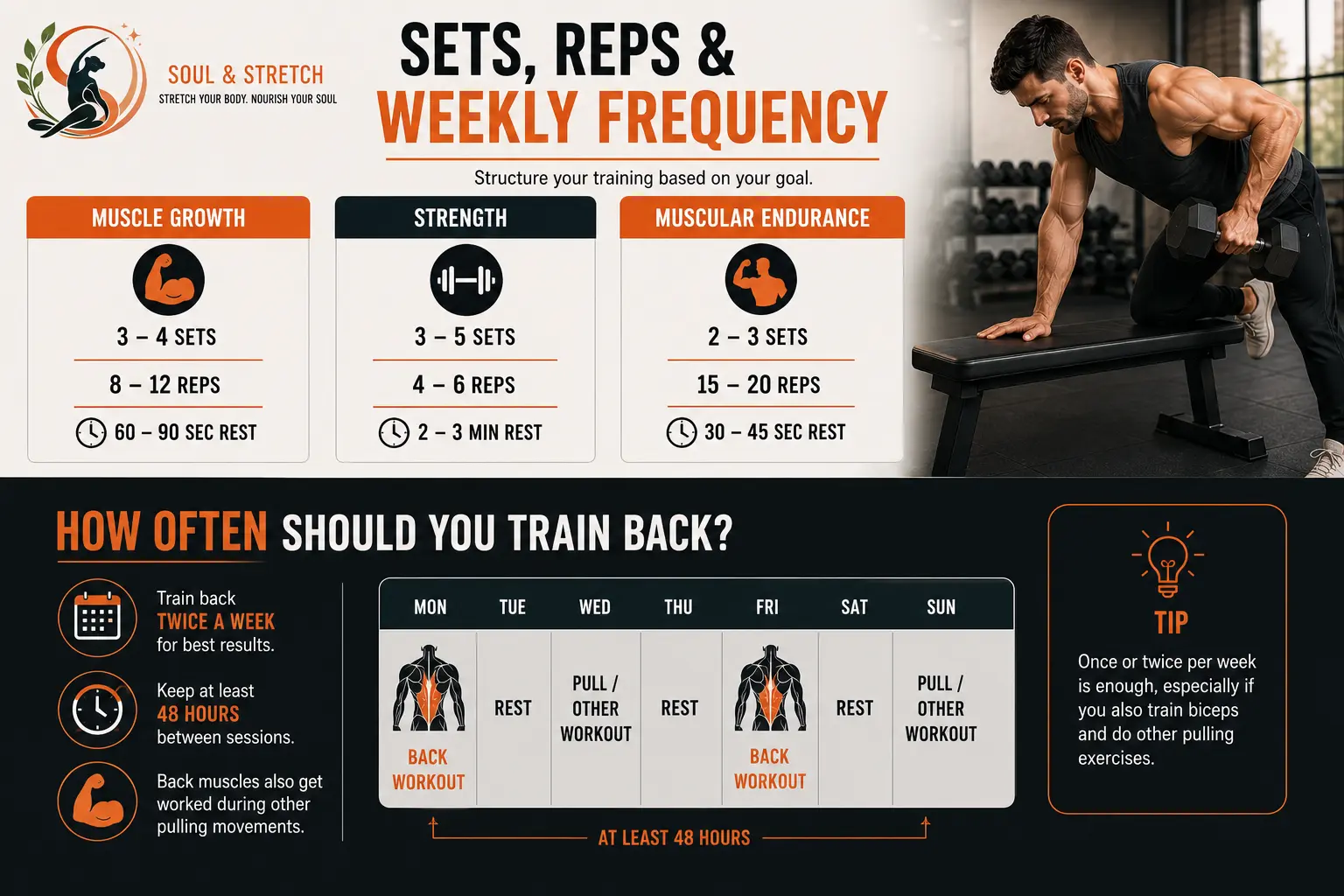
How you structure your sets and reps really depends on what you're actually training for, so don't just copy whatever routine your gym buddy runs.
How Many Sets and Reps for Back Growth
For muscle growth, aim for 3 to 4 sets of 8 to 12 reps per exercise, resting 60 to 90 seconds between sets. If pure strength is the goal instead, drop down to 3 to 5 sets of 4 to 6 reps with heavier weight and 2 to 3 minutes of rest. For muscular endurance, go lighter with 2 to 3 sets of 15 to 20 reps and shorter 30 to 45 second rest periods.
How Often Should You Train Back
Most people do well training back twice a week, with at least 48 hours between sessions to actually let the muscles recover. If you're combining it with a back and biceps workout, once or twice weekly is plenty, since your back muscles also get indirect work during pulling movements on your other training days anyway.
Dumbbells vs Kettlebells vs Bodyweight for Back Training
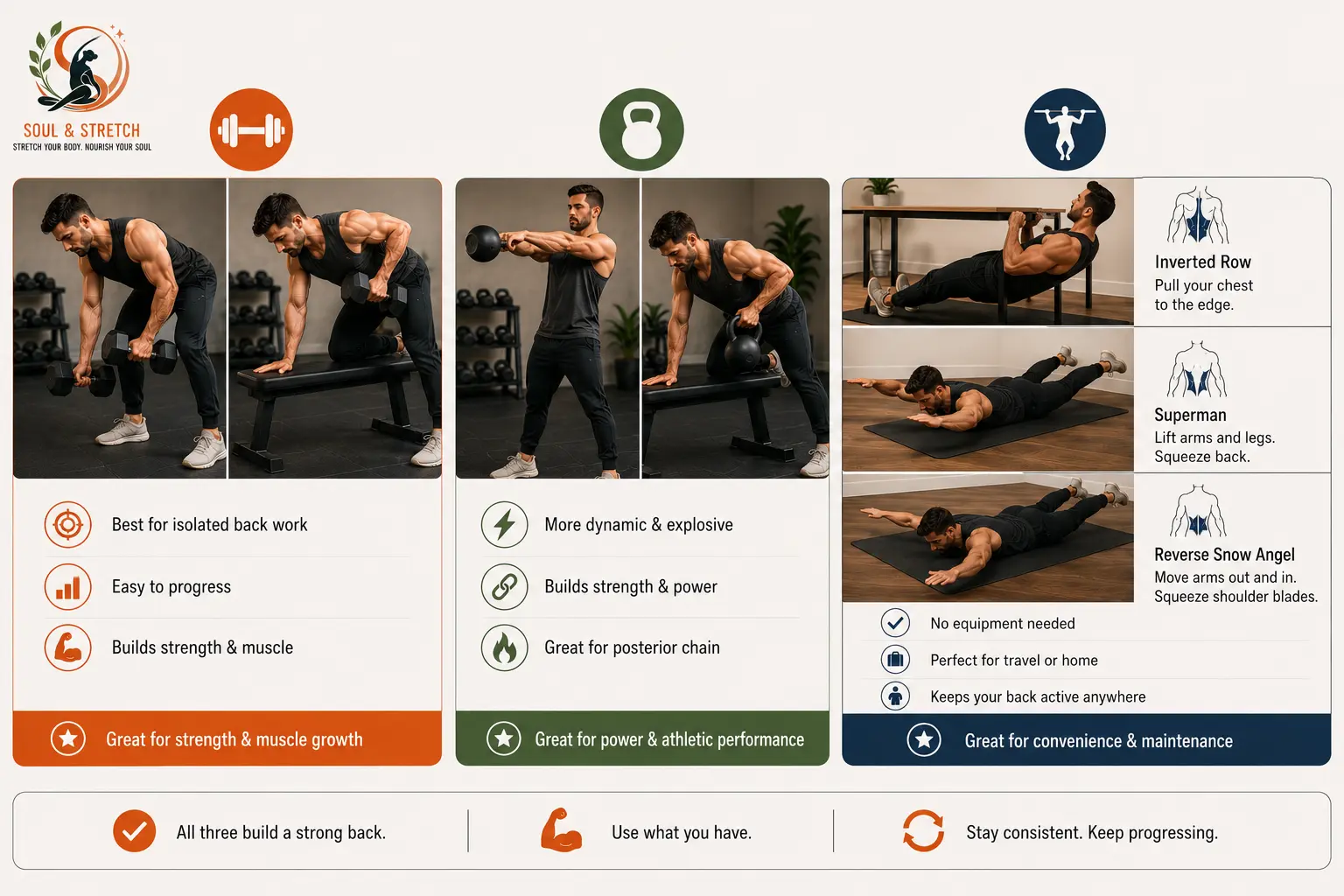
Dumbbells aren't the only tool that works here. It's worth knowing how the alternatives actually stack up. For a setup that adds cable-based rows to the mix, see this functional trainer for home gym guide.
Kettlebell Back Workout Comparison
A kettlebell back workout, built around swings and single-arm rows, trains your posterior chain with a bit more explosive, dynamic movement than a standard dumbbell row does. Dumbbells still win out for controlled, isolated back work, but kettlebells are a solid addition if you want to build some power alongside all that strength.
Bodyweight Back Exercises When You Have No Equipment
On days without any weights at hand, back exercises with no equipment required, like inverted rows using a table edge, supermans and reverse snow angels, still keep your back engaged and moving. They won't replace heavy loaded rows long term, sure, but they're a genuinely useful backup when you're traveling or just don't have dumbbells around that day.
Frequently Asked Questions
1. Can you build your back with dumbbells?
Yes, absolutely. Dumbbells can train every major back muscle, including your lats, traps, rhomboids and erector spinae, just as effectively as barbells or machines when you're consistent with progressive overload and proper form over time.
2. What are the 5 best back exercises?
The bent-over row, one-arm dumbbell row, chest-supported row, Romanian deadlift and dumbbell pullover cover your entire back. Together, these five hit your lats, traps, rhomboids and lower back muscles from multiple angles for balanced development.
3. What are the big 3 exercises for back?
The deadlift, bent-over row and pull-up (or lat pulldown alternative) are widely considered the big three for back training. They cover the full posterior chain, upper back thickness and lat width, making them the foundation of most serious back routines.
4. Which dumbbell exercise is best for the back?
The bent-over row is generally considered the single best dumbbell back exercise, since it trains your lats, rhomboids, traps and lower back all in one movement. It's also one of the easiest to load heavier as you get stronger.
5. How many times a week should I train my back?
Twice a week works well for most people, with at least 48 hours of rest between sessions. This gives your muscles enough time to recover and grow while still providing enough training frequency to build real strength over time.
6. Do dumbbell rows really work your back?
Yes, dumbbell rows are one of the most effective back exercises available. They directly target your lats, rhomboids and mid-traps and the unilateral setup means each side of your back has to work independently, which helps correct strength imbalances.
Conclusion
You don't need a fully loaded gym to build a strong, healthy back. That's really the whole point of this guide. A handful of dumbbell back exercises, run consistently with good form and the right sets and reps for your goal, can build real strength, better posture and a back that holds up under everyday life, not just under a barbell.
Start with the beginner routine above, stick with it for a few weeks and add weight once the reps start feeling easy. Progress here is slow and steady, sure, but it adds up faster than you'd think once you're actually consistent with it.


Comments (0)
No comments yet. Be the first to share your thoughts!
Leave a Comment