
So you've been eyeing that cable machine at your commercial gym, the one everyone lines up for and wondering if a functional trainer could actually live in your garage. Good question to ask before you spend anywhere from $700 to $4,000.
A functional trainer is probably the single most versatile piece of equipment you can put in a home gym, but it's also one of the easiest purchases to get wrong if you don't know what you're looking at.
I've helped a lot of clients build out home setups over the years and the functional trainer question comes up almost every time someone gets serious about training at home. This guide walks through what these machines actually do, how to pick the right one for your space and budget and what else belongs in the room around it.
What Is a Functional Trainer, In Plain Terms?
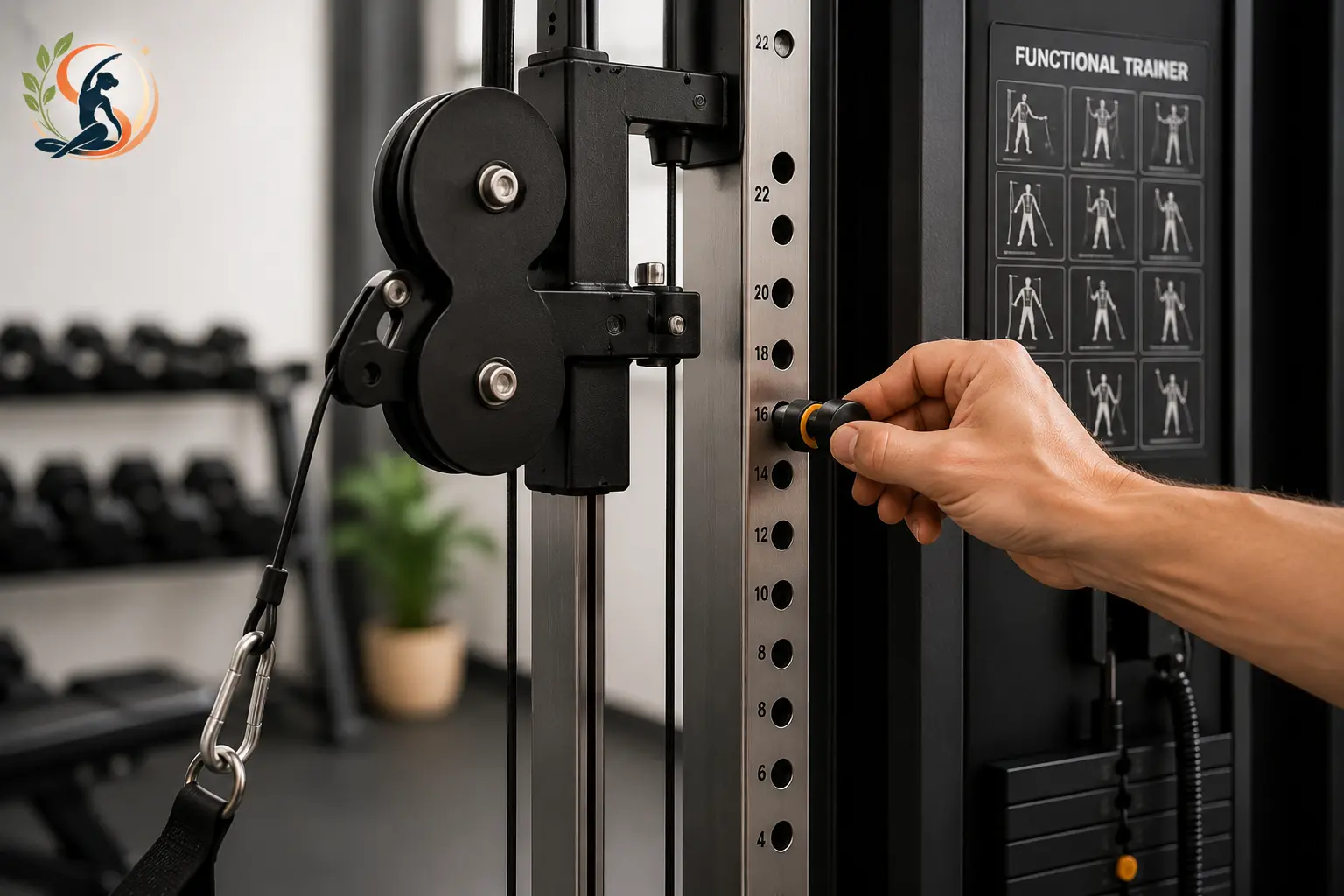
Strip away the marketing language and a functional trainer is just a frame with two adjustable pulleys, each connected to its own weight stack (or a plate-loaded arm) by a cable. You set the pulley height, clip on a handle and pull. That's it.
What makes it different from a regular cable machine is that both sides move independently. You can press with one arm while the other stays still, row from a low angle while standing on one leg or set both cables identically for a symmetrical chest fly. A barbell can't do any of that. A fixed-path weight lifting machine can't either.
Quick answer for anyone skimming: a functional trainer replaces dozens of single-purpose machines by letting cables move through almost any angle, which is why it's often the centerpiece of a well-planned home gym.
Why It Tends to Become the Centerpiece of a Home Gym
A few reasons keep coming up when I talk to people who've made the switch:
It covers hundreds of movements. Chest presses, face pulls, woodchoppers, tricep pushdowns, cable squats, rear delt flies, one machine, one footprint. You're not buying a bench press station, then a lat pulldown, then a cable crossover separately.
It's safer to train alone. The cable is guided the whole way. If your grip slips or you misjudge a rep, the weight doesn't come crashing down on you the way a loaded barbell can. That's a big deal if you're training without a spotter, which is most people at home.
It builds strength that actually transfers. Because you're moving through open, three-dimensional paths instead of a locked track, the stabilizer muscles around your shoulders, hips and core get worked every single rep. That carries over into daily life carrying groceries, twisting to grab something off a shelf, catching your balance on ice.
It doesn't eat your whole garage. Most units need somewhere around a 5-by-5-foot footprint plus clearance to pull the cables out, which is smaller than people expect for something this capable.
Weight Stack, Plate-Loaded or All-in-One? Picking Your Type
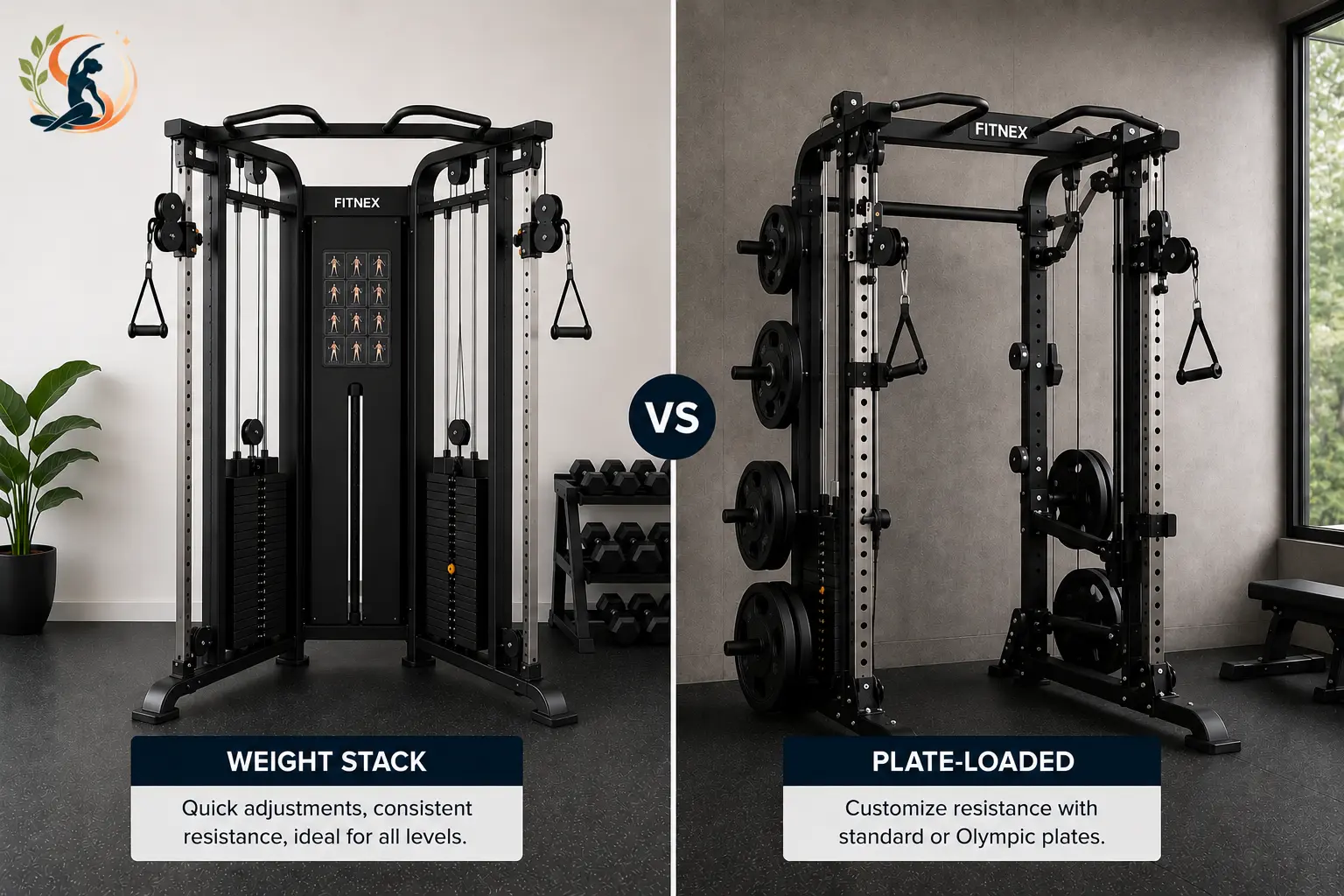
This is where most of the confusion starts, so let's untangle it.
Weight Stack Machines
These have a sealed stack of steel plates inside the frame and you set resistance with a pin. Quiet, fast to switch between exercises and great for drop sets since you just pull the pin up a slot mid-set. The tradeoff is a higher price tag and a fixed top-end weight once you're at 200 lbs, you're at 200 lbs.
Plate-Loaded Functional Trainers
Here you load your own bumper plates or standard plates onto pegs. Cheaper upfront, especially if you already own plates from a barbell setup and there's no real ceiling on how heavy you can go. The catch is you're manually swapping plates between exercises, which slows down supersets.
All-in-One Home Gym Systems
This is where a power rack or Smith machine bar gets bolted onto the same frame as the cable pulleys. You end up with a squat rack, a Smith bar and a functional trainer machine in one unit, genuinely one of the smartest options if floor space is tight, since it condenses what would normally be three or four separate machines. Look for "all in one home gym" or "multi station home gym" in product names that's usually what they're describing.
Understanding the Pulley Ratio (Nobody Explains Well)
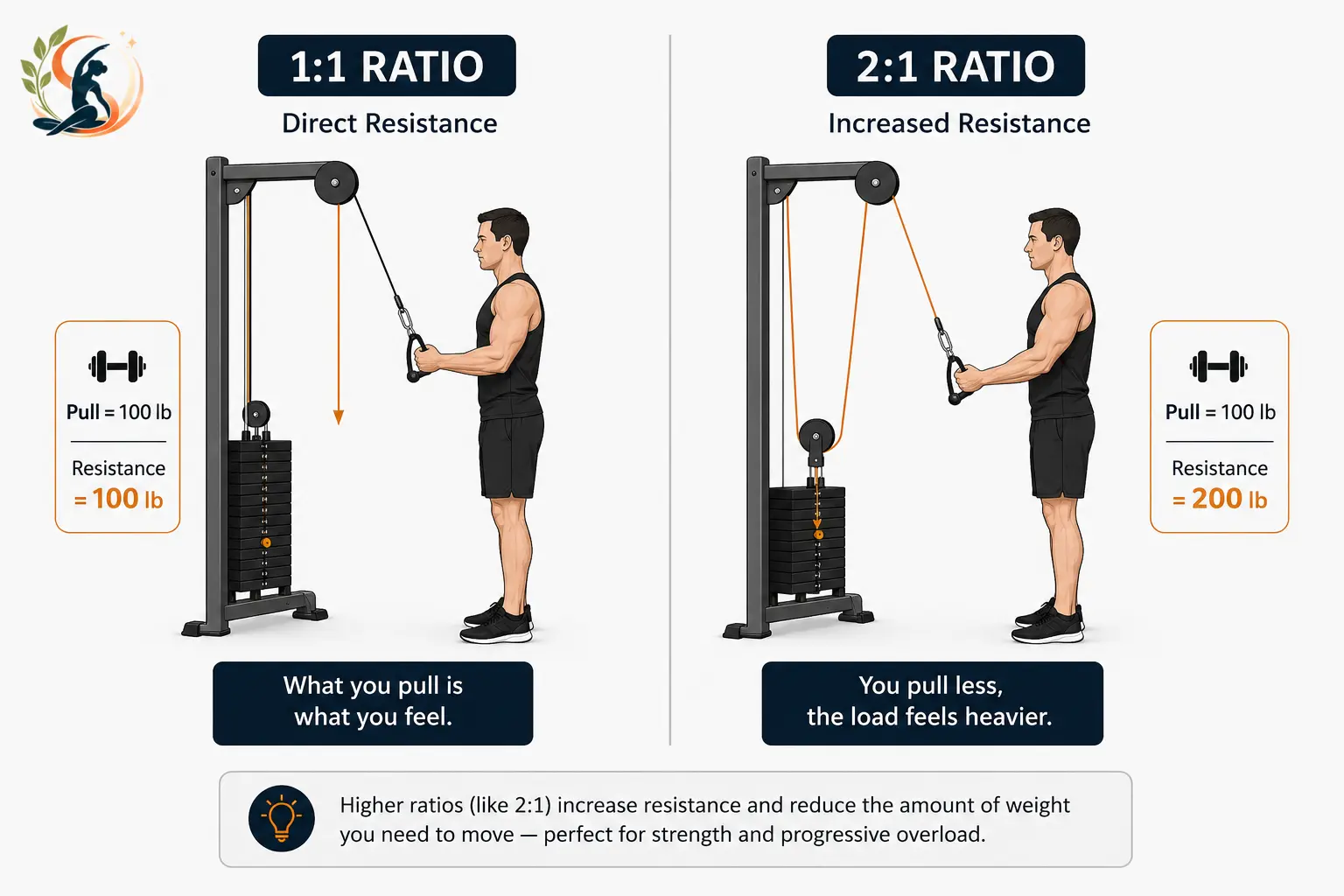
Here's something a lot of buying guides skip over. The pulley ratio determines how much of the stack weight you actually feel at the handle.
1:1 ratio 100 lbs on the stack feels like 100 lbs in your hand. Straightforward.
2:1 ratio 100 lbs on the stack feels like closer to 50 lbs. This lets manufacturers use a lighter, smaller stack while still offering fine-grained weight increments, which is common on compact and budget units.
Neither ratio is "better" on its own; it just changes how much usable resistance you're getting for the stack size, so check the spec sheet instead of assuming the stack number is the whole story.
What to Actually Check Before You Buy
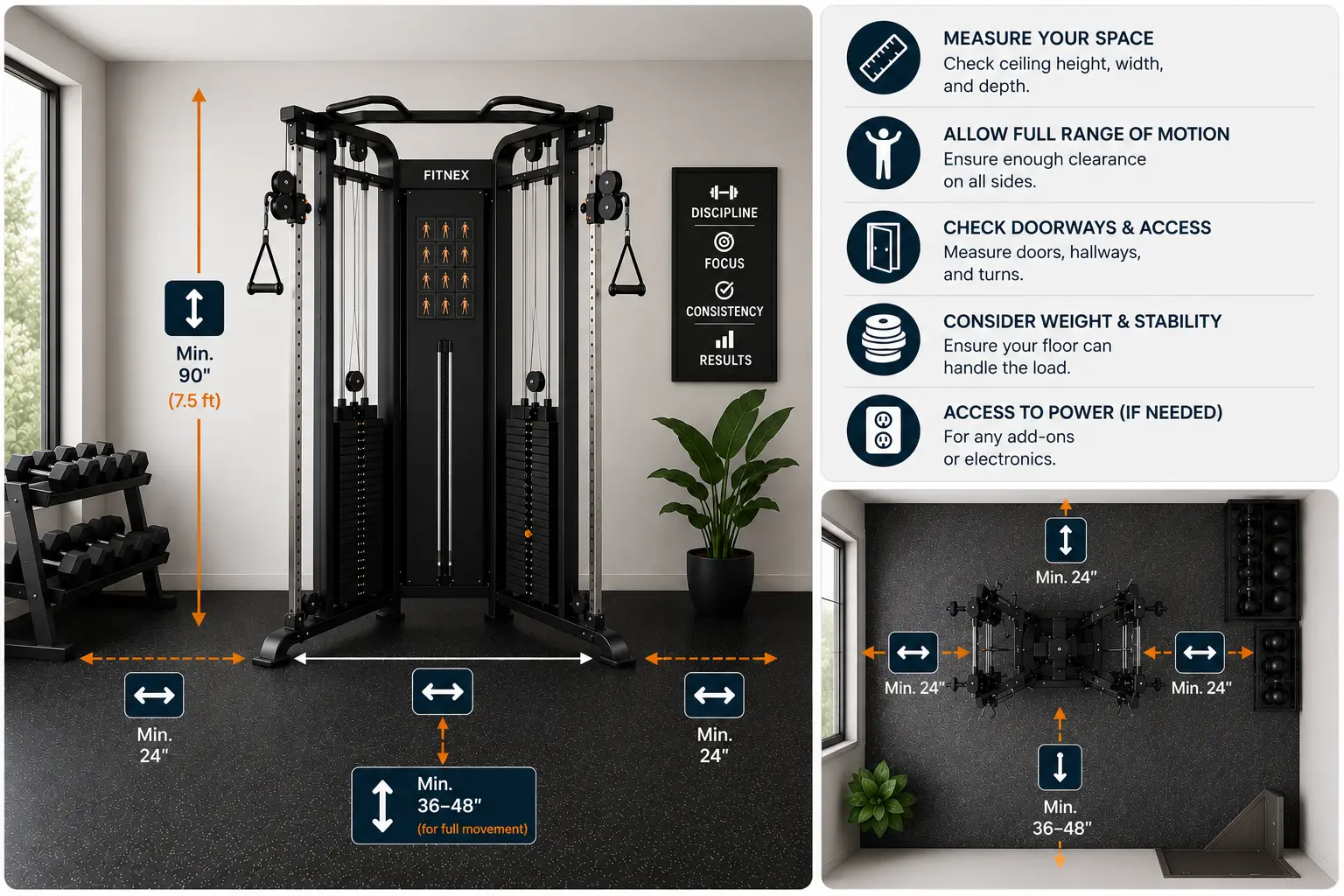
Footprint and ceiling height. Most functional trainers need roughly 60 by 60 inches of clear space and around 8 feet of ceiling height. Measuring your room before you fall in love with a model depth is the number people forget to check and some units with a center lat-row station stick out further than the spec photos suggest.
Weight capacity vs. your actual goals. If you're newer to lifting, a 150–160 lb stack per side is plenty for years of progress. If you're already strong on presses and rows, look at dual 200 lb+ stacks or a plate-loaded option so you don't outgrow the machine in a year.
Stability on an uneven floor. Basements and garages are rarely perfectly level. A wobbly frame isn't just annoying, it changes how the cable tracks and can throw off your form. Bolt-down feet or a heavier base frame make more of a difference than people expect.
Warranty terms. Look specifically at what's covered on the pulleys, cables and bearings versus the frame itself. Frames rarely fail; cables and pulley bushings are the parts that wear first. Attachment ecosystem. A peg board or storage rack for handles, ropes and ankle straps on the machine itself keeps your space from turning into a pile of loose accessories on the floor.
Functional Trainer vs. Other Strength Training Machines
People often ask whether they need a functional trainer and a squat rack or if one replaces the other. Short answer: they do different jobs.
A power rack or the best squat rack for home gym setups is built for loaded barbell work squats, bench, overhead press where you need safety pins to catch a bar if a rep fails. A functional trainer's cables can approximate some of these patterns, but nothing replaces a rack for heavy, low-rep barbell training.
A Smith machine locks the bar to a vertical (or slightly angled) track, which is great for beginners building confidence with pressing patterns, but it removes the stabilizer work a free cable gives you.
If your budget allows one purchase, a functional trainer with a built-in Smith bar or half-rack attachment gets you most of both worlds without needing two separate machines in the room.
Rounding Out the Rest of Your Home Gym
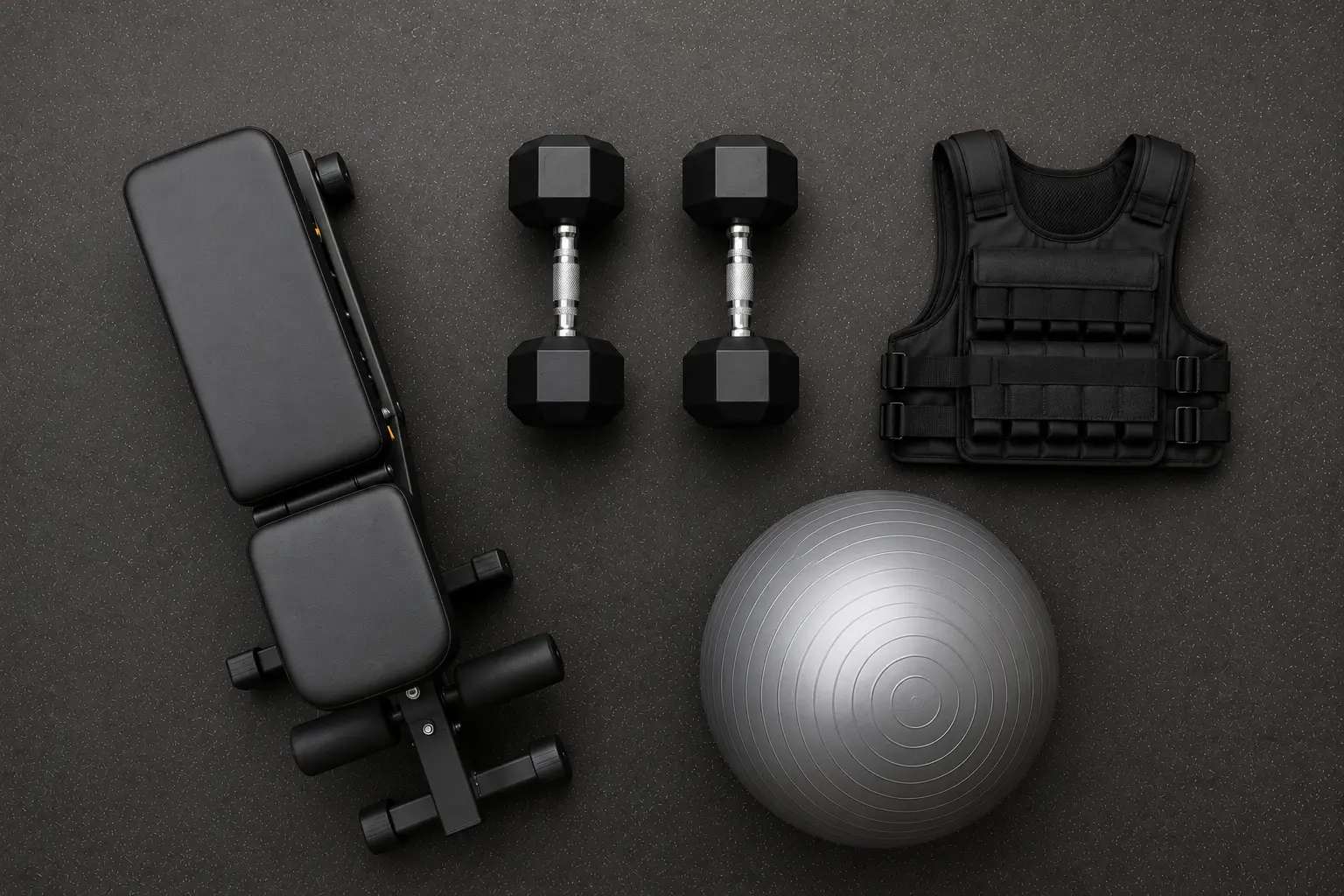
A functional trainer does a lot, but it's not the whole gym. Here's what tends to fill the gaps well:
An adjustable bench for home gym use. You'll want incline, flat and decline positions for cable presses and flies. This is usually the second purchase people make, right after the trainer itself, since half the exercises on a cable machine assume you have somewhere to sit or lie down.
Dumbbells for home gym training. Even with a full cable setup, free dumbbells let you do unilateral work, farmer's carries and anything where you need to move through space rather than stay anchored to the machine. A functional trainer's cables also work well for hip-mobility work this psoas stretch guide covers the stretching side of that same goal.
A weighted vest. Good for adding load to pull-ups, push-ups or step-ups without needing more equipment. Starting light even 10 to 15 lbs changes bodyweight exercises noticeably.
A power tower. If your functional trainer doesn't include a pull-up station, a compact power tower workout unit fills that gap for dips and hanging leg raises.
A weighted exercise ball. Cheap, useful for core work and as a bench substitute in a pinch and it packs away easily in small spaces. Cardio options. A home stair stepper or compact vibration fitness machine can round things out if you want conditioning work without needing a full treadmill footprint.
Vibration platforms in particular are marketed heavily for recovery and light activation work treat the more dramatic fat-loss claims with skepticism, since the actual evidence for that is thin.
Budget Home Gym Setup: What to Buy First
If you're building this out gradually rather than all at once, the order you buy in makes a real difference. A sensible sequence looks like this:
Flooring first. You'll be walking, dropping weights and rolling equipment across it before anything else goes in.
A rack or functional trainer as the anchor piece. This is the one thing worth spending more on, since it's the hardest to upgrade later without redoing your whole layout.
An adjustable bench.
A basic set of dumbbells or an adjustable pair.
Small accessories bands, a vest, a stability ball as the budget allows.
For garage gym essentials on a tighter budget, plate-loaded machines and stall-mat flooring stretch your money furthest. You don't need the commercial-grade version of anything to get a genuinely good workout; you need a stable, safe setup that fits your actual space.
If you're working with a small space home gym, a spare bedroom or a single garage bay, prioritize a compact or wall-mounted functional trainer over a full-depth unit and skip anything that needs a permanent dedicated corner.
Don't Skip the Flooring
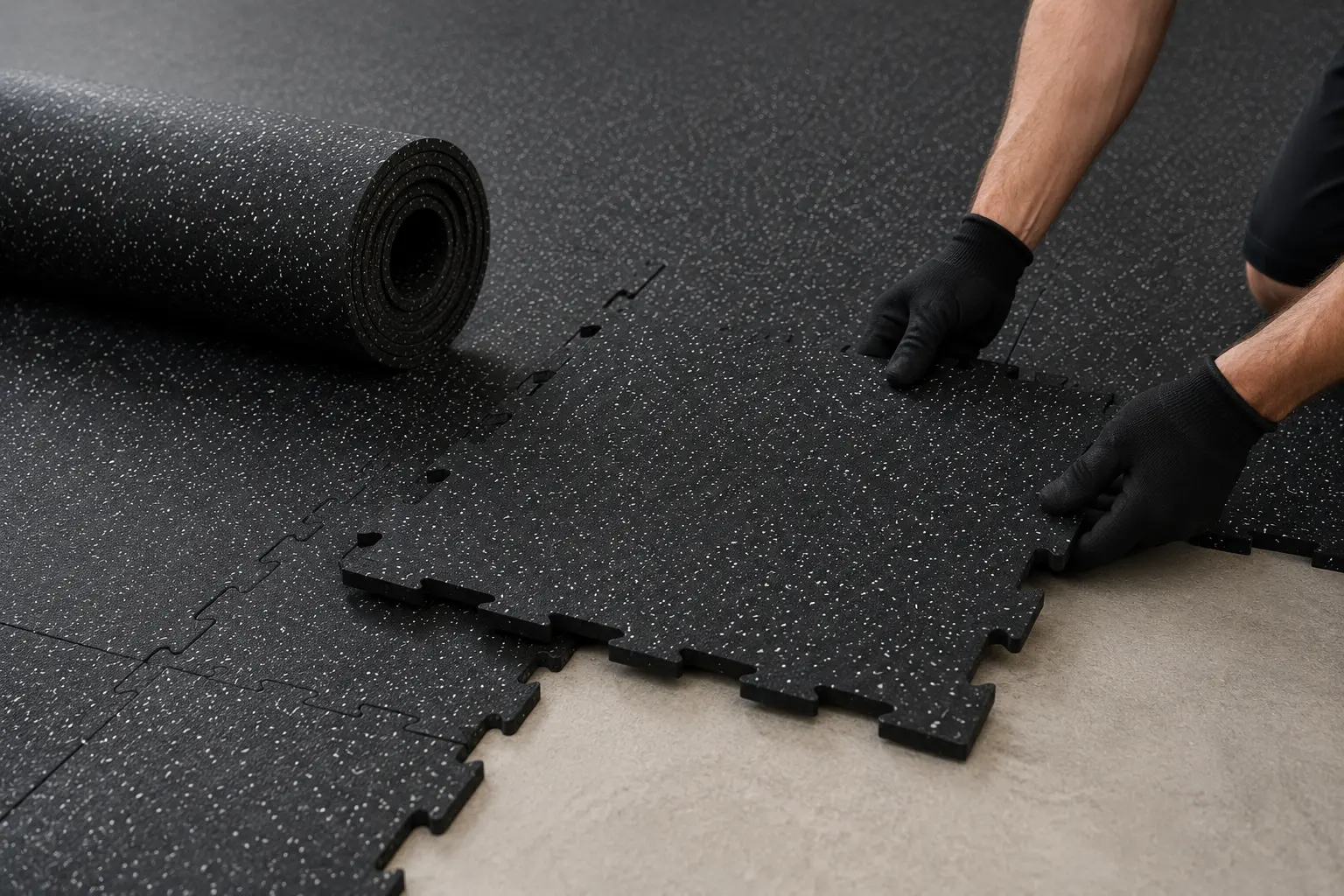
This gets treated as an afterthought and it shouldn't be. Concrete garage floors and basement slabs will crack or pit under dropped plates and heavy equipment feet over time and equipment shifts around on bare concrete in a way that's mildly dangerous during dynamic moves.
Rubber mats or rolls (½" to ¾" thick) are the standard choice for anywhere you're using free weights or a functional trainer, since they absorb impact and stay put.
Horse stall mats are a genuinely good budget alternative heavy-duty, cheap per square foot, though they carry a rubber smell for the first few weeks and are heavy to move.
Foam interlocking tiles work fine for stretching or bodyweight zones but will compress and dent under heavy equipment, so keep them away from your rack or bench.
PVC tiles hold up well over existing carpet if you're not ready to commit to a permanent rubber floor.
Buy flooring before the equipment ships, not after.
Functional Trainer Workouts for Posture and Posterior Chain Strength
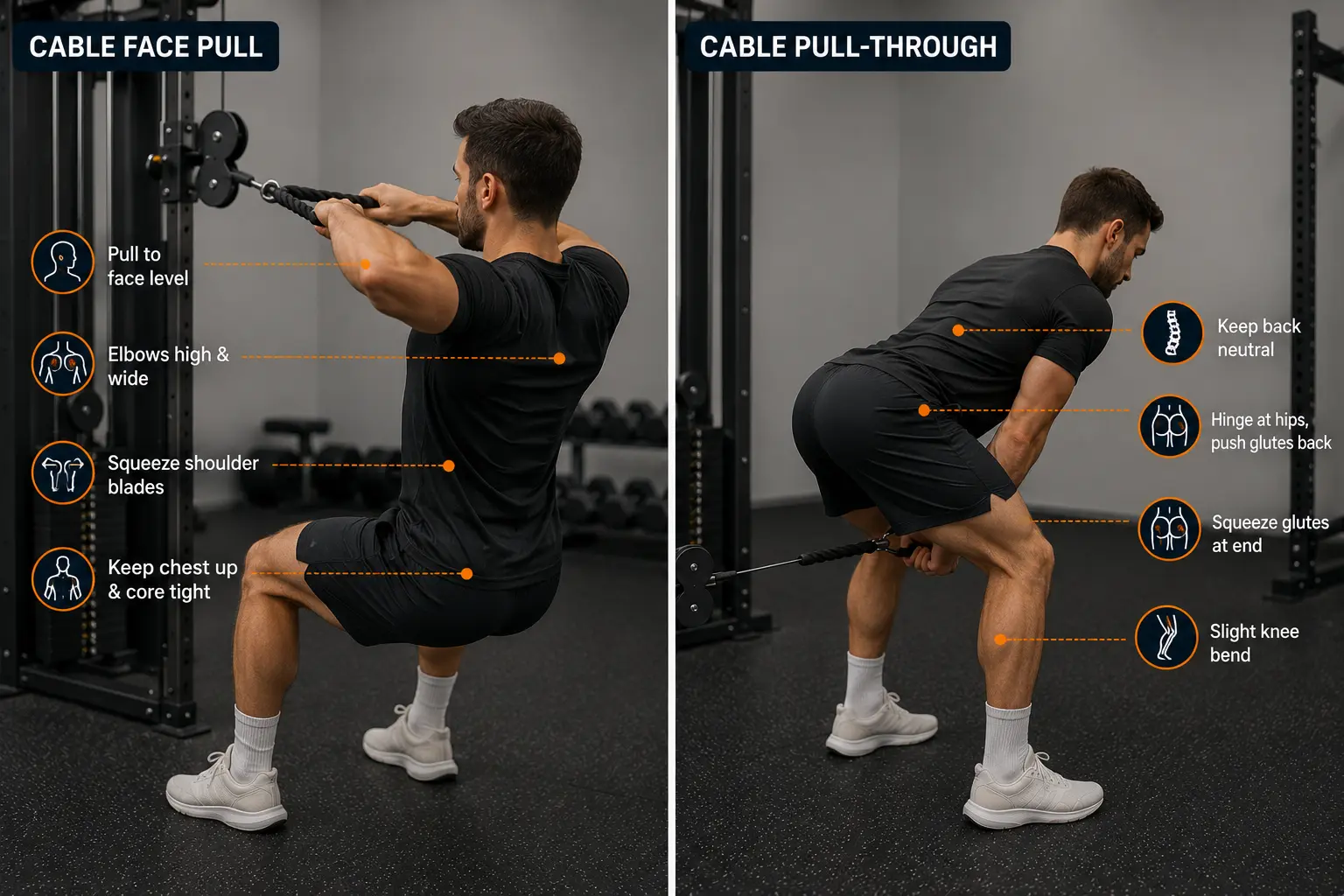
One thing a cable machine does better than almost anything else: posture-improving exercises that target the muscles most people neglect. If you sit at a desk most of the day, your posterior chain the erector spinae along your spine, glutes, hamstrings, lats and rear shoulders tends to go weak and tight while the front of your body tightens up and pulls you into a rounded posture.
A functional trainer lets you hit this directly:
Face pulls at head height for the rear delts and upper back.
Cable rows, seated or standing, for the lats and rhomboids.
Cable pull-throughs, which mimic a hip hinge and load the glutes and hamstrings without needing a barbell.
Straight-arm pulldowns for lat activation without heavy shoulder load.
Two or three sessions a week hitting these patterns tends to change how upright someone stands within a few weeks. Most people notice it first in how their shoulders feel at the end of a workday, before they notice it in the mirror. Between cable sessions, this chest exercises with dumbbells guide covers the free-weight side of a balanced routine.
If you're dealing with existing back pain, a disc issue or any diagnosed spinal condition, it's worth running your program past a doctor or physical therapist before loading up the posterior chain. A quick check-in there can save you a setback down the line.
Common Mistakes People Make With a New Functional Trainer
Buying based on stack weight alone, ignoring the pulley ratio and ending up with less usable resistance than expected. Skipping the depth measurement. Width gets checked, depth doesn't and then the machine won't clear a doorway or corner the way it looked like it would in photos.
Not budgeting for flooring and attachments. The machine price on the box rarely includes the mat underneath it or the extra handles and ropes you'll want within the first month.
Training the same three exercises forever.
The whole point of a functional trainer is the range of angles available to rotate through different handle positions and grips so you're not just recreating a fixed-path machine with extra steps.
Frequently Asked Questions
1. What's the minimum equipment needed for a home gym?
Realistically, a stable rack or functional trainer, an adjustable bench and a set of dumbbells cover most training goals. Everything past that (bands, a vest, cardio equipment) is an upgrade, not a requirement.
2. How much does a basic home gym cost?
A no-frills setup with a rack, bench, plates and flooring can be built for under $1,000–$1,500 if you shop smart. A functional trainer with a weight stack typically adds $700 to $2,000+ depending on the brand and stack size.
3. What flooring is best for a home gym?
Rubber mats or rolls at ½" to ¾" thick are the standard for anywhere you're lifting or using machines. Horse stall mats are a solid budget substitute if you're watching costs.
4. Is a functional trainer worth it for a small home gym?
Yes, often more so than in a larger space. It replaces several single-purpose machines in one footprint, which counts for the most when every square foot in your room is doing double duty.
5. Do I need a functional trainer and a squat rack or just one?
They cover different jobs, so ideally both, but if you can only pick one, a functional trainer with a built-in Smith bar or half-rack gets you close to both without buying two separate machines.
6. How much weight capacity do I actually need?
For most beginner-to-intermediate lifters, a 150–160 lb stack per side lasts for years. Only go bigger if you're already strong on presses and rows and know you'll outgrow a smaller stack quickly.
Conclusion
A functional trainer isn't the first thing you need for a home gym, but for a lot of people, it ends up being the piece that makes the room worth using. If you've got the space and the budget, pairing one with a solid bench and decent flooring gets you 90% of what a commercial gym offers, minus the drive and the wait for equipment.
Start with your space and your goals, not the flashiest model you find. The right machine is the one that fits your room, your budget and the exercises you'll actually keep doing six months from now.


Comments (0)
No comments yet. Be the first to share your thoughts!
Leave a Comment