
I get messages almost every week asking some version of the same question. How many calories should I actually be eating? Usually the person has already tried three different apps, listened to four different influencers and somehow ended up more confused than when they started.
Sound familiar? So let me try to untangle this properly, using the 1500 calorie meal plan as our main example, mostly because that's where most people asking me tend to land anyway, for better or worse.
This isn't going to be another one of those generic calorie articles that throws a table of numbers at you and calls it a day. I've worked through calorie planning with real clients for years now, watched what actually holds up over months instead of just the first two weeks and I want to walk you through it the way I would if we were sitting across a kitchen table, not typing this at eleven at night, which, full disclosure, is exactly when I'm writing this.
How Many Calories Do You Actually Need
This is where everyone should start. And almost nobody does. Most people skip straight past this part and grab a random meal plan off the internet instead, then wonder later why it doesn't quite fit their life.
Calculating Your Calorie Needs With TDEE
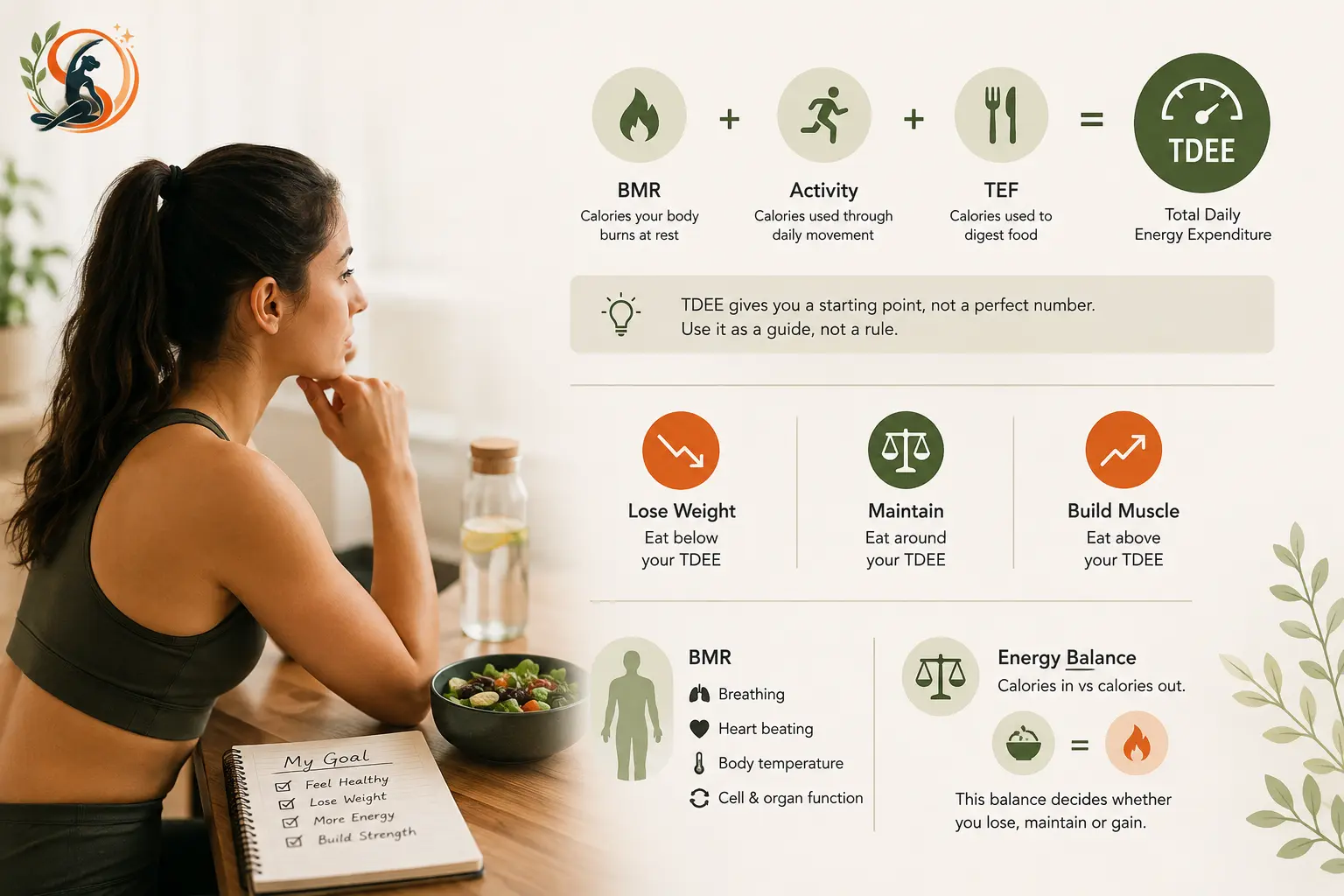
Your TDEE, total daily energy expenditure if we're being formal about it, is the real number that actually matters here. A TDEE calculator takes your basal metabolic rate and adds in your activity level to spit out a rough estimate of how many calories you burn in a day.
I say rough on purpose, these calculators are never perfectly precise, no matter what the slick app interface tries to convince you of. They give you a starting point. Not gospel. Not something to obsess over down to the last calorie, though I know plenty of people who treat it exactly that way.
Once you know your TDEE, everything else genuinely falls into place. Want to lose weight? Eat below it. Want to maintain it? Stay close to it. Want to build muscle? Go slightly above it. Simple enough on paper. Rarely simple once real life gets involved, work stress, birthday cake, a Friday night out with friends, you know how it goes.
Basal Metabolic Rate and Energy Balance
Your basal metabolic rate is the number of calories your body burns just by existing. Breathing, keeping your heart beating, all that background work happening constantly without you ever thinking about it. It usually makes up the biggest chunk of your total calorie burn for the day, which genuinely surprises people the first time they see the actual number sitting in front of them.
Energy balance is really the whole game underneath all of this, calories in versus calories out. I know that phrase has been repeated so many times online it almost sounds meaningless now, kind of like elevator music nobody actually hears anymore. But the underlying math hasn't changed and it probably never will, no matter what new trend shows up next spring claiming otherwise.
Calorie Deficit, Surplus and Weight Change
Once you have your baseline number figured out, the next step is deciding which direction you actually want to move in.
What a Safe Calorie Deficit Looks Like
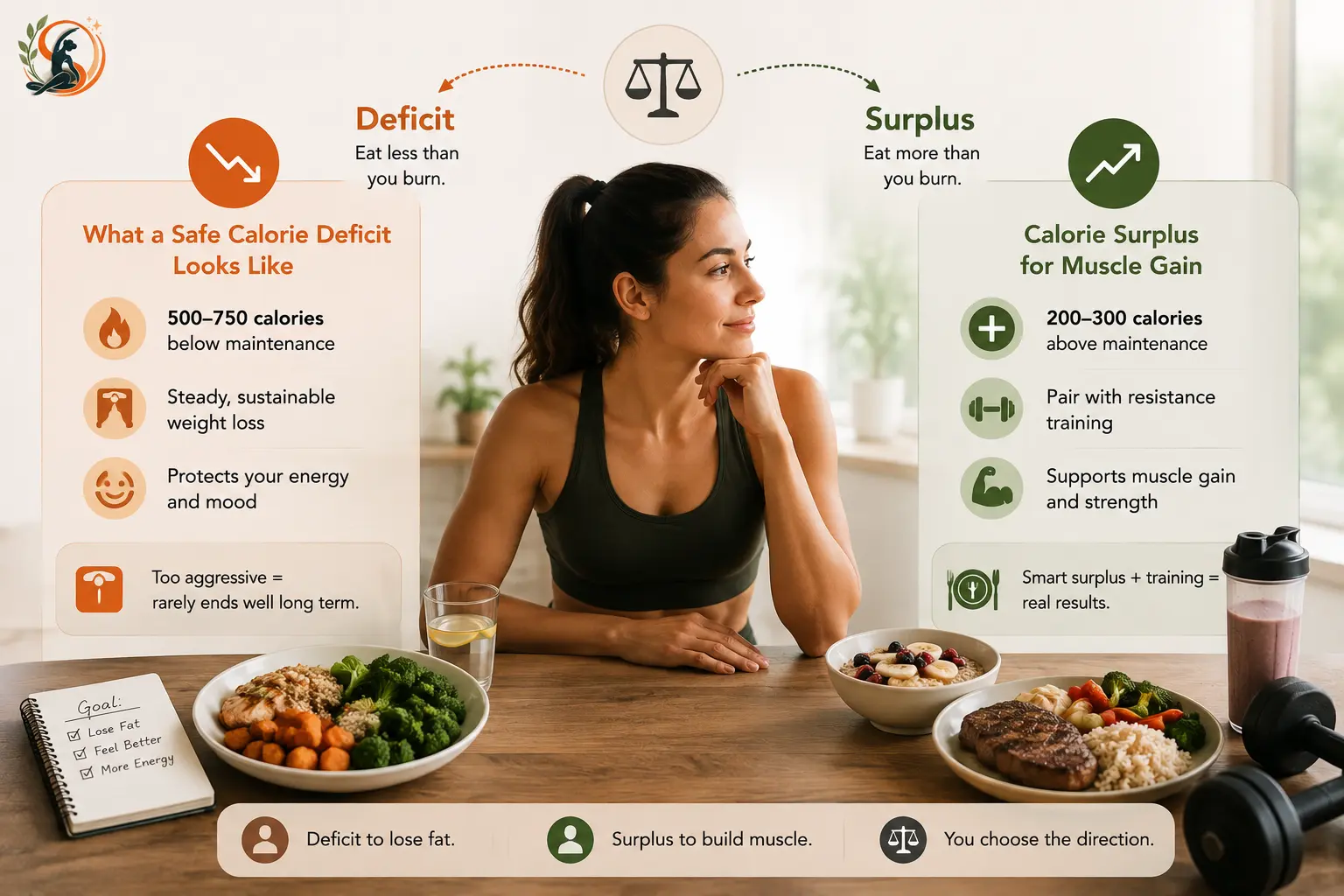
A calorie deficit simply means eating less than your body burns, which forces it to start pulling energy from stored fat instead. A safe deficit for most people sits somewhere between 500 and 750 calories below maintenance.
That produces steady, sustainable weight loss without wrecking your energy or your mood along the way. I've watched people go way more aggressive than that, chasing faster results because two pounds a week felt too slow and it almost never ends well long term. Almost never.
Calorie Surplus for Muscle Gain
On the flip side, a calorie surplus for muscle gain means eating slightly more than your body needs, usually somewhere around 200 to 300 extra calories, paired with actual resistance training. Not just extra food piled on top of the same old routine while you hope for the best. This is where a 3000 calorie meal plan often enters the conversation, especially for people with high activity levels or larger frames trying to build serious muscle mass over time.
Calorie Counting, Macro Tracking and Portion Control
Numbers only matter if you can actually apply them day to day. This is exactly where a lot of good intentions quietly fall apart, usually somewhere around week three, if I'm being honest.
Calorie counting sounds tedious at first and yeah, it kind of is in the beginning. But most people speed up within a couple of weeks once they learn the calorie content of their usual go to meals by heart. Readers who'd rather structure meals around food quality instead of counting calories might prefer the paleo meal plan approach instead.
Macro tracking takes things a step further, breaking calories down into protein, carbs and fat instead of just one big total number. I generally tell beginners to start with calories alone before layering macros on top. Trying to juggle both at once tends to overwhelm people fast and burns them out before week two even ends. Trust me on that one.
Portion control matters just as much as whatever number is sitting on paper. Maybe more, honestly. I've watched clients hit their calorie targets perfectly on a spreadsheet while still eating portions that didn't match reality at all, mostly because the measuring cups sat unused in a kitchen drawer collecting dust somewhere. A kitchen scale, even used loosely, solves this problem faster than any app ever will. No contest.
1500 Calorie Meal Plan for a Full Day
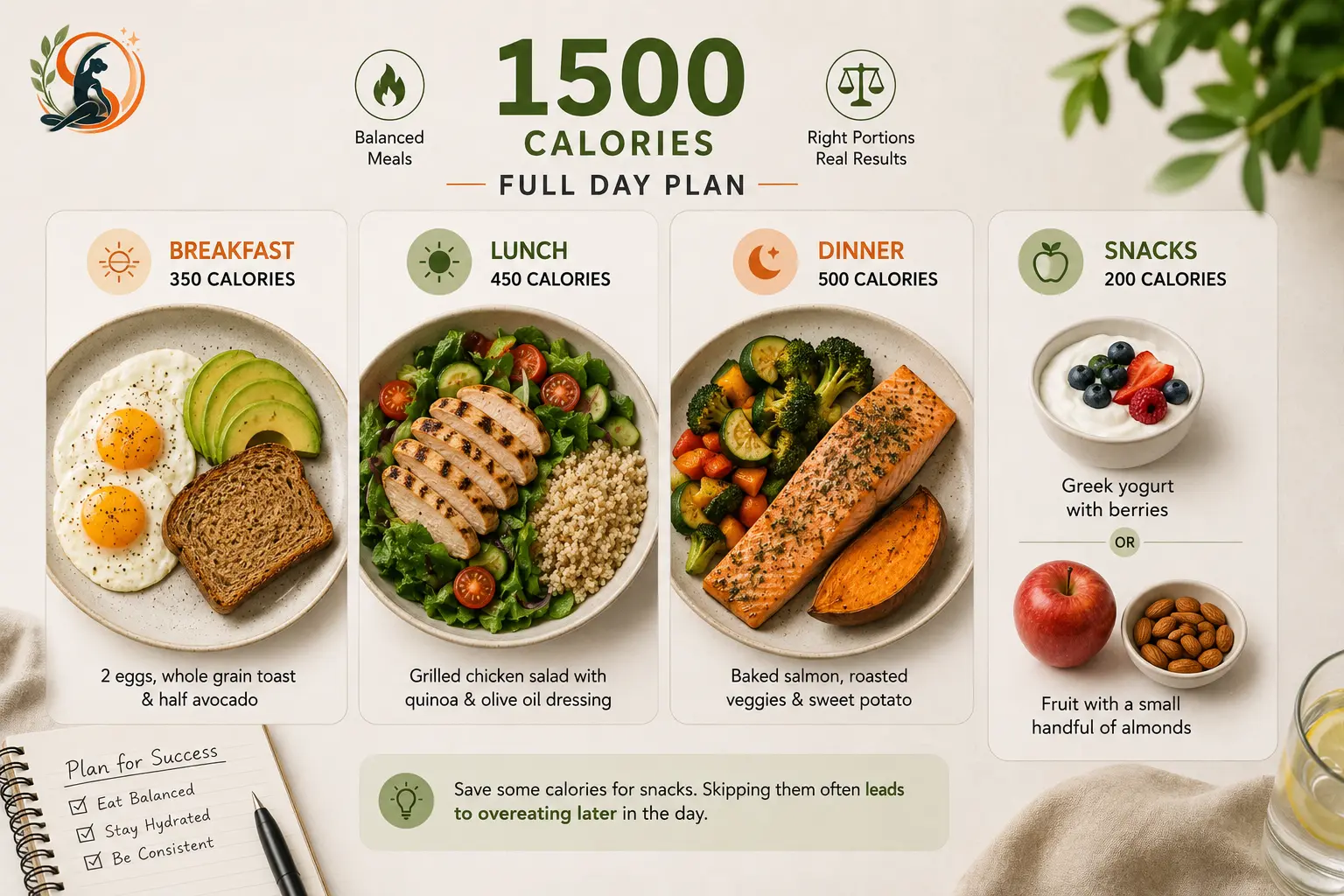
This is probably the part you actually came here for, so let's get into an actual 1500 calorie meal plan you could realistically follow starting tomorrow morning. Not someday. Tomorrow.
Breakfast, Lunch and Dinner
Breakfast might look like two eggs with a slice of whole grain toast and half an avocado, landing around 350 calories. Lunch could be a grilled chicken salad with mixed greens, olive oil dressing and a small portion of quinoa, coming in around 450 calories. Dinner tends to be the biggest meal for most people I work with, so something like baked salmon, roasted vegetables and a small sweet potato at roughly 500 calories rounds things out nicely by the end of the day.
Snacks That Fit the Calorie Budget
That leaves around 200 calories for snacks, which could be a piece of fruit with a small handful of almonds or plain Greek yogurt mixed with a few berries. I always push people to save at least some calorie room for snacks. Skipping them entirely tends to backfire hard by dinner time, right when hunger takes over every decision you were trying to make responsibly about ten minutes earlier. Swapping in low sodium snacks for the 200-calorie snack slot keeps sodium in check without changing the calorie math.
Calorie Specific Meal Plans From 1000 to 1800 Calories
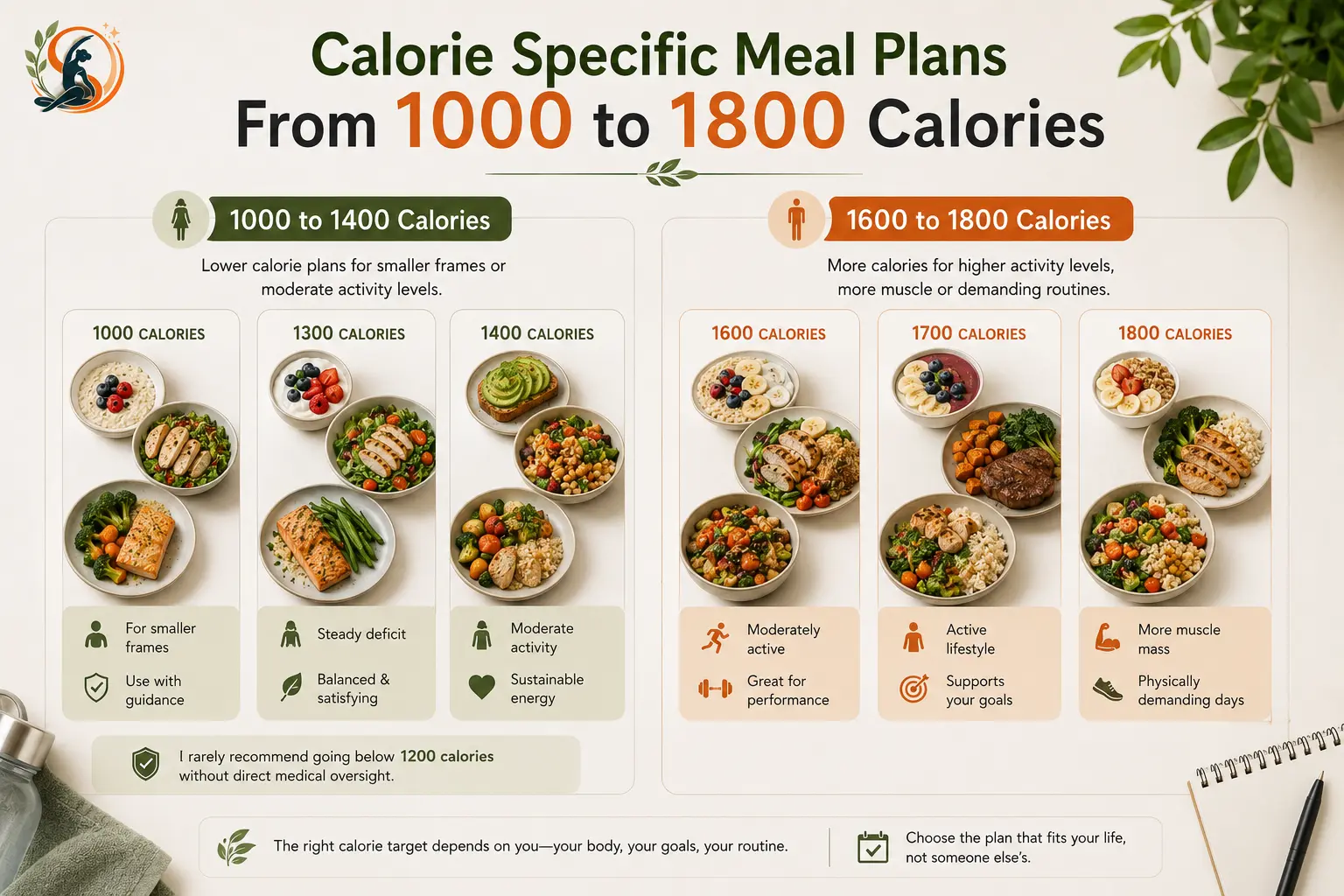
Not everyone needs exactly 1500 calories, obviously. Plenty of people landing on this page actually need a completely different number based on their size, activity level and goals and that's fine, this next part is for you.
1000 to 1400 Calorie Meal Plans
A 1000 calorie diet meal plan sits right at the very low end and usually only makes real sense for smaller framed individuals under close guidance, since going this low without any supervision can backfire fast, sometimes within days, not weeks.
A 1300 calorie meal plan or 1400 calorie diet meal plan tends to work better for moderately active women chasing a steady deficit without feeling constantly starved. I rarely recommend going below 1200 calories for anyone without direct medical oversight and I'll get into exactly why in a bit.
1600 to 1800 Calorie Meal Plans
A 1600 calorie meal plan or 1700 calorie meal plan often suits moderately active men or more active women reasonably well. An 1800 calorie meal plan tends to fit people carrying a bit more muscle mass or living a more physically demanding daily routine, whether that comes from standing on their feet all day at work or sticking to a serious workout schedule most desk jobs simply don't require.
Calorie Specific Meal Plans From 2000 to 3000 Calories
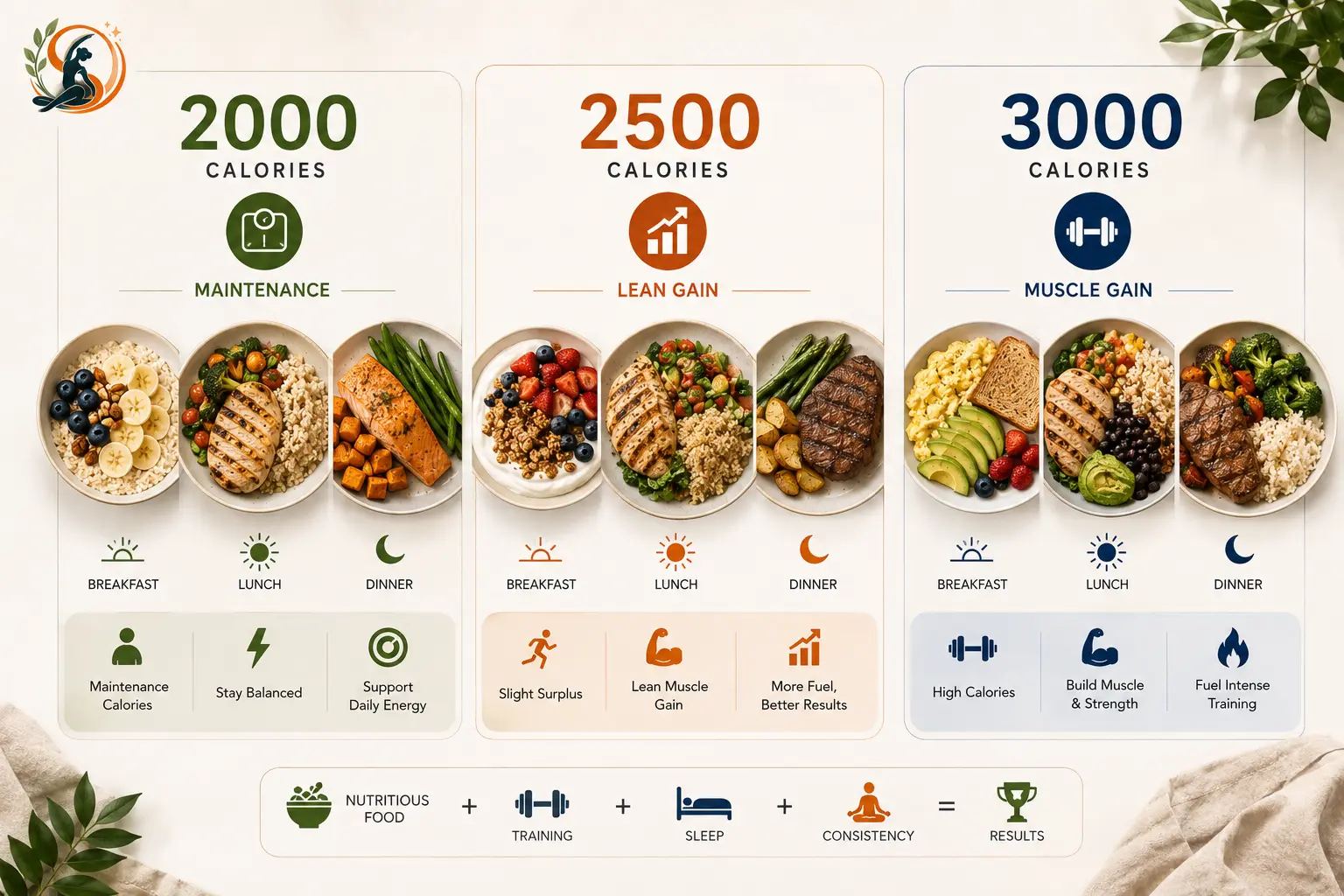
Moving up the scale now, these numbers usually apply to weight maintenance calories or muscle building goals rather than fat loss. Worth keeping in mind before you pick one at random off a chart somewhere. Athletes training at real volume follow a different logic entirely see how the Team USA athlete meal plans system scales portions to training day intensity instead of a fixed number.
2000 and 2500 Calorie Meal Plans for Maintenance
A 2000 calorie meal plan lines up closely with general weight maintenance calories for a lot of moderately active adults. That's actually where the standard percentages printed on nutrition labels come from in the first place, in case you ever wondered why 2000 keeps showing up everywhere you look. A 2500 calorie meal plan usually suits more active individuals or those working toward a slight surplus for lean muscle gain without packing on excess fat along the way.
3000 Calorie Meal Plan for Muscle Gain
A 3000 calorie meal plan is built for serious muscle building phases, heavy training schedules or naturally fast metabolisms that burn through food quicker than most people would believe possible. This isn't a number most people need for everyday life. Not even close. But for the right person, with the right training volume behind it, it makes complete and total sense.
Is 1200 Calories Too Low
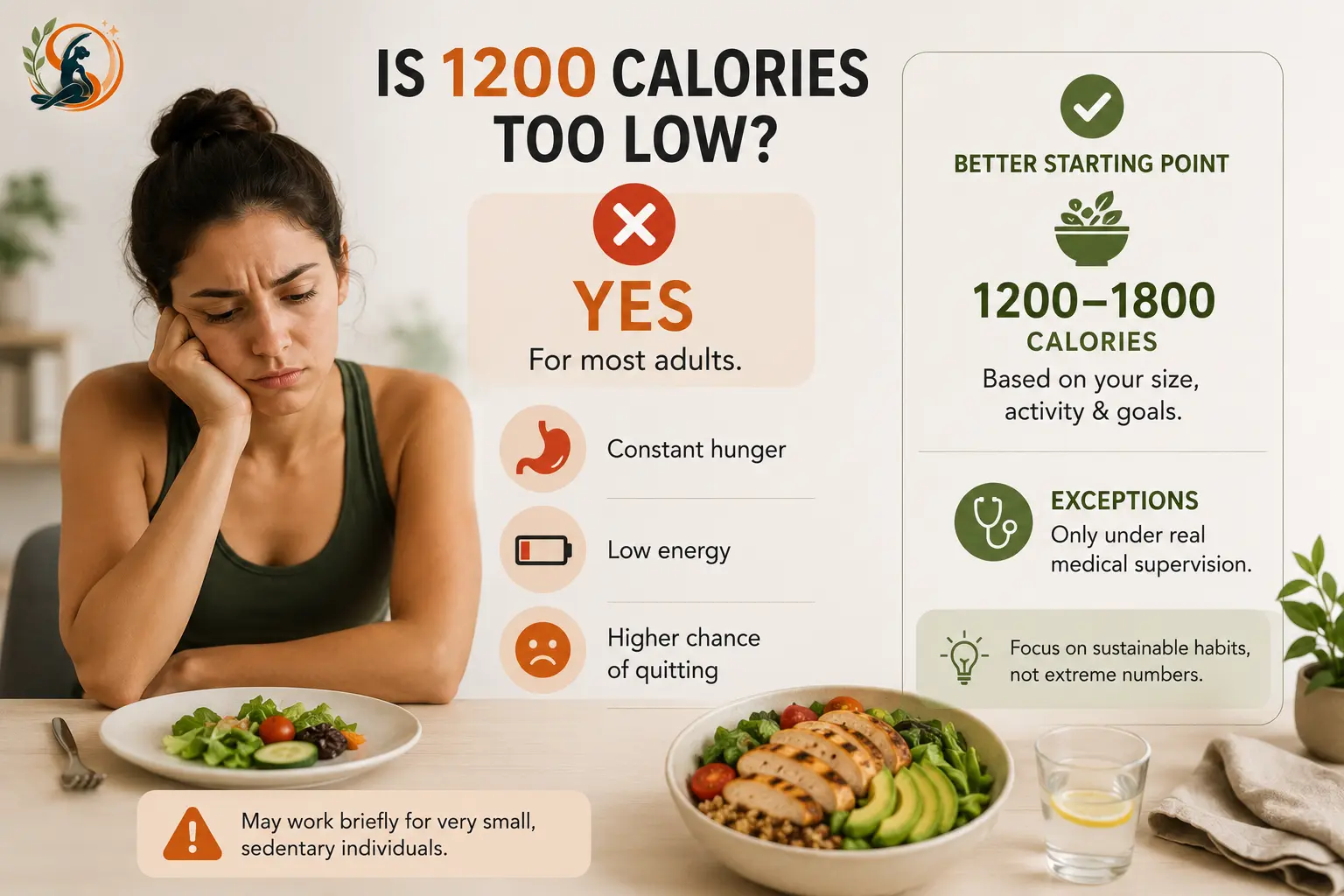
For most adults, yes. Honestly, yes. 1200 calories sits uncomfortably low and I say this having watched plenty of clients try it anyway before eventually backing off within a couple of weeks.
It might work briefly for very small, sedentary individuals, but for most people it leads straight to constant hunger, low energy and a much higher chance of quitting the whole thing entirely within a month. There are exceptions under real medical supervision, sure. But as a blanket starting point? I'd steer most people away from it without much hesitation.
What Happens If You Eat Too Few Calories
Eating too far below your basal metabolic rate for too long tends to backfire in ways people never really expect going in. Energy crashes, irritability, constant hunger, all of it shows up fast, sometimes within the first week alone. Your body eventually adapts by slowing down its own metabolism to protect itself, which is honestly the exact opposite of what most people are actually trying to achieve here.
Muscle loss becomes more likely too, since the body starts breaking down muscle tissue for energy once fat stores alone stop being replenished properly through food.
How Much Weight Can You Lose on 1500 Calories a Day
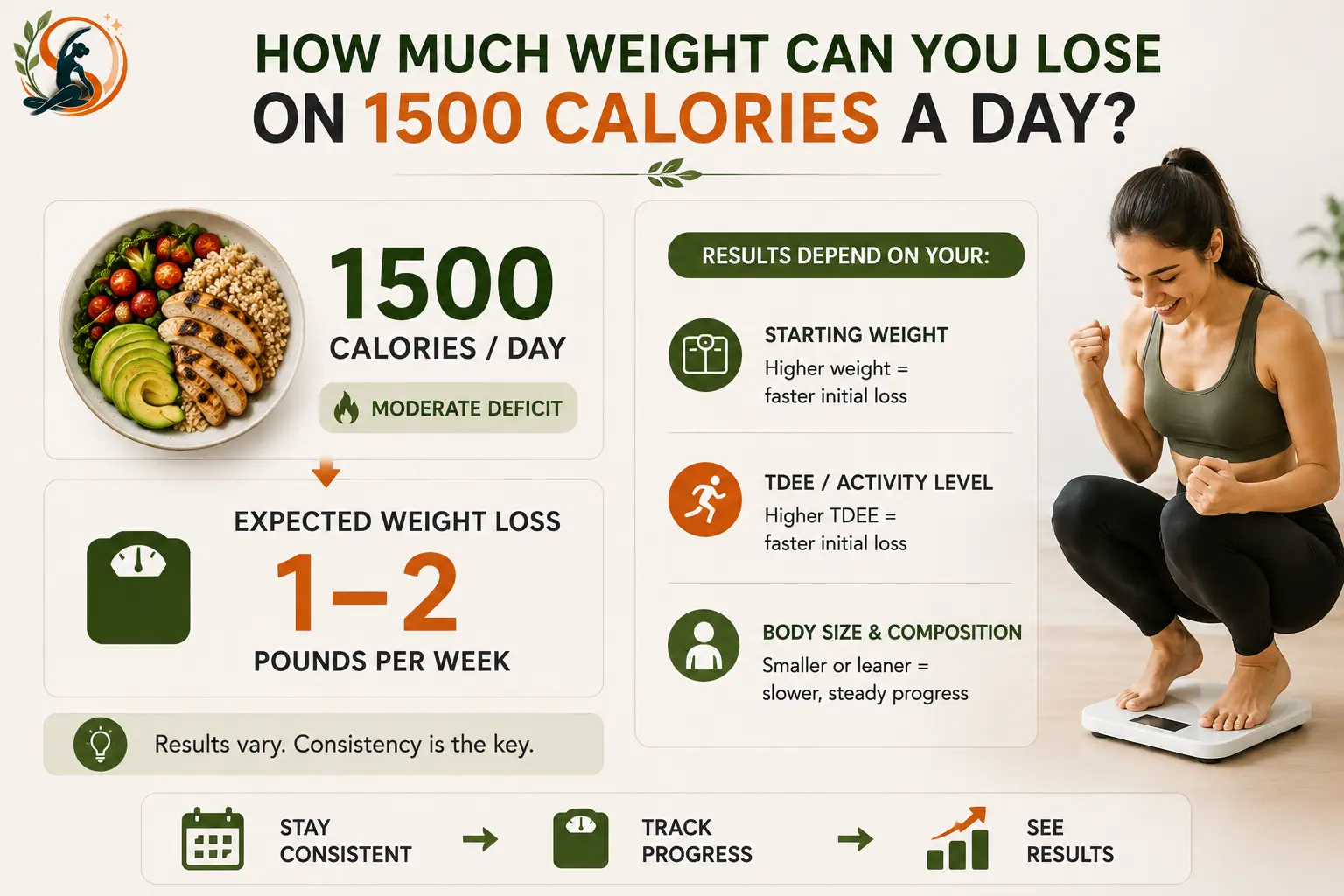
This depends heavily on your starting TDEE. But as a rough guide, a moderate deficit from 1500 calories typically produces somewhere around one to two pounds of weight loss per week for most people. Someone starting at a higher weight or higher TDEE might see faster results in the first few weeks, while someone smaller or already fairly lean, will likely see slower, steadier progress instead, which frustrates people more than it probably should.
Frequently Asked Questions
1. How many calories should I eat to lose weight?
Most people lose weight steadily by eating 500 to 750 calories below their TDEE. This usually lands somewhere between 1400 and 1800 calories daily, depending on body size, activity level and starting weight. Calculating your personal TDEE first gives a far more accurate number than following a generic figure.
2. How do I calculate my calorie needs?
Start by finding your basal metabolic rate using your age, weight, height and sex, then multiply it by an activity factor to get your TDEE. Most free TDEE calculators online handle this math automatically. From there, subtract or add calories depending on your weight loss or muscle building goal.
3. How much weight can I lose on 1500 calories a day?
Most people following a 1500 calorie meal plan lose roughly one to two pounds per week, depending on their starting TDEE and activity level. Larger individuals or those with higher maintenance calories often see faster early results, while smaller or leaner people typically experience slower, steadier progress instead.
4. What should I eat for 1500 calories a day?
A balanced 1500 calorie day usually includes lean protein like chicken or fish, healthy fats like avocado or olive oil, plenty of vegetables and moderate portions of whole grains or starchy vegetables. Spreading calories across three meals and one or two snacks helps manage hunger throughout the day.
5. How to lose 20 pounds in 3 months?
Losing 20 pounds in three months means averaging around 1.5 to 2 pounds weekly, which requires a consistent 500 to 1000 calorie daily deficit paired with regular activity. This pace sits within a healthy range for many people, though individual results vary based on starting weight and metabolism.
6. Why can't I lose weight eating 1500 calories a day?
This usually comes down to inaccurate calorie counting, underestimated portion sizes or a TDEE that sits lower than assumed due to age, muscle mass or activity level. Stress, poor sleep and inconsistent tracking also commonly slow progress even when calorie intake looks correct on paper.
Conclusion
Calorie numbers matter, sure. But they're only ever a starting point, not some strict rulebook carved into stone somewhere. I've watched people obsess over hitting an exact number down to the last calorie while completely ignoring sleep, stress and consistency, the stuff that actually moves the needle over months, not days.
Figure out your TDEE. Pick a calorie target that actually matches your goal, whether that lands at 1500 calories or closer to 3000. Then give yourself real time to see how your body responds before making any drastic changes out of impatience. That patience, more than any perfect number on a screen, is usually what separates the people who see lasting results from the ones who quit three weeks in and blame the diet instead of the timeline.


Comments (0)
No comments yet. Be the first to share your thoughts!
Leave a Comment