
I've spent fifteen-plus years in strength and nutrition coaching and this question comes up every single Olympic cycle, without fail. Someone watches the Games, sees an athlete crash a race or stick a landing and wants to know exactly what they ate that morning. Fair question. The answer's just not as tidy as people expect it to be.
There's no laminated card floating around with "the Team USA meal plan" printed on it. What actually exists is smarter than that and once you get how it works, you can steal the same framework for your own training. Doesn't matter if you're chasing a marathon PR or just trying to stop bonking during Saturday morning soccer.
Does Team USA Have One Official Meal Plan
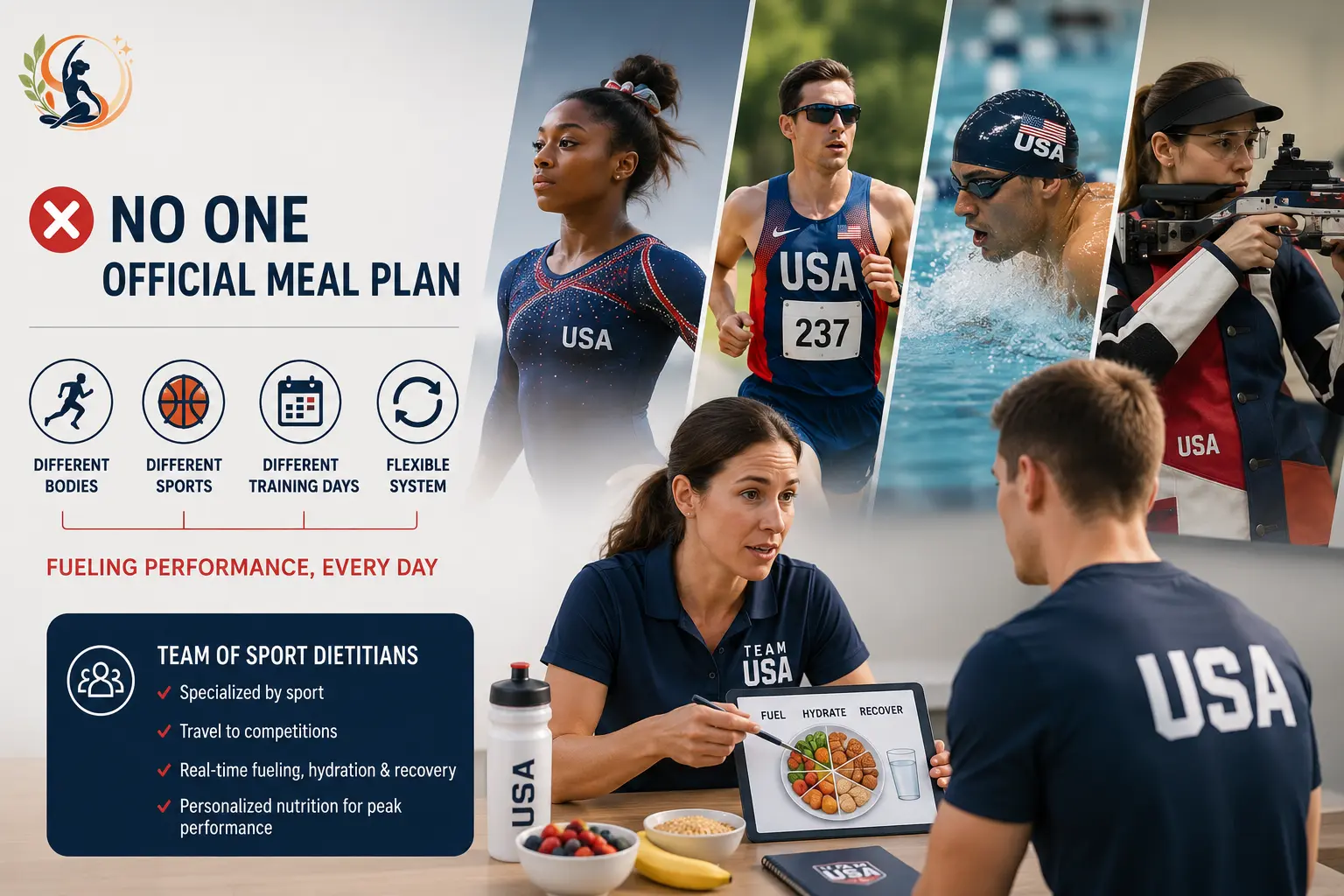
Short answer, no. And honestly, that's the interesting part.
The Truth About "Standard" Meal Plans for Elite Athletes
Every Team USA athlete eats differently, because every athlete's body, sport and training day looks nothing alike. A gymnast's calorie needs aren't in the same universe as a marathoner's. A swimmer grinding through two-a-days needs something completely different from a shooter or a fencer sitting at a table most of the day. So instead of one standard meal plan for Team USA athletes, the U.S. Olympic & Paralympic Committee built something more flexible, a system that shifts based on how hard you're training that specific day, not a fixed menu everyone's handed on day one.
Meet the Sport Nutritionist Team Behind Team USA
The USOPC keeps a full roster of sport dietitians on staff and calling them generic sports & nutrition consultants would honestly undersell what they do. Each one specializes in the athletes they support and they travel with Team USA to competitions to handle fueling, hydration and recovery in real time, not from behind a desk. A sport nutritionist working with a distance runner is dealing with a completely different set of problems week to week than one working with a weightlifter, even though technically they're on the same team.
The Athlete's Plate: Team USA's Real Nutrition Framework
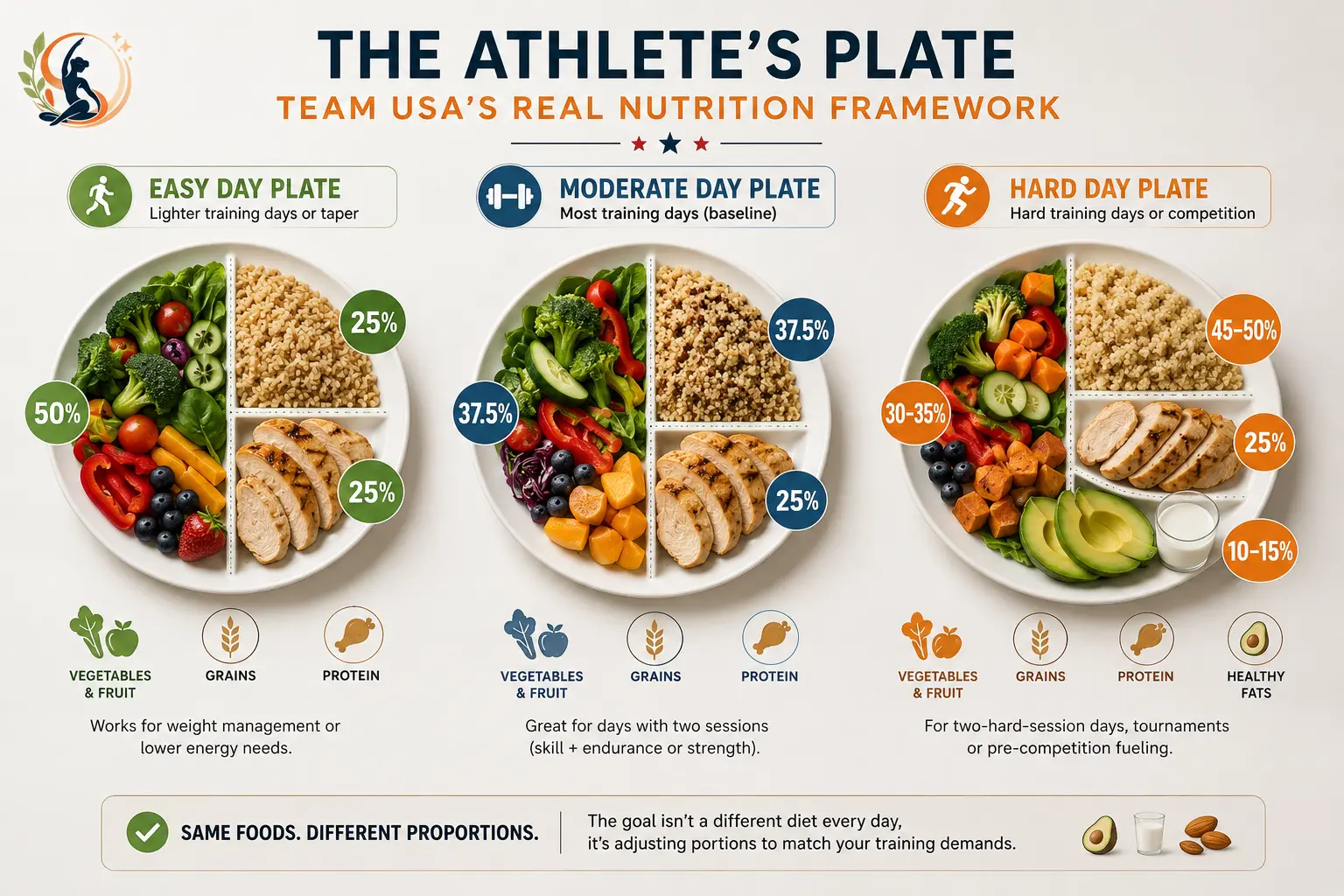
Here's the actual tool and it's the closest thing to a "standard" that exists. It's called the Athlete's Plate, built by USOPC sport dietitians alongside the University of Colorado Colorado Springs sport nutrition program.
The Easy Day Plate
On lighter training days or during a taper, the plate splits into 50% vegetables and fruit, 25% grains, 25% protein. This version also works for athletes actively managing their weight or anyone in a sport that just doesn't burn through a ton of daily energy to begin with.
The Moderate Day Plate
This is the baseline, the plate most training days actually look like. Grains and vegetables each take up roughly 37.5%, protein holds steady at 25%. Fits a day with two sessions well, say one focused on skill work and the other on endurance or strength.
The Hard Day Plate
Hard training days or competition days just need more fuel, no way around it. The grain portion grows further here, protein still sits around 25% and a bit more healthy fat gets added in too, avocado or a glass of milk. This is the plate for two-hard-session days, tournament days or that stretch right before a big race when carb loading genuinely matters.
What I like about this whole setup is that the food barely changes. You're not eating a totally different diet depending on the day. You're just shifting proportions on the same plate, which is a lot easier to actually stick with than switching your whole approach every 24 hours, which is where most people give up.
Sports & Nutrition Basics Every Athlete Should Know
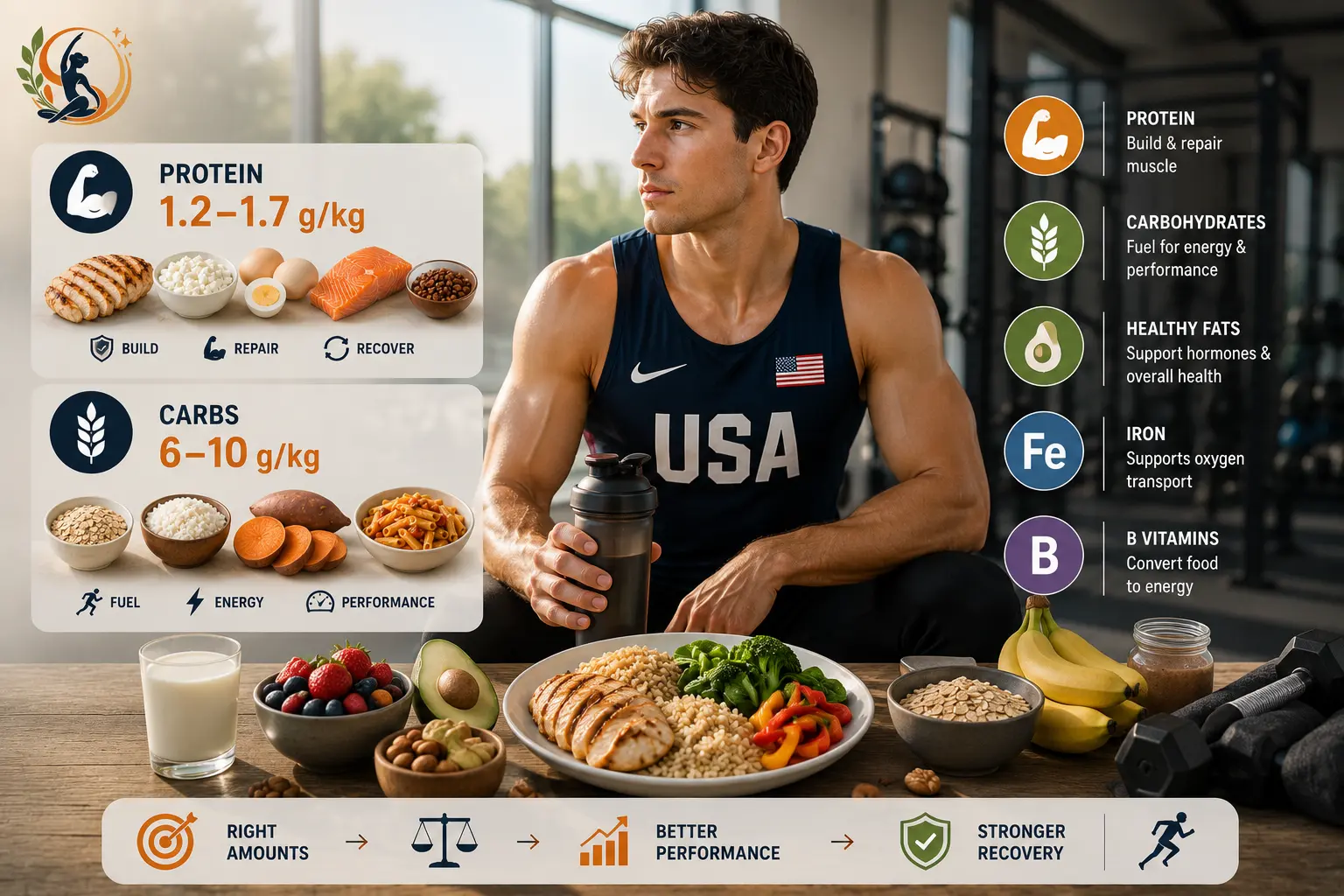
Before building anything yourself, it helps to know the numbers sitting behind that plate.
How Much Protein Do Athletes Actually Need
General guidance sits around 0.8 grams per kilogram of body weight for the average person. Athletes need more than that. Endurance athletes typically land around 1.2 to 1.4 grams per kilogram, strength athletes run a bit higher, closer to 1.2 to 1.7. For a 165-pound athlete, that works out to somewhere around 100 to 115 grams of protein a day, give or take, depending on the sport.
Carbohydrates and Athletic Nutrients That Fuel Performance
Carbs are still where most of an athlete's daily fuel comes from, especially for anyone training hard six days a week. High-volume athletes often need somewhere in the 6 to 10 gram per kilogram range, which is a lot more than the average gym-goer needs and honestly more than most people would guess. These athletic nutrients, carbs, protein, healthy fats, plus iron and B vitamins for actual energy production, all work together. Cut any one too far and it tends to backfire during training, not help it.
Best Thing to Eat Before Training
Probably the single most common question I get, at every level, from teenagers to actual pros.
The 4-2-1 Rule for Pre-Competition Eating
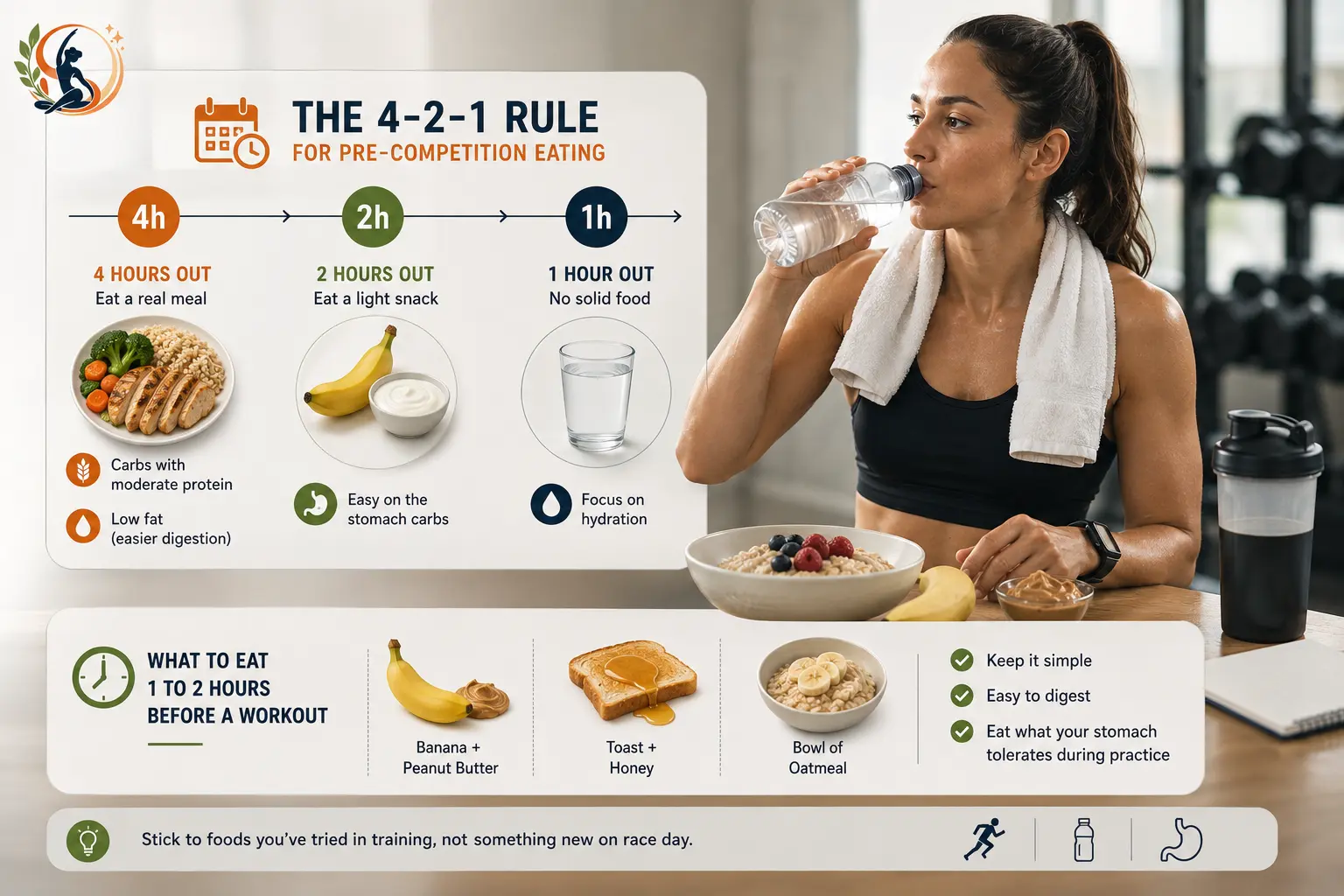
A lot of sport dietitians use some version of what's called the 4-2-1 rule for timing meals before competition. Four hours out, eat a real meal, carbs with moderate protein, low fat, since fat and fiber slow digestion right when you don't want that happening. Two hours out, switch to something lighter, an easy-on-the-stomach carb snack. One hour out, stop eating solid food entirely and just focus on staying hydrated. It's not some rigid law carved in stone anywhere, but it's a genuinely useful starting template if you've never actually planned pre-competition eating before.
What to Eat 1 to 2 Hours Before a Workout
If your session's closer than that full four-hour window allows, keep it simple. A banana with a little peanut butter, plain toast with honey, a small bowl of oatmeal, all work fine an hour or two out. The best thing to eat before training is honestly whatever your stomach already tolerates well, tested during regular practice, not something brand new you're trying for the first time on race day. Learned that lesson the hard way with more than one client over the years.
The 3-3-3 Rule for Meals: Does It Apply to Athletes
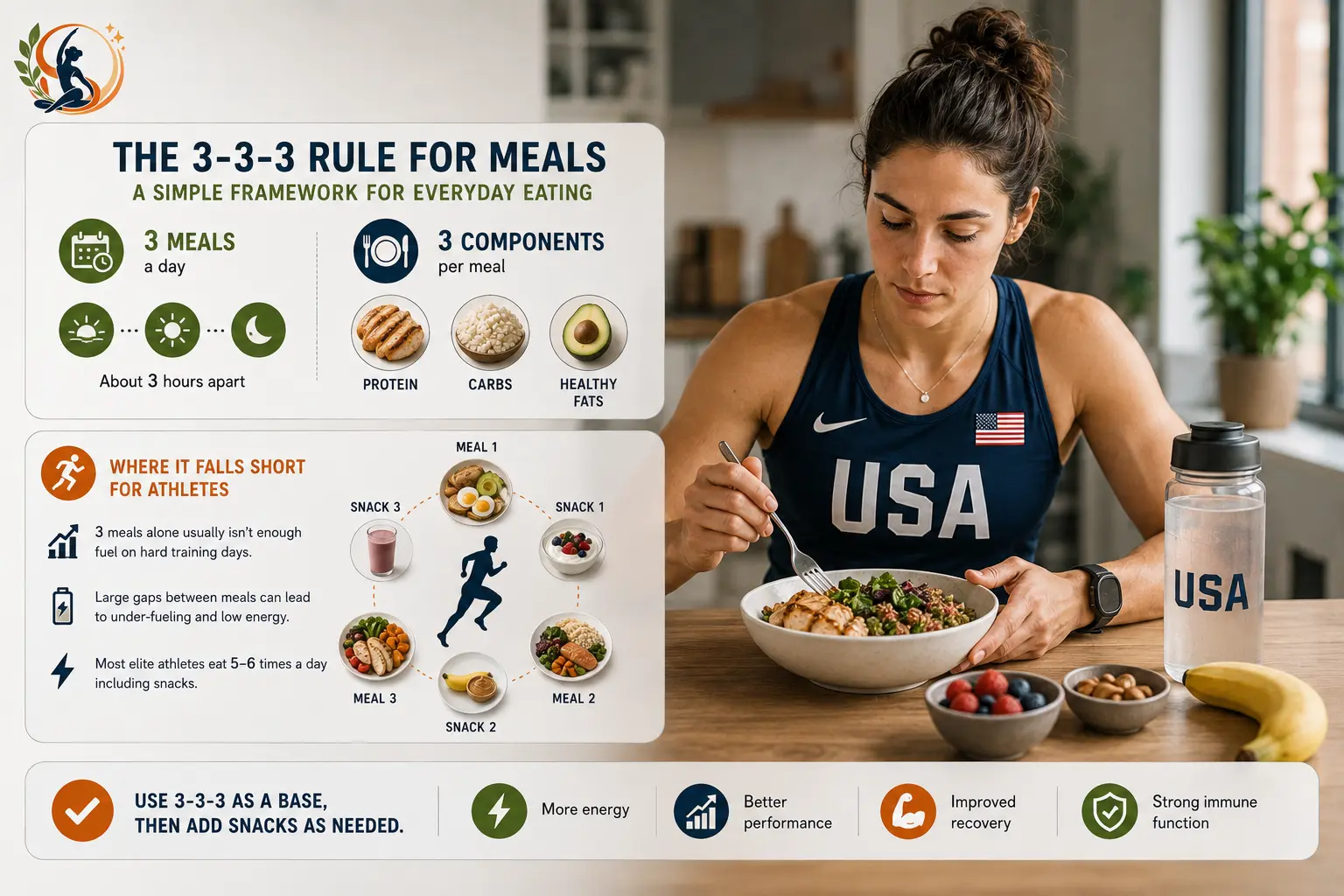
This one's been floating around social media a lot lately, so it's worth addressing head-on.
What the 3-3-3 Rule Actually Means
The 3-3-3 rule for food generally means eating three meals a day, spaced roughly three hours apart, each one built around three components, usually protein, a carb source and a healthy fat. Simple. No macro tracking required. For a lot of regular people just trying to eat more consistently, it works fine as a starting habit.
Where It Falls Short for Serious Athletes
For someone training at a Team USA level, three meals alone usually isn't enough fuel, especially on hard training days. Most elite athletes eat five to six times a day once you count snacks, since spacing meals that far apart during high-volume training can leave them genuinely under-fueled by evening. The 3-3-3 rule's fine as a general structure for regular life. Serious athletes usually need to layer snacks on top of it, not follow it exactly as written.
Building Your Own Meal Plan Like an Athlete
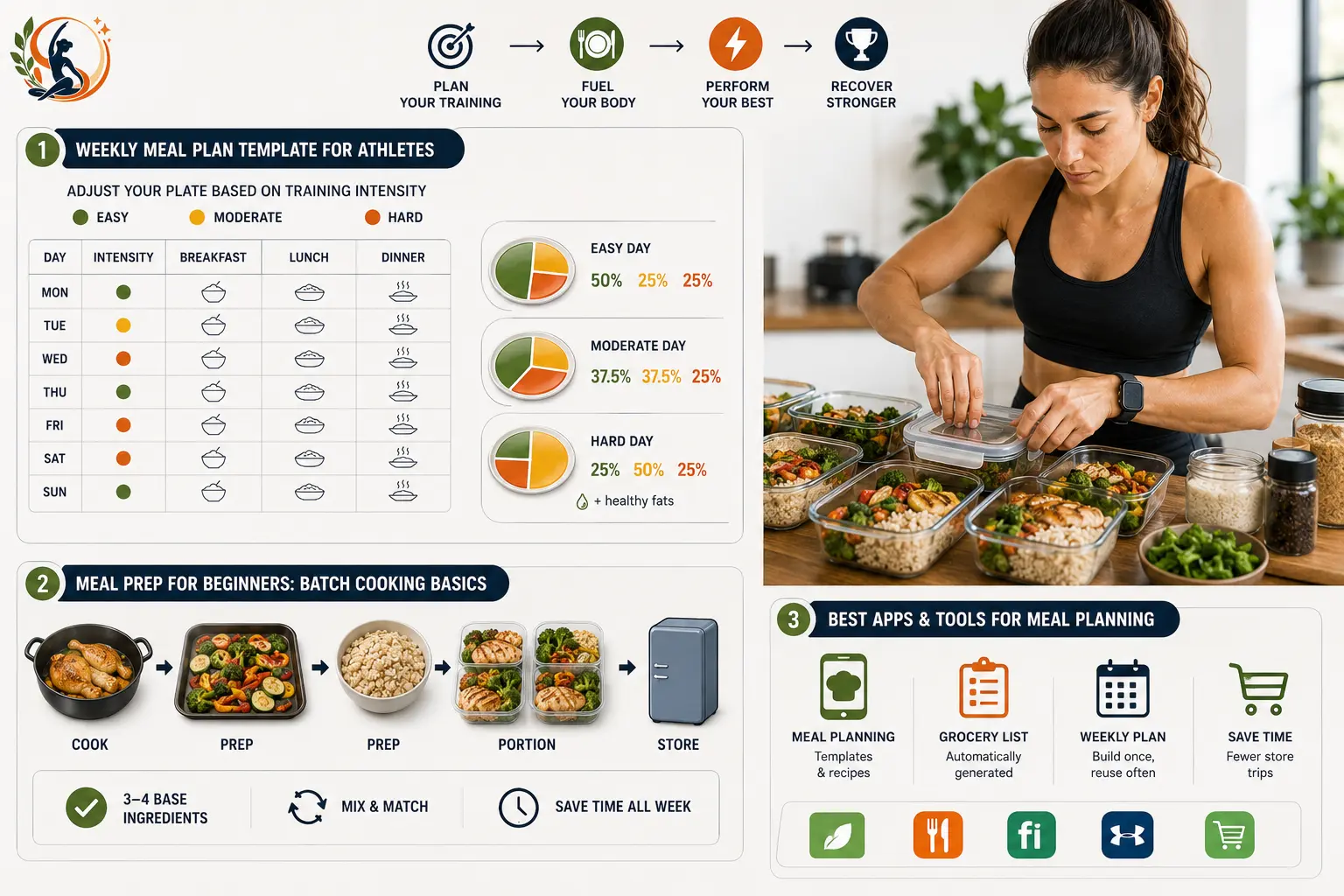
You don't need a USOC contract to eat this way. Here's how to actually build it yourself.
Weekly Meal Plan Template for Athletes
Grab any weekly meal plan template, even a basic one and map out your training intensity for each day first, before you plan a single meal. Mark which days are easy, moderate or hard, then adjust your plate proportions the same way the Athlete's Plate does it. Pair a hard-training day's plate with an actual strength session, like this chest exercises with dumbbells routine, to put those extra carbs to use. A simple meal plan template with seven rows and three meal columns is genuinely all you need to get started. No fancy software required, whatever the ads tell you.
Meal Prep for Beginners: Batch Cooking Basics
Batch cooking on a Sunday saves more time than almost any other habit I recommend to new clients, hands down. Cook a big batch of protein, a couple trays of roasted vegetables, a pot of rice or quinoa, then portion it all into meal prep containers for the week ahead. Meal prep for beginners doesn't need to be complicated at all. Three or four base ingredients, mixed and matched across different meals, gets you through most of the week without much daily effort. The same batch-cooking logic applies directly to healthy snacks for work if training happens around a 9-to-5.
Best Apps and Tools for Meal Planning
If paper's not your thing, there are plenty of solid apps for meal planning free to download that handle grocery lists and weekly templates for you. Most let you build a meal planning template once and reuse it on repeat and a lot of them generate a grocery list app-style shopping list automatically based on what you've planned, cutting down on the number of trips back to the store mid-week.
Best Diets for Athletes: What Actually Works
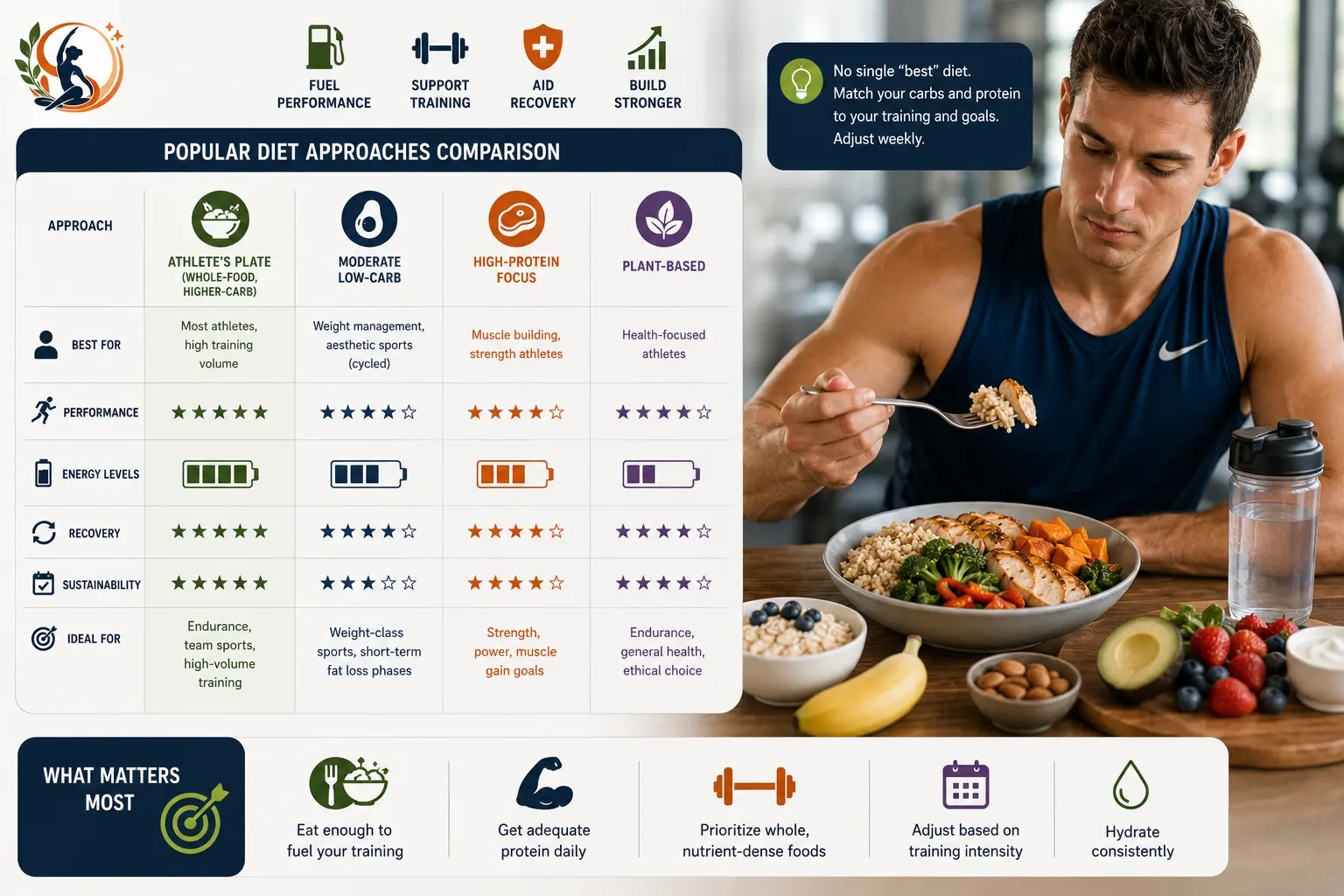
There's no single winner here and I'd be lying if I told you otherwise.
Comparing Popular Approaches for Active People
A whole-food, higher-carb approach like the Athlete's Plate tends to outperform trendy low-carb diets for anyone training hard on a regular basis, mostly because performance drops off fast without enough carbohydrate around. Some athletes in weight-class or aesthetic sports do experiment with lower-carb stretches here and there, but it's usually cycled in and out, not a permanent setup. For most people asking about the best diets for athletes, the honest answer is less about a specific diet label and more about matching your carbs and protein to how hard you're actually training that particular week. For readers who aren't training at that volume, a 1500 calorie meal plan breaks down calorie targets for more typical activity levels.
Frequently Asked Questions
1. What is the 4-2-1 eating rule for athletes?
The 4-2-1 rule times meals before competition: a full meal with carbs and moderate protein four hours out, a light carb snack two hours out and just hydration in the final hour before starting. It's a simple framework many sport dietitians use with athletes.
2. What is the 3-3-3 rule for meals?
The 3-3-3 rule means eating three meals a day, spaced about three hours apart, with each meal built around three components: protein, carbs and healthy fat. It's a general wellness habit, not an official athlete framework and often needs extra snacks for serious training.
3. What is a good meal plan for an athlete?
A good meal plan adjusts to training intensity, following something like the Athlete's Plate model. Easy days lean more on vegetables and protein, while hard training days add more carbs and a bit more fat, keeping protein steady across all of them.
4. How many calories do Olympic athletes eat a day?
It varies hugely by sport and body size, ranging from around 2,000 calories for smaller athletes in weight-class sports up to 6,000 or more for swimmers and endurance athletes during peak training. There's no single number, since it needs to scale with training volume and body size.
5. What is the 3-3-3 rule for food?
Same concept as the 3-3-3 rule for meals: three meals daily, roughly three hours apart, each built around three food groups. It's meant to simplify eating without calorie counting, though athletes training hard usually need more frequent meals than this rule suggests.
6. Do Team USA athletes all eat the same food?
No, not even close. Each athlete's plan is built around their sport, body size and daily training load, guided by USOPC sport dietitians using the flexible Athlete's Plate system rather than one fixed menu everyone follows regardless of what their day looks like.
Conclusion
There isn't one single, standard meal plan for Team USA athletes and that's really the whole lesson here. What exists instead is a flexible system, built around how hard you're training on any given day, that adjusts the same core foods rather than swapping diets entirely. That's a framework anyone can borrow, whether you're an Olympic hopeful or just trying to fuel a weekend 10K without hitting a wall at mile eight.
Start by tracking how your training actually varies through the week, then build your plate proportions around that, heavier on carbs for hard days, lighter on easy ones. It's not glamorous. It's just exactly what's working for the athletes who make it all the way to the Games.


Comments (0)
No comments yet. Be the first to share your thoughts!
Leave a Comment