
My doctor said "borderline high cholesterol" and something in my chest just dropped. I'm thirty-four. I wasn't ready for that conversation yet. I went home, sat on my kitchen floor honestly and started reading about whole food diet research until 2 AM that night.
If a scary number on a lab report is what's pushing you toward a whole food diet, welcome, you're in good company. My wake-up call wasn't graceful. It was panic first, research second, actual change a distant third.
No dramatic before-and-after photos here. Just what happened when fear finally beat out convenience, one confused grocery trip at a time.
The Lab Result That Wrecked My Whole Week
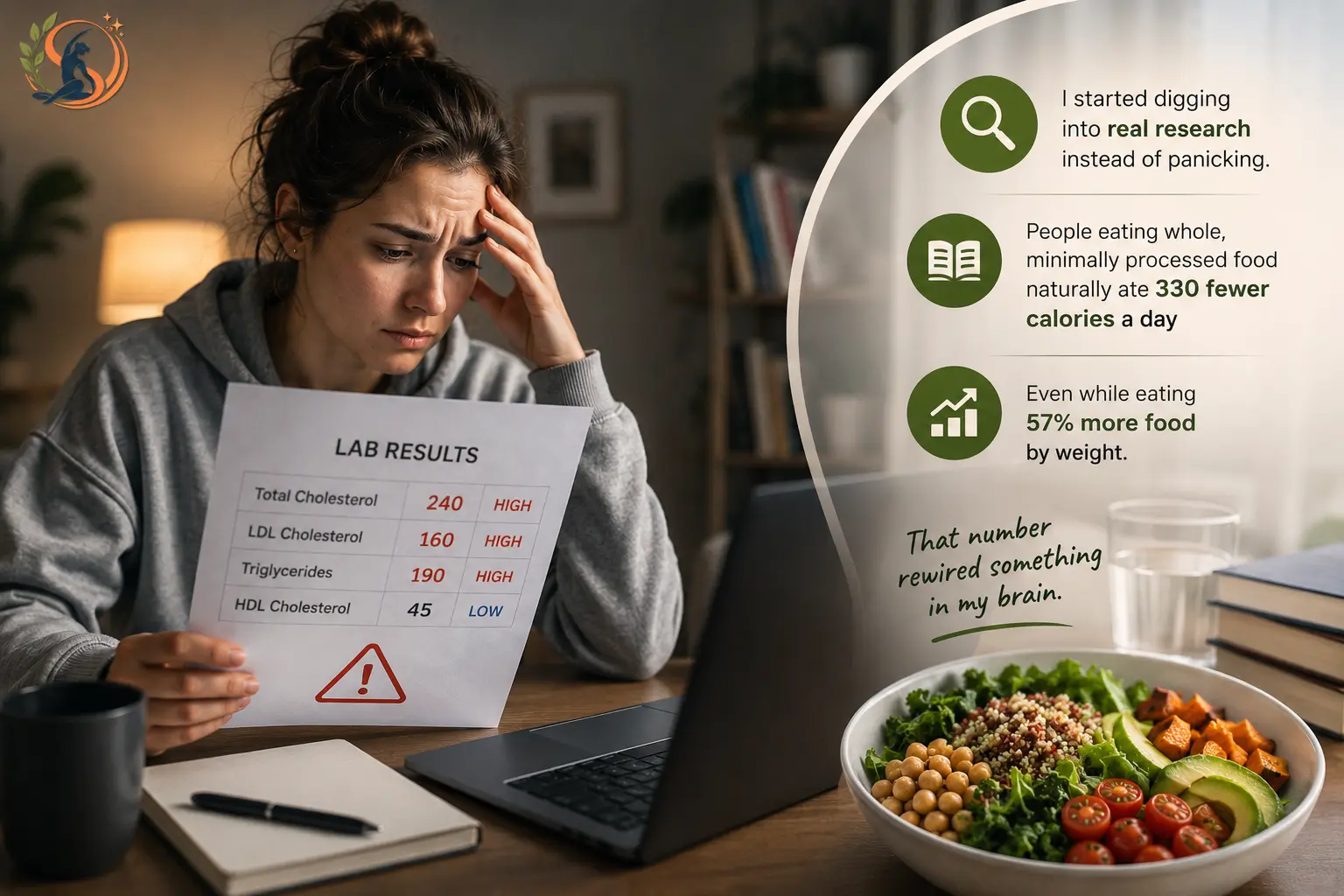
My doctor read the numbers out loud like it was nothing, totally routine to her. To me it landed like a gut punch. LDL creeping up, triglycerides not great either. She mentioned diet changes almost casually, like "try eating more vegetables," and I nodded along pretending I understood the assignment. I didn't, not really.
Drove home white-knuckling the steering wheel a little, honestly overreacting probably. But that night I started digging into actual research instead of just panicking. I found a study that stuck with me: people eating whole, minimally processed food naturally ate 330 fewer calories a day than people eating ultra-processed meals, even while eating 57% more food by weight. That number rewired something in my brain.
What A Whole Food Diet Actually Means, Beyond The Buzzword
Turns out "whole food diet" isn't some rigid rulebook with a name attached to it, no official founder, no branded meal kit. It just means choosing food close to how it looks in nature: vegetables, fruit, beans, whole grains, eggs, fish over the ultra-processed stuff loaded with additives most of us can't pronounce or explain. If cutting processed food is the real goal, an anti-inflammatory eating pattern built around the same fish, olive oil and produce basics sharpens that same focus even further.
Processed food isn't automatically evil, to be clear, frozen vegetables count as whole food too. But here's a number that stuck with me: processed foods make up something like 72% of total daily calories in the average American diet right now. That statistic alone told me where most of my problem was actually hiding.
The Overwhelming First Week That Nearly Broke Me
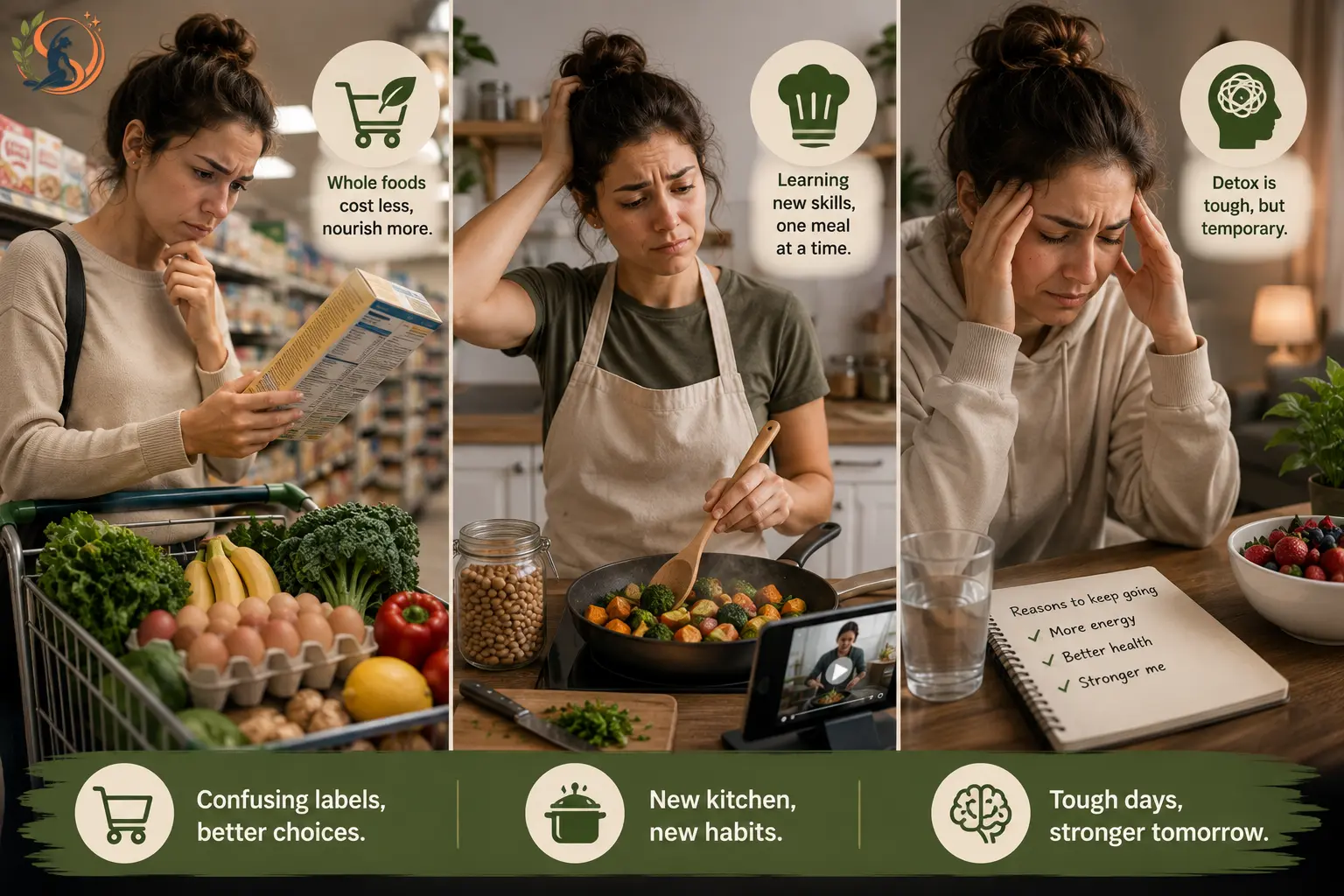
Grocery Shopping Turned Into An Ordeal
Stood in the cereal aisle for embarrassingly long, reading ingredient lists like they were written in another language. Sugar under six different names, preservatives I'd never questioned before. My whole food diet cart ended up mostly produce and eggs that first trip and checkout still cost less than my usual haul, weirdly.
My Cooking Skills Were Genuinely Bad
I could microwave things competently. That was about it. Learning to actually cook dried beans, roast vegetables without burning them, season food beyond salt humbling at thirty-four, not gonna lie. YouTube became my unofficial culinary school for a solid month during this whole food diet transition period.
Sugar Withdrawal Was Real And Annoying
Headaches, irritability, weird fogginess for about five days. Nobody warns you that cutting processed sugar mimics actual withdrawal symptoms somewhat. Research on ultra-processed food consumption backs this up loosely; these foods are engineered for cravability, so your body notices hard when they suddenly disappear from a whole food diet.
The Emotional Side Nobody Mentions In The Meal Plans
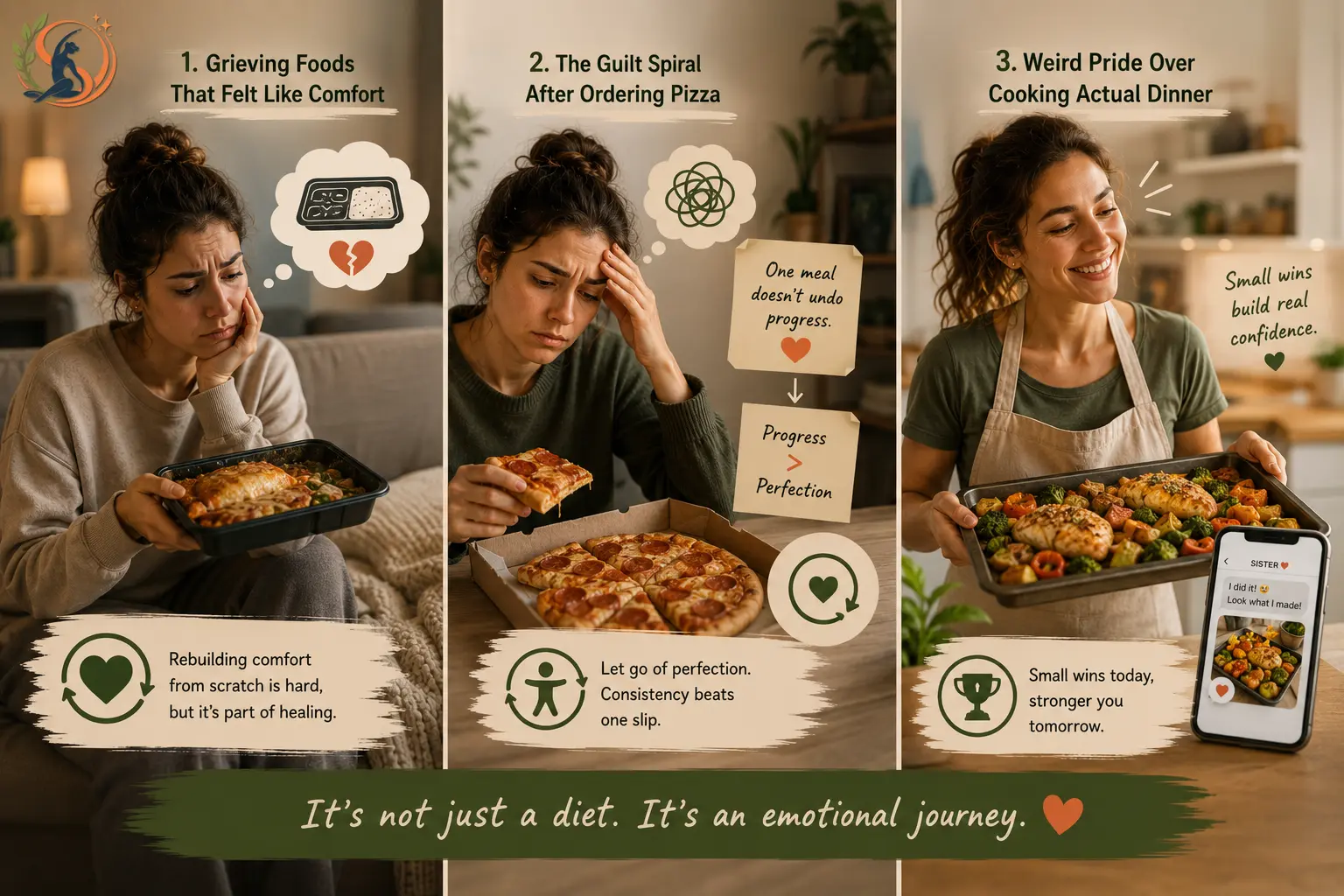
Grieving Foods That Felt Like Comfort
Sounds silly typing it out, but I actually missed my favorite frozen dinners, the predictable sameness of them after long work days. Whole food diet transitions ask you to rebuild comfort from scratch, literally and that emotional labor is real even when the health reasoning is completely sound and obvious.
The Guilt Spiral After Ordering Pizza
Caved during a brutal week at work ordered pizza, then spiraled about it for two days straight afterward. I learned eventually that one meal doesn't undo a whole food diet commitment. Perfectionism was sabotaging me way more than the actual pizza slice ever could realistically have done alone.
Weird Pride Over Cooking Actual Dinner
The first time I roasted a full sheet pan of vegetables and chicken without setting off the smoke alarm, I texted my sister a photo like I'd won something. Small whole food diet wins started stacking into genuine confidence I hadn't expected finding through something this basic and unglamorous honestly.
What Actually Changed In My Body, Numbers Included
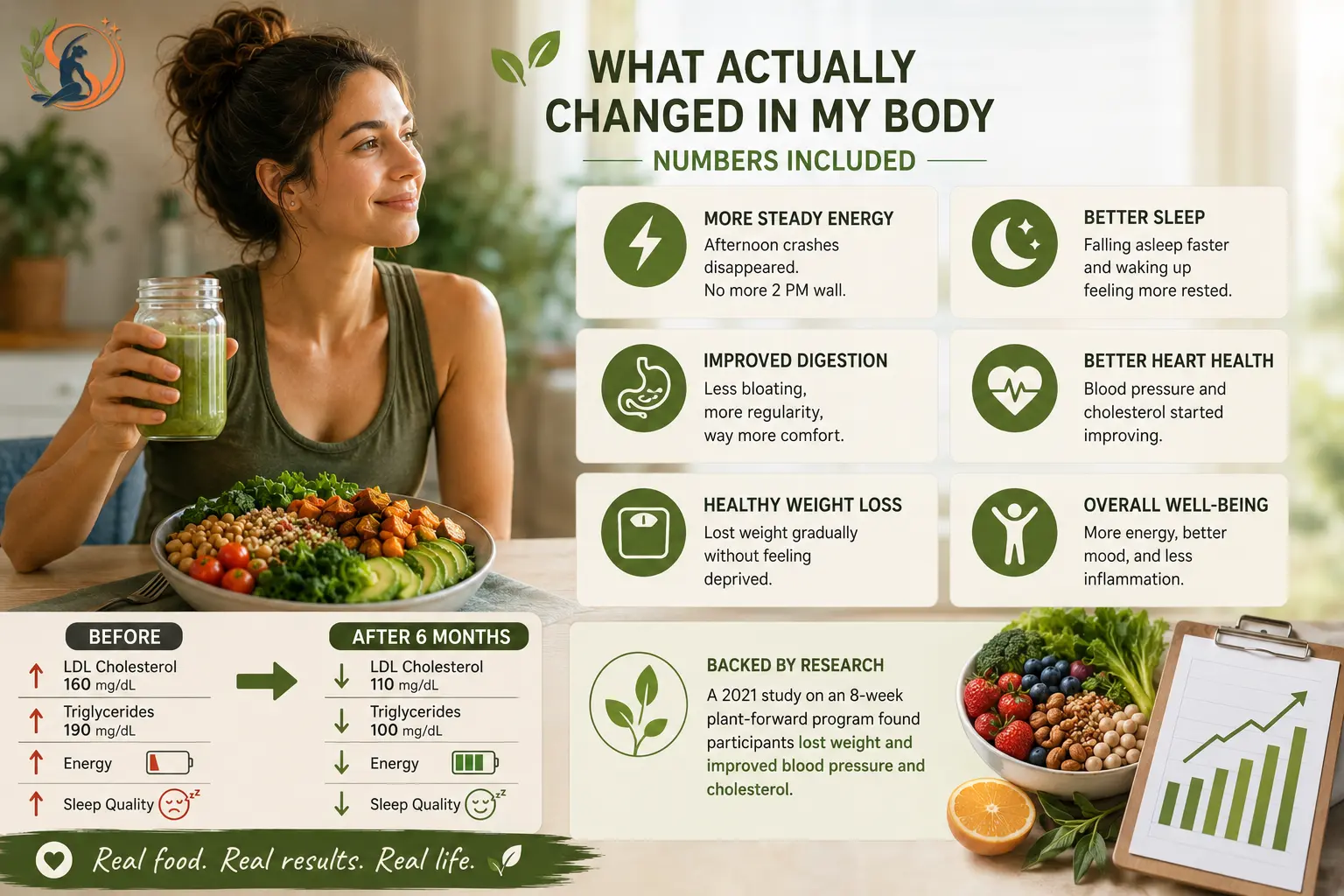
Three weeks in, afternoon energy crashes basically disappeared. That 2 PM wall I used to hit daily just wasn't showing up the same way anymore. Sleep got easier too, falling asleep faster instead of scrolling for an hour first. A 2021 study on an eight-week plant-forward program found participants lost weight and improved blood pressure and cholesterol which is exactly the direction I was hoping my own numbers would move eventually.
Digestion improved more than I expected, less bloating, more predictable bathroom habits, honestly a relief after years of just assuming discomfort was normal. Research consistently links diets built around whole and minimally processed plant foods to meaningfully lower cardiovascular risk. I wasn't chasing a specific study result personally, just chasing feeling less awful, but it was reassuring seeing the science line up with what my body was already telling me.
Navigating Restaurants And Family Dinners Without Losing My Mind
Eating out got genuinely trickier maintaining whole food diet habits while not being the annoying friend interrogating servers about sauce ingredients. I found a rhythm and eventually scanned the menu for anything grilled or roasted, asked for dressing on the side, stopped overthinking every single outing like it was a referendum on my entire commitment.
Family dinners were harder honestly, since declining grandma's casserole felt loaded with meaning it probably didn't actually carry. Some relatives got genuinely curious about the whole food diet approach, others just quietly judged from across the table. I learned to eat what I could, enjoy the company and not turn every gathering into a nutrition seminar nobody asked for.
Mistakes That Cost Me Time And Motivation
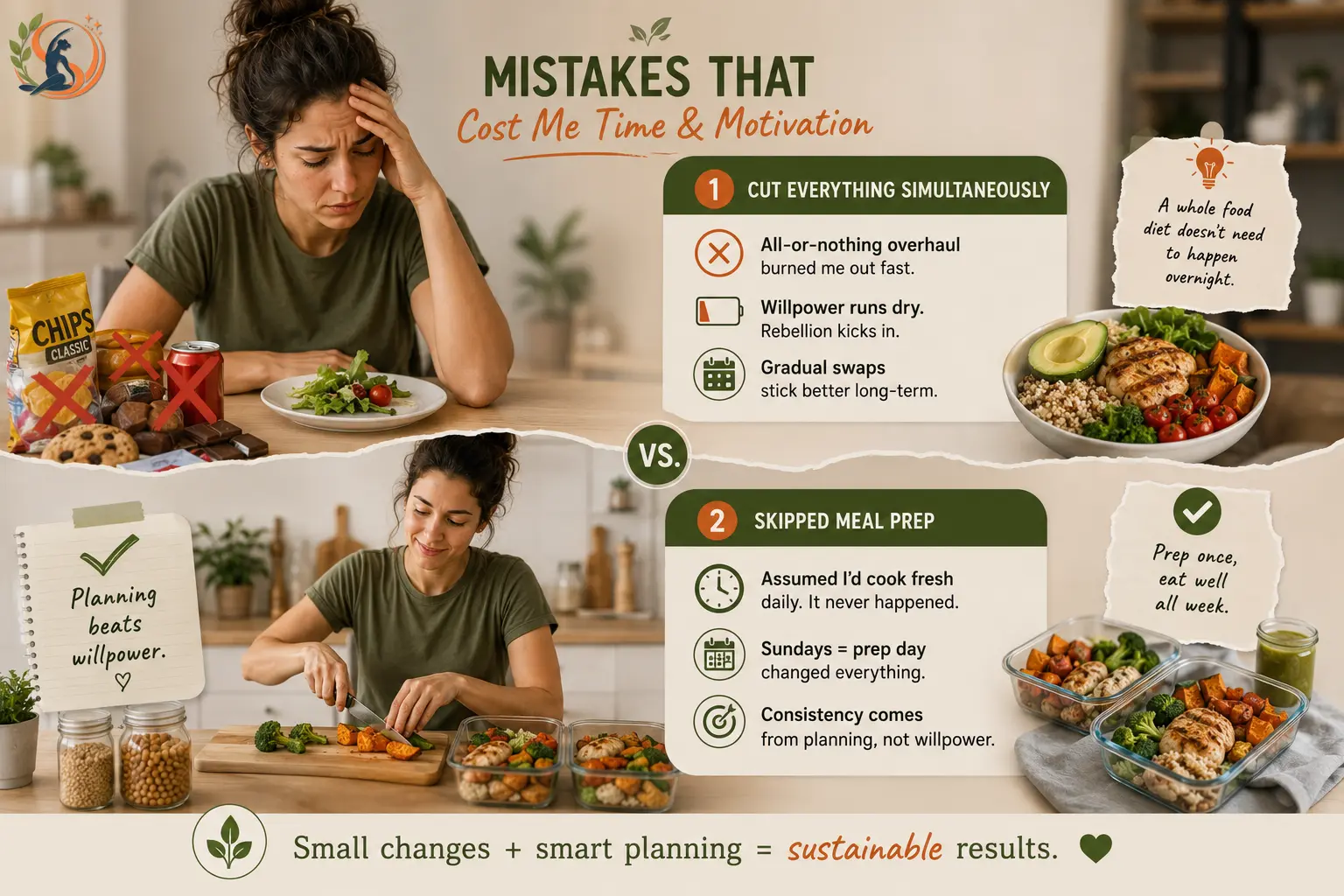
Cut everything simultaneously that first week, dramatic all-or-nothing overhaul and burned out within ten days completely. A whole food diet doesn't need to happen overnight, gradual swaps stick better than dramatic purges that inevitably trigger rebellion once willpower runs dry, which it always eventually does for basically everyone honestly.
Also skipped meal prep entirely at first, assuming I'd just cook fresh daily after work like some idealized version of myself. Never happened realistically. Once I started prepping proteins and roasted vegetables on Sundays, consistency actually stuck. Planning beats willpower every single time for sustaining a whole food diet long-term.
Small Shopping And Prep Habits That Made This Sustainable
Buy frozen vegetables in bulk, they're picked at peak ripeness and cost noticeably less than fresh produce
Keep a rotating list of five simple whole food diet meals instead of reinventing dinner nightly from scratch
Shop the perimeter of the grocery store first, that's usually where the actual whole foods live physically
Batch cook grains and beans weekly, they reheat well and anchor multiple different meals throughout the week
Read labels once per product, then just remember which brands work instead of relitigating every single trip
For readers who want more structure than 'just eat real food,' a paleo meal plan applies the same whole-food logic with a clearer rulebook attached.
Keeping naturally sweet whole foods like dates on hand makes it easier to skip the processed dessert aisle entirely
Physical Changes My Follow-Up Bloodwork Actually Confirmed
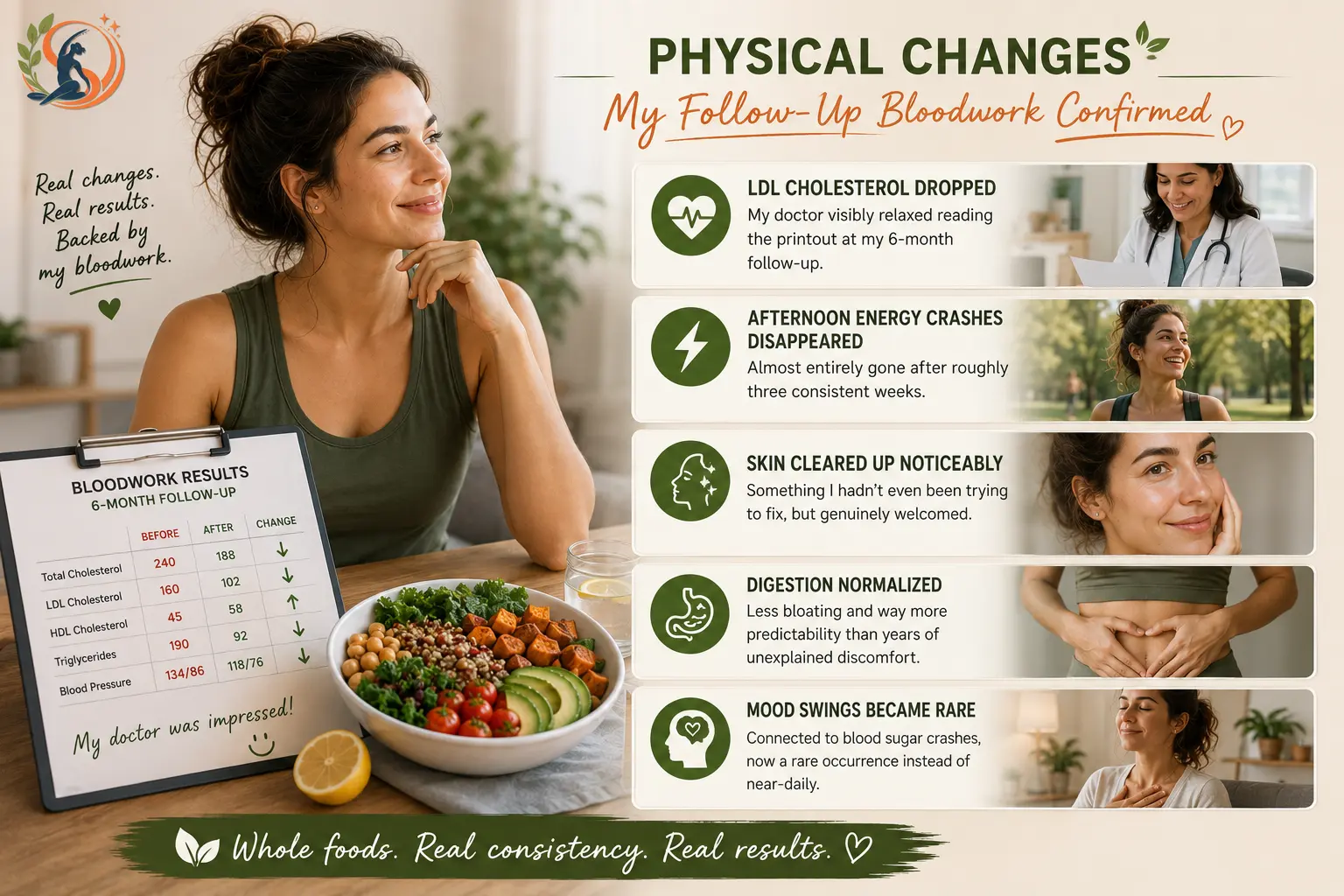
LDL cholesterol dropped enough that my doctor visibly relaxed reading the printout during my six-month follow-up appointment
Afternoon energy crashes disappeared almost entirely after roughly three consistent weeks of whole food diet eating patterns
Skin cleared up noticeably, something I hadn't even been trying to fix but genuinely welcomed regardless
Digestion normalized, less bloating and way more predictability than years of unexplained discomfort I'd just accepted
Mood swings connected to blood sugar crashes became rare instead of a near-daily occurrence I'd normalized
Where My Numbers And My Habits Stand Now
Six months later, my follow-up bloodwork came back with LDL solidly back in normal range and my doctor actually smiled reading it, which honestly felt like a small personal victory. That whole food diet commitment that started in fear turned into something closer to just how I eat now, no drama attached anymore.
I still eat pizza sometimes. Still have imperfect weeks. But roughly eighty percent of what I eat now looks close to how it grew or was raised and that ratio alone seems to be doing most of the actual work here, more than any specific rule or restriction I originally thought I'd need to follow.
What I'd Actually Tell Someone Standing Where I Stood

Don't try to fix everything the first week, seriously, you will burn out and quit by day ten like I nearly did. A whole food diet rewards patience way more than intensity. Swap one meal at a time, learn to cook a handful of dishes really well and let the rest follow gradually behind that.
Also, talk to your actual doctor before making major changes, especially if you're managing a condition like diabetes where carbohydrate shifts matter medically. Whole food diet principles are broadly solid, backed by real research across cardiovascular and metabolic health, but your specific situation deserves personalized guidance beyond just internet advice.
Summary
A scary cholesterol reading pushed me toward a whole food diet and six months later my bloodwork actually backs up the change. The transition included real struggles, overwhelmed grocery trips, sugar withdrawal, guilt over imperfect weeks, but research on ultra-processed food risks and whole food benefits kept me grounded. Progress was gradual, not dramatic and that's exactly why it stuck long-term.
Frequently Asked Questions
1. How much weight can you realistically lose eating a whole food diet?
Varies by person, but a 2019 clinical trial found people eating whole foods consumed 330 fewer calories daily than those eating ultra-processed meals, despite eating more food by weight. Weight loss often happens naturally without calorie counting, simply because whole foods are more filling per calorie consumed.
2. Is a whole food diet the same thing as eating zero processed food?
No and that's a common misconception. Frozen vegetables, canned beans and plain yogurt count as whole or minimally processed foods. The real distinction is avoiding ultra-processed products loaded with additives, preservatives and added sugars, not eliminating all convenience or preparation from your food entirely.
3. Does research actually support whole food diets for heart health specifically?
Yes, strongly. A 2021 review analyzing 99 separate studies found diets built around whole and minimally processed plant foods were associated with significantly lower cardiovascular disease risk. That's a substantial body of evidence, not a single isolated study or wellness trend without real backing.
4. How long before someone notices actual physical changes on a whole food diet?
Energy and digestion often shift within two to three weeks based on my own experience and common reports. Measurable changes in bloodwork like cholesterol typically take two to three months of consistency. Individual timelines vary depending on starting health status and how consistently changes get applied.
5. Can a whole food diet work on a genuinely tight grocery budget?
Yes, frozen vegetables, dried beans, rice and oats are among the cheapest items in any grocery store per actual serving. Whole food diet eating doesn't require expensive specialty products, prioritizing basic staples over convenient processed alternatives often ends up costing less monthly, not more.
6. What's the biggest reason people quit a whole food diet early on?
Going too extreme too fast, based on my own near-failure and common advice from nutrition coaches. Cutting everything simultaneously triggers burnout and eventual bingeing within days or weeks. Gradual, sustainable swaps consistently outperform dramatic overnight overhauls for people trying to maintain lasting change.
Conclusion
My whole food diet story didn't start with inspiration, it started with fear sitting on a kitchen floor at midnight reading research studies. Six months later, the fear's mostly gone, replaced by bloodwork numbers that actually back up the effort and habits that stopped feeling like sacrifice a while back. If a scary number sent you here too, know the science is genuinely solid behind this approach and the transition doesn't have to be perfect to actually work over time.


Comments (0)
No comments yet. Be the first to share your thoughts!
Leave a Comment