
A nutritionist friend basically shoved a bag of dates into my hands years ago and told me to just try them. I was skeptical at first, honestly a little annoyed too. But it didn't take long before I actually started craving them, not just eating them because someone told me to.
This guide breaks down the real nutritional value of dates, things like calories, fiber, natural sugar and actual health benefits, based on both research and my own experience eating them almost daily now. We'll also cover how many you should eat, the different types out there and how dates stack up against other fruits. Dates are exactly the kind of minimally processed food a whole food diet is built around.
Wondering if this sticky, caramel tasting fruit really deserves the superfood hype? Short answer, yes, mostly. Let me show you why.
What Are Dates: A Quick Breakdown

Dates, sometimes called khajur, come from the date palm tree. People have been growing and eating them for thousands of years across the Middle East and North Africa. They're technically a fruit, a stone fruit specifically, even though their wrinkly, chewy look makes people think they're some kind of candy instead.
What's actually wild about dates is how sweet they are without a single grain of added sugar. None. That deep, caramel taste comes purely from natural sugar that gets concentrated as the fruit dries out. This is exactly why knowing the real nutritional value of dates matters, so you stop assuming they're just junk food in disguise.
The Nutritional Value of Dates Explained
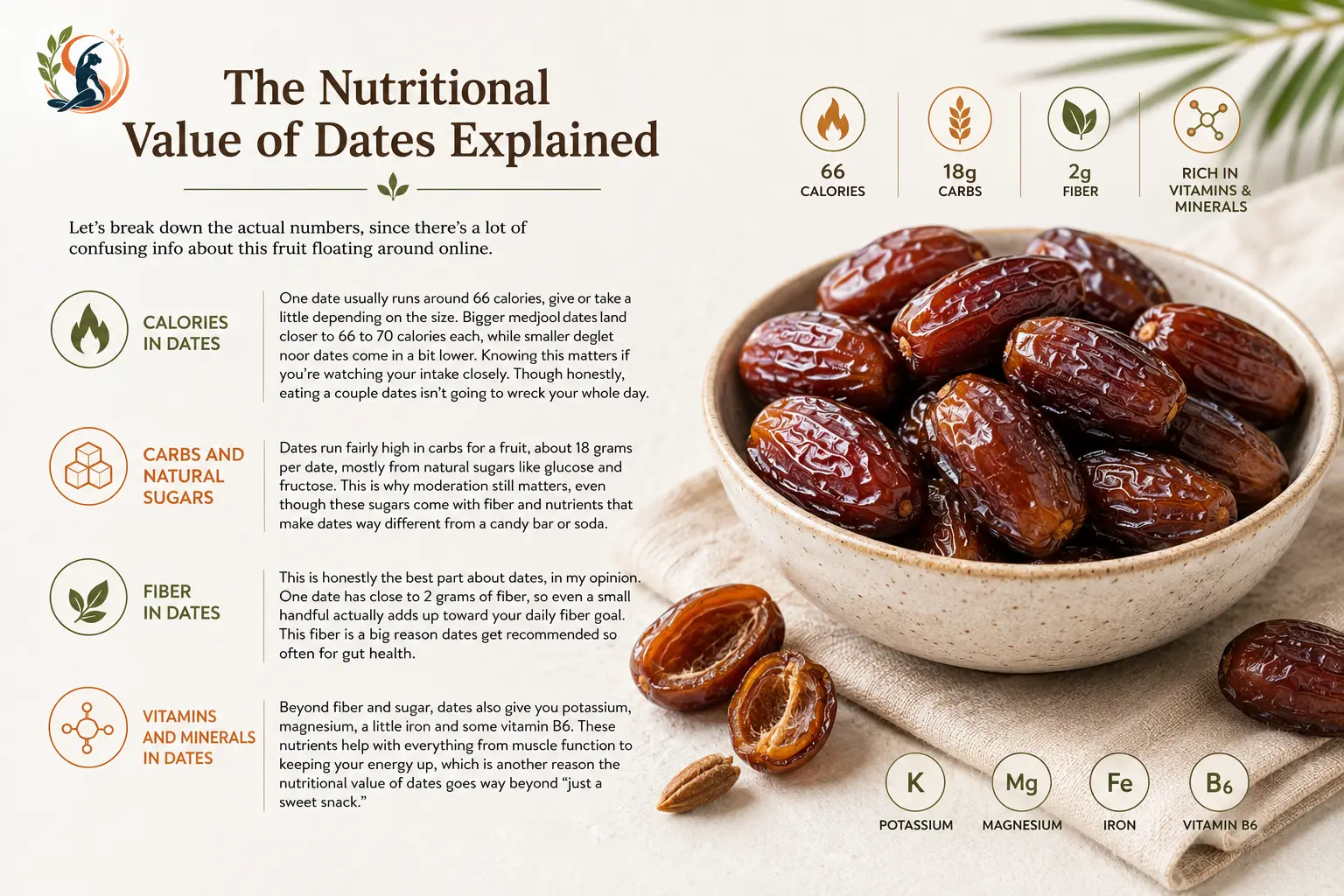
Let's break down the actual numbers, since there's a lot of confusing info about this fruit floating around online.
Calories in Dates
One date usually runs around 66 calories, give or take a little depending on the size. Bigger medjool dates land closer to 66 to 70 calories each, while smaller deglet noor dates come in a bit lower. Knowing this matters if you're watching your intake closely. Though honestly, eating a couple dates isn't going to wreck your whole day.
Carbs and Natural Sugars
Dates run fairly high in carbs for a fruit, about 18 grams per date, mostly from natural sugars like glucose and fructose. This is why moderation still matters, even though these sugars come with fiber and nutrients that make dates way different from a candy bar or soda.
Fiber in Dates
This is honestly the best part about dates, in my opinion. One date has close to 2 grams of fiber, so even a small handful actually adds up toward your daily fiber goal. This fiber is a big reason dates get recommended so often for gut health.
Vitamins and Minerals in Dates
Beyond fiber and sugar, dates also give you potassium, magnesium, a little iron and some vitamin B6. These nutrients help with everything from muscle function to keeping your energy up, which is another reason the nutritional value of dates goes way beyond "just a sweet snack."
Health Benefits of Eating Dates

The benefits go well beyond curbing a sugar craving.
Supports healthy digestion through fiber
Gives quick, natural energy from healthy carbs
Contains antioxidants that fight cell damage
Supports heart health through potassium
May help support bone health
Works as a natural swap for refined sugar
Dates and Digestive Health
This is where dates really shine, at least in my experience. The fiber helps keep things moving regularly, which is exactly why so many people search for dates when they're dealing with constipation.
On top of fiber, dates also seem to have natural compounds that gently help the gut contract and move things along. Add in how much water that fiber pulls in and you get a pretty solid, natural option if you want gentle digestive support without popping a pill.
Why Dates Help With Constipation
High fiber adds bulk to stool naturally
Natural sugars pull water into your gut
Eating them regularly supports steady bowel movements
Soluble fiber feeds healthy gut bacteria
Types of Dates and How They Differ
Not every date tastes or feels the same. Knowing the difference actually helps a lot when you're shopping.
Medjool Dates
Medjool dates are the big, soft, caramel like ones most people picture. Medjool dates benefits include that rich, almost buttery texture, which makes them great for snacking straight up or blending into a smoothie.
Deglet Noor Dates
Deglet Noor dates are smaller, firmer and a bit less sweet than medjool. They hold up better in baking since their texture doesn't fall apart under heat. And honestly, they're usually cheaper too.
Date vs Fig
People ask about date vs fig a lot since both are sweet, chewy dried fruits. Figs have more calcium, while dates usually win on fiber and potassium. Which one's "better" really depends on what you're going for nutritionally.
How to Eat Dates
Dates work in sweet and savory dishes way more than people expect.
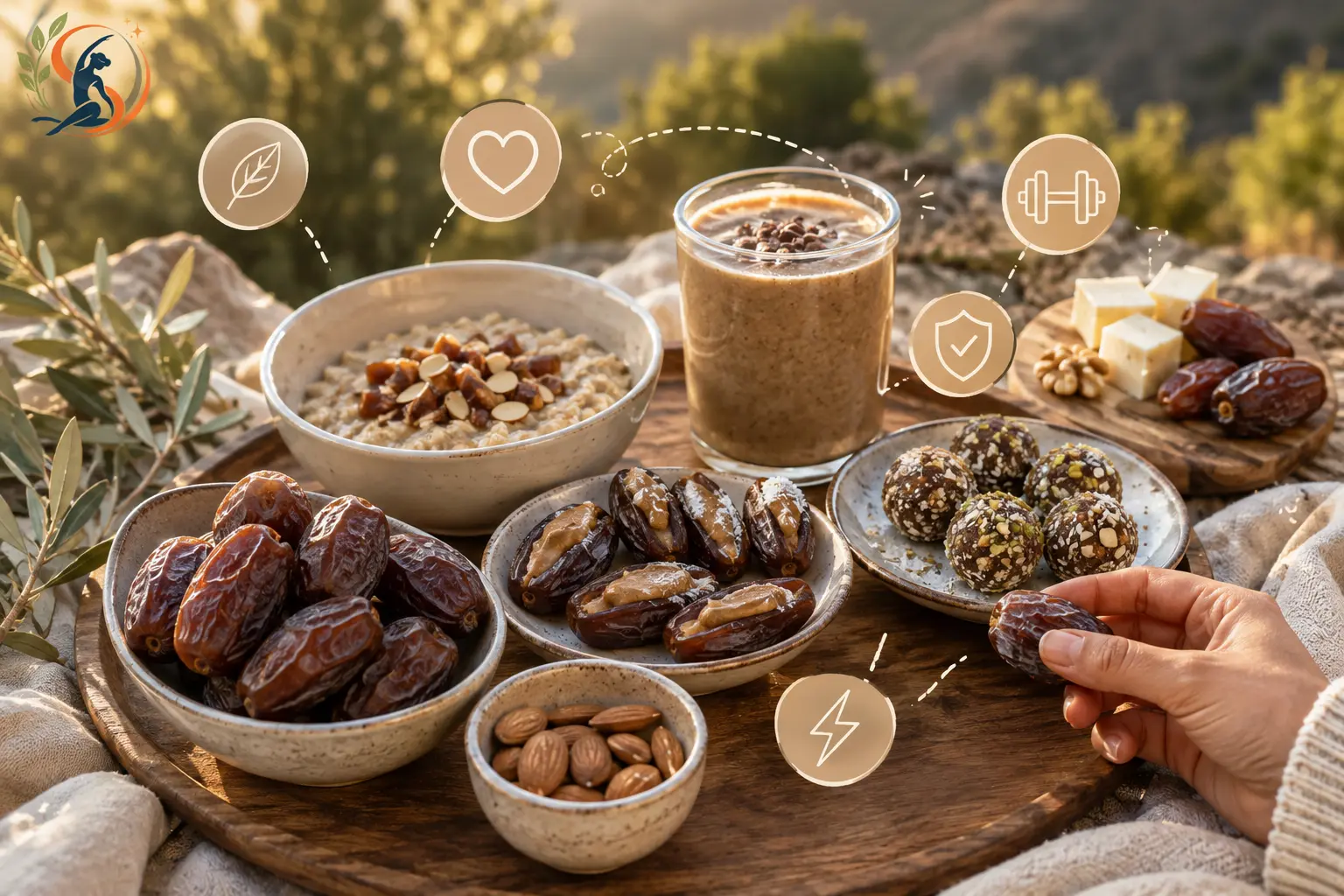
Blend into a date smoothie for natural sweetness
Make date paste as a sugar substitute
Roll into date balls with nuts and seeds
Stuff with almond butter for a quick snack
Chop into oatmeal or overnight oats
Pair with cheese for a sweet salty bite
Rolled into date balls or stuffed with almond butter, they also work well as one of the easier snacks for kids to make together.
Buying and Storing Dates
Finding good dates isn't hard once you know what to look for. Fresh ones should look plump and a little glossy, not dried out or crusty on top, since that usually means they've been sitting around too long. Organic dates are pretty easy to find now too, usually not much pricier than regular ones.
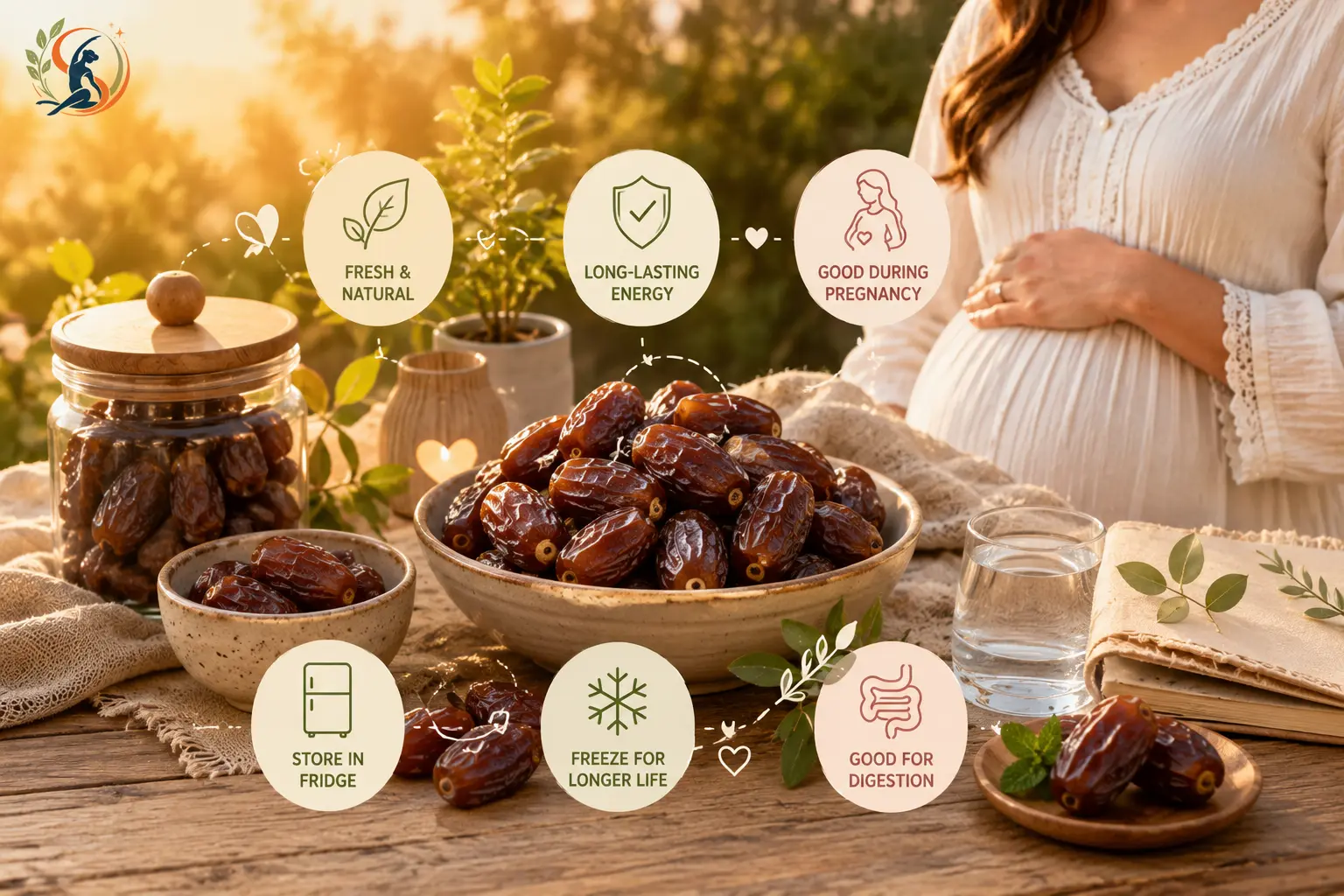
Storage matters more than people think if you want dates to stay fresh. Stored right, dates last a lot longer than most people assume, especially kept away from heat and moisture.
How Long Are Dates Good For
Room temperature, about one month
In the fridge, up to six months
Frozen, up to a year
Do dates go bad? Yep, watch for mold or a sour, fermented smell
Are Dates Good During Pregnancy
Dates and pregnancy comes up a lot, for good reason. Some research suggests eating dates in the last few weeks of pregnancy might help make labor a little easier, thanks to natural compounds that may help prep the cervix. That said, always run it by your doctor first before changing anything in your diet while pregnant. Just to be safe.
Beyond labor stuff, the fiber and minerals in dates also help with common pregnancy digestive issues, so they're worth eating throughout the whole pregnancy, not just near the end.
How Many Dates Should You Eat a Day
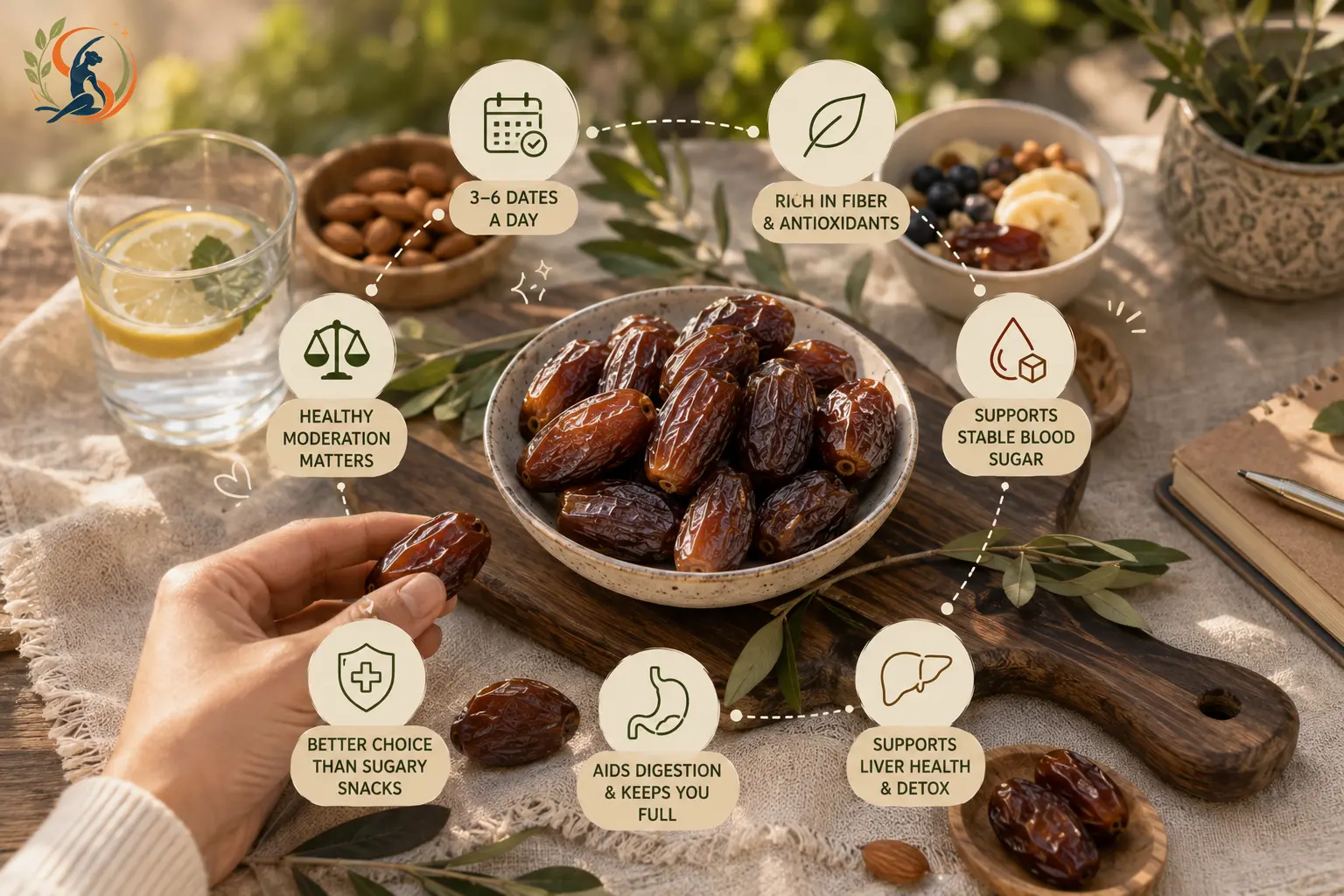
Even with something this healthy, moderation still counts. Most nutritionists say three to six dates a day is a solid range, enough to get real benefits without going overboard on sugar. This number can shift depending on your calorie needs and blood sugar, so if you're managing diabetes, staying on the lower end makes sense.
Dates vs Other Dried Fruit
Compared to raisins or dried apricots, dates usually pack in more fiber per serving, which matters for staying full and keeping digestion smooth. They also don't spike blood sugar as much as people assume, thanks again to that fiber slowing things down. That makes dates a smarter pick than a lot of other dried fruit or those sugary snickers style bars loaded with added sugar.
Dates and Liver Health
This one doesn't get talked about enough. Some early research suggests the antioxidants in dates, certain polyphenols specifically, might help protect liver cells from damage over time. This research is still pretty new and shouldn't replace real medical advice. But it's another reason the nutritional value of dates keeps surprising people who study this stuff.
Dates have actually been used in traditional medicine for ages, specifically for liver and gut health, way before modern science caught up to explain why. That mix of fiber, antioxidants and natural compounds seems to genuinely support how your body detoxes, even if we're still figuring out exactly how.
Nutritious Dates for Weight Management
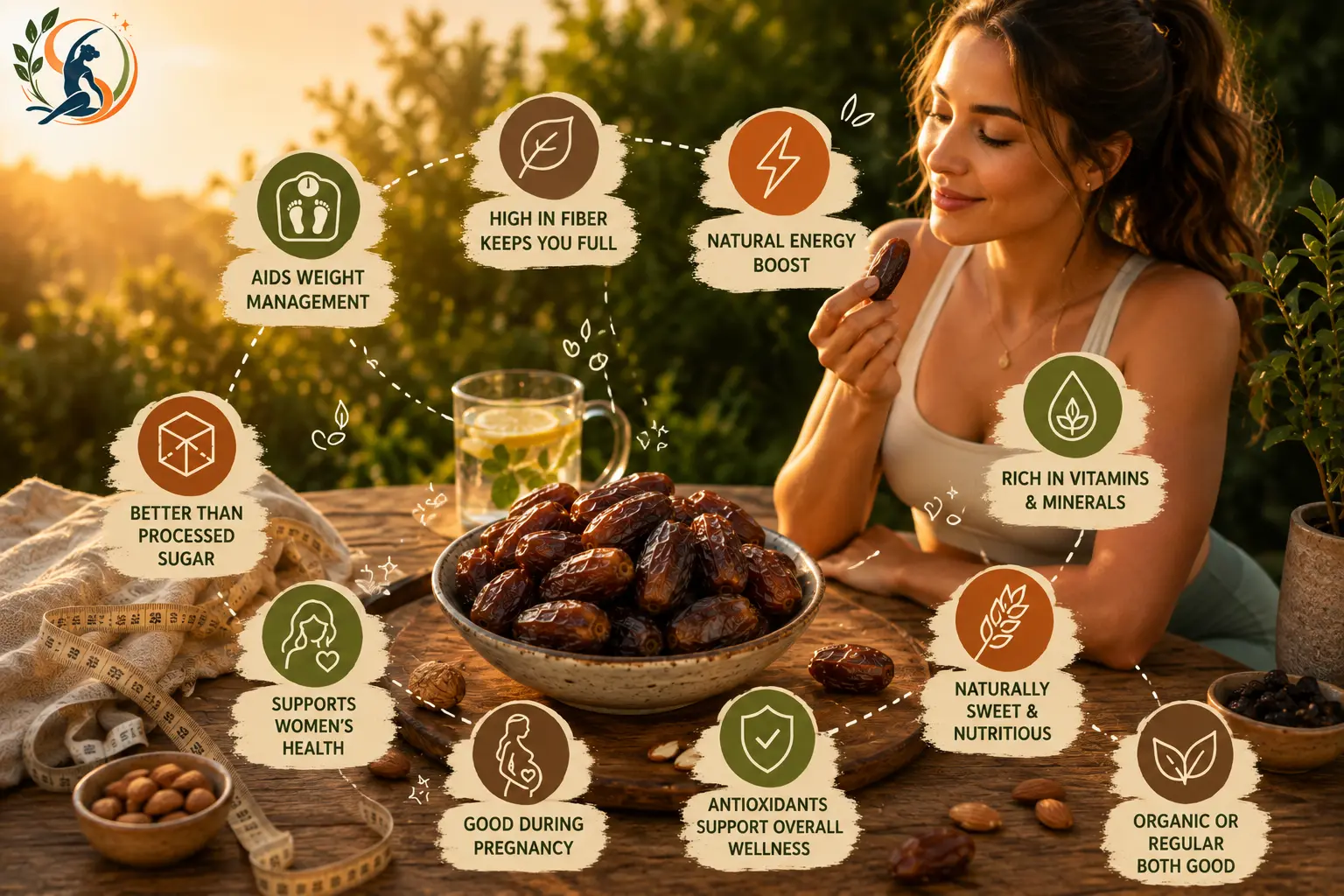
A lot of people assume dates work against weight loss because of their calories and natural sugar. Actually, nutritious dates can help with weight management when you eat them the right way, mostly because the fiber keeps you fuller longer so you're not overeating later.
Swapping processed sweets for a couple dates satisfies a sugar craving while actually giving your body something useful, instead of empty calories that spike and crash. This one swap has helped a bunch of people I know cut back on sugar without feeling like they're missing out, which honestly surprised me too.
Quick Facts on Date Nutrition
People usually want more exact numbers when they look up date nutrition facts, so here's a quick rundown beyond the basics. One date gives you close to 15% of your daily fiber needs, which is pretty impressive for something this small and sweet.
Dates also have small amounts of calcium, phosphorus and zinc, rounding out a nutrient list that punches way above its weight for such a tiny snack. Whether you're checking dates kcal for tracking or just curious what's inside, the numbers back up why this fruit has such a good reputation.
Dates for Women's Health
Benefits of dates for women come up a lot in wellness talk and there's real substance behind it, not just hype. Beyond the pregnancy stuff already covered, the iron in dates can help women dealing with heavier periods, since iron plays a direct role in fighting fatigue from blood loss.
The natural sugar and quick energy also make dates a solid snack during hormonal swings, when sugar cravings hit harder than usual, anyone who's been there knows exactly what I mean. Grabbing a couple dates instead of candy gives you that same satisfaction but with actual fiber and minerals your body can use.
Organic Dates vs Regular Dates
Organic dates are easier to find in stores these days, though the actual nutrition difference between organic and regular dates is pretty small based on most research out there. The main difference usually comes down to pesticide exposure during growing, not any big shift in vitamins, minerals or fiber.
If organic fits your budget and you prefer it, go for it. They're a totally fine choice either way. Focus more on freshness and how you store them than stressing over the organic label, since both types give you basically the same nutritional value of dates regardless.
Are Dates Really High in Fiber
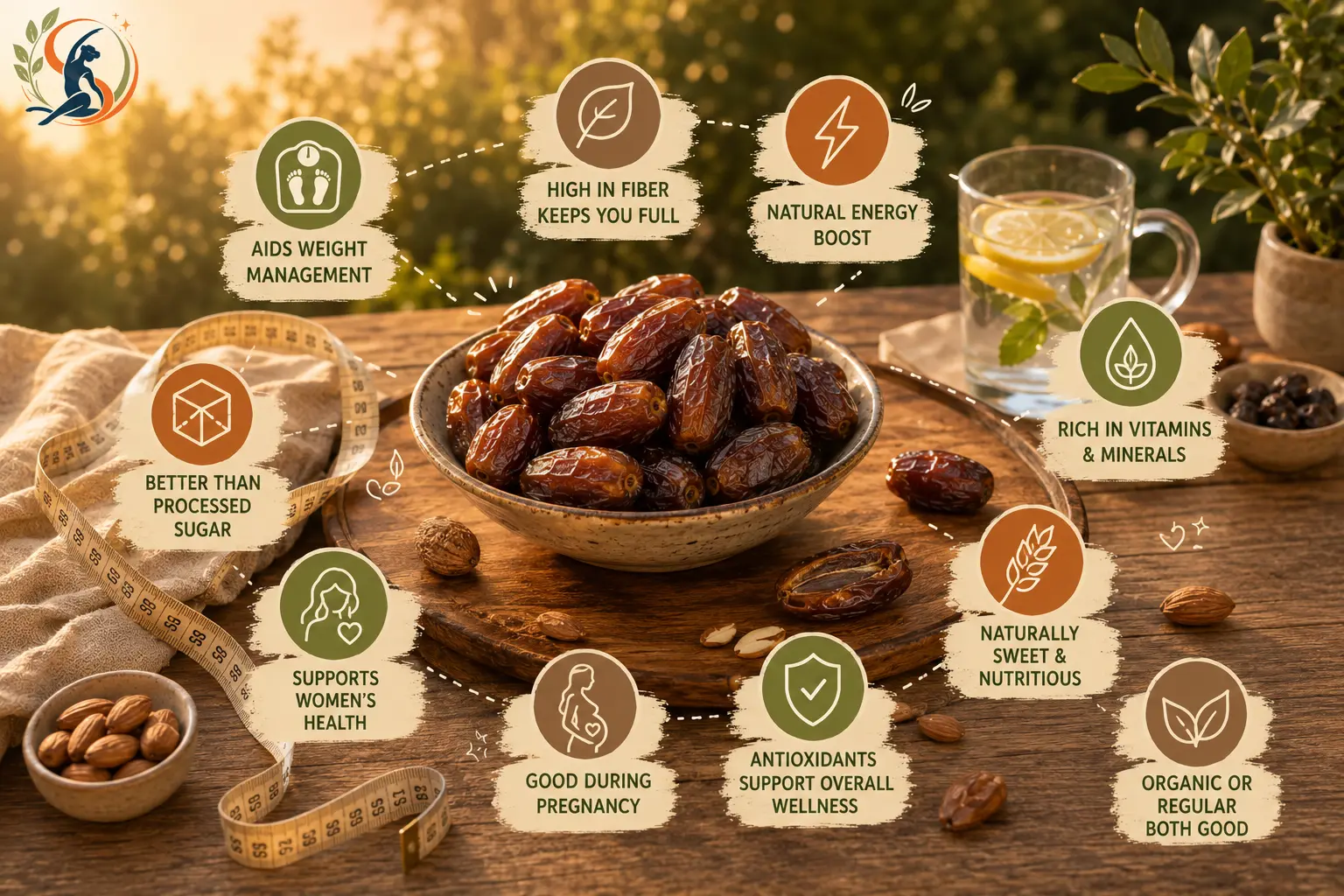
When people ask if dates are high in fiber, yeah, they really are, especially for how small they are. Compare that to an apple, which gives you about 4 grams of fiber and four or five dates can match or beat that while taking up way less room in your bag.
That makes dates a genuinely easy way to hit your daily fiber goal without eating a huge meal. Since most people don't get enough fiber anyway, tossing a few dates into your day, oatmeal, a smoothie or just straight out of the bag, is a simple way to close that gap without much effort.
Dates in Everyday American Cooking
Dates have quietly snuck into a lot of everyday American food over the last decade or so, showing up in energy bars, granola, even coffee shop drinks as a natural sweetener. Makes sense once you know the real nutritional value of dates compared to refined sugar, since you're getting sweetness plus fiber and minerals instead of just empty calories.
A lot of home cooks now swap date paste in for brown sugar in baking, one for one, which cuts down on refined sugar without really changing how the final dish tastes. Date based snack bars have gotten pretty popular too, proof this old school fruit has found a real place in modern American kitchens.
Frequently Asked Questions
1. How many calories are on a date?
One medium date has around 66 calories, though bigger medjool dates run a little higher. That makes dates a fairly calorie dense snack for their size, so keep portions in mind if you're watching your daily calorie intake closely.
2. Are dates good for constipation?
Yes, dates are commonly recommended for constipation thanks to their high fiber and natural sugars that pull water into your gut. Eating a few regularly can help keep your bowel movements healthy and consistent for most people.
3. How many dates should I eat a day?
Most nutritionists suggest three to six dates daily for solid nutritional benefits without going overboard on sugar. Your exact needs depend on calorie goals and blood sugar, so those managing diabetes should stick to the lower end.
4. Are dates a fruit?
Yes, dates are technically a fruit, specifically a stone fruit from the date palm tree. Despite looking dried and chewy, they grow from a flowering plant just like other fruits, which is why they're not the same as candy.
5. Are medjool dates healthy?
Yes, medjool dates are considered healthy, packing fiber, potassium and natural energy with no added sugar. They're bigger though, so they carry a few more calories per date than smaller varieties, so portion size still matters.
6. Are dates good during pregnancy?
Dates are generally considered safe and even helpful during pregnancy, with some research suggesting they may make labor a bit easier later on. They also help with common pregnancy digestive issues, though it's smart to check with your doctor first.
Conclusion
The nutritional value of dates really does live up to the hype as a wholesome, naturally sweet superfood. Loaded with fiber, potassium and antioxidants, dates offer real benefits for digestion and energy, not just a sugar fix. Whether you're dealing with constipation, pregnancy nutrition or just want a healthier snack, a few dates a day can genuinely make a difference. Start small, pay attention to how your body feels and enjoy this old school fruit for the genuinely good, versatile food it is, one sticky bite at a time.


Comments (0)
No comments yet. Be the first to share your thoughts!
Leave a Comment