
Fifteen years teaching this stuff and people still show up expecting their mind to go blank the second they sit down. It doesn't. Not for me, not for anyone I've ever taught, not even for monks who've been at it for forty years. The actual skill is noticing your mind wandering off to a grocery list and bringing it back. That's the whole job.
So here's what this covers. A real guided meditation script you can use tonight. How long beginners should actually sit for, since most people guess way too long and quit by day three. What to do when your brain just won't shut up. And a handful of tools that make it stick past the first week, a body scan, some journaling, visualization, the stuff that tends to get skipped in a rush to just hand someone a script.
Meditation for Beginners: What You Actually Need to Know First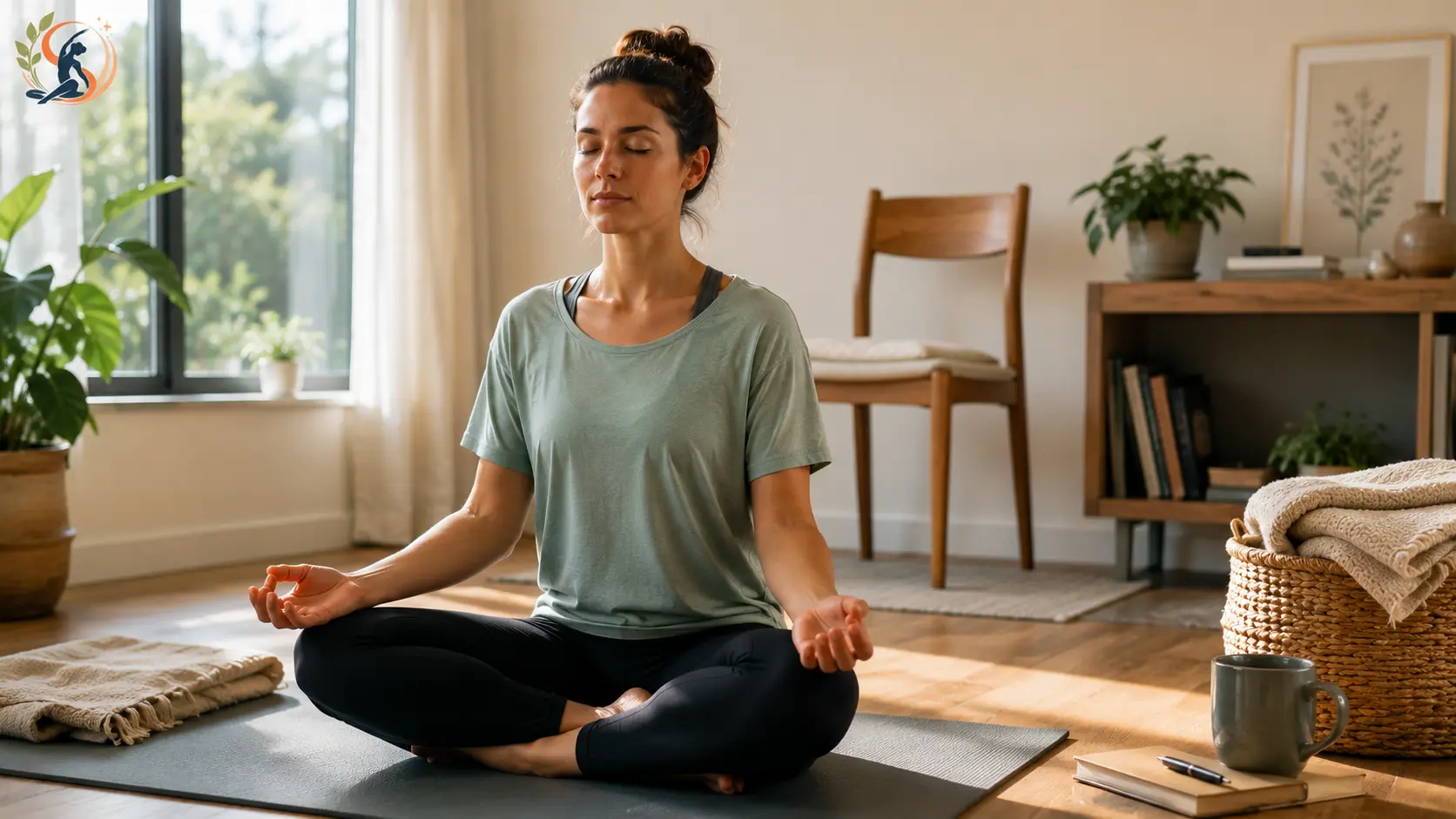
Two things trip up almost every new student I've had and they're both fixable in about thirty seconds.
Mindfulness for Beginners: The Real Starting Point
Mindfulness is just attention, pointed at right now, without grading yourself on it. Your breath. A sound outside. The weight of your hands in your lap. Not tomorrow's meeting, not the thing you said last week that you're still cringing about.
Here's what nobody tells beginners going in. It's not going to feel peaceful right away. Mine didn't. The first few weeks felt more like herding cats than sitting in stillness and that's normal, not a sign you're bad at this.
Meditation Posture: How to Sit Without Hurting Your Back
Posture actually matters, mostly because bad posture turns a ten minute sit into a ten minute fight with your lower back. Spine up, roughly straight, whether you're cross-legged on the floor, sitting in a kitchen chair with feet flat or leaning against a wall for support. Hands wherever they land comfortably. Shoulders down, away from your ears.
No special cushion required. A dining chair does the job. What matters is your spine isn't caving in on itself, since that makes deep breathing harder and falling asleep mid-session a lot easier.
How Long Should Beginners Meditate
Nearly every first-timer asks this and the answer surprises people, mostly because it's shorter than what they'd guessed.
Starting With a 3 Minute Meditation
Three minutes. That's plenty for week one. Set a timer, get your posture sorted, follow the breath for those three minutes and stop. Most people who quit meditation quit because they tried to sit for twenty minutes on day one and hated every second of it, not because the practice failed them.
Building Up to a 15 Minute Meditation
Once three minutes stops feeling like a chore, usually a week or two in, stretch it toward fifteen. No rush required here. Five short sits a week beats one long, dreaded session that only happens when guilt finally kicks in.
A Full Guided Meditation Script for Beginners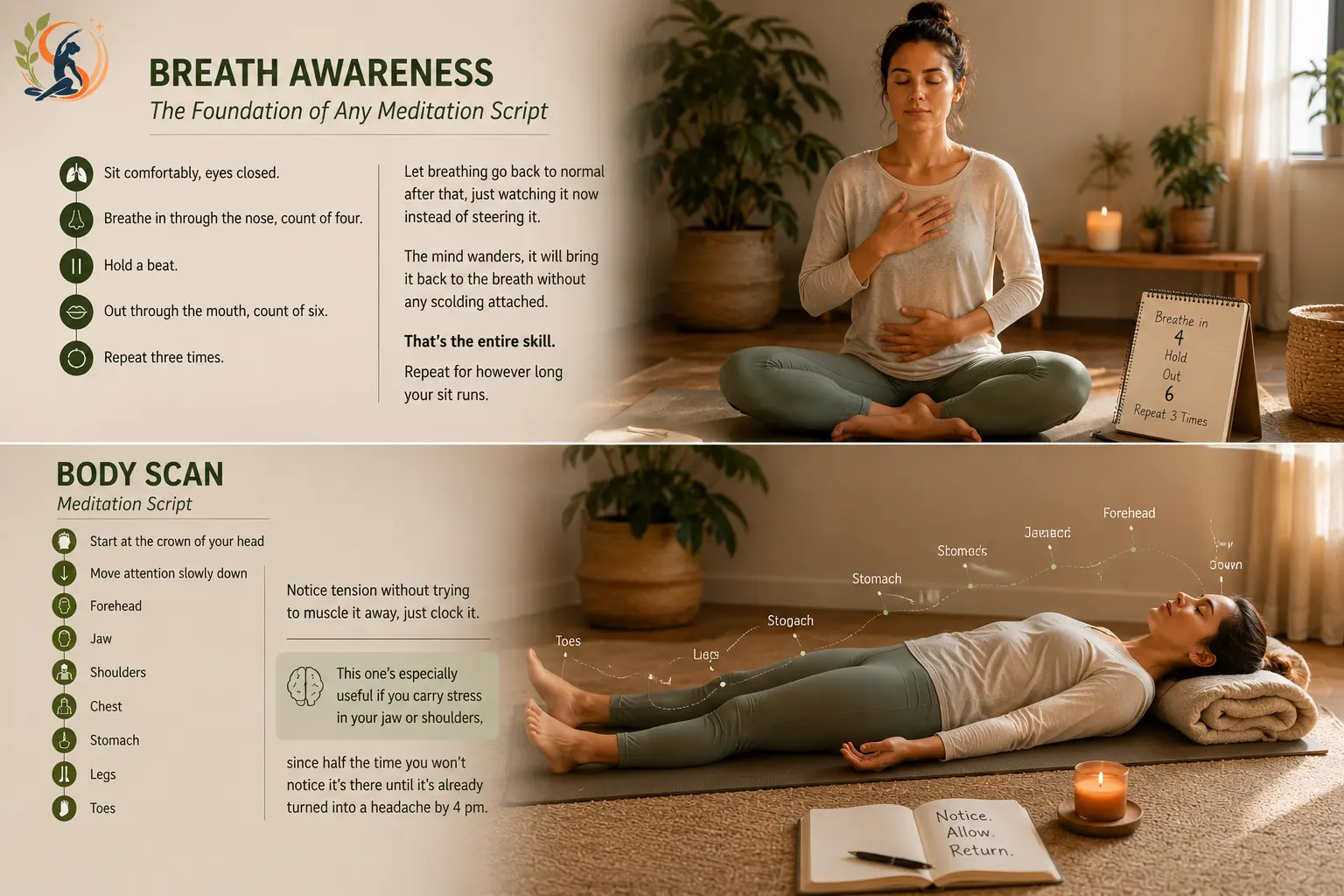
Here's an actual script. Read it slowly. Record yourself reading it if you want or just run through it silently before closing your eyes. Once breath and body-scan basics feel steady, loving kindness meditation adds a compassion-focused layer worth trying next.
Breath Awareness: The Foundation of Any Meditation Script
Sit comfortably, eyes closed. Breathe in through the nose, count of four. Hold a beat. Out through the mouth, count of six. Repeat three times. Let breathing go back to normal after that, just watching it now instead of steering it. The mind wanders, it will bring it back to the breath without any scolding attached. That's the entire skill. Repeat for however long your sit runs.
Body Scan Meditation Script
Once breath feels steady on its own, layer in a body scan. Start at the crown of your head, move attention slowly down, forehead, jaw, shoulders, chest, stomach, legs, toes. Notice tension without trying to muscle it away, just clock it. This one's especially useful if you carry stress in your jaw or shoulders, since half the time you won't notice it's there until it's already turned into a headache by 4 pm.
How Do I Stop My Mind From Wandering During Meditation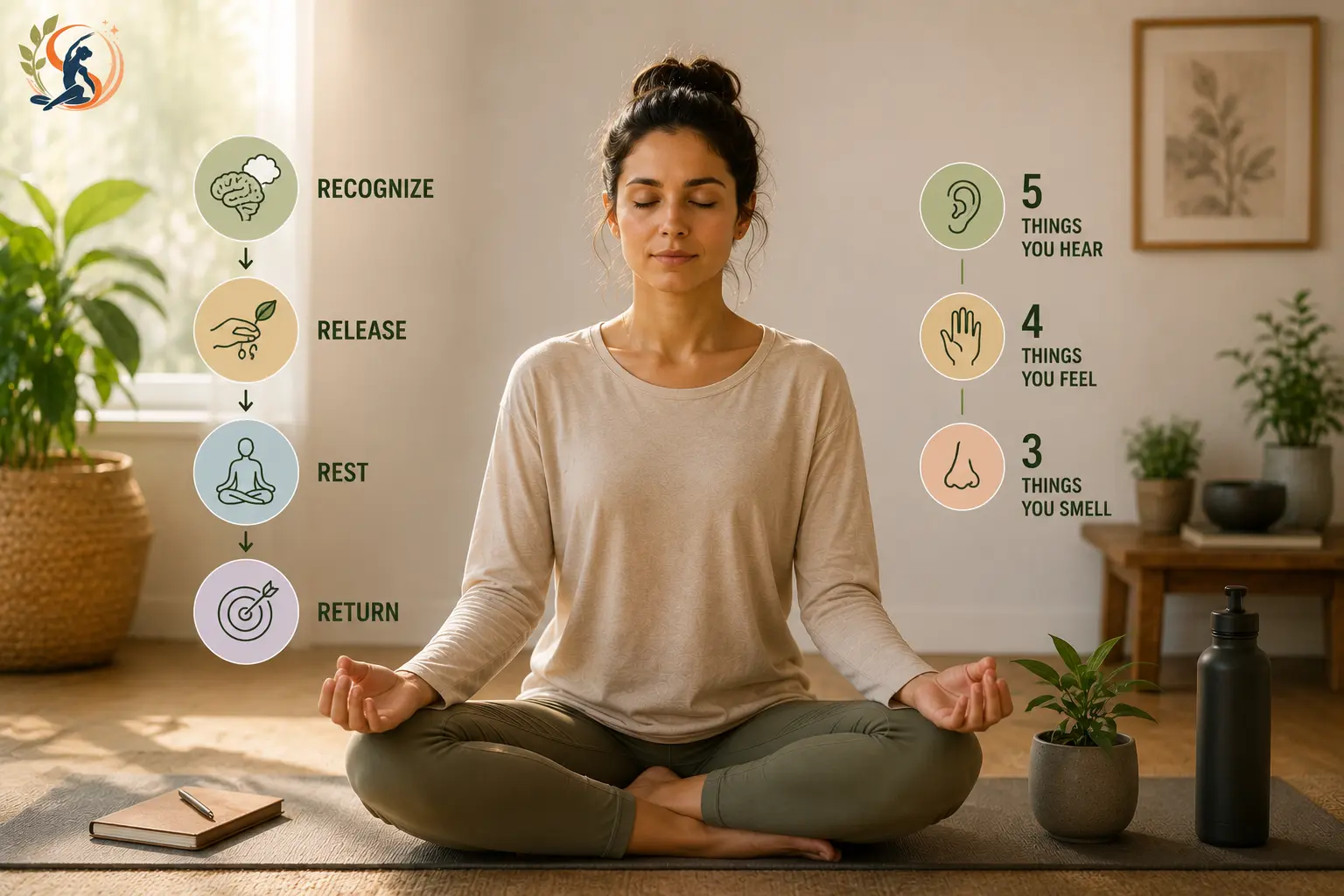
You don't, not fully. You just get quicker at catching it.
The 4 R's of Guided Meditation (And Why There's More Than One Version)
People search this expecting a tidy, single answer and there isn't one, which is worth knowing before you go hunting for "the real version." Different teachers use different sets. One goes Recognize, Release, Rest, Return, spot the distraction, let it drop, settle into the breath, come back to your focus point. Another version runs Resting, Recognizing, Releasing, Returning, same four moves, shuffled order.
It doesn't matter which one you memorize. What matters is the actual motion underneath both, catching the drift, dropping the frustration about it, coming back. Over and over, for the whole sit.
Grounding Meditation for a Busy Mind
On the loud days, grounding works better than fighting your thoughts head-on. Five things you hear. Four things touching your skin right now. Three things you smell. Pulls your attention out of your skull and into the room you're actually sitting in, which beats trying to force a racing mind into silence through sheer willpower.
Mindfulness Meditation Script vs Guided Relaxation Meditation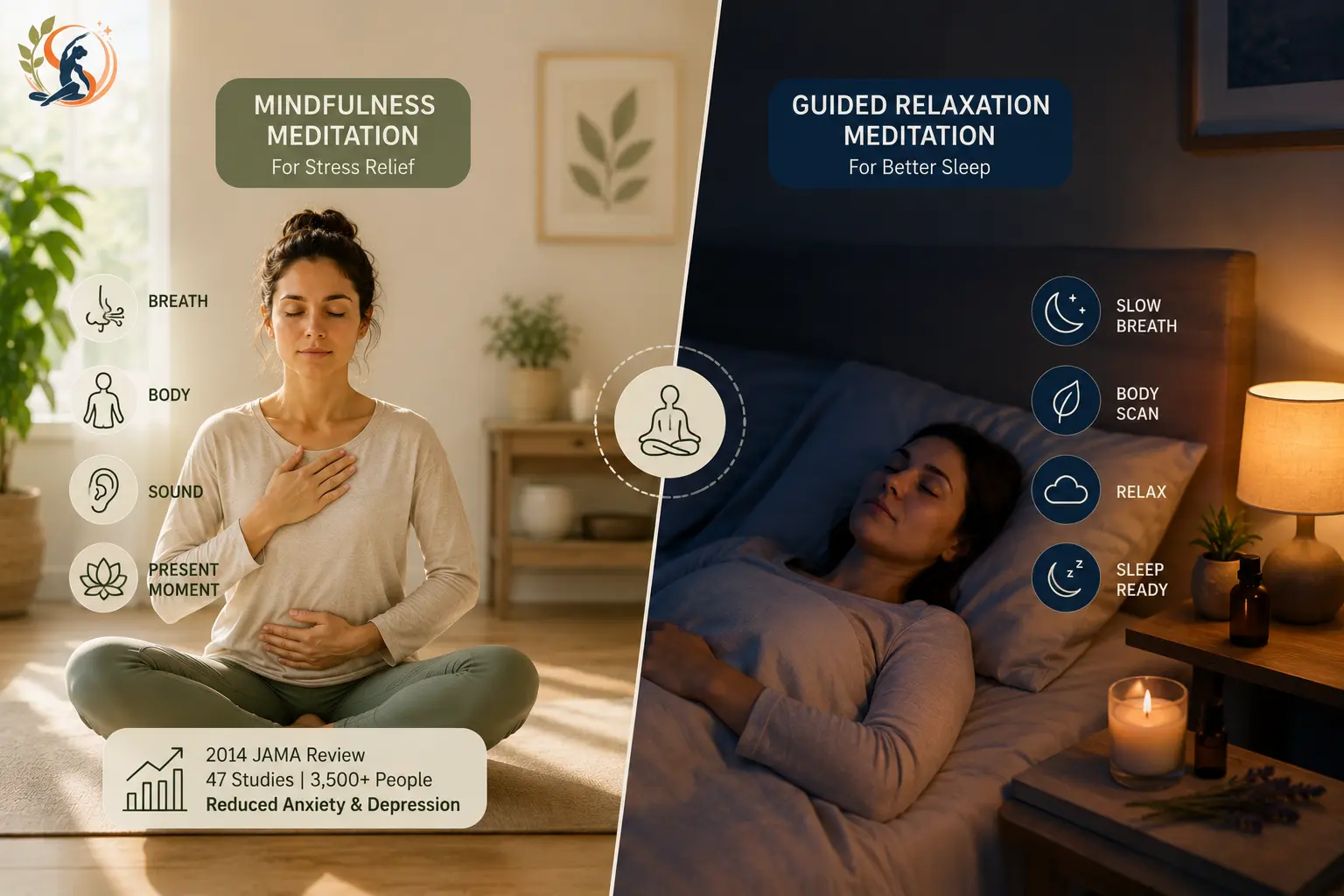
People use these two terms like they're the same thing. They're aimed at slightly different targets.
Guided Mindfulness Meditation for Stress Relief
A mindfulness script keeps you anchored to right now, breath, body, sound, without trying to force your mood to change directly. Works well for stress specifically, since most stress is really just your brain living three days ahead of your actual body.
There's real data behind this too, not just wellness talk. A 2014 review in JAMA Internal Medicine pulled together 47 clinical trials, over 3,500 people total and found moderate evidence that mindfulness programs cut anxiety and depression, landing in roughly the same effect range you'd see from antidepressants for mild to moderate cases. Worth saying plainly: that's not a miracle cure and the same researchers admitted evidence was thinner for things like sleep or attention specifically. But for anxiety and low mood, the numbers hold up. That's not a marketing copy, that's a peer-reviewed finding.
Sleep Meditation Script for Winding Down at Night
A sleep script has a different job entirely, slowing the body and thoughts down enough to actually fall asleep, usually lying flat instead of sitting up. Longer exhales than inhales, a slower body scan, pacing built to wind you down instead of sharpen you up, opposite goal from a daytime focus session.
Visualization and Emotional Healing in Meditation
Past breath and body work, visualization's another tool, particularly good for sitting with hard emotions instead of avoiding them. Readers drawn to that kind of imagery might also want Sahasrara chakra meditation, which uses a similar visualization at the crown of the head.
Visualization Meditation Basics
Picture somewhere calm, a shoreline, woods, a warm light sitting in your chest and go into detail, every sense you can manage. Works because your brain reacts to a vivid imagined scene almost like it's real, which is exactly why a good visualization drops stress in the moment, not just on paper somewhere in a research study.
Emotional Healing Through the Relaxation Response
Harvard cardiologist Herbert Benson coined "the relaxation response" back in the 1970s, describing the physical shift meditation triggers, heart rate down, blood pressure down, breathing slower. A lot of emotional healing through meditation runs through this exact channel, handing your nervous system an actual break from a fight-or-flight state; plenty of people live nearly full time without clocking it.
How to Write a Guided Meditation Script (For Your Own Practice)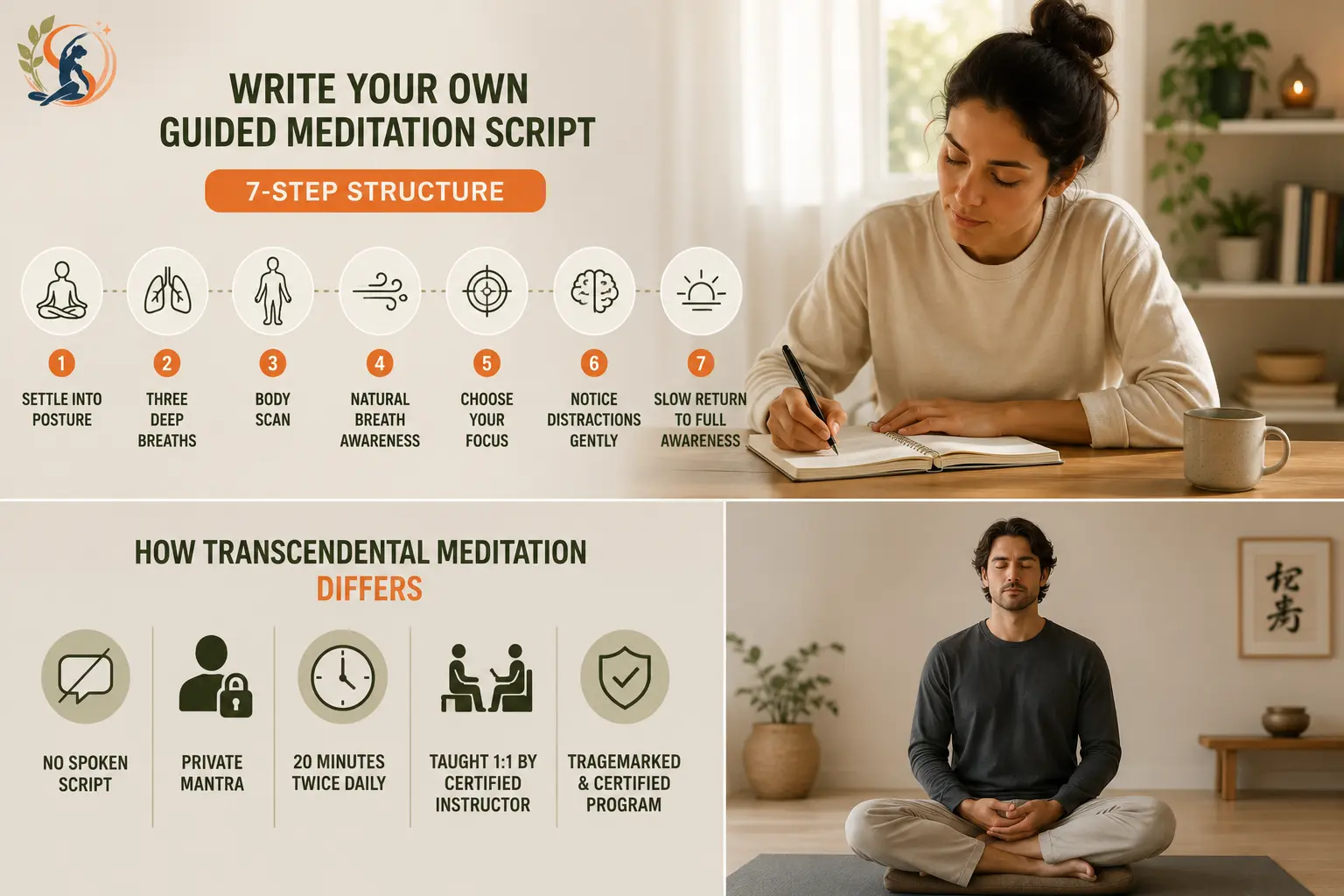
Writing your own is more straightforward than it sounds from the outside.
A Simple 7-Step Structure to Follow
Settle into posture. Three deep breaths. Body scan. Stretch of natural breath awareness. Pick a focus, breath, mantra or a visualization. Notice distractions as they show up, without a fight. Slow return to full alertness before opening your eyes. No official "7 steps" exists that every teacher signs off on, but this sequence covers what almost every script out there includes in some form.
How Transcendental Meditation Differs From a Written Script
TM works differently. No spoken script at all, just a private mantra repeated silently, taught one-on-one by a certified instructor, twenty minutes twice daily. It's trademarked, with its own certification path, unlike the free scripts this whole guide's built around, which need zero formal training to use.
Mindfulness Journal: The Companion Habit Worth Building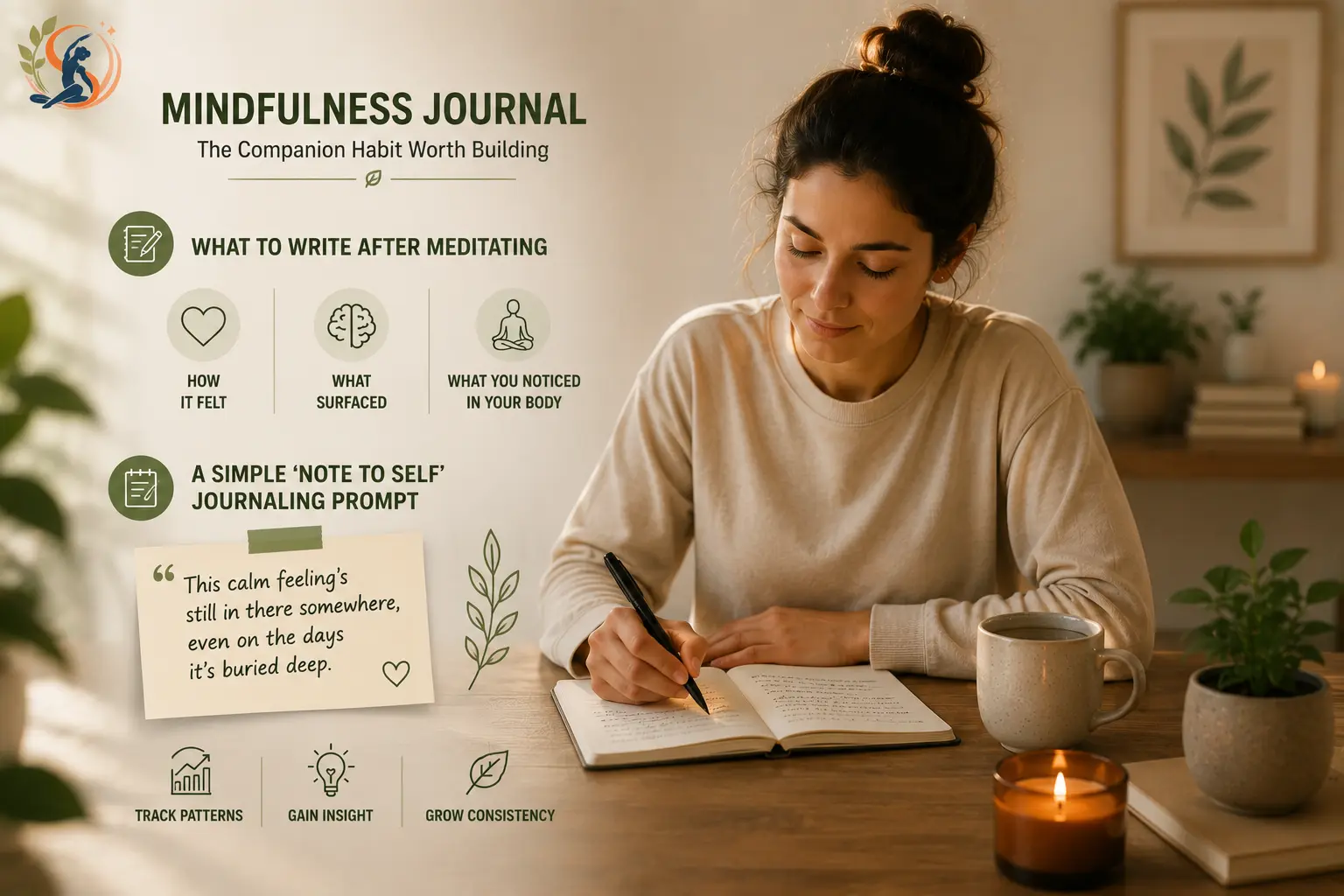
Meditation and journaling reinforce each other and pairing them tends to make both stick.
What to Write in a Mindfulness Journal After Meditating
Keep it simple. A line or two, how the sit felt, what surfaced, what you noticed in your body. That's enough. Over weeks this builds a kind of pattern map, showing which stressors keep resurfacing, information that otherwise vanishes the second you stand up and get back to your day.
A Simple "Note to Self" Journaling Prompt
Try this one. Right after meditating, write a short note addressed to your future self, for a harder day down the road. Something like, "this calm feeling's still in there somewhere, even on the days it's buried deep." Small move, sure. But reading your own past words back on a rough day tends to hit different than advice from a stranger, even good advice.
Frequently Asked Questions
1. How long should beginners meditate?
Start with just 3 minutes a day. Once that feels manageable, usually after a week or two, gradually build toward 10 or 15 minutes. Consistency matters more than length, so several short daily sessions beat one long session done occasionally.
2. What's the correct way to sit for meditation?
Keep your spine reasonably upright, whether cross-legged on a cushion or seated in a chair with feet flat on the floor. Hands rest comfortably, shoulders relaxed. There's no single required position, just one that keeps your back supported without slumping.
3. How do I stop my mind from wandering during meditation?
You don't fully stop it and that's normal. Notice when your attention drifts, then gently return to your breath or focus point without judgment. This noticing-and-returning cycle is the actual skill being built, not a sign you're doing it wrong.
4. What are the 4 R's of guided meditation?
There isn't one single official version. Common frameworks include Recognize, Release, Rest, Return or Resting, Recognizing, Releasing, Returning. Both describe the same basic cycle, noticing a distraction, letting it go and returning attention to your breath or focus.
5. What are the 7 steps of meditation?
No single official list exists, but a common structure includes settling into posture, deep breaths, a body scan, breath awareness, a chosen focus point, acknowledging distractions and a slow return to alertness. Most guided scripts follow some version of this sequence.
6. What is 11:11 meditation?
This refers to a popular belief that seeing repeating numbers like 11:11 is a spiritual sign or prompt to pause and reflect. Some people use the moment as a cue for a brief mindful breath or intention-setting, though it's rooted in numerology rather than a formal meditation technique.
Conclusion
Meditation for beginners comes down to two things. Show up consistently. Go easy on yourself when your mind wanders anyway, because it will, every time, forever and that's fine. A short script, a few minutes of breath work, maybe a quick line in a journal after, covers most of what actually matters. Start with three minutes. Build from there. The rest tends to take care of itself, one sit at a time.


Comments (0)
No comments yet. Be the first to share your thoughts!
Leave a Comment