
The first time someone told me to "send love to a difficult person" during meditation, I almost laughed out loud. Sounded a bit much, honestly, like something out of a self-help poster. But a few weeks into actually trying it, something shifted. Not some dramatic, lightning-bolt moment. Just quieter. Less tight in the chest by the end of the day, if that makes sense.
That's loving kindness meditation, also called metta meditation, in a nutshell. It's an old practice, way older than most of the wellness trends floating around right now and it's simple enough that you don't need years of training to start tonight. This guide walks through where it comes from, what the actual research says about it, how to practice it step by step, a full loving kindness meditation script for beginners and a few related practices worth knowing if you want to go deeper into Eastern meditation traditions.
What Is Loving Kindness Meditation (Metta)

Metta is a Pali word and it roughly means goodwill or warm friendliness toward everyone, no exceptions. Loving kindness meditation is the practice of directing that feeling toward yourself, then toward other people, on purpose, using repeated phrases. That's really the whole idea. Compassion meditation, said out loud or silently, over and over, until it starts to feel a little less forced and a little more true.
Where Metta Meditation Comes From
This practice traces back to early Buddhist teaching, over two thousand years old at this point, which is honestly wild to sit with for a second. Picture a monk meditating under a tree, working through the same handful of phrases day after day, year after year.
That image of the Buddha meditating and teaching metta to his students is basically where all of this started. It wasn't originally a stress-relief technique the way we'd think of one now. It was a way of training the mind toward kindness on purpose, since kindness doesn't always show up on its own, no matter how much we'd like it to.
Why People Practice Compassion Meditation
People come to metta for all kinds of reasons. Some want less anxiety. Some are working through anger toward a specific person, maybe someone they haven't fully forgiven yet. Some just want to like themselves a bit more, which, honestly, is a bigger ask for most people than it sounds like on paper. Loving-kindness practice has been studied for exactly this reason and the research backs up a lot of what people say anecdotally, which we'll actually get into properly in a minute. Some people specifically reach for these phrases before a stressful event see meditation for interview prep for that exact use case.
What Science Actually Says About Loving Kindness Meditation
This part gets skipped in a lot of beginner guides and that's a shame, because the data here is genuinely interesting, not just wellness-blog fluff.
The Study That Started It All
In 2008, psychologist Barbara Fredrickson and her colleagues ran a field experiment with 139 working adults at a software company. Half were randomly assigned to start a daily loving-kindness meditation practice for seven weeks, the other half didn't. The results were pretty striking. The group practicing metta showed steady increases in daily positive emotions, things like joy, gratitude, contentment, hope and even awe and those increases kept building the longer people stuck with it.
More importantly, those extra positive emotions translated into real personal resources over time: better mindfulness, a clearer sense of purpose, stronger social support and fewer physical illness symptoms. This wasn't a one-off feel-good result either. It's one of the most cited pieces of loving kindness meditation research out there.
It's Not Just a Feeling, It Shows Up in Behavior Too
A separate study from Hutcherson, Seppala and Gross found that even a single, very short loving-kindness session, just a few minutes long, measurably increased how socially connected people felt toward complete strangers. Not people they knew. Strangers. That's a meaningful finding, because it suggests metta isn't only working on your internal mood, it's actually shifting how warmly you view people you've never met, almost immediately.
There's also a smaller but interesting pilot study from Carson and colleagues that tested loving-kindness meditation with people living with chronic low back pain. Participants who practiced LKM reported less pain and less psychological distress by the end of the trial. That's a pretty different use case from "feeling calmer," and it points to something worth knowing: this isn't just an emotional exercise. There's a physical dimension too, even if researchers are still working out exactly why.
How Do You Practice Metta Meditation (Step by Step)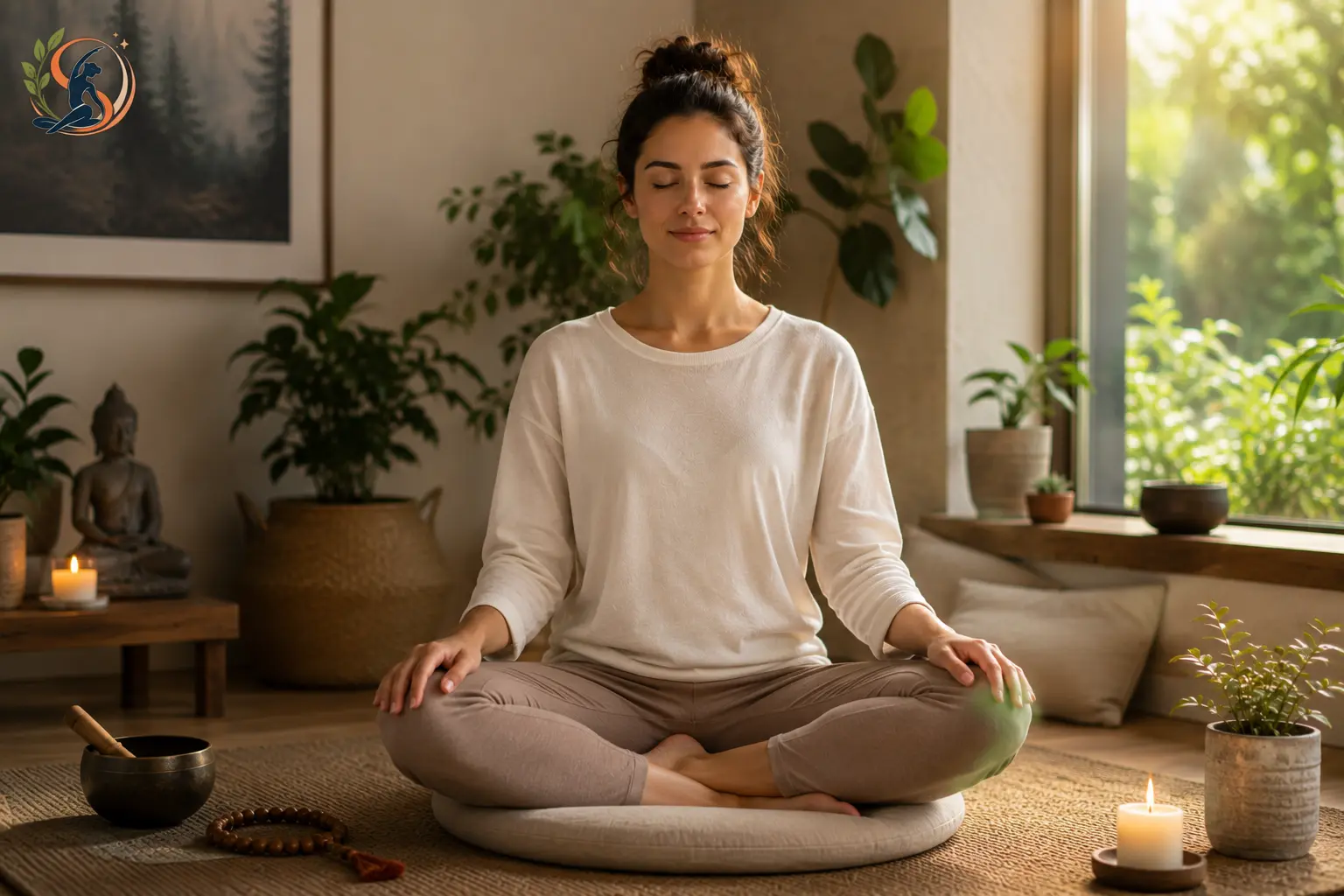
People ask this constantly and the honest answer is, it's simpler than it looks on paper. You sit, you breathe, you repeat some phrases silently. That's most of it, really.
Getting Your Body Ready
Posture matters more than people expect and this is where it overlaps a bit with zen meditation, zazen posture and technique. You don't need a cushion or special training to get this right. Sit with your spine reasonably straight, shoulders relaxed, hands resting in your lap or on your knees.
In zazen, practitioners often sit cross-legged with a straight back and a soft, downward gaze, almost half-closed eyes. You can borrow that same steadiness for metta without copying the exact zazen posture and techniques move for move. The point is a body that's alert, not stiff and definitely not slouched over a phone.
Breath Awareness Before You Begin
Give yourself thirty seconds, maybe a minute, of plain breath awareness before jumping into any phrases. In through the nose, out through the mouth or nose, whatever's comfortable for you. This isn't complicated and it's not some separate skill you need to master first. It's just a way of letting your nervous system know you're about to slow down for a few minutes, so it stops bracing for the next thing on your list. Readers newer to sitting practice altogether might want to start with this guided meditation script for beginners first.
A Full Loving Kindness Meditation Script for Beginners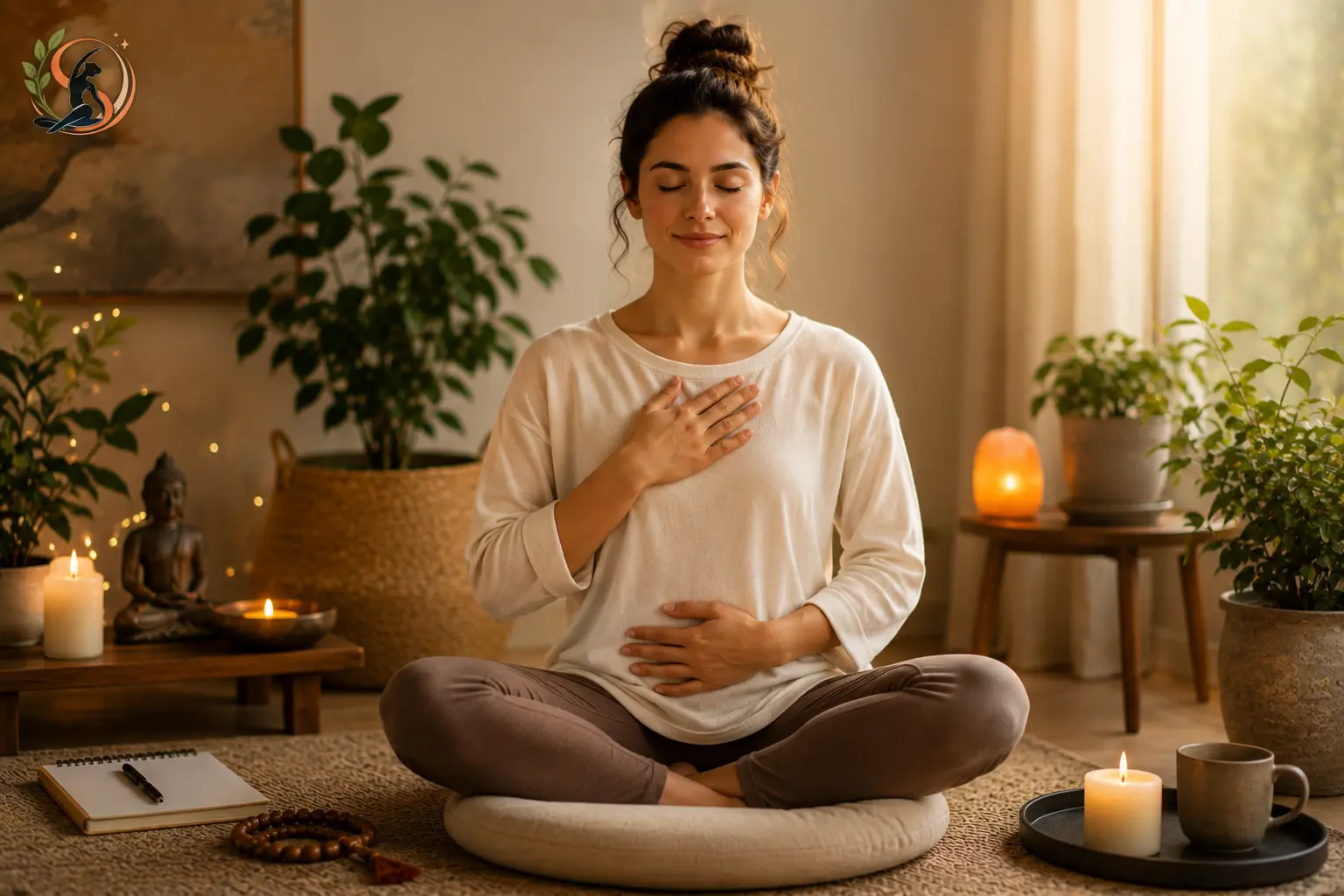
Here's an actual metta meditation script you can use today, tonight even. Read it slowly. Out loud is fine if you're alone, silently is fine too, whatever feels less awkward.
Metta Meditation Script for Yourself
Start here, always, even though it's tempting to skip straight to other people. Sit comfortably, close your eyes and silently repeat: "May I be safe. May I be happy. May I be healthy. May I live with ease." Say each line slowly and let a few seconds of quiet sit between each one, no rush. This part trips people up sometimes, because directing kindness at yourself can feel strange, even a little embarrassing, at first. That reaction's completely normal. Keep going anyway.
Metta Meditation Script for Loved Ones, Neutral People and Everyone
Once the phrases for yourself feel a bit steadier, bring someone you love to mind. Picture their face clearly. Repeat: "May you be safe. May you be happy. May you be healthy. May you live with ease." Then move to someone neutral, a cashier, a neighbor you barely know, someone whose day you know nothing at all about. Same four lines. Then, if you're ready for it, bring to mind someone you find genuinely difficult.
This is the hard part of any love and kindness meditation and nobody gets through it painlessly the first handful of times. Finally, widen it out to everyone, everywhere: "May all beings be safe. May all beings be happy. May all beings be healthy. May all beings live with ease." That's the full metta loving kindness meditation, start to finish and it usually runs somewhere between ten and twenty minutes depending on how long you linger at each stage.
Metta Prayer and Mantra Meditation Technique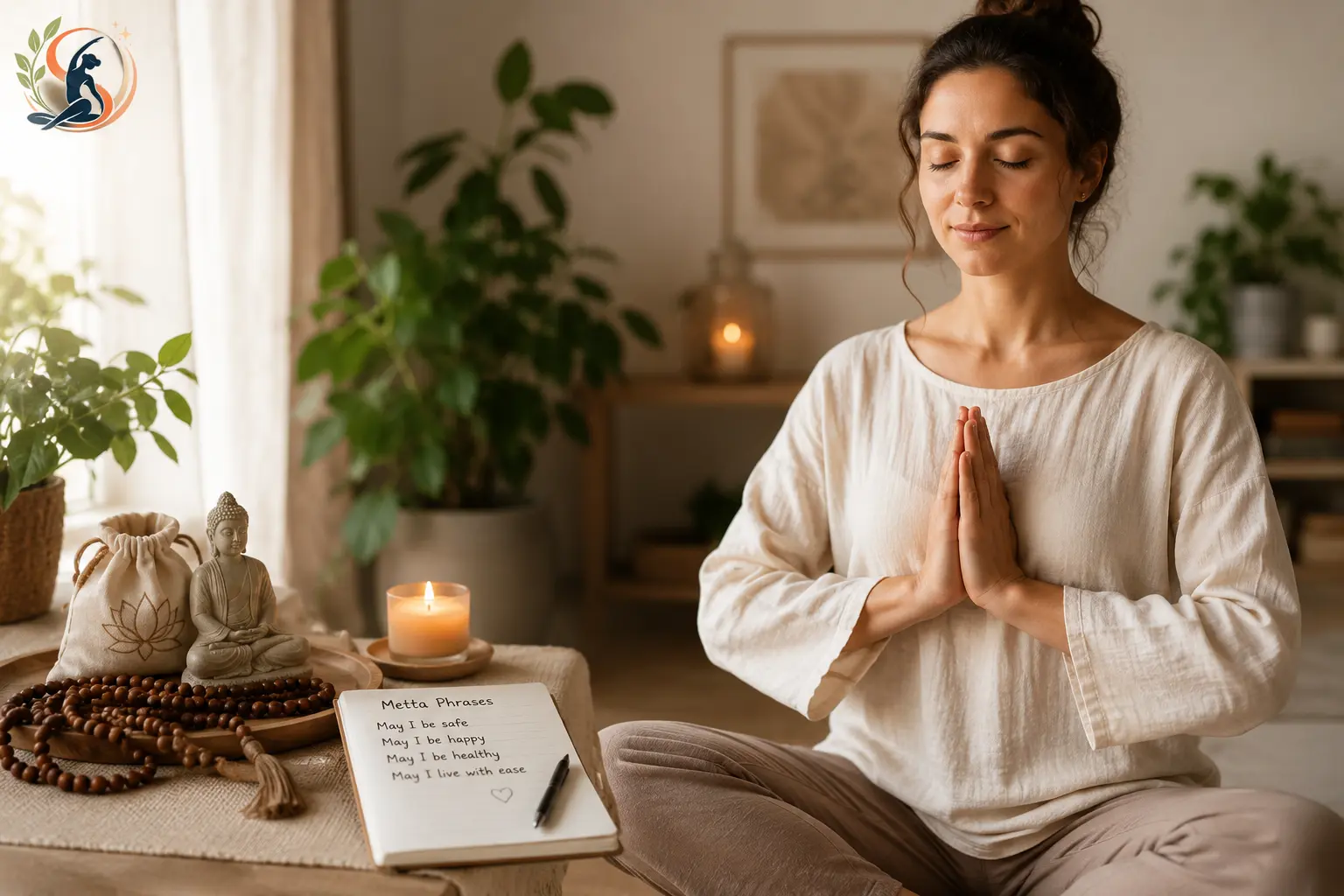
Some people treat these phrases almost like a metta prayer, less like a script to get through quickly and more like something you return to daily, the way you'd return to any mantra meditation technique, rain or shine.
Using Mala Beads for Metta Repetition
If you've ever wondered how to use meditation beads mala, this is a natural place to bring them in. A mala usually has 108 beads, strung on a loop. You hold one bead between your thumb and finger for each repetition of your phrase, moving to the next bead as you go, working your way slowly around the whole strand.
It gives your hands something to do, honestly a small relief and it keeps count without you having to think about numbers while your mind's busy with the actual meditation itself. Plenty of people find this steadiness a wandering mind far better than sitting there with empty hands.
Hand Positions During Loving Kindness Practice
You'll sometimes see meditators sitting with hands together, fingers pointing upward, palms lightly touching near the chest, almost like a quiet prayer position. This hands together fingers pointing meditation posture isn't required for metta, not even close, but plenty of people find it helps anyway. It's a small physical cue that says, this moment is about kindness and calm, not about scrolling a phone or figuring out what's for dinner.
Tonglen Meditation: The Compassion Practice That Pairs With Metta
Tonglen is a Tibetan Buddhist practice and it's basically metta's more intense sibling. Where loving kindness meditation sends good wishes outward, tonglen meditation asks you to breathe in someone else's pain and breathe out relief for them, which sounds backwards until you actually try it.
What Tonglen Meditation Is Used For
Tonglen gets used specifically when someone's dealing with grief, illness or another person's visible suffering, situations where simply wishing someone well starts to feel a bit thin, almost too easy. On the in-breath, you imagine taking in someone's pain as a heavy, dark cloud. On the out-breath, you send back warmth, spaciousness, relief. It sounds almost backwards compared to most meditation, breathing in something hard on purpose, but that's really the whole point of it. It builds a kind of emotional courage that plain metta doesn't always ask for.
How Tonglen Differs From Loving-Kindness Practice
Metta is mostly about wishing well from a bit of a safe distance. Tonglen is about actively taking on discomfort, if only in imagination and transforming it into something usable. Beginners usually start with metta first, since it's gentler and less confronting and move to tonglen once sitting with someone else's pain feels less overwhelming. Most teachers suggest not skipping straight to tonglen if you're brand new to any of this and honestly, that's fair advice.
Other Contemplative Practices Worth Knowing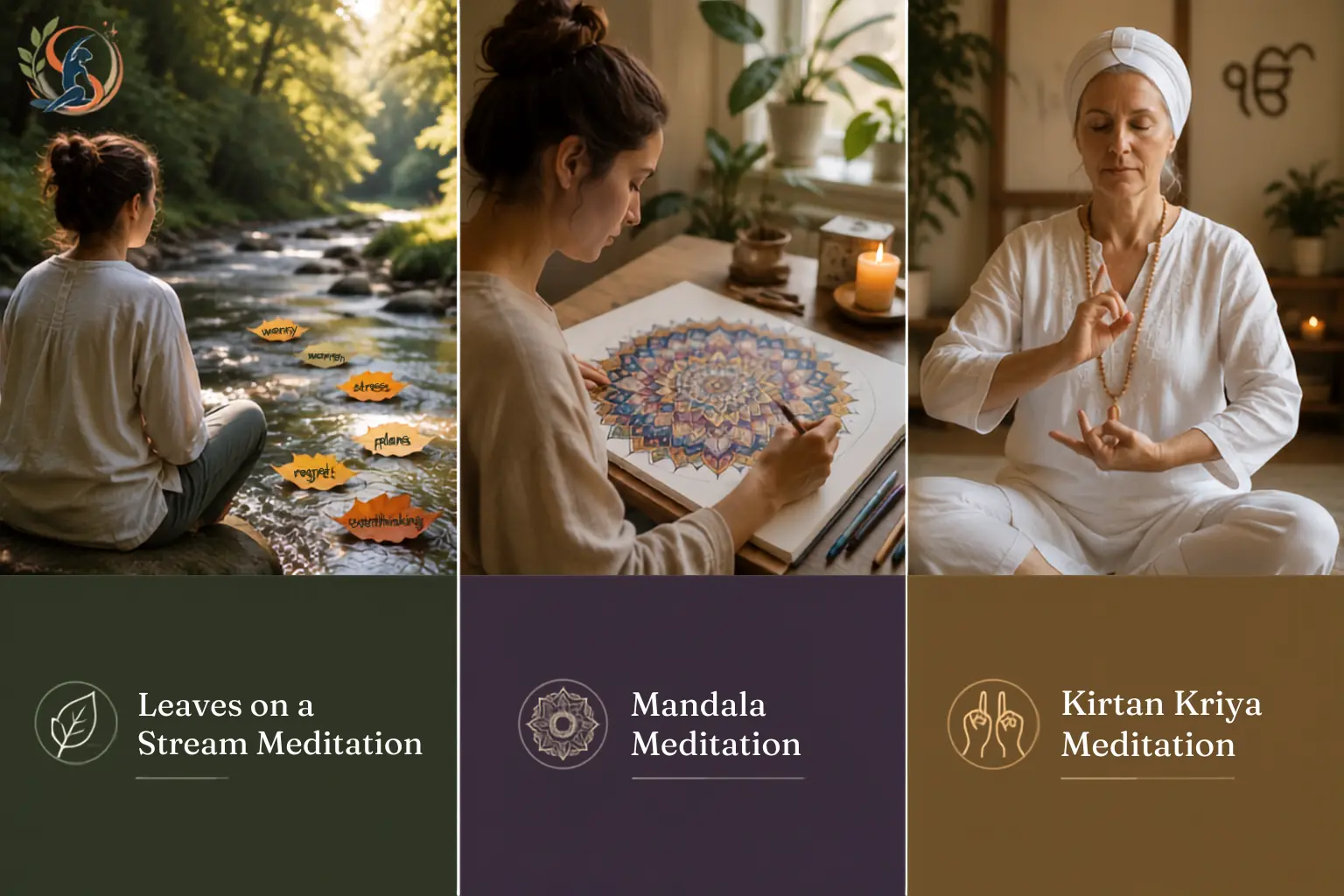
Once metta starts to feel familiar, a lot of people get curious about other approaches within Eastern meditation traditions and beyond. Here are a few worth knowing about, even if they're not part of your daily loving kindness meditation script.
Leaves on a Stream Meditation
This one comes from a different lineage entirely, more modern, more Western in its framing. You imagine sitting by a stream and every thought that pops into your head gets placed on a leaf and watched as it floats away, downstream, gone. It's less about compassion and more about learning not to grab onto every single thought that shows up in your head. Good for busy, anxious minds that struggle to sit still with plain breath awareness alone.
Mandala Meditation
Mandala meditation uses a circular, symmetrical pattern as a focus point, either one you look at or one you draw slowly by hand. The idea is that following the pattern with your eyes or building one bit by bit, settles a scattered mind in a way that sitting with eyes closed sometimes just can't manage. It's popular in both Buddhist and Hindu contexts and it works well for people who find total stillness genuinely, actually hard.
Kirtan Kriya Meditation
Kirtan kriya comes out of Kundalini yoga and it combines a repeated mantra, usually "Sa Ta Na Ma," with specific finger movements and, often, visualized light moving through the head. It's a mantra meditation technique, sure, but a much more active one than sitting quietly with metta phrases. Some research has looked at it specifically for memory and cognitive health in older adults, which is a slightly different angle than most compassion meditation research tends to take.
Common Mistakes Beginners Make With Loving Kindness Meditation
A few things trip people up early on and it's worth naming them so you don't think you're doing it wrong when you're actually doing it just fine.
Rushing the Self-Compassion Step
Skipping straight to loved ones because sending kindness to yourself feels awkward is probably the single most common mistake. Don't skip it, tempting as it is. The self-directed phrases are the foundation the rest of the practice sits on and rushing past them usually just means the difficult-person stage later on feels shakier than it needs to.
Expecting Instant Results
Metta meditation isn't a switch you flip. Fredrickson's research took seven full weeks to show its biggest effects and most people notice small shifts over weeks, not minutes. If your first session doesn't feel life-changing, that's completely normal, not a sign you're doing something wrong.
Frequently Asked Questions
1. What is tonglen meditation used for?
Tonglen is used to build compassion for someone who's suffering, often during grief or illness. On the in-breath, you imagine taking in their pain. On the out-breath, you send back relief and warmth. It's an intense compassion meditation, usually practiced after some experience with metta first.
2. How do you practice metta meditation?
Sit comfortably, breathe naturally and silently repeat phrases like "May I be happy, may I be safe, may I be healthy, may I live with ease." Start with yourself, then move to loved ones, neutral people, difficult people and finally everyone. Ten to twenty minutes is typical.
3. What's the difference between Zen and mindfulness meditation?
Zen meditation or zazen, is a specific Buddhist tradition with set posture, breathing and often a teacher-guided lineage behind it. Mindfulness meditation is broader and less tied to one tradition, focused mainly on present-moment awareness. Zazen sits technically within that wider mindfulness umbrella, not outside it.
4. Can beginners do loving kindness meditation without a teacher?
Yes, plenty of people learn it entirely from a script or app, no teacher involved at all. The phrases are simple and repetition does most of the heavy lifting over time. A teacher helps later with deeper questions, but isn't required for real benefit from a basic beginner practice.
5. How long should a beginner practice metta meditation each day?
Ten minutes a day is a solid starting point and consistency matters more than length. Research on this practice often uses sessions of similar length over several weeks before big changes show up. Short daily sessions tend to build the habit faster than occasional long ones people skip.
6. Is loving kindness meditation religious or can anyone practice it?
It comes from Buddhist tradition, but the practice itself doesn't require any particular belief system to work. Plenty of secular, non-religious people practice metta purely for the documented mental health benefits, treating the phrases as a mental exercise rather than a religious ritual of any kind.
Conclusion
Loving kindness meditation isn't complicated, even though it can feel a little strange the first few times you try it, especially the part where you're wishing yourself well out loud. A script, a few repeated phrases, some patience and it turns out actual research backs up why this stuff works over time, not just word of mouth. Whether you stick with basic metta, add mala beads into the mix or eventually work your way toward tonglen, the direction stays the same. A little more kindness, aimed first at yourself, then out toward everyone else, one quiet session at a time.


Comments (0)
No comments yet. Be the first to share your thoughts!
Leave a Comment