
Fifteen years coaching people through their first months in a gym and the fear is always basically the same one, no matter who walks in. Rows of machines nobody bothered explaining. Weights that feel too heavy one day and somehow too light the next. That nagging sense that everyone else in the room is watching and judging, when really they're all too busy worrying about the exact same thing to notice you at all.
So here's the walkthrough I'd actually hand a new client on day one, start to finish, no skipped steps. What to throw in your gym bag. What to eat beforehand so you're not running on empty by set three. A full gym machine workout routine is broken down machine by machine, because almost nobody explains those properly either.
And real answers, backed by actual research rather than gym-bro folklore, to the two questions I get asked more than any other combined, can you gym seven days a week and what does a genuinely solid three day gym routine look like once you cut out the noise.
Before Your First Workout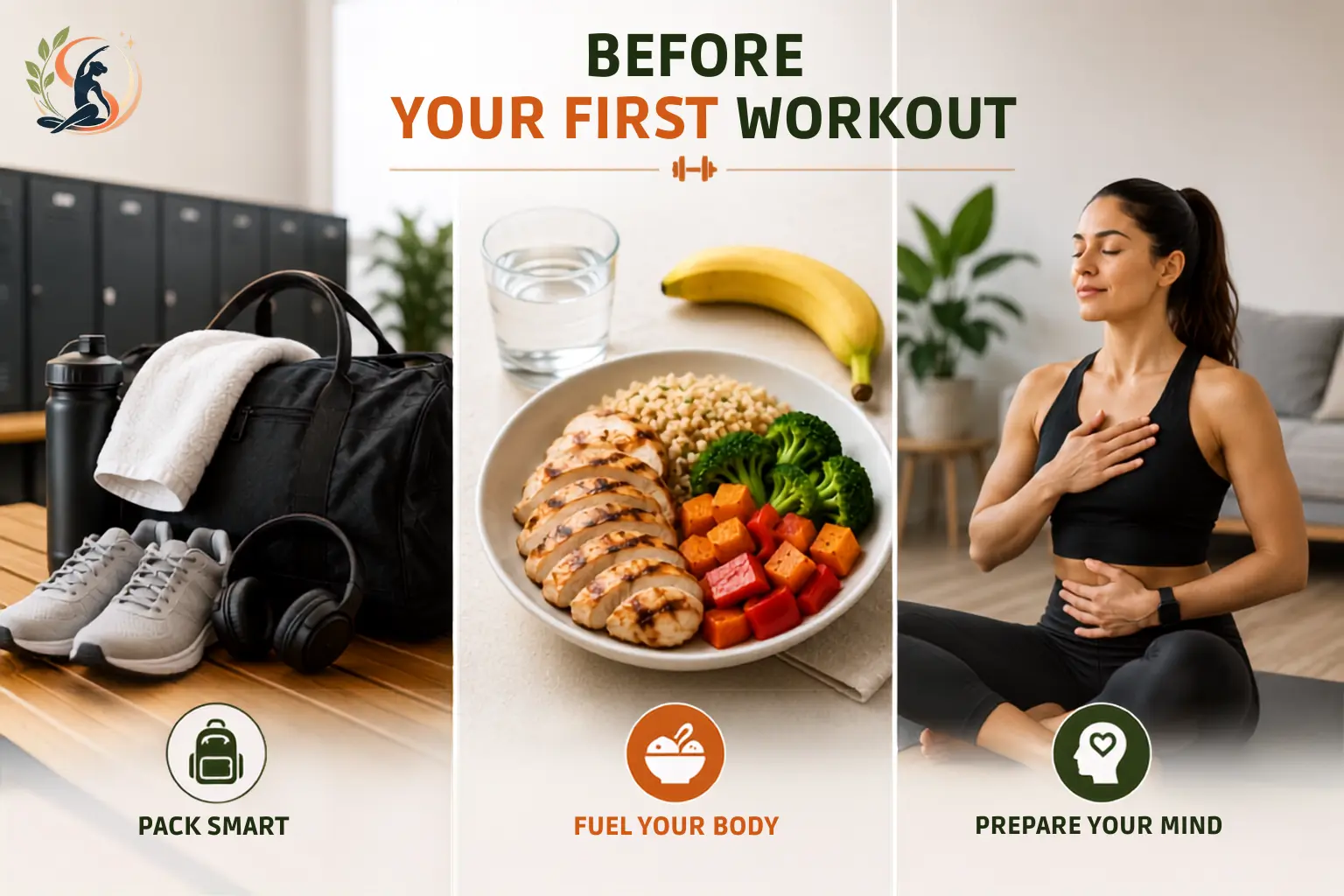
Most of the anxiety around gym exercises for beginners gets solved before you even walk through the front door, if you handle a few things ahead of time.
What to Pack in Your Gym Bag
Water bottle, sweat towel, shoes you're not also wearing to run errands afterward, a change of clothes if you've got somewhere to be next. Headphones. A lock if your gym's got lockers. Deodorant, obviously. Once you've got a few weeks under your belt, protein powder and a resistance band or two are worth tossing in too, but hold off on day one. Overpacking week one is its own weird flavor of overwhelm and you really don't need it on top of everything else that's new.
Fueling Up Before You Train
Skipping a meal before the gym is a bit like trying to drive somewhere on an empty tank and hoping you make it. Eat something with carbs one to three hours before you go, enough time to actually digest without sitting heavy in your stomach mid-set. Sleep matters just as much, maybe more if I'm being honest. A rough night's sleep shows up in your workout the next day whether or not you notice it happening in real time.
Getting Your Head Right
Mental prep isn't as fluffy as it sounds on paper, either. Research on positive self-talk before a workout has actually shown it can boost performance, not just make you feel slightly better about the whole thing. Doesn't need to be elaborate. A sticky note on the dashboard.
A two-minute pep talk to yourself sitting in the parking lot. Whatever gets you walking through the doors instead of talking yourself back out of the whole plan. If nerves are the real obstacle here, a few minutes of breath work from our beginner's guide to meditation before you even leave the house tends to work better than people expect it to.
The Science of Why Strength Training Matters
Skip straight past this section if you just want the workouts. Stick around if you actually want to know why any of this is worth carving time out of your week for.
What's Happening in Your Muscles
Muscle growth, hypertrophy if you want the clinical term for it, works through a cycle that's honestly simpler than people assume. You load the tissue under stress, tiny amounts of microscopic damage occur and your body rebuilds that same tissue back bigger and stronger than it was before. Keep repeating the cycle, feed your body enough protein and rest to actually rebuild properly in between and the whole process compounds quietly over weeks and months until one day your shirts fit differently.
What the Research Shows
A Harvard-led study published in 2026, tracking more than 147,000 adults across three full decades, turned up something genuinely worth sitting with for a second. People who did 90 to 119 minutes of strength training a week, roughly two to three sessions, had a 13% lower risk of dying from any cause at all compared to people who did none. Cardiovascular death dropped 19%. Neurological disease death, dementia included, dropped 27%, which is a bigger number than most people would guess lifting weights could touch.
Stack regular cardio on top and the numbers climb even further, up to a 45% lower risk of dying from any cause versus people doing neither one. Here's the part that actually matters most if you're just starting out, though. More isn't automatically better past a certain point. The benefits flattened out right around two hours a week. You genuinely don't need to live at the gym for any of this to pay off.
Warming Up and Cooling Down the Right Way
A Real Warm-Up Routine
Five minutes of light cardio to open things up, a brisk walk or an easy spin on a bike, whatever's available. Then movement-based stretching, arm circles, leg swings, a handful of bodyweight squats. Nothing static or held for long stretches here, that comes later. This gets real blood flowing into your joints before you ask them to do anything demanding. Skip it to save five rushed minutes and a completely ordinary Tuesday can turn into a pulled muscle you're dealing with for two weeks.
Cooling Down and Stretching After
Save the long, held stretches for the very end of your session instead of the beginning. Five minutes of static stretching or just a slow walk to bring your heart rate back down gradually, helps you recover faster and feel noticeably less wrecked the next morning. Sit at a desk most of the day? This window's also a decent chance to work on the tight hip flexors and rounded shoulders that desk life tends to quietly build up over months without you clocking it.
How Much Weight Should Beginners Lift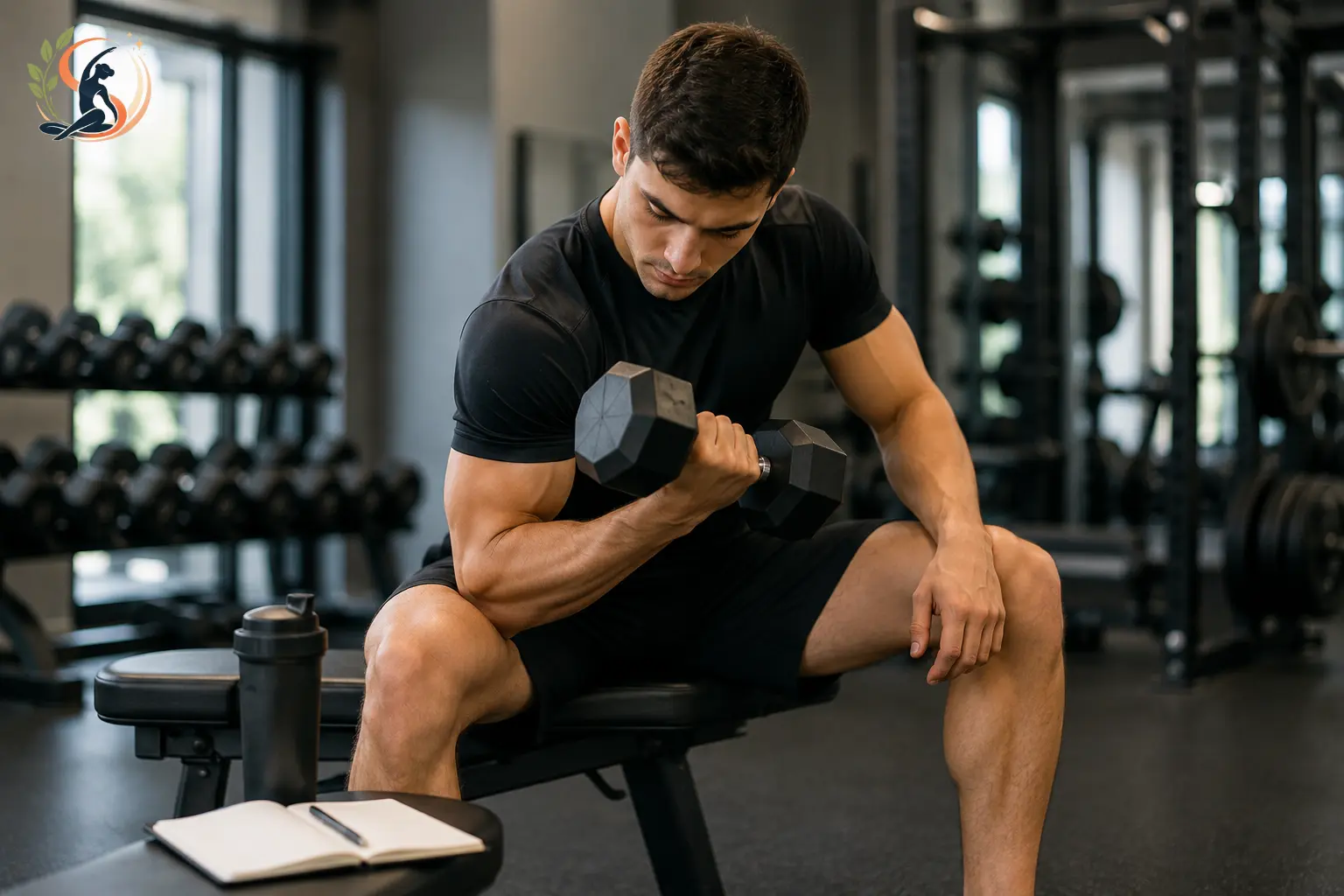
This one trips up nearly everyone starting out, so it's worth slowing down on.
Reps, Sets and the Trial-Set Test
A rep is one full repetition of whatever move you're doing. A set is a group of reps done back to back before you stop and rest. Ten curls in a row, that's one set of ten. Rest a bit, do ten more, now you've done two sets of ten. Beginners generally do fine with 2 to 4 sets of 8 to 15 reps per exercise, resting 60 to 90 seconds between each one.
Not sure what weight to grab off the rack? Run a trial set of 12 reps first. Felt too easy the whole way through? Go heavier next set. Form fell apart before you even finished? Go lighter. Jot down what actually worked so next time isn't the same guessing game all over again.
The RPE Scale: A Smarter Way to Pick Your Weight
Most beginner guides tell you to lift somewhere around 60 to 70% of your one-rep max. The problem is, almost no beginner actually knows their true max and finding it out safely takes a level of experience most new lifters simply don't have yet. RPE tends to work better while you're still learning. Rate of perceived exertion, scored 1 to 10, based on roughly how many reps you think you've still got left in the tank when you finish a set.
Aim for somewhere around RPE 6 to 8 on most sets, meaning you could probably squeeze out two to four more reps if you genuinely had to. A set that feels like RPE 10, where you truly could not do one single additional rep, is too heavy while you're still nailing down form.
Gym Machine Workout Routine for Beginners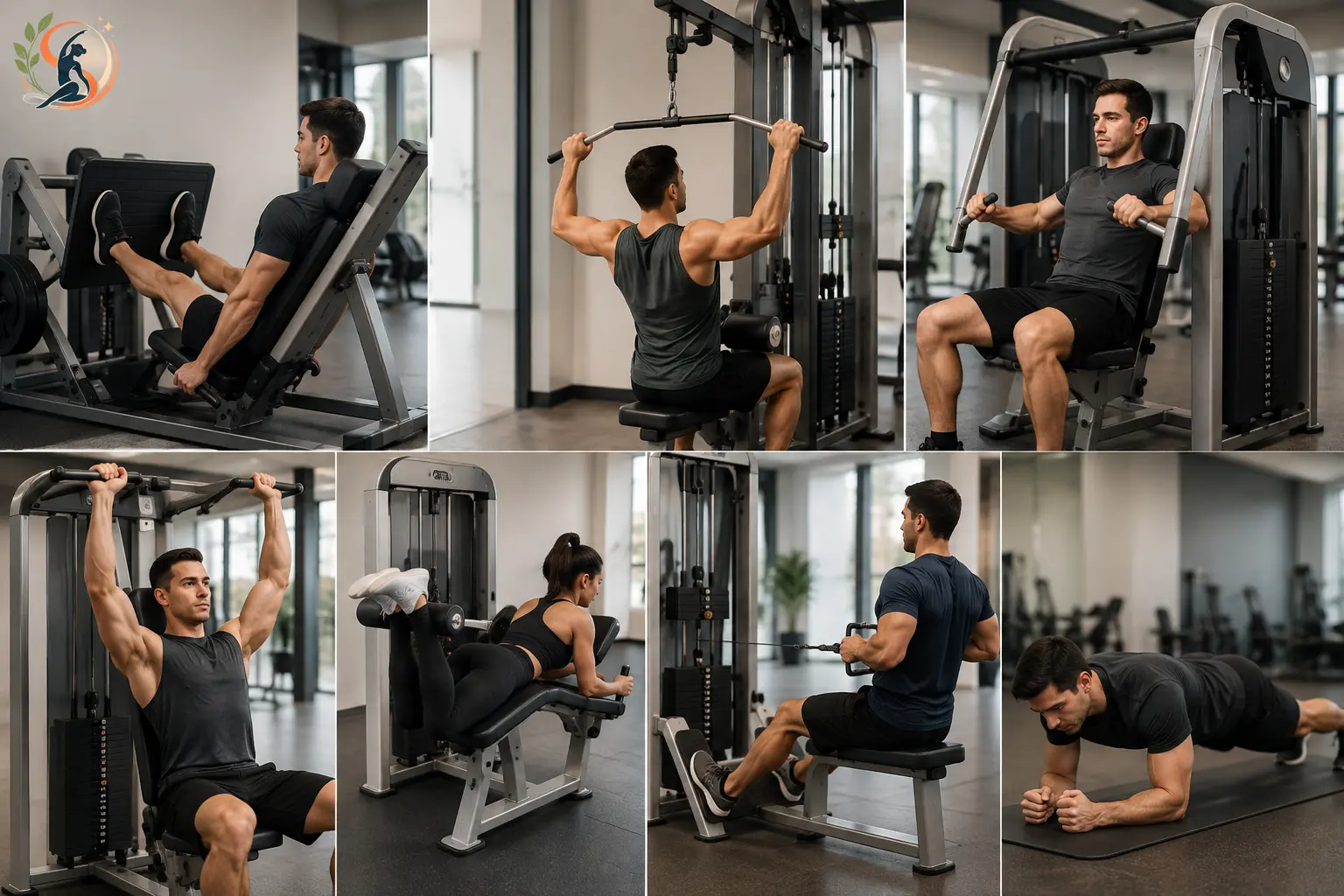
Machines get overlooked fast once people start feeling comfortable in a gym, which is a shame, because they're honestly one of the best possible starting points for anyone brand new to lifting.
Best Machines for First-Time Gym Goers
Machines guide your joints along a fixed, predictable path, which strips out a huge amount of the guesswork around form while you're still figuring out what good technique is even supposed to feel like in your body. Leg press works your quads and glutes without requiring you to balance a barbell across your back. Lat pulldown trains your back and biceps while seated, pulling a bar down toward your chest in a controlled line.
Chest press mimics the motion of a bench press without needing a spotter hovering over you. Shoulder press builds your delts and triceps in a stable, seated position. Leg curl isolates your hamstrings directly, nothing else really involved. Cable row works your entire upper back with one simple, repeatable seated pulling motion.
A Complete Weight Machine Workout Routine
Rest 60 to 90 seconds between sets throughout the whole thing.
Leg press – 12 reps x 3 sets
Lat pulldown – 10 reps x 3 sets
Chest press – 10 reps x 3 sets
Shoulder press – 10 reps x 3 sets
Leg curl – 12 reps x 3 sets
Cable row – 10 reps x 3 sets
Plank – 30 seconds x 3 sets
About 40 minutes start to finish, your whole body covered in one sitting and a month or two spent here builds real, honest confidence before free weights even enter the picture.
10 Best Muscle-Building Exercises for Beginners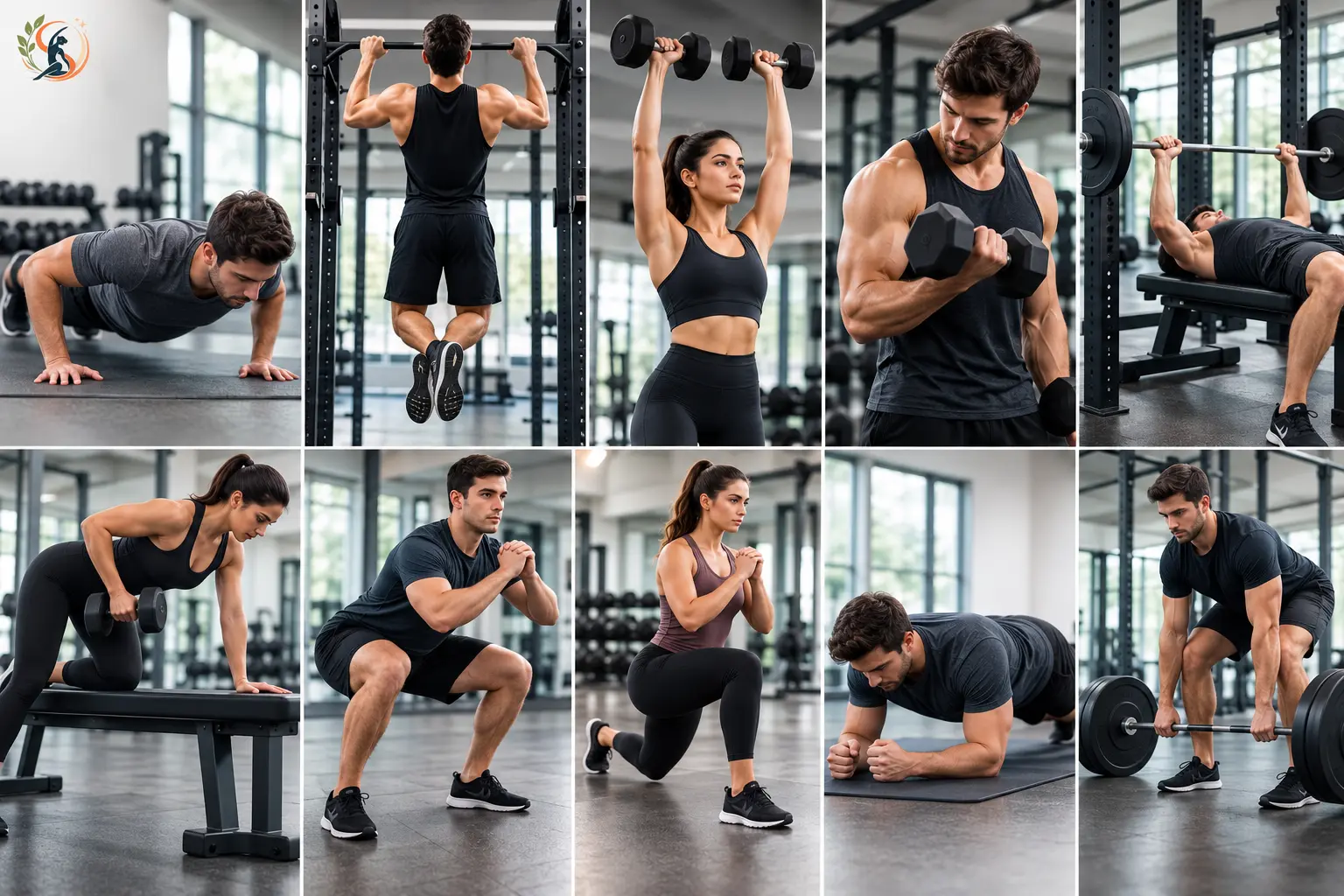
Once machines start feeling second nature, these free-weight and bodyweight moves round out a proper strength foundation underneath everything else.
Upper Body Muscle-Building Moves
Push-ups: chest, shoulders, triceps, core. Knee push-ups or wall push-ups work perfectly fine as a starting point, no shame in it.
Pull-ups (or an assisted machine version): back and biceps and arguably the single hardest move on this whole list for a true beginner to nail.
Overhead press: shoulders and triceps. Stick with light dumbbells for stability while you're learning the motion.
Barbell or dumbbell curls: biceps, plain and simple. Around 15 to 20 pounds total works for most people just starting out.
Bench press (or a dumbbell floor press if a bench isn't free): chest and shoulders, real pushing strength that carries over into everyday life more than people expect.
Dumbbell rows: back, hitting your lats and rhomboids while your core quietly works overtime just to keep you stable through the whole movement.
Lower Body and Core Muscle-Building Moves
Squats: quads, hamstrings, glutes, hitting nearly every muscle in your lower body at once. Bodyweight first, always, before you even think about adding a barbell or dumbbells.
Lunges: single-leg strength and balance and this one pays off in everyday life a lot more than most beginners give it credit for.
Planks: abs, lower back, shoulders, no equipment needed whatsoever.
Deadlifts: total-body strength, arguably the most rewarding move on the entire list once you've earned it. Save this one until your hip hinge is genuinely solid and honestly, learn it in person from a trainer before you load any real weight onto it.
A Beginner Workout Plan: Sample Gym Plans for Every Goal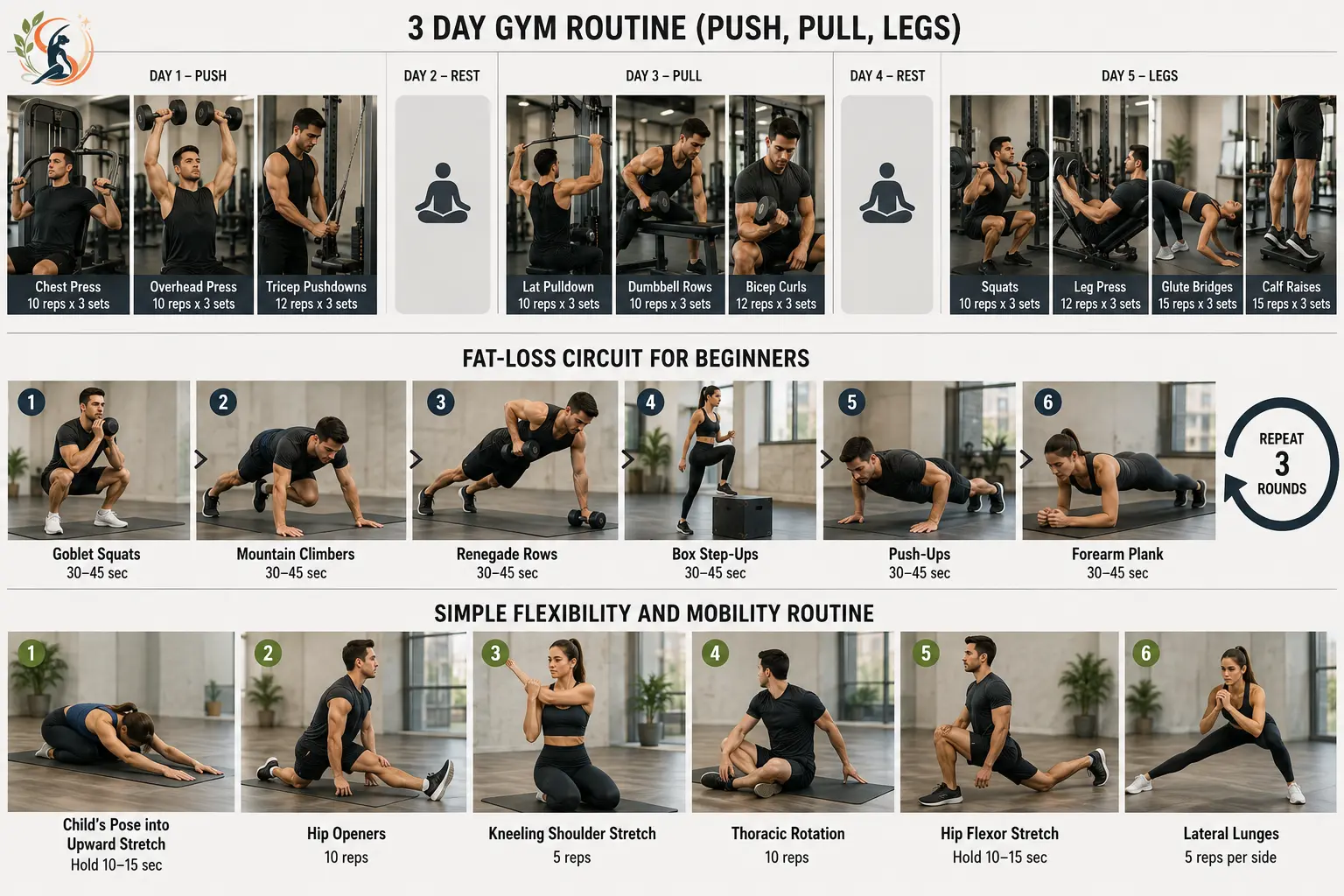
Different goals need genuinely different structure. Here are three real options below, not one watered-down plan pretending to fit absolutely everybody.
3 Day Gym Routine (Push, Pull, Legs)
This one covers your whole body across the week without ever hitting the same muscles two days in a row and it scales up easily once you're ready to add more volume down the line. Rest 60 to 90 seconds between sets.
Day 1 – Push
Chest press – 10 reps x 3 sets
Overhead press – 10 reps x 3 sets
Tricep pushdowns – 12 reps x 3 sets
Day 2 – Rest
Day 3 – Pull
Lat pulldown – 10 reps x 3 sets
Dumbbell rows – 10 reps x 3 sets
Bicep curls – 12 reps x 3 sets
Day 4 – Rest
Day 5 – Legs
Squats – 10 reps x 3 sets
Leg press – 12 reps x 3 sets
Glute bridges – 15 reps x 3 sets
Calf raises – 15 reps x 3 sets
Fat-Loss Circuit for Beginners
A completely different goal calls for a completely different structure here. Circuit through these moves back to back with minimal rest, 30 to 45 seconds per move, 30 seconds rest, three full rounds total.
Goblet squats – 30-45 seconds
Mountain climbers – 30-45 seconds
Renegade rows – 30-45 seconds
Box step-ups – 30-45 seconds
Push-ups – 30-45 seconds
Forearm plank – 30-45 seconds
This keeps your heart rate elevated for the entire session, which burns more overall than a standard strength session on its own and it keeps quietly burning a bit even after you've already left the building.
Simple Flexibility and Mobility Routine
Worth doing on a rest day or just tacked onto the tail end of any workout above. This one isn't really about burning calories at all. It's about undoing the tightness that quietly builds up from sitting all day, lifting all week or honestly, sometimes both happening at once without you noticing.
Child's pose into upward stretch – hold 10-15 seconds
Hip openers – 10 reps
Kneeling shoulder stretch – 5 reps
Thoracic rotation – 10 reps
Hip flexor stretch – hold 10-15 seconds
Lateral lunges – 5 reps per side
Can You Gym 7 Days a Week as a Beginner
Technically, sure, you can. Doesn't mean it's the smart move while you're still new to all of this, though. Training every muscle group hard, seven days straight with no letup, doesn't leave your body any real time to repair and actually grow stronger in between sessions. Research on overtraining keeps landing in the same place too, higher injury risk and worse performance over time, not better. Still want to show up daily anyway?
Alternate hard training days with genuinely lighter recovery days instead, a walk, some stretching, easy cardio, rather than lifting heavy every single day of the week without a real break in there anywhere.
Common Beginner Mistakes to Avoid
Training Mistakes That Slow Progress
Skipping the warm-up because you're in a hurry. Using bad form just to lift heavier than you're actually ready for. Never change your routine once you've learned it, which quietly stalls progress after the first couple months pass. Training the same muscles two days running without enough real rest between them. Any single one of these can slow you down more than most people would ever guess.
Mindset Mistakes That Kill Motivation
Comparing your week-one self to someone who's been training for years already, which never ends well for anyone's motivation. Expecting visible changes within the first few sessions, when it typically takes ten to eighteen actual sessions before real results start showing up in the mirror. Quitting the moment a workout starts feeling genuinely hard, instead of recognizing that the hard feeling usually just means it's working the way it's supposed to.
Eating and Recovering Like a Beginner Should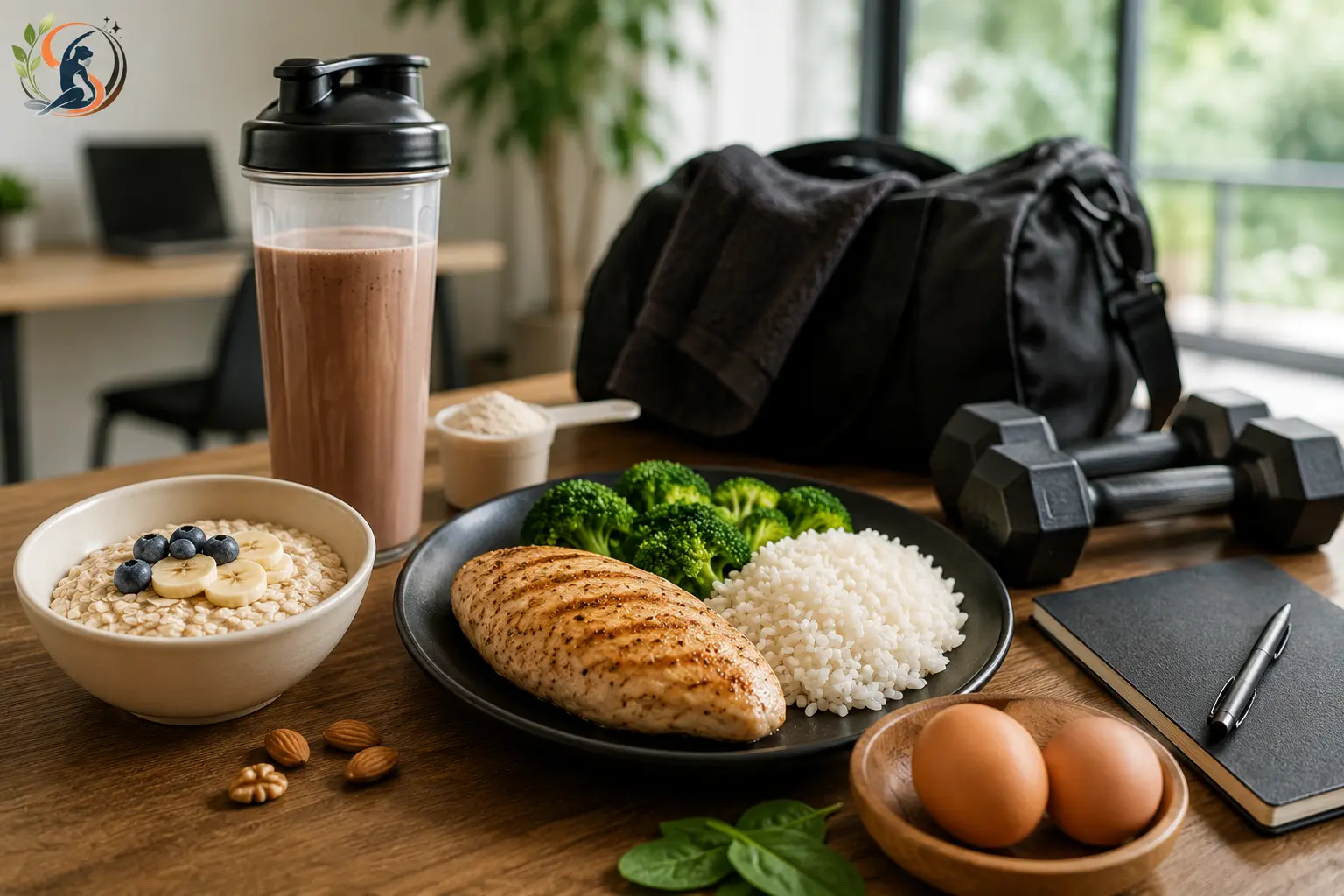
What to Eat Before and After the Gym
Before, something with carbs, one to three hours out, real fuel your body can actually use mid-workout. After, protein within a couple hours helps kick off the muscle repair process properly, a boiled egg, a protein shake, chicken and rice, none of it needs to be complicated or expensive. Fat loss the actual goal here?
The same old rule still wins out, burn more than you take in and protein-heavy meals help you stay full longer while you're doing exactly that. Curious how this same idea scales up at the elite level? Our breakdown of Team USA athlete meal plans covers the same carb-and-protein timing principles, just dialed way up for serious training volume.
Desk Job: Here's Why That Matters Too
Sitting most of the day quietly tightens your hip flexors and rounds your shoulders forward without you ever really noticing it happen in the moment. Standing more throughout your day, even just pacing during phone calls, helps counter some of that slow drift. Your gym sessions end up pulling double duty this way too, undoing hours of sitting on top of actually building real strength.
Staying Consistent as a Beginner
How Long Until You See Results
Most people notice better energy and mood within the first couple of weeks, honestly before much else changes at all. Strength gains, lifting a bit more weight or squeezing out a few extra reps, usually show up within three to four weeks of staying consistent. Visible physical changes tend to take six to eight weeks on average, sometimes longer depending on where you started from and how consistent you're genuinely able to stay through the process.
Tracking Progress Beyond the Scale
The scale barely tells the whole story, especially early on when the number can bounce around for reasons that have nothing to do with real progress. Track the weight you're lifting and how many reps you're actually completing instead. Take a monthly photo, same lighting, same outfit, so the comparison actually means something. Notice how your clothes fit a little differently or how much easier the stairs feel four weeks in. All of that matters more than one number on a scale ever really will.
Frequently Asked Questions
1. What is a good beginner gym routine?
A good beginner routine covers your whole body two to three times a week, mixing machines and free weights. Start with 2 to 4 sets of 8 to 15 reps per exercise, resting 60 to 90 seconds between sets and rest at least 48 hours between sessions targeting the same muscles.
2. What should a beginner do at a gym?
Warm up for five minutes, then work through a full-body routine using machines and a few free-weight basics like squats and push-ups. Focus on learning proper form before adding heavier weight. Ask staff for help if you're unsure how any machine or movement works.
3. How to gym 7 days a week?
It's possible, but alternate hard training days with lighter recovery days, like walking or stretching, rather than lifting heavy every single day. Training every muscle group intensely all seven days raises injury risk and actually slows progress instead of speeding it up.
4. What is a good 3 day gym routine?
A solid 3 day routine covers your full body across the week, often split into push, pull and legs. This spacing gives every muscle group enough recovery time between sessions while still training your whole body twice through each week.
5. How much weight should a beginner lift?
Start with a weight that lets you complete 8 to 15 reps with good form, stopping around RPE 6 to 8, meaning you could still do a few more reps if pushed. Increase weight gradually once the current load starts feeling noticeably easier.
6. Is 3 days a week enough for a beginner to build muscle?
Yes, three days a week is enough for a beginner to build real strength and muscle, as long as each session covers your whole body and you're progressively increasing weight or reps over time. Consistency matters far more than training frequency at this stage.
Conclusion
Gym exercises for beginners really don't need to be complicated to actually work, whatever the overwhelming wall of equipment on day one might make you feel. Pack the basics, eat something before you train, learn the machines first and build a simple 3 day gym plan around your actual week, not someone else's. Give it six to eight weeks before you judge whether any of it's working. It is. It just takes a little longer to show up than most people expect walking through the door that very first time.
Once machines and the basics start feeling comfortable, you can build toward more specific muscle-group training from here. Our guides on dumbbell back exercises and an upper body dumbbell workout are solid next steps once you're ready to move past this beginner routine and get more specific.


Comments (0)
No comments yet. Be the first to share your thoughts!
Leave a Comment