
I used to grab a box of eggs without ever really thinking about what was inside them, until I started actually tracking meals and realized how little I understood about something I ate almost daily without a second thought.
Egg nutrition facts get thrown around constantly online, yet most of it is either oversimplified or buried in confusing charts that don't actually answer what people are searching for when they type the question into a search bar at 7am. This guide breaks down calories, protein, fat and carbs in plain terms, whether you're eating one egg or six across a full day.
Whole eggs, egg whites, boiled, scrambled, it all adds up differently than most people assume going in.
What Makes Eggs Nutritionally Unique
Eggs sit in a strange category of food, cheap, widely available and yet still misunderstood decades after the whole "eggs are bad for you" scare faded from serious nutrition science and public conversation. What actually makes them stand out isn't one single nutrient, it's the combination packed into something so small and inexpensive that most people barely think twice about buying.
A single egg delivers a genuinely complete amino acid profile, meaning it contains all nine essential amino acids your body can't produce on its own no matter how balanced the rest of your diet looks.
That's part of why egg nutrition facts get referenced so often in fitness and health circles, few whole foods manage to pack complete protein, healthy fat and a long list of vitamins into something you can cook in under five minutes flat.
Eggs fit naturally into a broader whole food eating pattern too, since they require no processing between the farm and your pan.
Egg Nutrition Facts: Calories, Protein, Fat and Carbs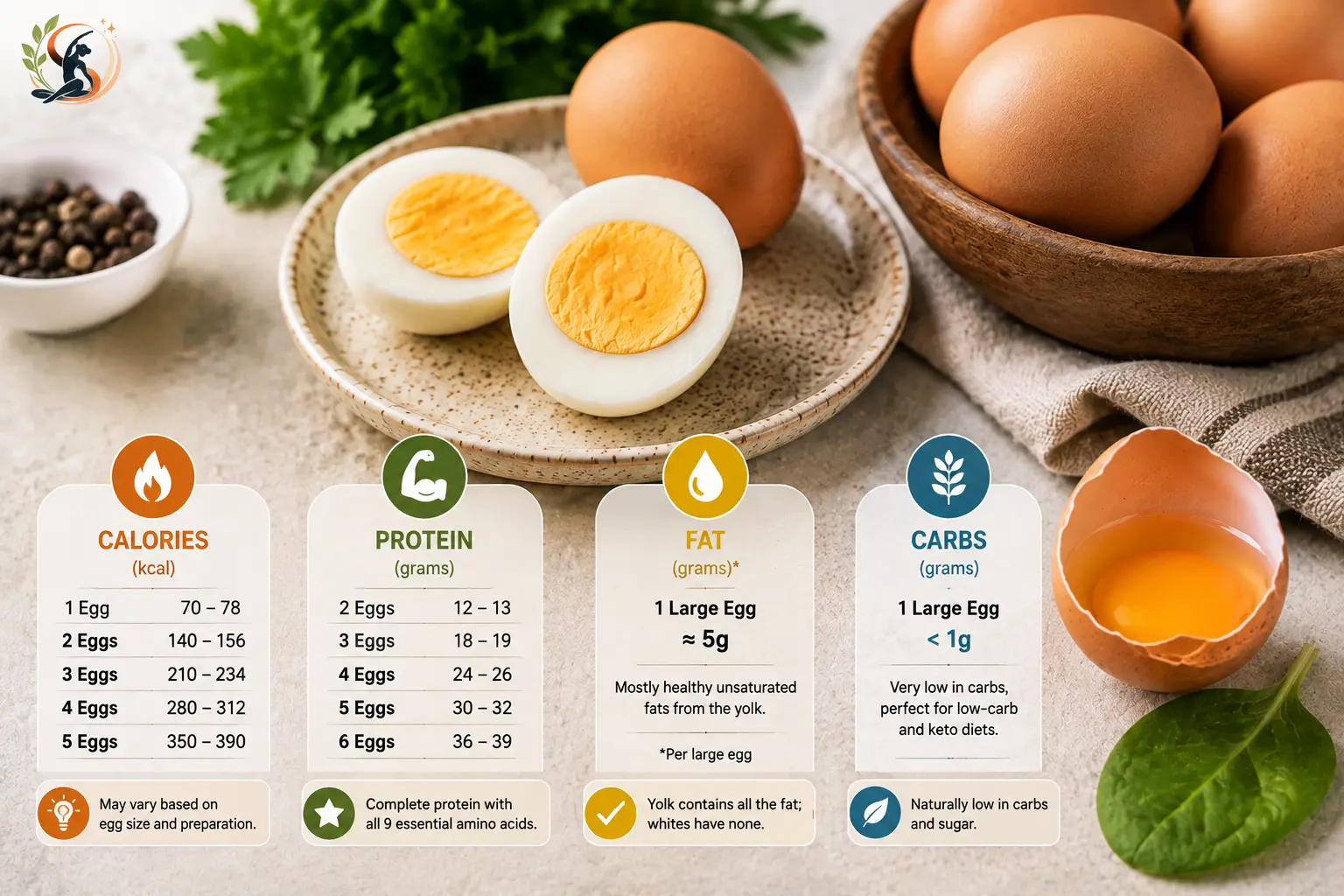
Most confusion around eggs comes down to portion size, since the numbers shift depending on whether you're eating one egg or four and whether you're counting the yolk or just the white separately.
Calories in Eggs:
A single large egg contains roughly 70 to 78 calories, depending on size and how it's prepared before serving. Calories in 2 eggs typically land around 140 to 156, while calories in three eggs run closer to 210 to 234 depending on the exact size purchased.
For anyone tracking numbers more precisely, calories in 4 eggs usually fall between 280 and 312 and 5 eggs calories can reach 350 to 390 depending on egg size and grading.
Protein in Eggs:
Protein in 2 eggs generally comes out to around 12 to 13 grams, making eggs a genuinely efficient protein source for the calories involved throughout the day. How much protein in 3 eggs typically lands around 18 to 19 grams, while protein in 4 eggs climbs to roughly 24 to 26 grams depending on exact egg size.
For anyone eating larger portions, how much protein in 5 eggs usually falls between 30 and 32 grams and how much protein in 6 eggs can reach up to 36 to 39 grams total across a meal.
Fat Content in Eggs:
Most of an egg's fat sits in the yolk, with the white containing essentially none at all regardless of egg size or brand. How much fat an egg typically comes out to around 5 grams per large egg, mostly a mix of monounsaturated and polyunsaturated fats with a smaller amount of saturated fat mixed in.
This fat content is part of why whole eggs feel more satisfying than egg whites alone, even though both technically qualify as lean protein sources on their own.
Carbohydrates in Eggs:
Do eggs have carbs is one of the most searched egg nutrition facts questions and the honest answer is barely any to speak of. Carbs in an egg typically measure under one gram, making eggs one of the few whole foods that fit cleanly into low-carb and ketogenic eating patterns without requiring any real adjustment or tracking on your part.
Egg Yolk vs Egg White: Nutritional Differences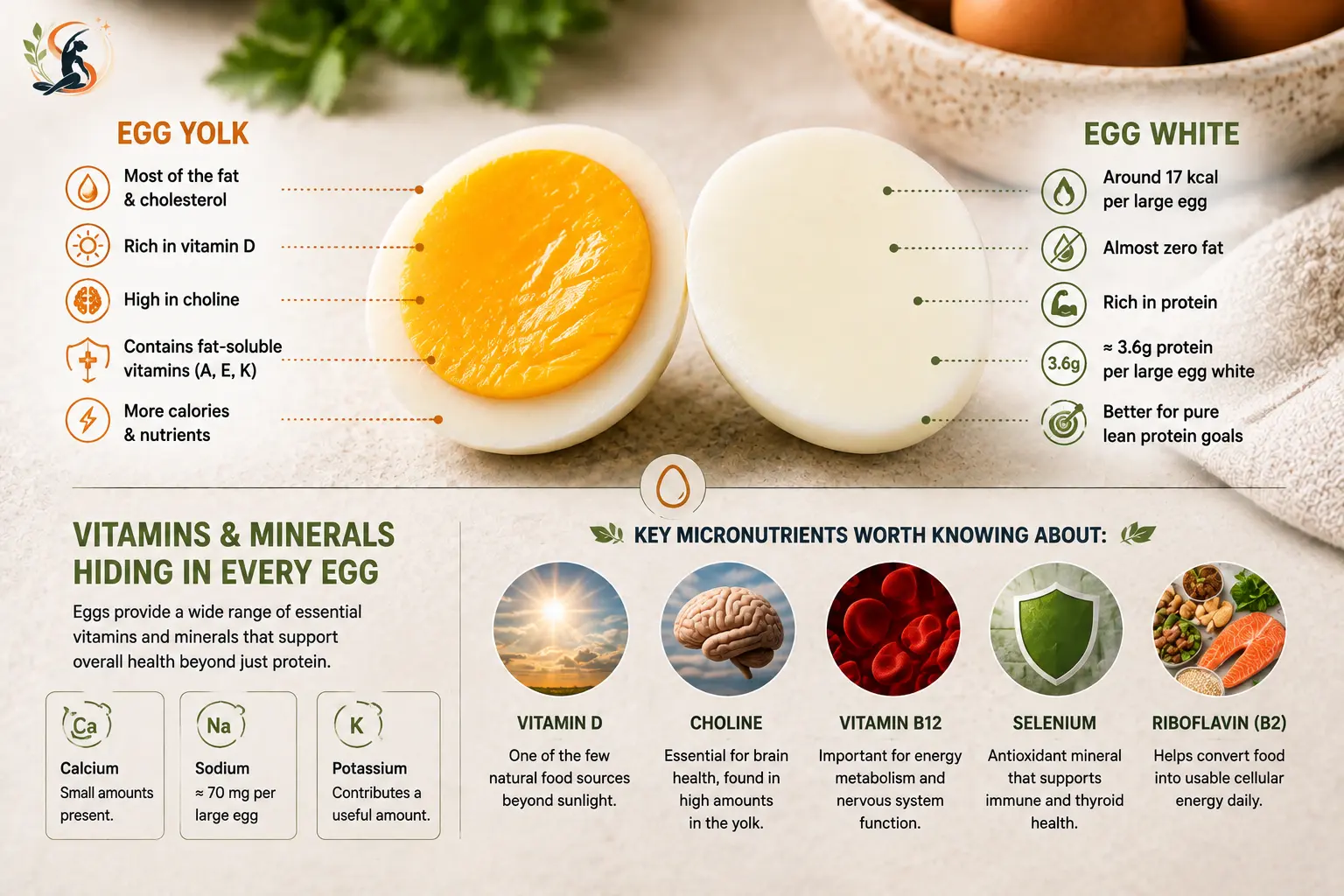
Understanding what's actually in each part of the egg clears up a lot of confusion people carry around from years of conflicting diet advice and outdated headlines.
Egg yolk nutrition includes most of the fat, cholesterol, vitamin D, choline and fat-soluble vitamins in the whole egg
Calories in the white of an egg run around 17 per large egg, almost entirely from protein with essentially zero fat
Does egg white have protein is a common question and yes, roughly 3.6 grams of protein sits in a single egg white alone
Whole eggs deliver a more complete nutritional package, while whites alone are better for pure lean protein goals
What is in an egg yolk includes choline, an underrated nutrient tied to brain and liver function that whites don't provide
Vitamins and Minerals Hiding in Every Egg
Beyond the protein and fat conversation, eggs quietly deliver a wide range of vitamins and minerals that rarely get mentioned in typical egg nutrition facts breakdowns online, overshadowed by the constant focus on protein grams alone.
Calcium in eggs is modest but present, mostly concentrated in the shell rather than the edible portion, though the egg itself still contributes small amounts worth noting for anyone tracking micronutrients closely.
Sodium content matters too, especially for anyone managing blood pressure and how much sodium in an egg typically sits around 70 milligrams per large egg before any added salt during cooking changes that number significantly.
Are eggs high in potassium is another common question and while they're not a major potassium source compared to bananas or potatoes, they still contribute a small, useful amount alongside other nutrients like vitamin B12, riboflavin and selenium that round out the overall nutritional picture.
Key Micronutrients Worth Knowing About:
Vitamin D, one of the few natural food sources beyond fatty fish and sunlight exposure alone
Choline, essential for brain health and found in meaningfully high amounts in the yolk specifically
Vitamin B12, important for energy metabolism and nervous system function throughout the body
Selenium, an antioxidant mineral that supports immune function and thyroid health over time
Riboflavin (B2), which plays a role in converting food into usable cellular energy daily
How Many Eggs Should You Eat?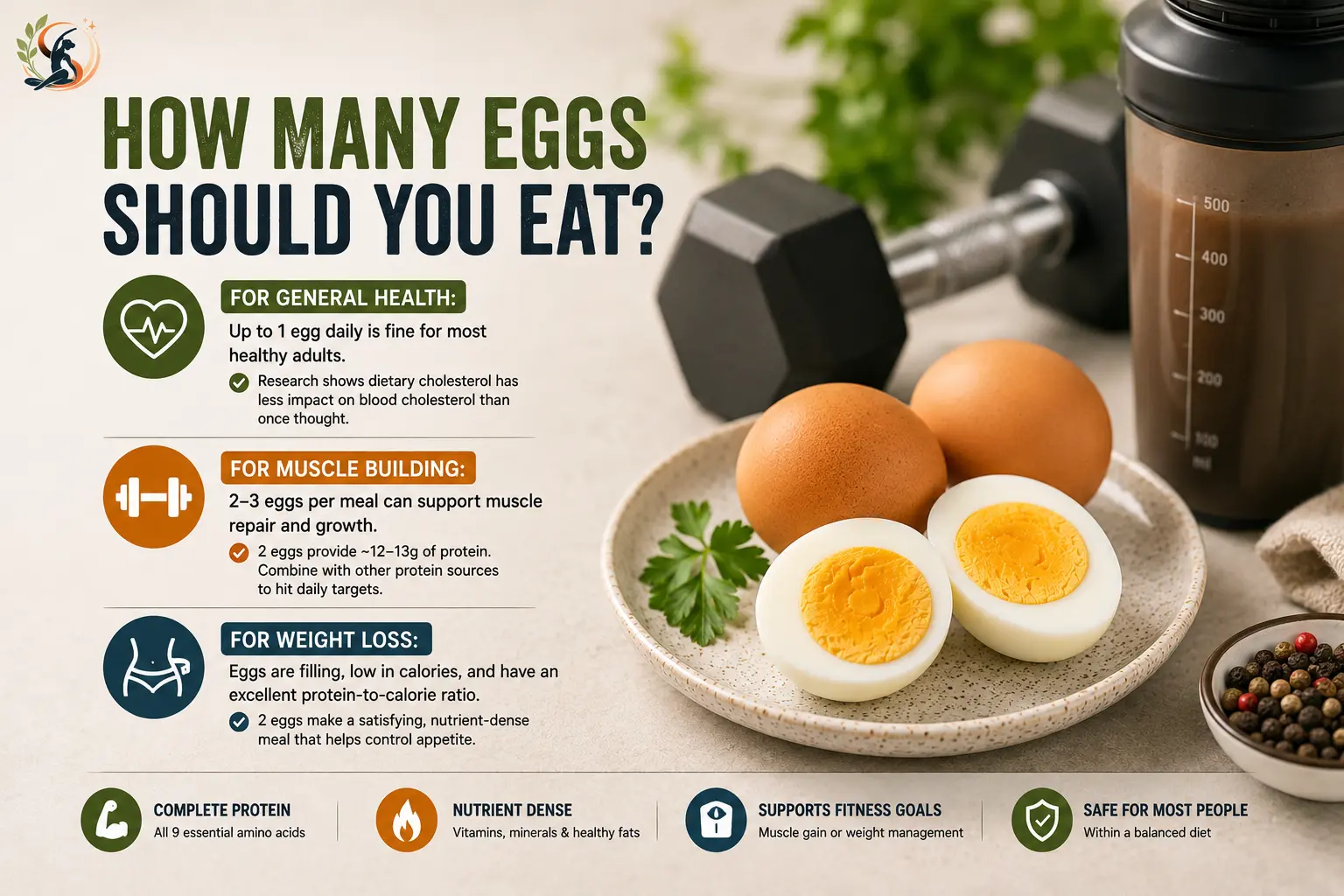
The "how many eggs is too many" debate has shifted significantly over the past two decades as research on dietary cholesterol evolved and older assumptions got revisited with better data.
For General Health:
Most current guidance suggests up to one egg daily is fine for the average healthy adult, with some research supporting higher intake for people without specific cholesterol concerns or existing heart conditions to manage.
Egg nutrition facts around cholesterol have been reassessed since older studies overstated the connection between dietary cholesterol and blood cholesterol levels in ways that shaped decades of overly cautious advice.
For Muscle Building:
Athletes and anyone in a serious training phase often eat considerably more, sometimes three eggs protein or more per meal, since the complete amino acid profile supports muscle repair effectively after intense training sessions throughout the week.
Two eggs protein alone, around 12 to 13 grams, often gets combined with other protein sources to hit daily targets more efficiently without relying on a single food source entirely. If you're not sure how eggs fit into your own daily protein target, running your numbers through a proper calculator makes this a lot less like guesswork.
For a broader look at how elite athletes structure protein across a full day, not just from eggs alone, it's worth seeing how a real sport-dietitian framework handles it.
For Weight Loss:
Eggs show up constantly in weight loss meal plans because they're filling relative to their calorie count and 2 eggs nutrition info consistently shows a favorable protein-to-calorie ratio compared to many other breakfast options people default to out of habit.
If eggs are part of a broader weight-loss approach, seeing how they fit into a full calorie specific meal plan can help with the bigger picture beyond just breakfast.
Health Benefits of Eating Eggs Regularly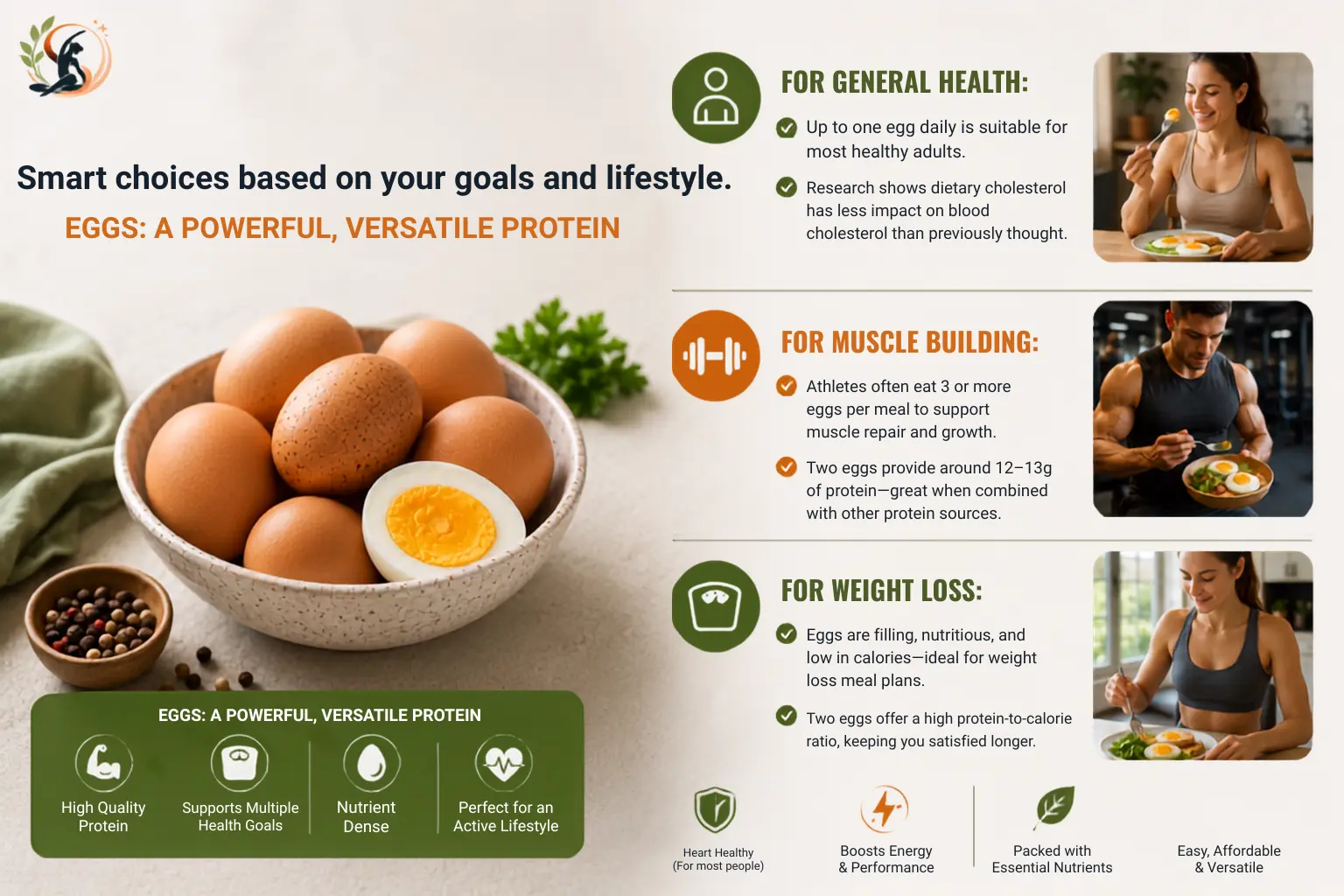
Beyond the raw numbers, consistent egg consumption tends to support several practical health outcomes worth knowing about beyond just hitting a protein target for the day.
Sustained fullness between meals due to the combination of protein and fat working together
Support for eye health through lutein and zeaxanthin, antioxidants concentrated in the yolk
A convenient, minimally processed protein source that requires no specialized preparation or equipment
Muscle maintenance support from a complete amino acid profile most plant proteins can't match alone
Brain and liver support through choline, a nutrient many people don't get enough of otherwise
Common Egg Nutrition Myths
A surprising amount of outdated information still circulates about eggs, some of it decades old and never properly corrected in public awareness despite newer research directly contradicting it.
The cholesterol myth persists the longest, the idea that eating eggs directly raises blood cholesterol dangerously for essentially everyone regardless of their overall diet. Current research shows dietary cholesterol has a much smaller effect on blood cholesterol for most people than saturated fat intake overall, which shifted how nutrition professionals talk about egg nutrition facts entirely over the past fifteen years or so.
Myths Worth Retiring:
Egg whites alone are automatically healthier than whole eggs for everyone
Brown eggs are nutritionally superior to white eggs based on shell color alone
Raw eggs offer meaningfully more nutrition than cooked eggs in practical terms
Eating multiple eggs daily is universally dangerous regardless of individual health context
All the nutrition sits in the yolk and whites offer nothing beyond empty protein
Getting the Most Nutrition From Your Eggs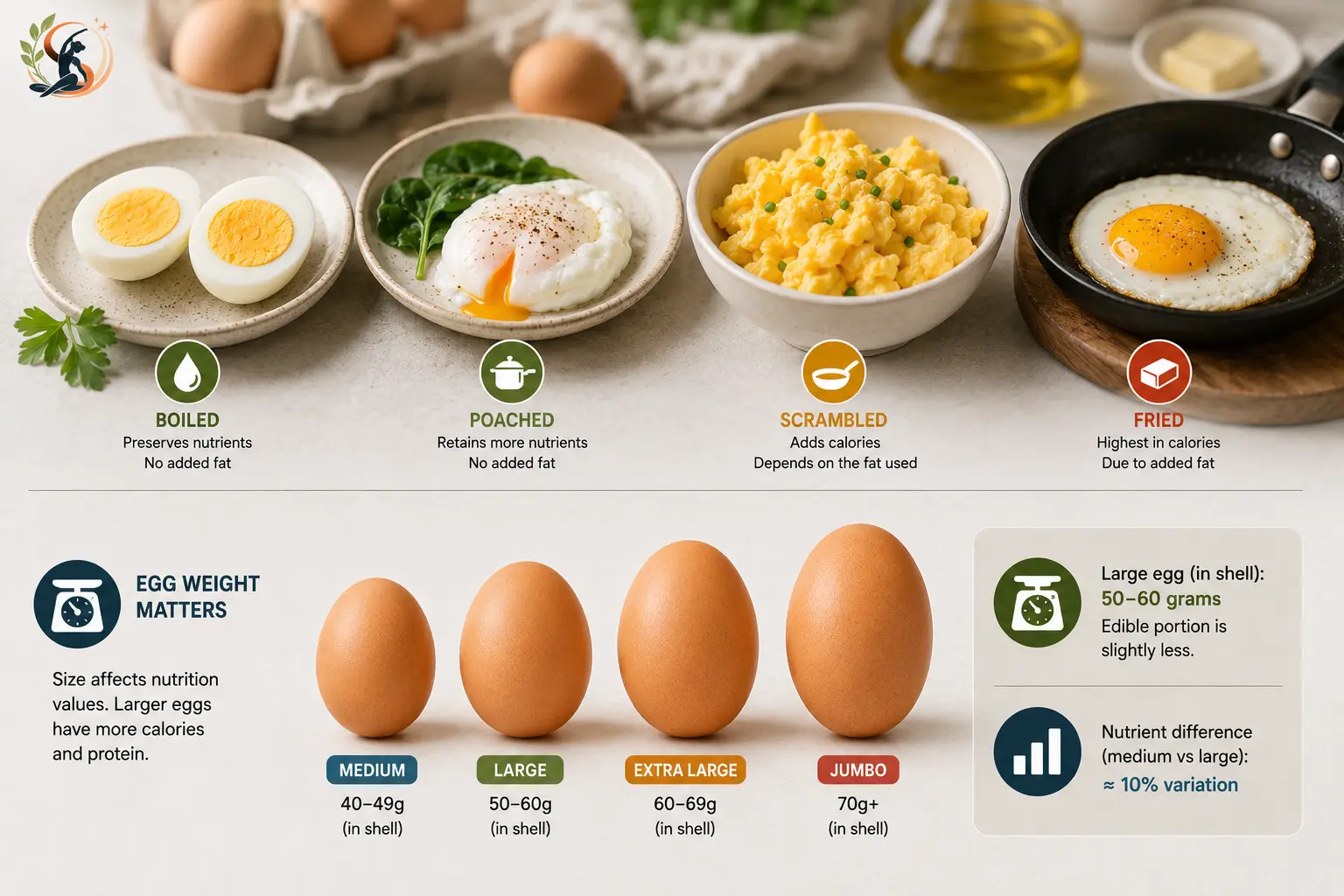
How you cook eggs actually changes their nutritional profile slightly, something most people never consider when reaching for a pan on a busy morning before work.
Boiling or poaching preserves nutrients most effectively since no added fat gets introduced during cooking, making hard boiled eggs nutrition slightly leaner than fried versions by default in almost every side-by-side comparison you'll find.
Scrambling or frying in butter or oil adds calories and fat that aren't reflected in a standard egg nutrition facts label, which matters if you're tracking numbers closely rather than just eating intuitively based on hunger alone throughout the day.
How Egg Weight Affects the Numbers
Egg size labeling causes more confusion than people realize, since "large" doesn't mean the same thing across every carton, brand or country you happen to be shopping in.
How much does an egg weigh typically ranges from 50 to 60 grams for a large egg in the shell, with the edible portion weighing somewhat less once shell weight gets subtracted from the total.
This matters because egg nutrition medium versus large sizing can shift calorie and protein counts by roughly ten percent, enough to matter for anyone tracking macros precisely rather than estimating loosely based on general assumptions or guesswork.
How Eggs Compare to Other Common Protein Sources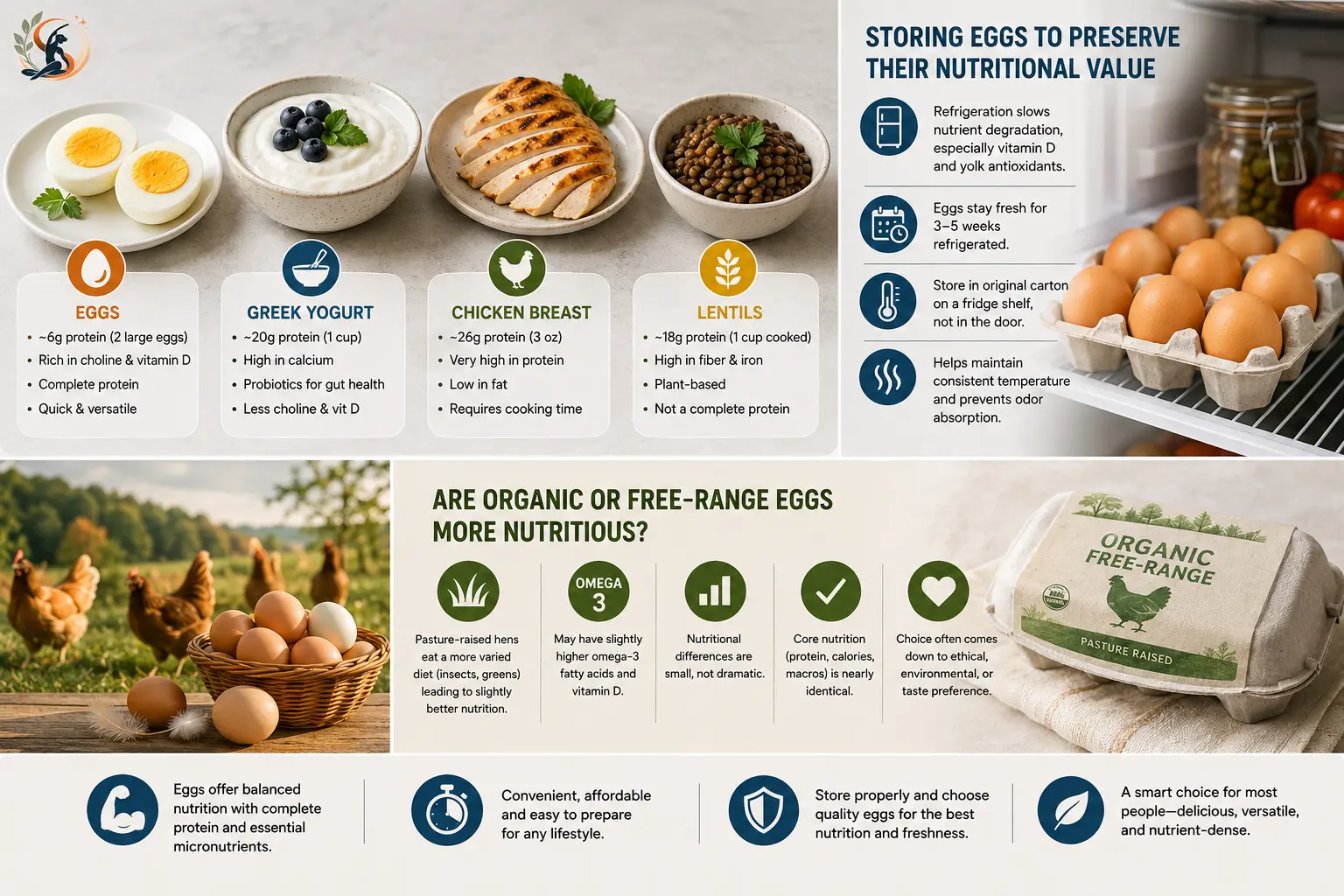
Context matters when evaluating egg nutrition facts against other everyday protein options people typically reach for at breakfast or throughout a busy day.
Compared to a cup of Greek yogurt, which delivers around 20 grams of protein per serving, eggs offer less protein per calorie but more variety in micronutrients like choline and vitamin D that yogurt simply doesn't provide in any meaningful amount at all.
Against chicken breast, eggs fall short on pure protein density but win on convenience and versatility, since a boiled egg requires zero prep time compared to cooking meat properly from raw.
Plant-based options like lentils or tofu offer respectable protein too, but lack the complete amino acid profile eggs provide naturally without needing to be combined with other foods to round out the nutrition picture entirely for most people.
Storing Eggs to Preserve Their Nutritional Value
Freshness affects more than taste, it genuinely impacts how well eggs hold onto certain nutrients over time, something that rarely gets mentioned alongside standard nutrition breakdowns focused purely on macros and grams per serving.
Refrigeration slows nutrient degradation significantly compared to leaving eggs at room temperature, particularly for fat-soluble vitamins like D and the antioxidants found in the yolk that break down faster in warmer conditions.
Eggs generally stay fresh for three to five weeks refrigerated, though nutritional quality does gradually decline the longer they sit, even before visible spoilage occurs or the smell gives anything away.
Storing eggs in their original carton, rather than a fridge door egg tray, also helps maintain consistent temperature and reduces exposure to odors that can subtly affect flavor and quality over time without you necessarily noticing right away.
Are Organic or Free-Range Eggs More Nutritious?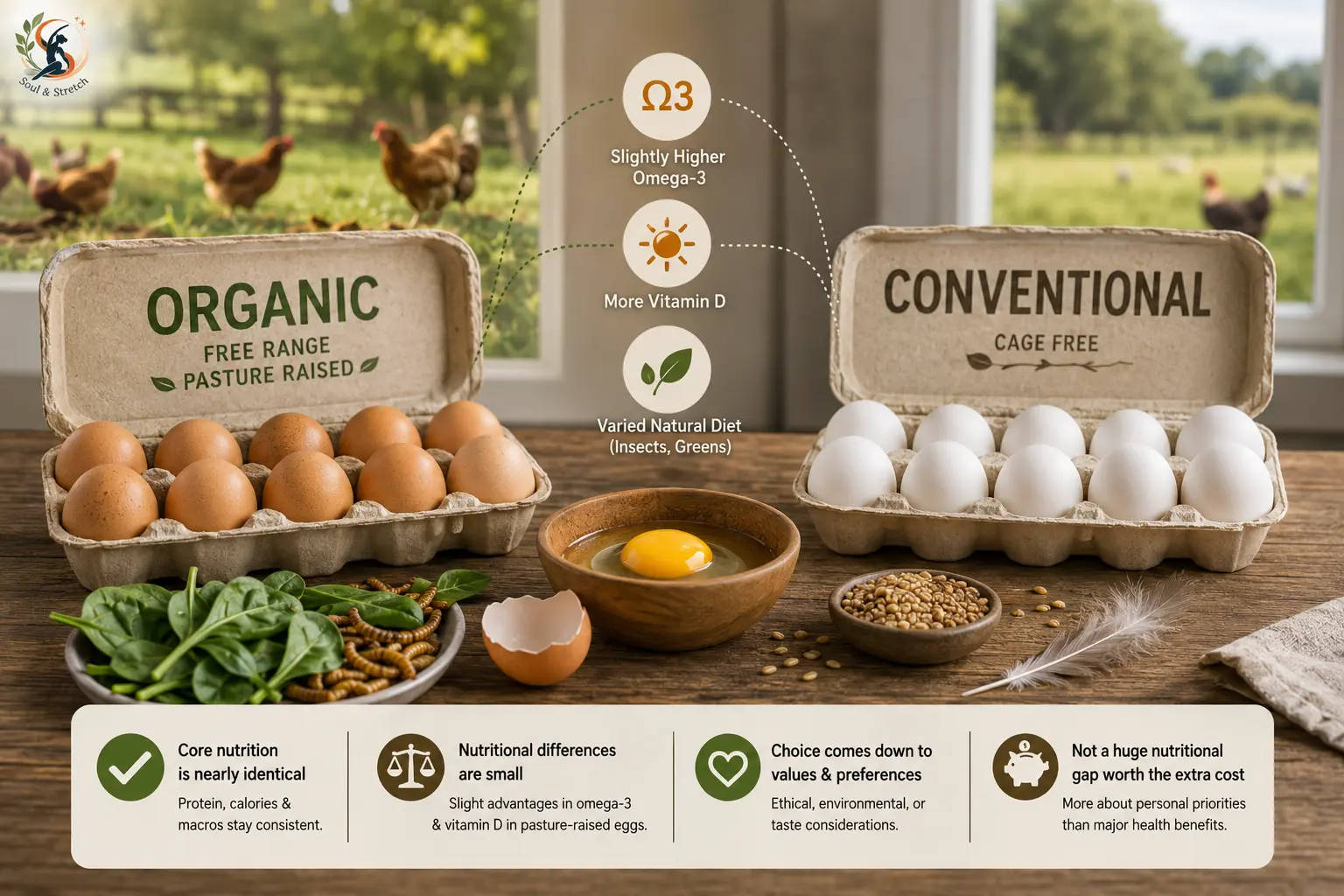
This question comes up constantly, usually alongside sticker shock at the price difference between a regular carton and one labeled organic or pasture-raised at the grocery store checkout counter.
The nutritional difference is smaller than marketing often suggests, though not entirely nonexistent either. Some studies show pasture-raised eggs contain slightly higher levels of omega-3 fatty acids and vitamin D, largely because hens with genuine outdoor access eat a more varied diet including insects and greens rather than standard feed alone day after day.
That said, the core egg nutrition facts, protein, calories and overall macronutrient breakdown, stay remarkably consistent regardless of how the hen was raised, so the choice often comes down to ethical or taste preferences more than a meaningful nutritional gap worth paying extra for.
Frequently Asked Questions
1. How much protein is in 2 eggs?
Two large eggs typically contain around 12 to 13 grams of protein combined together. This makes eggs one of the more efficient protein sources available, delivering complete amino acids for a relatively low calorie cost per gram consumed.
2. How many calories are in 2 eggs?
Two large eggs generally contain 140 to 156 calories total, depending on exact size and cooking method used. Adding butter or oil during cooking increases this number beyond the base nutritional value of the eggs alone in the shell.
3. Do eggs have carbs?
Eggs contain minimal carbohydrates, typically under one gram per egg consumed. This makes them a practical choice for low-carb, ketogenic or carb-conscious eating patterns without requiring any significant dietary tracking adjustments day to day.
4. How much fat is in an egg?
A large egg contains approximately 5 grams of fat, almost entirely concentrated in the yolk itself rather than the white. This includes a mix of monounsaturated, polyunsaturated and a smaller amount of saturated fat combined together.
5. Is there calcium in eggs?
Eggs contain a modest amount of calcium, mostly negligible compared to dairy sources like milk or yogurt consumed regularly. The majority of an egg's calcium actually resides in the shell rather than the edible portion most people eat.
6. How much does an egg weigh?
A large egg typically weighs between 50 and 60 grams including the shell, with the edible portion weighing somewhat less once removed. Egg size labeling varies by region, which can affect nutritional comparisons between different products and brands.
Conclusion
Egg nutrition facts are simpler than they first appear once you break them down by portion size and preparation method rather than relying on vague generalizations. Whether you're counting protein in 2 eggs or tracking calories across a full week, eggs remain one of the most efficient, nutrient-dense foods genuinely available at almost any grocery store. Understanding what's actually in each part, yolk and white, helps you make choices that fit your specific goals instead of following outdated advice.


Comments (0)
No comments yet. Be the first to share your thoughts!
Leave a Comment