
I've ruined more batches of "healthy" brownies than I'd like to admit. Hockey pucks from too much whole wheat flour. Sad, bland little squares because I cut the sugar and forgot sugar was doing something besides just making things sweet.
Fifteen years or so of messing around with swaps in my own kitchen and here's basically what I've landed on: most healthy baking advice either hands you one recipe and calls it a day or gives you a pile of tips with nothing to actually test them on. Neither one tells you where the line is before a swap ruins everything.
So that's what I'm actually trying to do here. Explain why the common swaps work, give you a brownie recipe that's held up through a lot of trial and error on my end and then run through muffins, cookies, granola and a few other things people keep asking about. Nothing fancy, no baking degree needed.
Why Most "Healthy Baking" Advice Falls Short
Honestly a lot of it comes down to how the content itself is built. You either get a blog post with one recipe and nothing around it or a listicle with ten swaps and zero context for how they'd actually work together. So you end up with five tabs open just trying to figure out why applesauce is even in the conversation and how much of it you're supposed to use.
But the bigger issue, the one that actually costs you a pan of brownies, is nobody warns you where things break. Change the flour, the sugar and the fat all in one go and when it comes out dense or gummy or just wrong somehow, good luck figuring out which swap did it.
That's the part almost nobody mentions and it's the part I wish someone had told me before I wasted a few pans finding out the hard way.
The Building Blocks: Swaps That Work Across Almost Every Recipe
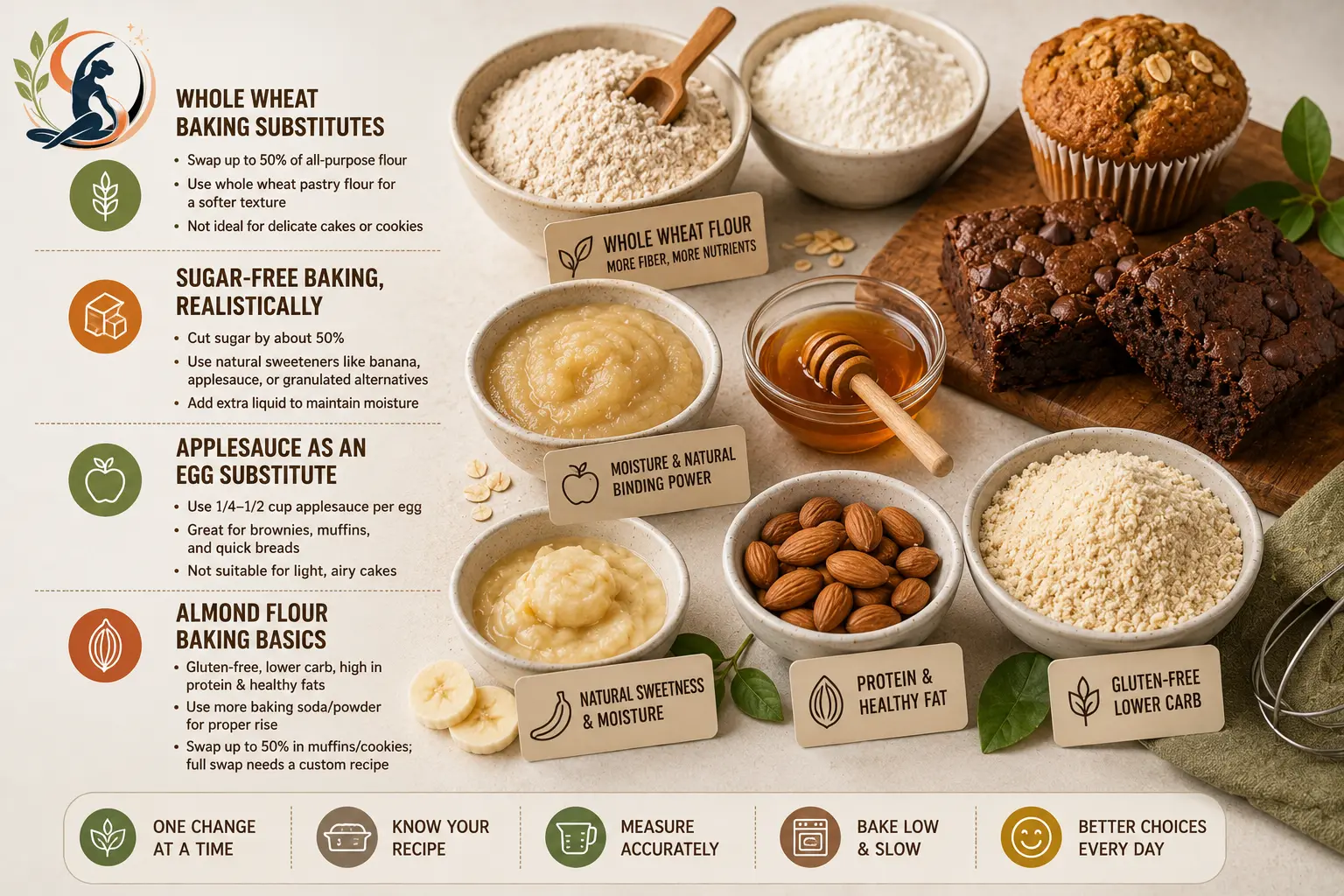
Whole Wheat Baking Substitutes and Where the Limit Sits
Yeah, whole wheat flour has more fiber and nutrients than the white stuff, nobody's arguing that. But go all-in on it and you're usually looking at something dense and kind of grainy, which is rough in anything delicate like sugar cookies or a brownie that's supposed to be fudgy, not sturdy.
What actually works and what most people who bake a lot will tell you, is swapping out about half the all-purpose flour, not all of it. Or grab whole wheat pastry flour if you can find it, it's milled softer and behaves way closer to regular flour than the name suggests.
Sugar-Free Baking, Realistically Speaking
"Sugar-free" starts to feel like a bit of a lie the second you're actually in the kitchen with it. Sugar isn't just there for sweetness, it's holding moisture together, affecting how things brown, doing a bunch of quiet structural work you don't notice until it's gone.
Pull it out entirely and things tend to fall apart, texture-wise, no matter how good your intentions were going in. What works better in practice is cutting the sugar by about half, subbing in something like a granulated alternative or mashed banana or applesauce for the rest and adding a little extra liquid to cover for what the sugar used to be doing.
Applesauce as an Egg Substitute and When to Skip It
Applesauce stands in for eggs because it brings moisture and a little natural binding power, kind of similar to what egg does. Quarter to half a cup per egg is the usual ratio. Works great in brownies, muffins, quick breads, basically anywhere dense and moist is the goal.
Where it falls apart is anything that needs to be light and airy, like a sponge cake, because eggs give lift and applesauce just doesn't have that in it, no matter how much you throw at it.
Almond Flour Baking Basics
Almond flour's naturally gluten-free, lower carb and has more protein and healthy fat going for it than regular flour does. What it doesn't do is rise the same way, so if a recipe leans hard on it, you'll probably need a bit more baking soda or powder to make up for that.
Good starting point: swap half your regular flour for almond flour in most muffin or cookie recipes and you'll be fine. Going full almond flour usually needs a recipe built around it from the start, not just dropped into something meant for wheat.
Healthy Brownie Recipe: The One Worth Keeping
What Are the Three Ingredients in Healthy Brownies
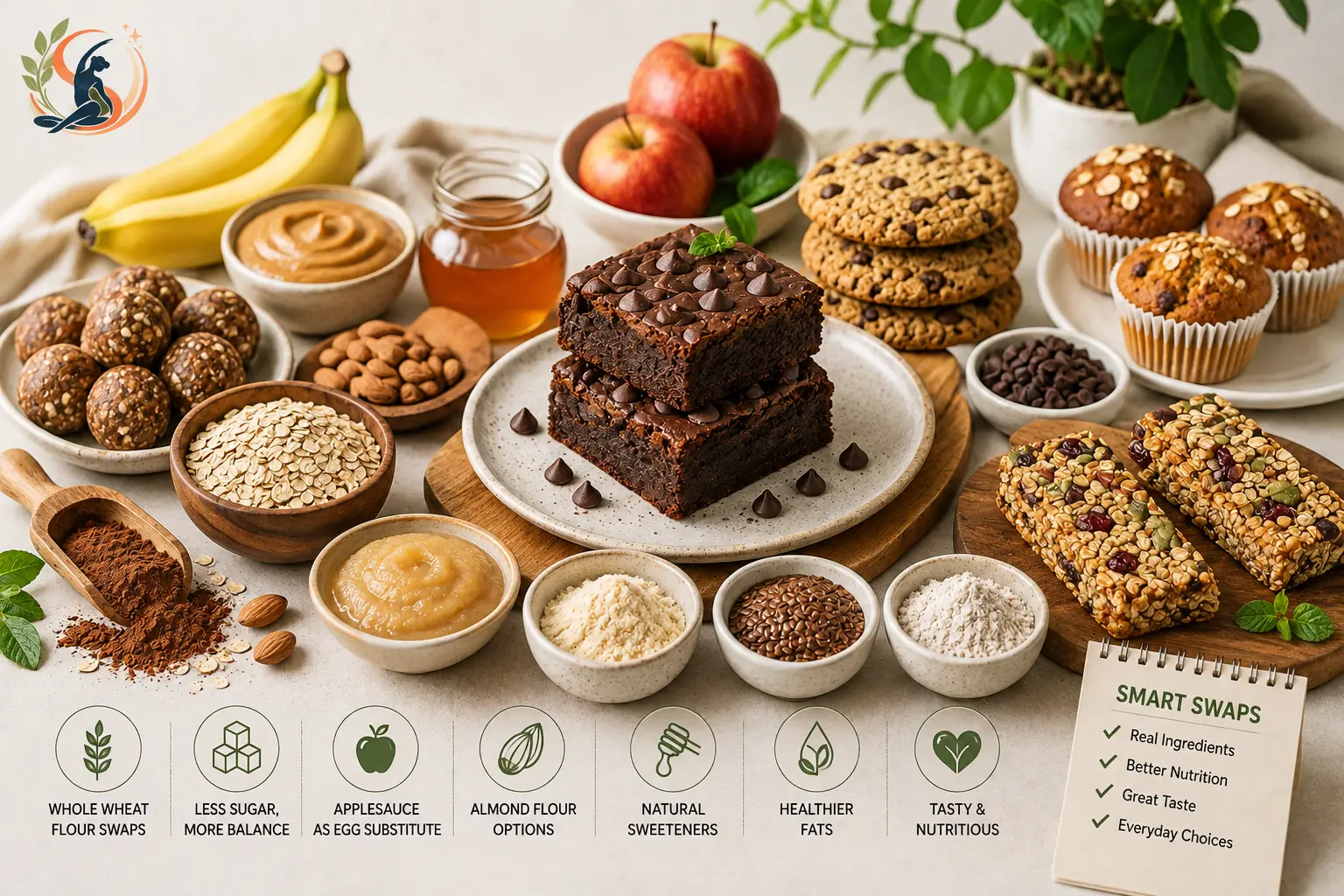
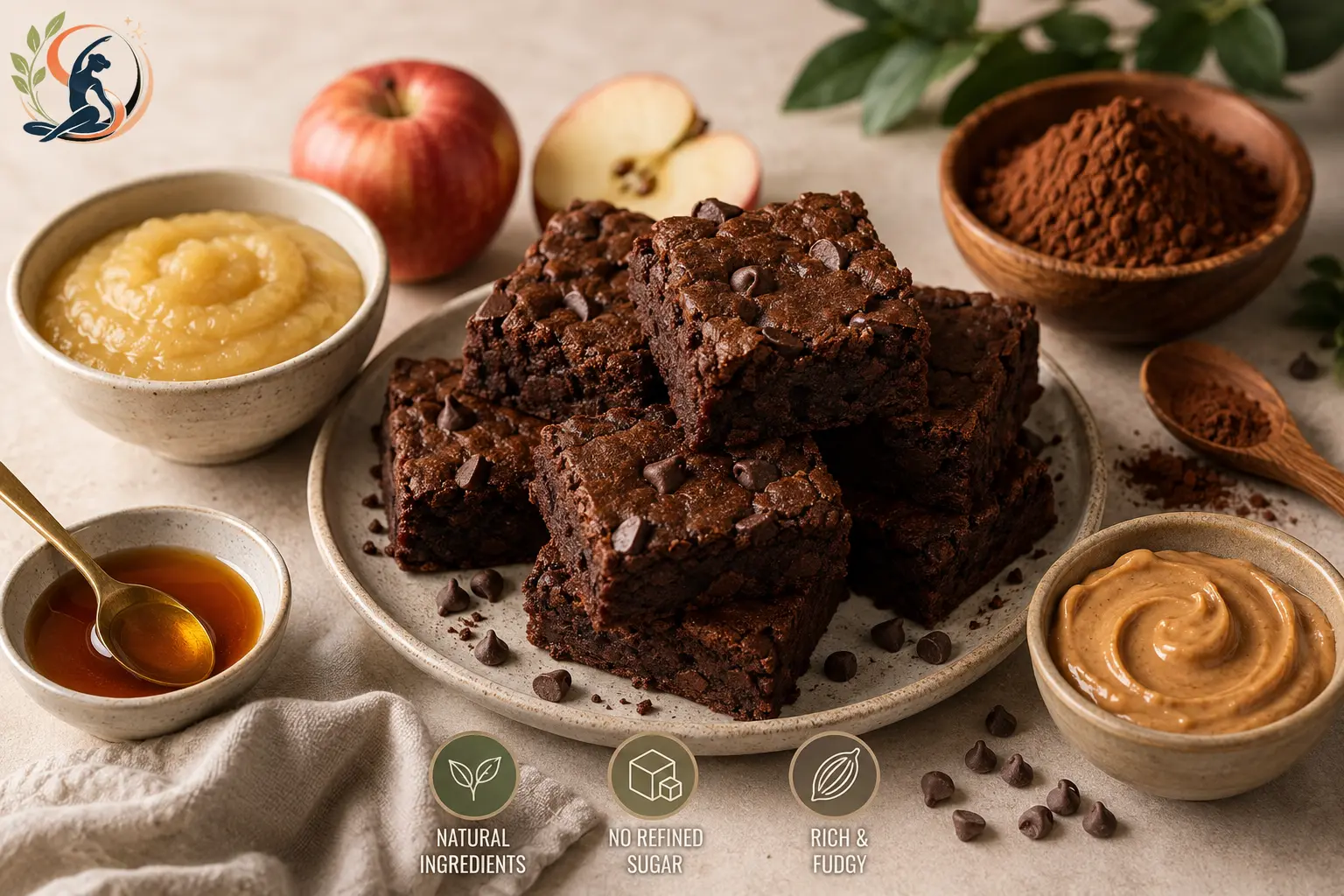
Strip it down and a genuinely simple healthy brownie really only needs three things. Unsweetened applesauce for moisture and a bit of natural sweetness. A nut butter, almond or peanut, whatever you've got, for fat and richness.
And unsweetened cocoa powder, obviously, for the actual chocolate part. Throw in some maple syrup or a couple drops of stevia if you want them sweeter, that's really the only thing separating the bare-bones version from a slightly fancier one. Applesauce and nut butter aren't the only whole-food sweetener option dates, blended into a paste, work as a natural sugar substitute too.
Step-by-Step Healthy Chocolate Brownie Recipe
Preheat to 350°F, line an 8-inch pan with parchment. Whisk 1 cup unsweetened applesauce, 1/2 cup natural almond or peanut butter and 1/3 cup maple syrup together until it's smooth. Add 1/2 cup unsweetened cocoa powder, 1/4 teaspoon baking soda, a pinch of salt and mix just until combined, don't overdo it, overmixing is basically the one way to mess this up.
Toss in some dark chocolate chips if you want. Pour it into the pan, bake for 20 to 25 minutes, until the top's set but the middle's still a little soft when you poke it. Then let it cool all the way before you cut it.
I know it's tempting not to, but they firm up a ton as they sit and slicing early just turns a clean square into a fudgy mess on your knife, every single time.
What's the Healthiest Brownie Mix, If You're Buying One?
Not making these from scratch? Fair enough, no judgment. Just read the box like you'd judge the homemade version, under ten ingredients, no partially hydrogenated oils, a sugar count per serving that isn't insane. If whole grain flour shows up before sugar on the ingredient list, that's usually a decent sign.
Healthy Banana Muffins and Other Quick Breads
Healthy Banana Muffin Recipe, Simplified
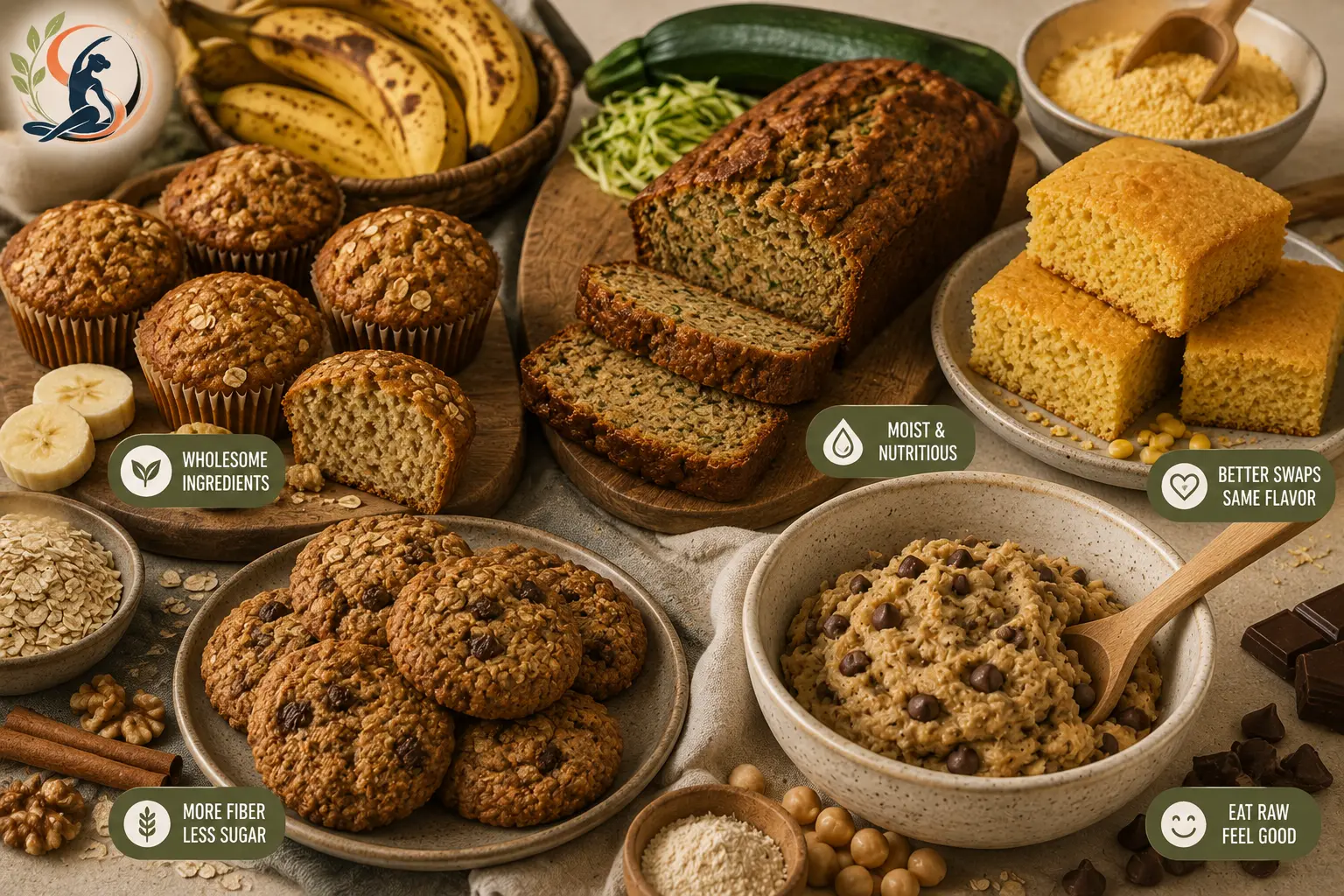
Mash up three ripe bananas, the uglier and spottier, the better, honestly. Mix in one egg or a quarter cup of applesauce if you're keeping it egg-free, plus a quarter cup melted coconut oil and a third cup honey.
Stir in a cup and a half of whole wheat flour, a teaspoon of baking soda, a pinch of salt, bake at 350°F for 18 to 20 minutes. And that's basically the whole formula behind almost every healthy banana muffin recipe out there, ripe fruit doing the sweetening, whole grain flour, not too much fat. Adding oats or nuts if you want, doesn't really change the logic. These muffins double as one of the easier snacks for kids, since ripe banana does most of the sweetening.
Healthy Zucchini Bread and Cornbread Swaps
Shredded zucchini's a good one because it adds moisture and a little nutrition without really touching the flavor, which makes zucchini bread a pretty easy first step if you're new to any of this.
Cornbread's a little trickier since people are picky about the flavor, but swapping half the butter for plain Greek yogurt and cutting the added sugar by a third keeps it moist without losing what actually makes cornbread taste like cornbread.
Healthy Cookies Without Losing the Point of a Cookie
Healthy Oatmeal Cookie Recipe Basics
Oats bring fiber a regular flour cookie just doesn't have. The usual move is swapping half the butter for unsweetened applesauce, cutting sugar by about a third and leaning a little harder on cinnamon or vanilla so it doesn't taste like something's missing.
Healthy Cookie Dough You Can Eat Raw
If you want cookie dough you can actually eat out of the bowl without worrying about raw egg or flour, the trick is starting with chickpeas or oat flour instead of regular flour, then blending in nut butter and a natural sweetener. Sounds weird, I know. But blend it smooth and stir in some cocoa powder or vanilla and it's shockingly close to the real thing.
Granola, Trail Mix and Other Guilt-Free Baking Snacks
Healthy Granola Recipe Fundamentals
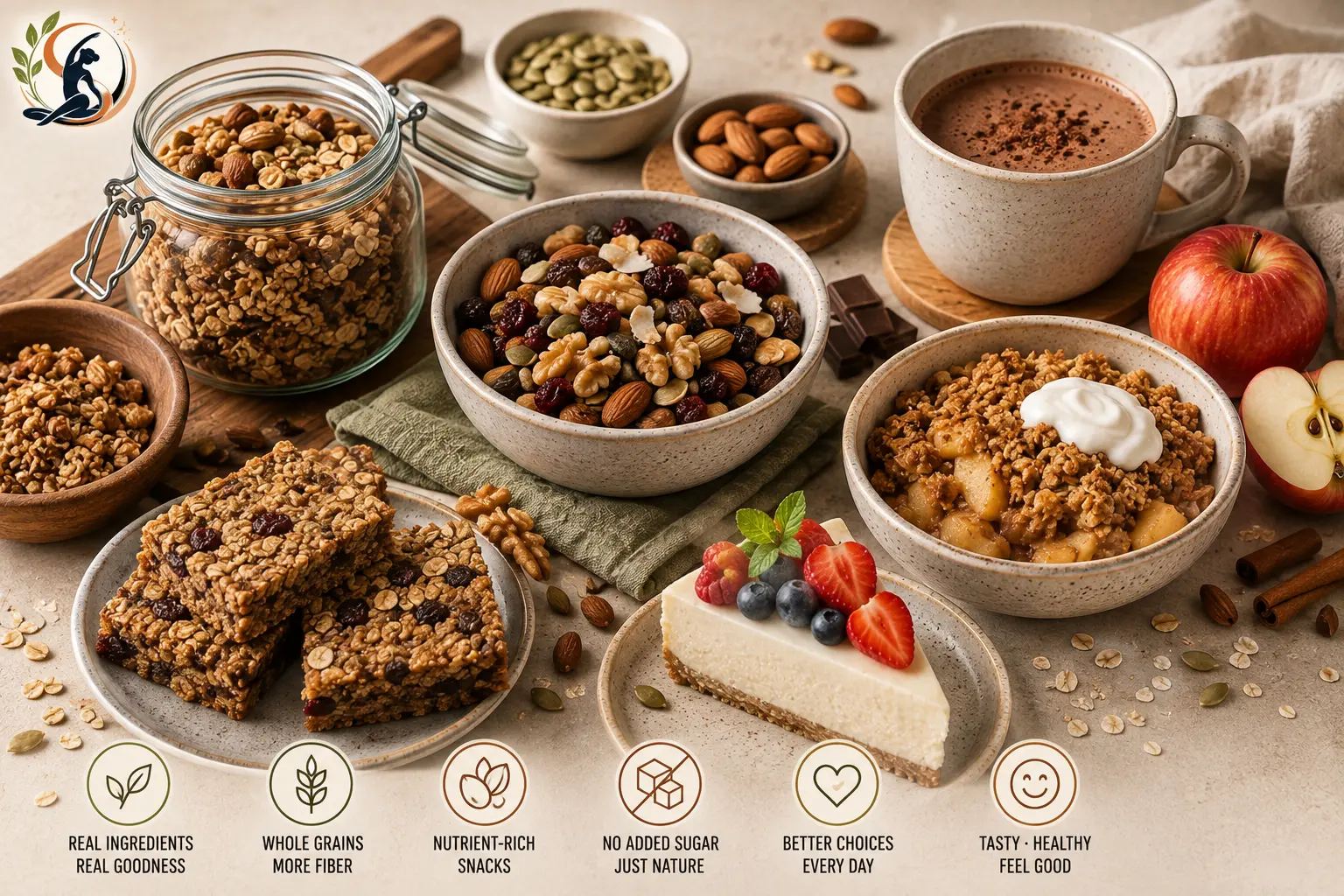
Good everyday granola starts with rolled oats, a small amount of oil and honey or maple syrup for sweetness, baked low and slow, around 300°F, because oats go from toasted to burning fast if you wander off for even a minute.
Nuts, seeds, a little cinnamon, that's the rest of it. Press the same mix into a pan and bake it a bit longer and you've basically got flapjacks instead, firmer, sliceable, good for a lunchbox. The same oats-and-nut-butter base shows up in homemade snack bars, if a bar format travels better than a brownie square.
Building a Healthy Trail Mix Without Added Sugar
Trail mix is honestly just proportions once you get past the branding. Roughly equal nuts, seeds and unsweetened dried fruit, maybe a small handful of dark chocolate chips thrown in. Skip the store-bought candy-coated stuff if you can, it usually has more added sugar than the actual fruit and nuts combined, which feels a little backwards when you think about it.
A Few Other Treats Worth a Mention
Apple crisp gets easier to lighten up too, swap the buttery, sugary topping for oats, a little coconut oil and cinnamon and let the baked apples do most of the sweetening on their own. Cheesecake usually works with Greek yogurt or light cream cheese blended with a natural sweetener, sitting on a crust of crushed nuts or oats instead of the usual butter and graham crumbs.
And if you want something warm on a cold night, unsweetened cocoa powder, whatever milk you like and a touch of honey gets you the same cozy hot chocolate without the sugar hiding in the packet stuff.
Common Mistakes in Healthy Baking
Changing everything at once is probably the biggest one and it's an easy trap because you're excited and want the whole thing healthier right now. But swap the flour, the sugar, the fat and the eggs all in the same batch and when something goes wrong, you've got no idea which change did it. Better to change one thing at a time until you actually understand how a recipe reacts, then move on to the next.
Assuming healthy automatically means bland is another common one. A pinch of salt, decent vanilla, some cinnamon or warm spice, that stuff does more for flavor than people give it credit for and skipping it is usually why the "healthy" version tastes worse than it had to, which then makes people quietly give up on the whole thing a week later.
And portion size matters more than people want to admit. Eat a healthier brownie in a portion twice the normal size and you've basically undone the point of swapping anything in the first place. Doesn't matter how clean the label looks.
Frequently Asked Questions
1. How do you make baked goods healthier?
Swap in whole grain flour for part of the white flour, cut sugar by about a third to a half and replace some butter or oil with applesauce, mashed banana or Greek yogurt. Change one ingredient at a time so you can tell what's affecting the texture.
2. What can replace sugar in baking?
Mashed banana, unsweetened applesauce, honey and maple syrup all work as partial sugar replacements. Most recipes hold up best when only half the sugar is replaced rather than all of it, since sugar also affects moisture and texture, not just sweetness.
3. Can you bake with almond flour instead of regular flour?
Yes, though it works best replacing half of the regular flour rather than all of it, since almond flour doesn't rise the same way. Recipes built specifically around almond flour, rather than a straight swap, tend to give more reliable results.
4. Is there such a thing as a healthy brownie?
Yes. A healthy brownie recipe typically swaps butter and refined sugar for applesauce, nut butter and a natural sweetener like maple syrup, while keeping the same rich, fudgy texture people want from a real brownie.
5. What's the healthiest brownie mix?
Look for a short ingredient list, whole grain flour listed before sugar and no partially hydrogenated oils. A reasonable added sugar count per serving, generally under 10 grams, is a solid benchmark when comparing boxed options.
6. How do you make healthy brownies without sugar?
Replace the sugar with maple syrup, honey or a few drops of liquid stevia and use ripe mashed banana or applesauce for extra natural sweetness and moisture. Most sugar-free brownie recipes still use a small amount of natural sweetener rather than cutting it entirely.
Conclusion
Healthy baking really doesn't have to be a choice between one rigid recipe and a random pile of tips that don't attach to anything. Once you get what each swap is actually doing for the moisture, the structure, the sweetness, you can start adjusting basically any recipe with real confidence instead of just guessing and hoping, which is what I did for way longer than I should've. Start with the brownies, get a feel for the swaps and the rest of it, muffins, cookies, granola, whatever else, starts to make a lot more sense from there.


Comments (0)
No comments yet. Be the first to share your thoughts!
Leave a Comment