
I used to think leg day meant a barbell and a squat rack. No other option, full stop, that's just how I saw it for years. Then I moved apartments, lost my gym membership for a few months and had nothing but two dumbbells sitting in the corner collecting dust. Turns out I was wrong about the whole thing. Some of my best leg growth actually happened during that stretch, which honestly still bugs me a little when I think about how long I wasted assuming otherwise.
This guide breaks down real leg workouts with dumbbells, hamstring exercises you can do at home and bodyweight backups for the day's equipment just isn't around. We'll get into quads, hamstrings, glutes and a simple routine you can actually stick with, not some fantasy split you'll quit by week two.
Ready to stop assuming you need a full gym to build real leg strength? Let's just get into it.
Why Leg Workouts With Dumbbells Work So Well
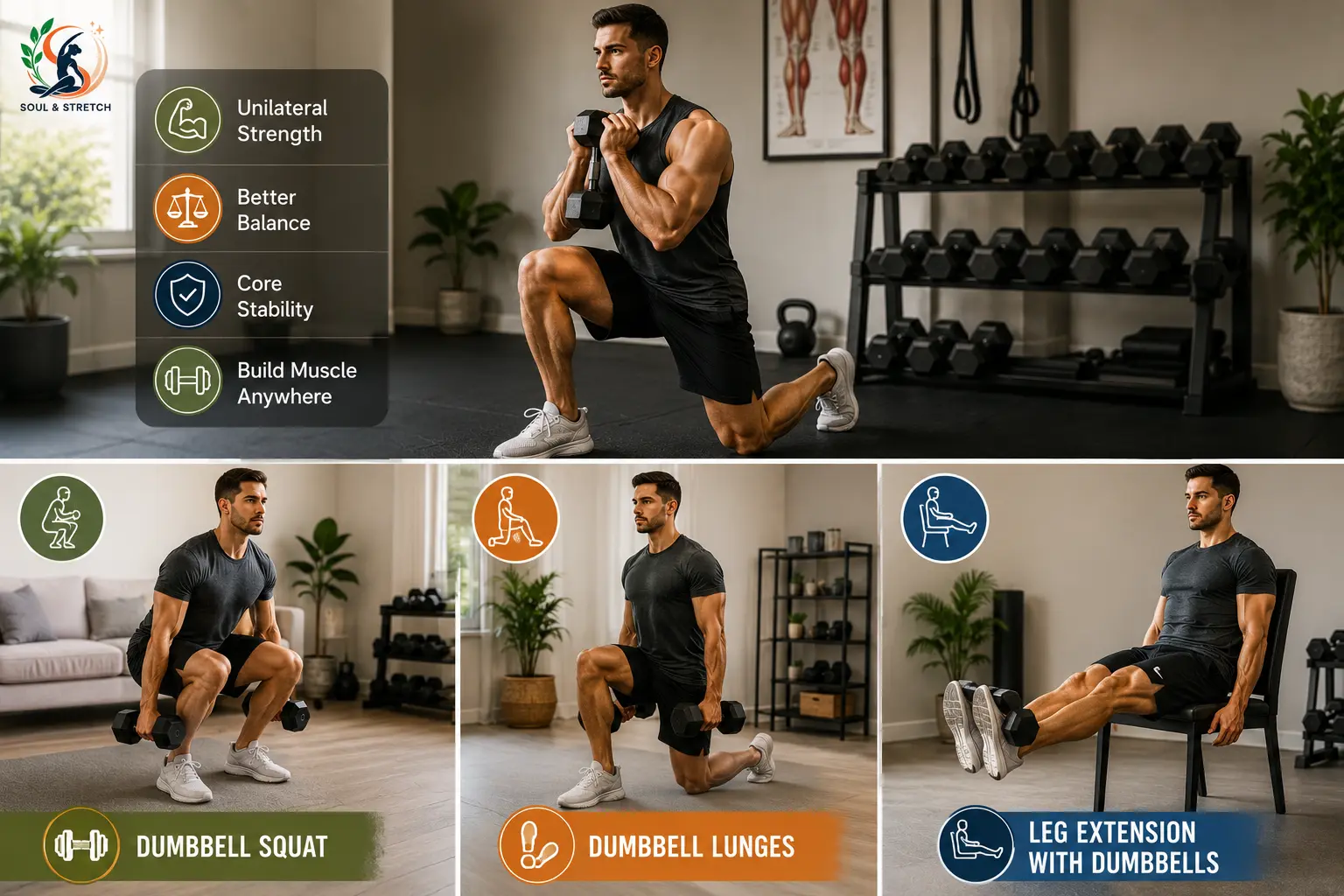
Dumbbells force each leg to work on its own, which exposes weaknesses a barbell tends to hide pretty well. Your dominant leg can't quietly pick up the slack the way it does under a bar resting across your shoulders. It has nowhere to hide, basically.
This kind of unilateral leg training also builds better balance and core stability, things a lot of traditional leg workouts at the gym skip entirely without anyone really noticing. And for anyone without access to heavy equipment, leg workouts with dumbbells still deliver enough resistance to genuinely build muscle, especially once you start pushing sets closer to failure instead of stopping early out of habit.
Best Dumbbell Leg Exercises for Quads
Quad training with dumbbells works better than most people expect. Way better, honestly, once you actually dial in the right exercises instead of just guessing.
Dumbbell Squat
The dumbbell squat is about as close to a foundational movement as it gets, no argument there. Hold a dumbbell in each hand at your sides or one at your chest goblet-style, then squat down until your thighs are roughly parallel to the floor. This one exercise alone covers most of what a good quad workout with dumbbells session actually needs.
Dumbbell Lunges
Lunges hit each leg separately, which is exactly why they work so well for unilateral leg training. Step forward, lower your back knee toward the floor, then push back up through your front heel. Walking lunges or stationary reps both work fine, just pick whichever fits your space that day.
Leg Extension With Dumbbells
You can mimic a leg extension machine using a dumbbell held between your feet while seated on a sturdy chair or bench. Extend your legs out fully, squeeze your quads hard at the top, then lower slowly. Not perfect, I'll admit that. But it genuinely isolates the quads in a way few other home exercises manage to pull off.
Hamstring Exercises at Home
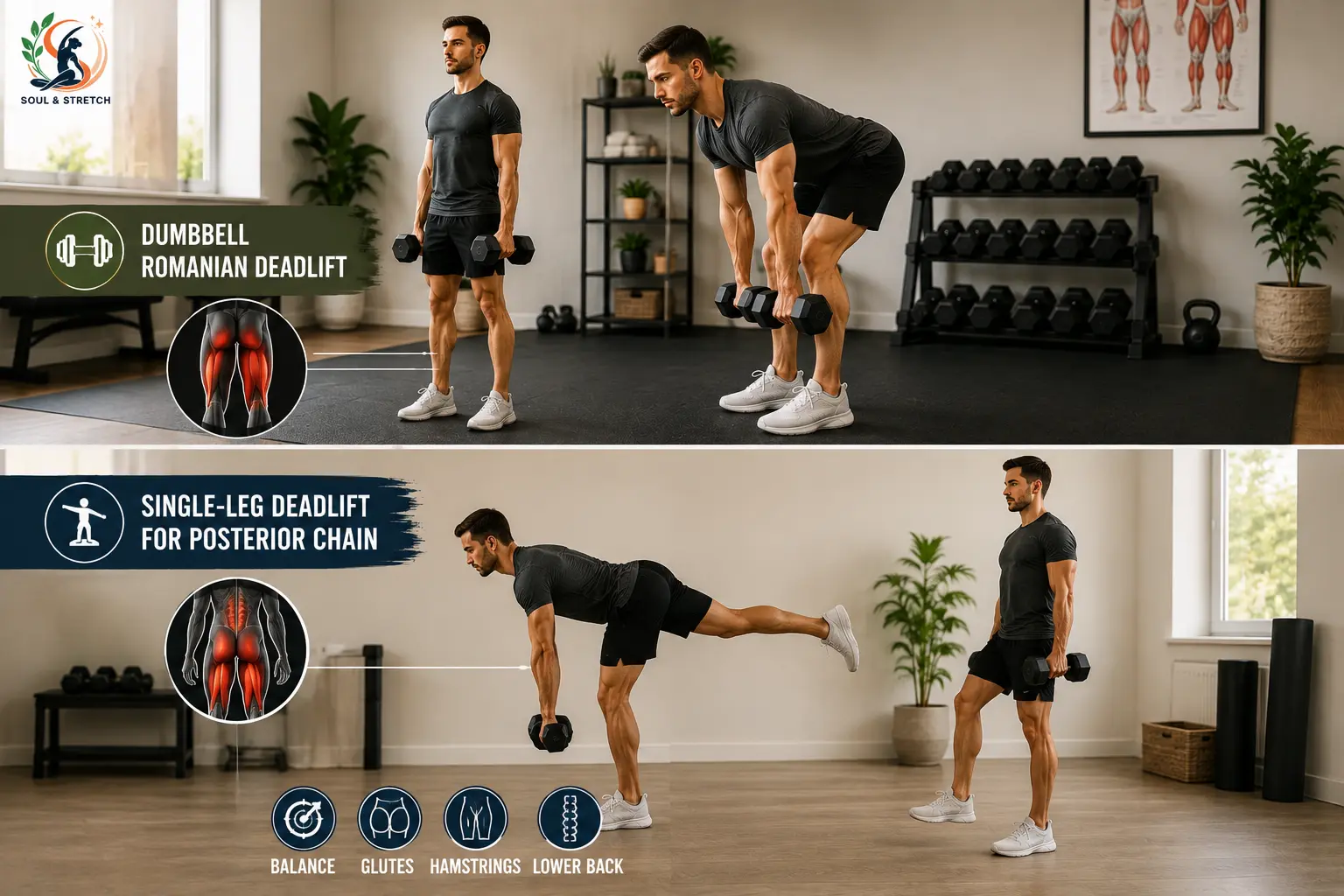
Hamstrings get neglected constantly in home workouts. Mostly because people assume you need some fancy leg curl machine to train them properly. You really don't, not even close.
Dumbbell Romanian Deadlift
The Romanian deadlift is probably the single best hamstring exercise at home you can do with just dumbbells. Hinge at your hips, keep a slight bend in your knees and lower the dumbbells down your legs until you feel a deep stretch through your hamstrings. Drive your hips forward to stand back up, squeezing your glutes hard at the top.
Single-Leg Deadlift for Posterior Chain
Single-leg deadlifts challenge your balance while hammering the entire posterior chain, hamstrings, glutes and lower back, all working together at once. Hold one dumbbell, hinge forward while extending your free leg back behind you, then return to standing. Harder than it looks the first few tries, trust me on that. But it pays off fast once you get the hang of it.
Bodyweight Leg Exercises When You Have No Weights
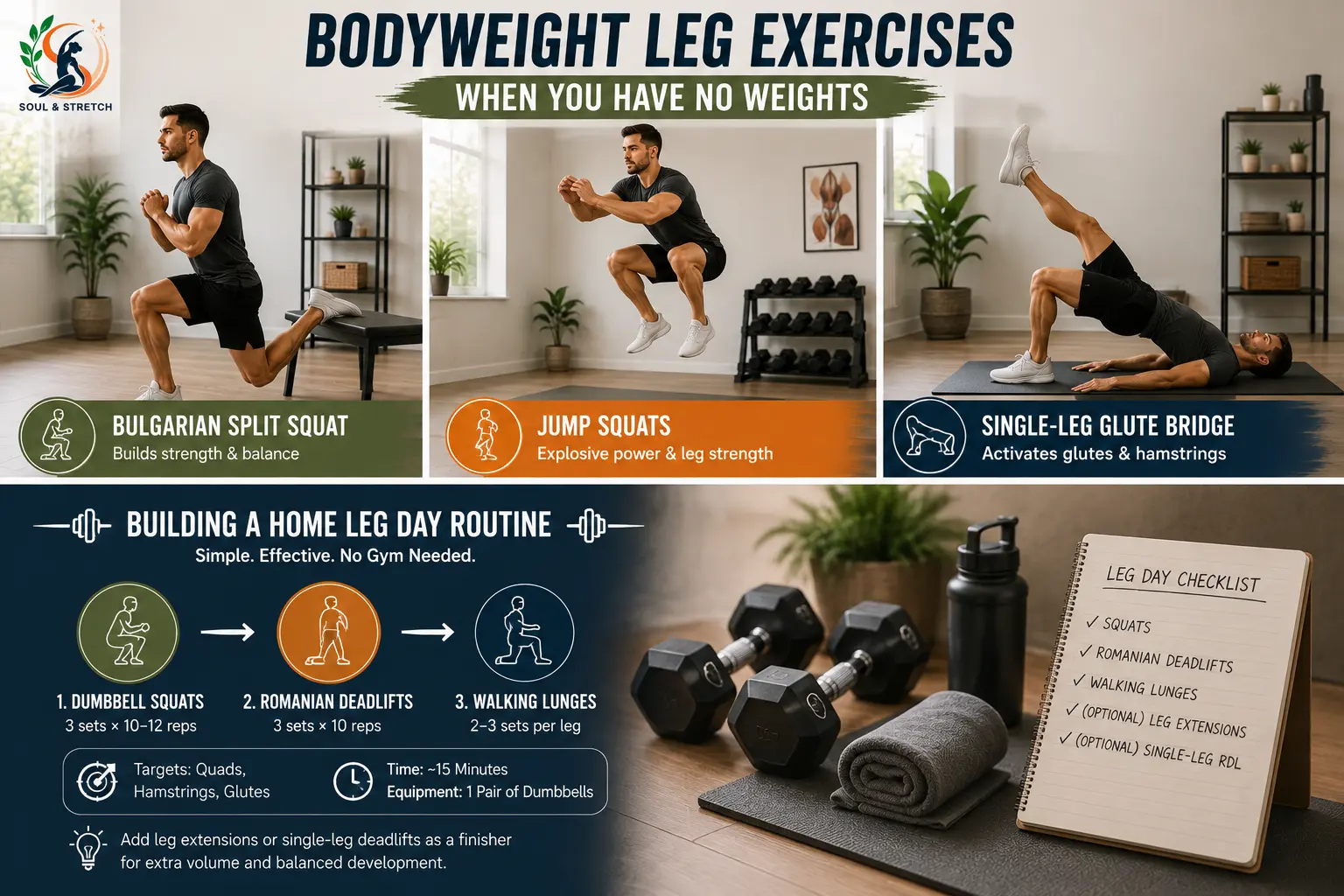
Some days dumbbells just aren't an option. That's fine, genuinely fine, no need to skip the workout entirely because of it. Bodyweight leg exercises can still build real strength, especially for beginners just getting started with training.
Bulgarian split squats using just your body weight, jump squats and single-leg glute bridges all challenge your legs plenty without any added resistance at all. Slowing down the tempo, adding a two or three second pause at the bottom of each rep, makes bodyweight leg exercises feel way harder than people expect walking in.
Building a Home Leg Day Routine
Putting together a solid home leg day routine really doesn't need to be complicated. At all, honestly.
Start with dumbbell squats for three sets of ten to twelve reps, move into Romanian deadlifts for three sets of ten, then finish with walking lunges for two to three sets per leg. This simple leg day routine covers quads, hamstrings and glutes without needing more than one pair of dumbbells and maybe fifteen minutes of floor space, tops.
For anyone wanting more volume, tossing in leg extensions or single-leg deadlifts as a finisher rounds things out nicely without turning the whole session into some hour-long ordeal nobody has time for anyway.
Combine this with our chest exercises with dumbbells guide for a complete two-day home split. Add in our dumbbell back exercises guide, and you've got quads, hamstrings, chest, and back fully covered at home.
Unilateral Leg Training and Why It Matters
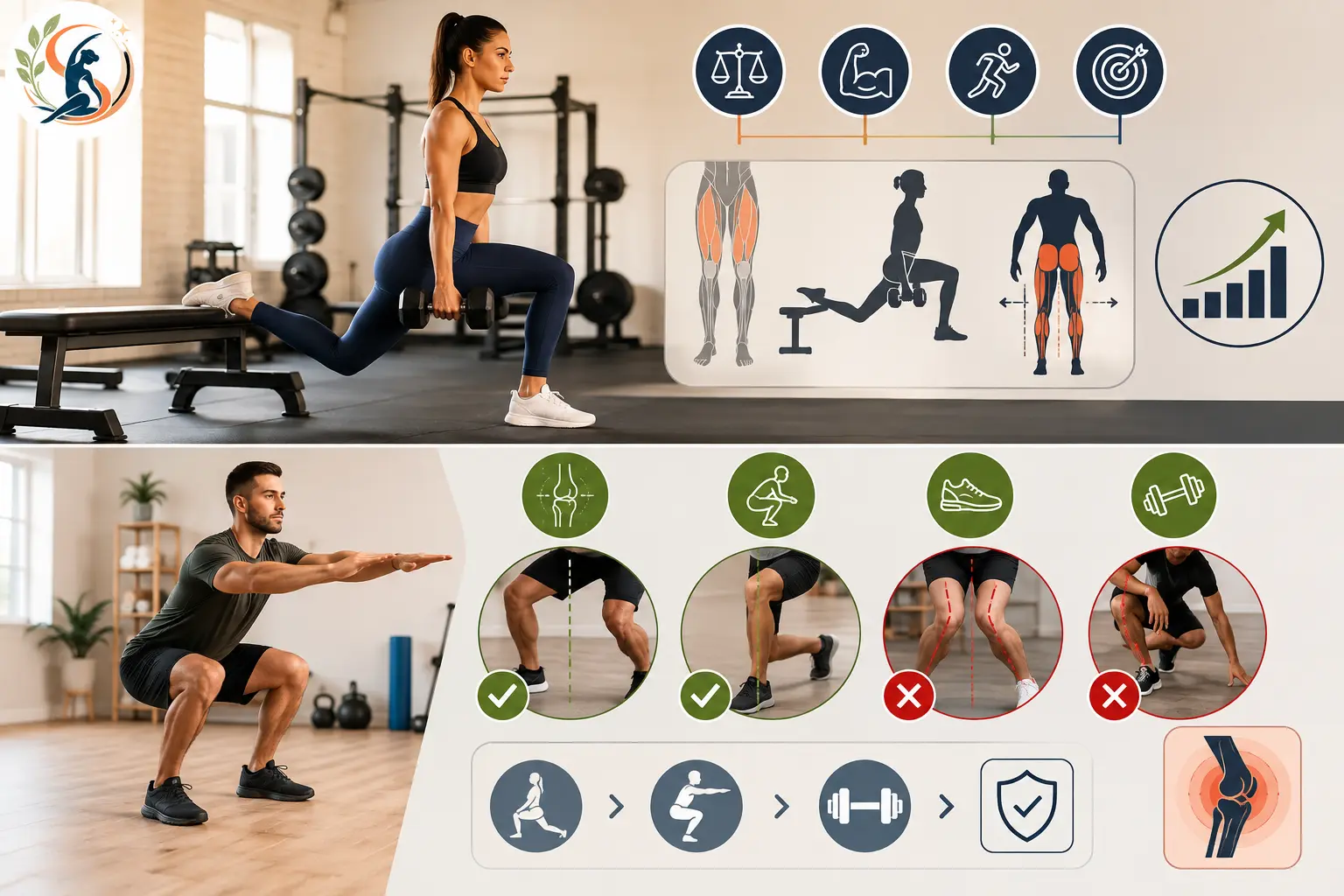
Training one leg at a time isn't just about balance, though that's a real benefit too, don't get me wrong. Unilateral leg training forces your smaller stabilizer muscles to actually engage, muscles that stay lazy during two-legged movements like a standard dumbbell squat most of the time.
Over time, this evens out strength imbalances most people don't even realize they have until one leg suddenly feels noticeably weaker mid-set, which happened to me more than once before I started paying attention. Working single-leg movements into your routine consistently, even just once a week, closes that gap way faster than most people expect it to.
Avoiding Knee Pain During Leg Workouts
Knee pain during leg workouts usually comes down to a handful of common issues and honestly most of them are fixable pretty quickly once you actually know what to look for.
Make sure your knees track over your toes during squats and lunges instead of caving inward, which puts unnecessary stress right on the joint itself. Warming up properly with a few bodyweight squats before adding dumbbells also makes a bigger difference than people give it credit for, way bigger.
If pain persists even with good form, scaling back the range of motion or the weight temporarily usually solves it without needing to skip leg day entirely out of frustration. If your hips feel locked up after squats, our psoas stretch guide walks through releasing that tightness properly.
How Tom Platz Built Legendary Legs
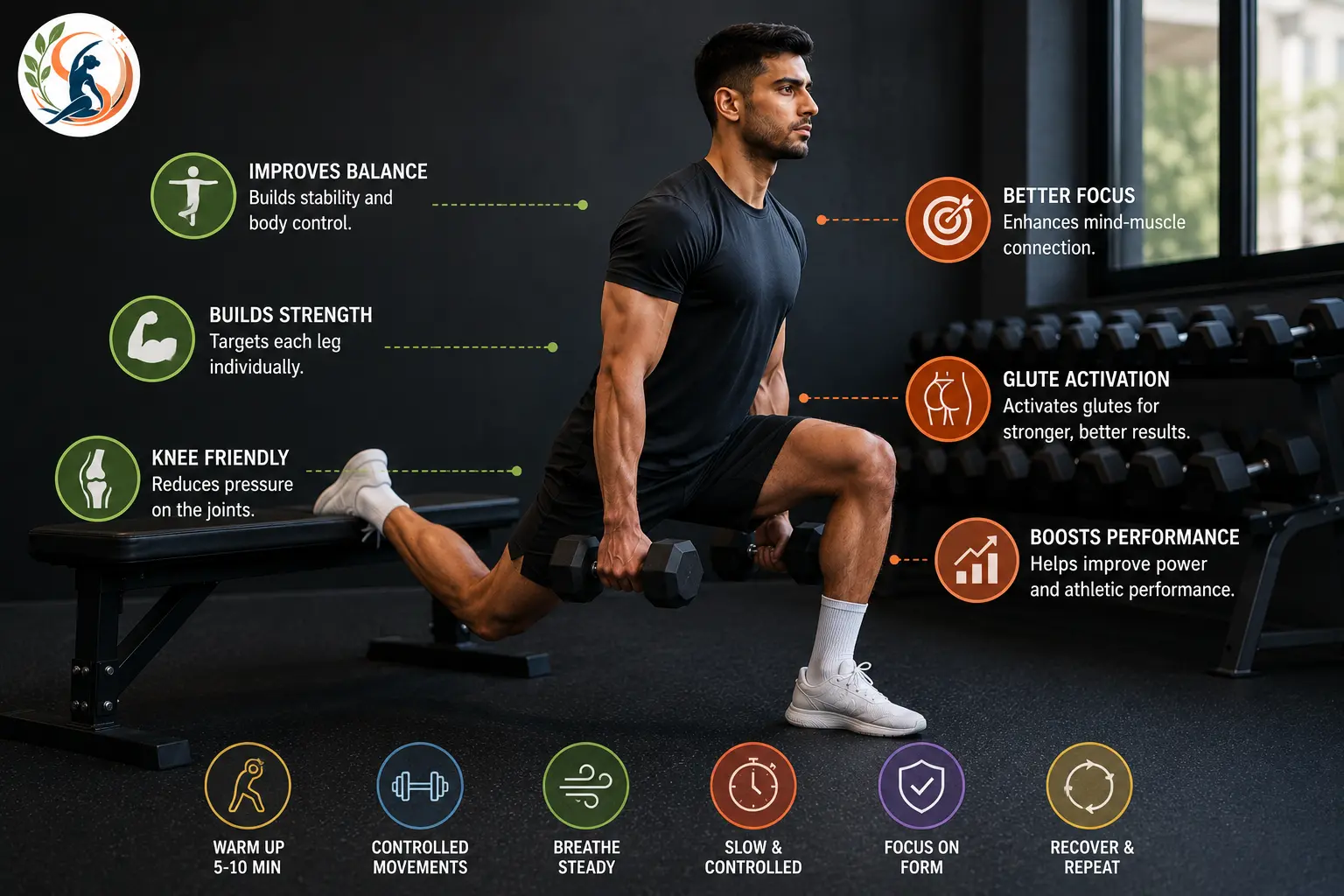
If you've spent any time in bodybuilding circles, you've probably heard of the tom platz leg workout, famous for being brutally high volume and just plain relentless in a way most people can't even fathom attempting. Platz built some of the most legendary legs in bodybuilding history through insane squat volume and a willingness to push way past normal discomfort, the kind most of us would tap out from in minutes.
Most of us aren't chasing that level of extremity and honestly, you really don't need to be. But there's something worth taking from his approach anyway, consistency and genuinely pushing your sets, even with something as simple as leg workouts with dumbbells at home, builds real results over time. It's not complicated. It just requires actually showing up.
Glute Activation Before Your Leg Workout
A lot of people skip this step entirely and it's probably costing them results without them even realizing it. Glute activation exercises before your main lifts wake up muscles that tend to stay dormant, especially if you sit most of the day at a desk job like most of us do now.
A few sets of glute bridges or banded lateral walks before jumping into dumbbell squats makes a noticeable difference in how well your glutes actually fire during the heavier work later on. Skipping this step often just means your quads or lower back end up compensating for glutes that never got the memo to turn on in the first place.
Progressive Overload With Dumbbells
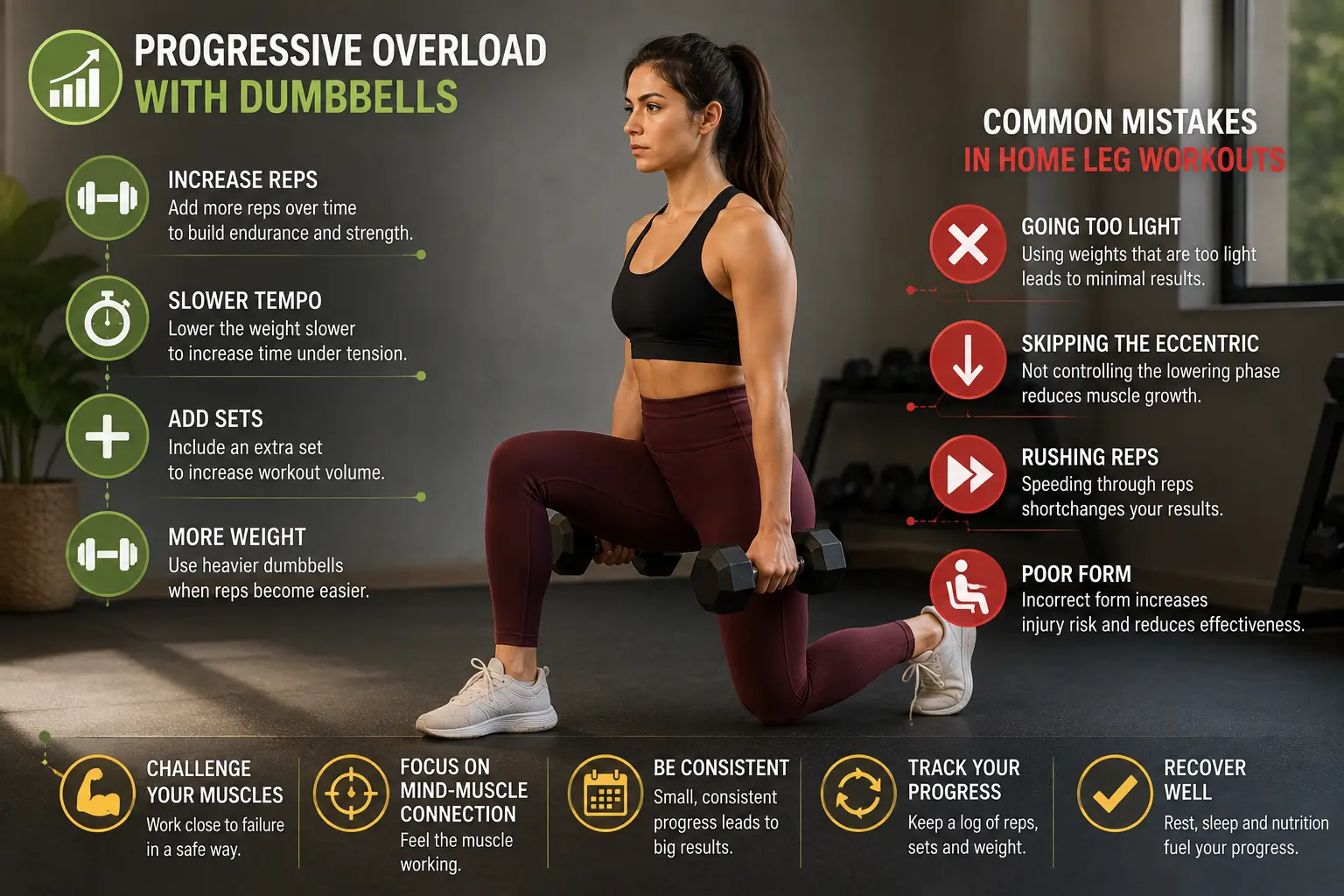
Progressive overload matters just as much with dumbbells as it does with any barbell setup, even though people assume otherwise since dumbbells feel more casual somehow, less "serious" I guess. Gradually increasing reps, slowing your tempo or adding an extra set over time keeps your legs adapting instead of plateauing after the first few weeks like so many home routines tend to do.
If you only own one or two pairs of dumbbells, don't stress, you can still progress just fine. Slower tempos, added pauses at the bottom of each rep and shorter rest periods between sets all crank up difficulty without needing a single extra pound of weight. Matters more than people realize when you're working with limited equipment at home.
Common Mistakes in Home Leg Workouts
I've watched a lot of people rush through leg workouts with dumbbells without really thinking about what's actually working or not working, in their form.
The biggest mistake, by far, is going too light for too long, treating dumbbell leg exercises like some kind of warmup instead of the actual workout itself. If you can knock out twenty smooth reps without much effort at all, it's time to grab heavier dumbbells or slow your tempo way down.
Another common issue is skipping the eccentric or lowering portion of each rep, which wastes a huge chunk of the muscle-building stimulus these exercises are actually capable of delivering when done right.
Rushing through reps just to finish faster shortchanges your results too. Slowing down, controlling each rep fully and actually feeling the target muscle working matters so much more than speeding through a set just to check it off some mental list.
How Often Should You Train Legs
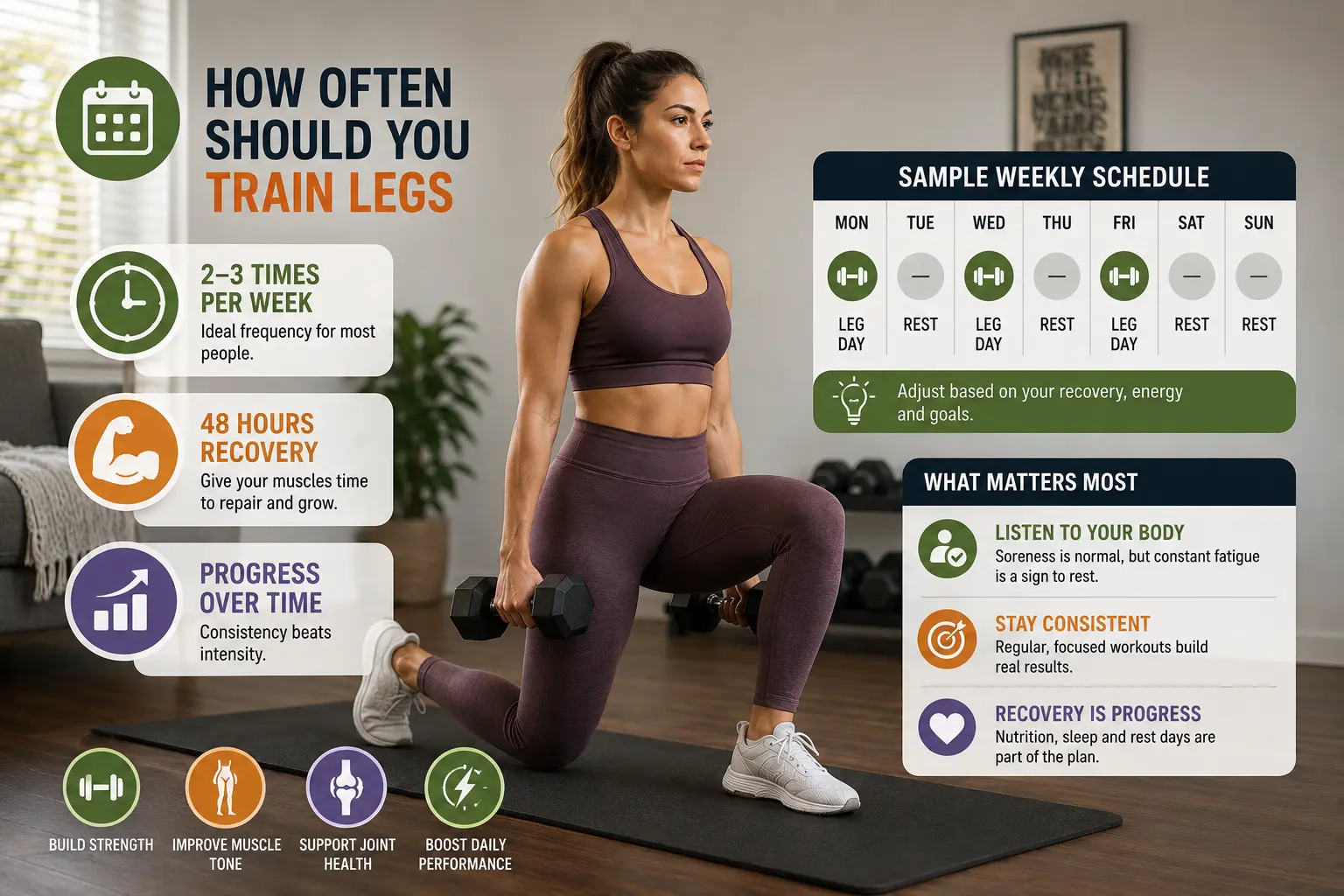
Training legs two to three times per week tends to work well for most people following leg workouts with dumbbells at home, especially when sessions stay focused instead of dragging on for an hour for no real reason. Your legs need roughly 48 hours to recover properly between sessions, so spacing training days out avoids overtraining while still building consistent strength over time.
Beginners might start with two sessions weekly, then add a third once recovery feels manageable and soreness stops lingering for days afterward. Listening to how your own body actually responds matters way more than rigidly following some fixed schedule you found online from someone whose body isn't yours.
Frequently Asked Questions
1. Can you build legs with just dumbbells?
Yes, dumbbells provide enough resistance to build real leg muscle, especially for beginners and intermediate lifters. Progressive overload, gradually increasing reps, sets or weight over time, matters more than the specific equipment used to train your legs effectively.
2. Is 3 exercises enough for leg day?
Yes, three well-chosen exercises covering quads, hamstrings and glutes, like squats, Romanian deadlifts and lunges, cover most of what a leg day needs. Quality and intensity matter far more than cramming in extra exercises just to feel thorough.
3. Can you build leg muscles without weights?
Yes, bodyweight leg exercises like Bulgarian split squats, jump squats and single-leg glute bridges can build real muscle, especially for beginners. Slowing down tempo and adding pauses increases difficulty significantly without needing any added external resistance at all.
4. What's the best hamstring exercise at home?
The dumbbell Romanian deadlift is widely considered the best hamstring exercise at home, since it directly targets the entire posterior chain. Single-leg deadlifts and glute bridges also work well as effective hamstring-focused alternatives without needing a machine.
5. How do I avoid knee pain during leg workouts?
Keep your knees tracking over your toes during squats and lunges, warm up properly beforehand and avoid rushing through reps with poor form. If pain continues despite good technique, scale back weight or range of motion temporarily instead of pushing through.
6. What are the top 5 dumbbell leg exercises?
The top 5 dumbbell leg exercises are the dumbbell squat, Romanian deadlift, walking lunges, single-leg deadlift and leg extension with dumbbells. Together, these cover quads, hamstrings and glutes for a genuinely complete lower body workout.
Conclusion
Building strong legs doesn't require a fully loaded gym or a squat rack sitting in your garage collecting dust for months. A solid set of leg workouts with dumbbells, paired with a few reliable bodyweight backups, covers everything your legs actually need to grow over time.
Stay consistent, push your sets when you genuinely can, care more about form than ego and give your body the time it actually needs to respond and get stronger, one honest rep at a time. Finish leg day with our post-workout stretch routine to help your muscles recover faster.


Comments (0)
No comments yet. Be the first to share your thoughts!
Leave a Comment