
I toppled sideways into the person next to me the first time I tried eagle position yoga, arms tangled, one leg wrapped nowhere near where it should've been and the whole row of us just laughed it off together, none of us taking ourselves too seriously that day.
Eagle position yoga or garudasana in Sanskrit, looks deceptively simple from across the room, limbs wrapped tight around each other in a shape that somehow demands balance, flexibility and focus all at once. This guide walks through what actually happens in your body, how to build toward it safely and why it's genuinely worth the wobbly, slightly embarrassing first attempts everyone goes through.
Shaky ankles, tangled arms and eventually, a pose that quietly becomes one of your favorites in the whole practice.
What Is Eagle Position Yoga (Garudasana)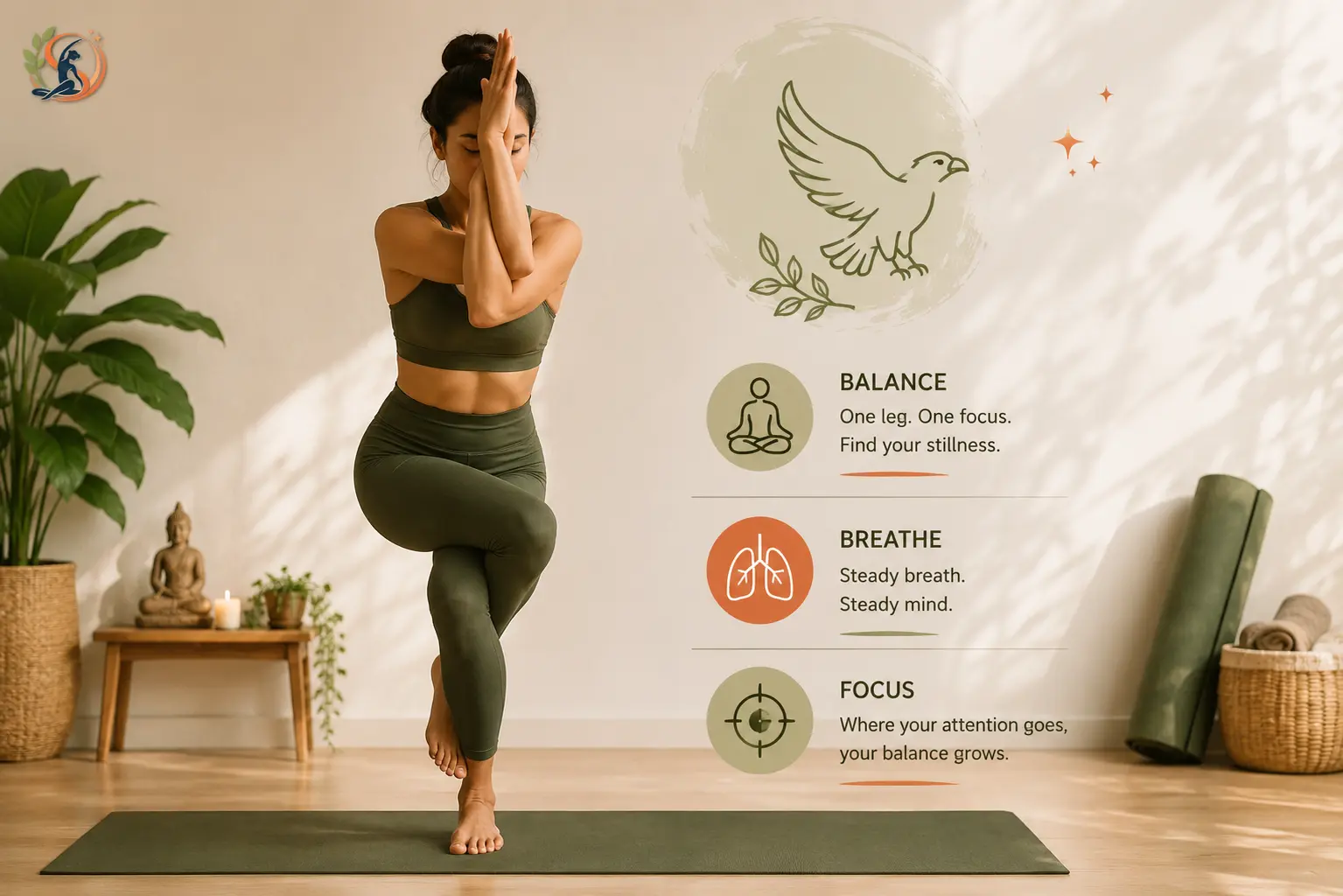
Eagle pose, known as garudasana, wraps one arm and one leg around the other while balancing on a single standing leg, creating a compact, twisted shape that looks far more complicated than it actually is once your body genuinely understands the pattern behind it.
It's named after Garuda, a mythical bird figure in Hindu tradition often depicted as a vehicle for the god Vishnu and the shape does genuinely resemble a bird with folded wings if you squint a little and use some imagination.
What surprised me most about eagle pose yoga once I actually got past the wobbling was realizing how much of it comes down to focus rather than pure flexibility alone. Your eyes, your breath and your standing leg all have to work together in sync and the moment your attention drifts even slightly, balance goes with it almost instantly, no matter how flexible you actually are.
The Benefits of Eagle Pose Yoga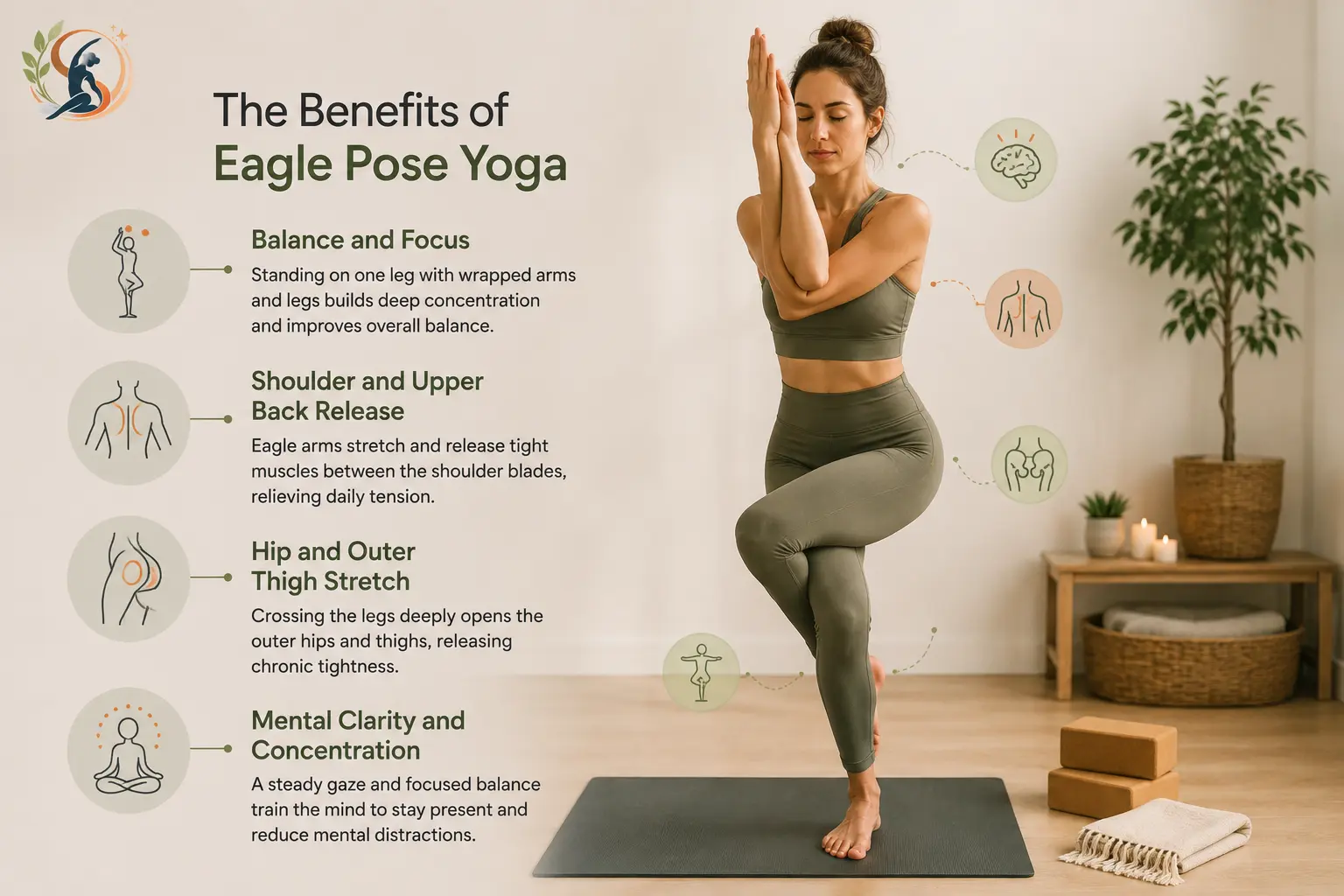
Most people assume this pose is purely about balance and while that's a big part of it, eagle position yoga delivers a surprising range of benefits packed into one fairly compact, twisted shape that touches more of the body than it first appears to.
Balance and Focus
Standing on one leg while your arms and other legs wrap around each other forces a level of concentration most standing poses simply don't demand from the body or mind. Regular practice genuinely sharpens focus, both on and off the mat, in a way that's hard to appreciate until you notice yourself steadier during other balance-dependent activities too, like carrying groceries up icy stairs without a second thought.
Shoulder and Upper Back Release
The eagle arms position, wrapping one arm under and over the other, stretches the muscles between the shoulder blades that rarely get touched during a normal day of hunching over a desk or phone screen for hours at a stretch. This release tends to feel almost immediate, even during your very first attempt at the shape, before you've even mastered the rest of the pose.
Hip and Outer Thigh Stretch
Crossing one leg tightly over the other stretches the outer hip and thigh, an area that stays chronically tight for a lot of people, especially runners and anyone who sits most of the day without much lateral movement built into their routine at all.
Mental Clarity and Concentration
Because balance depends so heavily on a fixed gaze point, eagle pose yoga trains a specific kind of mental stillness that carries over well beyond the pose itself, into other parts of daily life you wouldn't necessarily expect. A wandering mind shows up instantly here, which makes it a strangely effective mindfulness tool disguised as a balance pose, one that calls out distraction almost immediately.
Who Should Try Eagle Position Yoga
This pose works well for a wide range of practitioners, though it does ask a bit more coordination than some other standing poses genuinely require. Here's who tends to benefit most from working eagle position into a regular practice, based on the range of students I've watched grow into this shape over time:
Desk workers carrying chronic tension between the shoulder blades and upper back
Runners and cyclists with tight outer hips and IT bands from repetitive motion
Anyone looking to sharpen focus and balance through a genuinely engaging standing pose
Practitioners working toward more advanced arm balances that require similar coordination
People wanting a pose that challenges both the body and a wandering, distracted mind
If you're still building your foundation, working through some other foundational standing poses pairs well with eagle position as a next step.
How to Do Eagle Pose Step by Step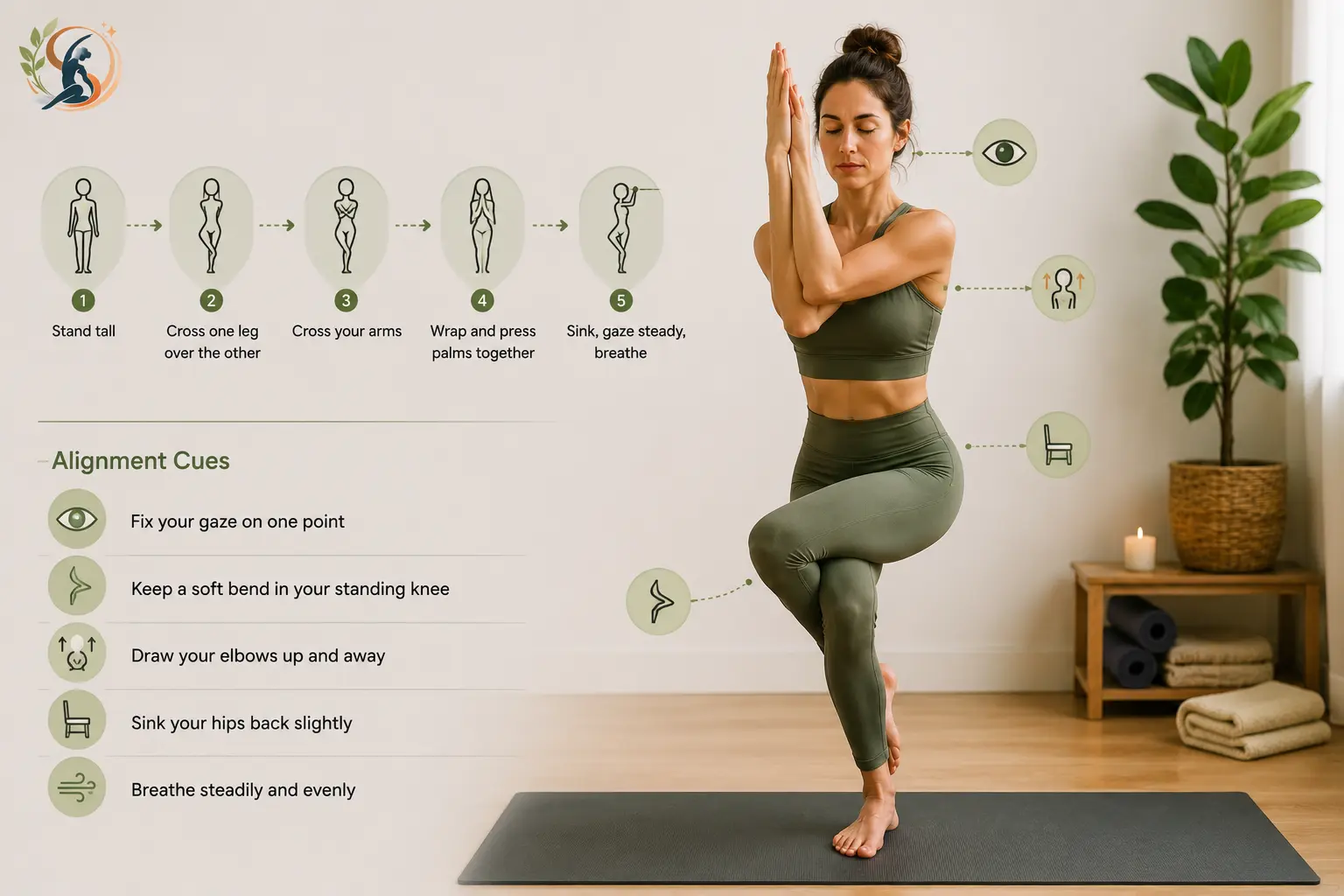
Getting into eagle position yoga safely starts with accepting that wobbling is completely normal, even expected, especially in the first several attempts you make at this shape. I spent weeks falling out of it before something finally clicked and honestly, that struggle was part of what made it satisfying once it actually did click into place.
Start standing tall, bend your knees slightly and cross one leg over the other, hooking your foot behind the opposite calf if your balance genuinely allows it that day. Bring your arms out in front, cross one elbow over the other, then wrap your forearms so your palms come together, forming the classic eagle arms shape most people picture.
Sink your hips slightly, keep your gaze fixed on one point and breathe steadily rather than holding your breath through the inevitable wobble.
Alignment Cues for Eagle Arms
Fix your gaze on one unmoving point to genuinely help stabilize your balance
Keep a soft bend in your standing knee rather than locking it straight
Draw your elbows up and away from your chest to deepen the shoulder stretch
Sink your hips back slightly as though sitting into an invisible chair
Breathe steadily and evenly instead of holding your breath through the wobble
Variations of Eagle Position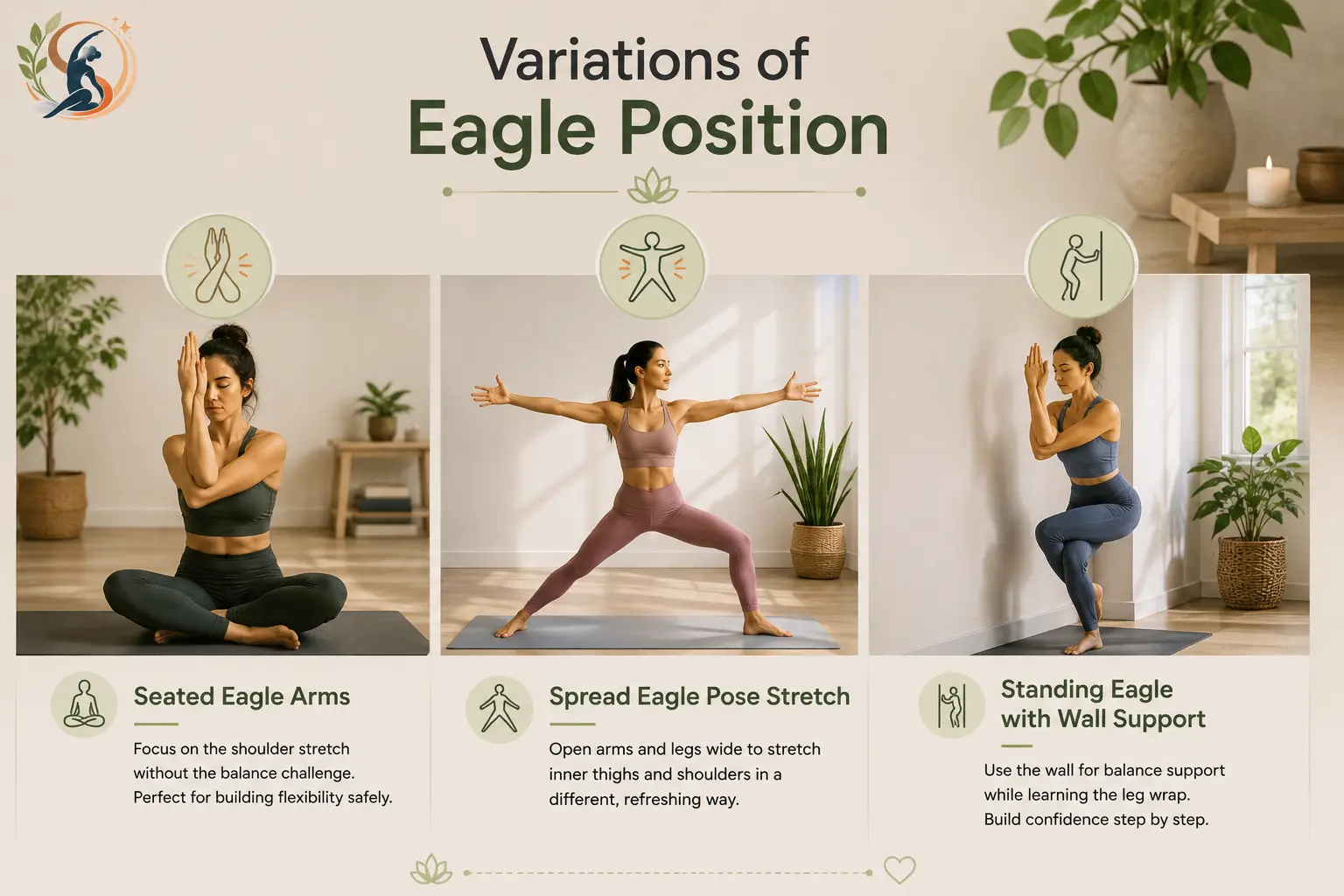
Not everyone can balance and wrap simultaneously right away and that's completely fine, honestly most people can't the first several times they try. Several variations make this yoga eagle pose more accessible or add a different kind of challenge depending on what your practice needs on any given day.
Seated Eagle Arms
Practicing just the eagle arms portion while seated removes the balance challenge entirely, letting you focus purely on the shoulder stretch without worrying about toppling over mid-pose in front of the whole class.
Spread Eagle Pose Stretch
This variation opens the arms and legs wide instead of wrapping them, offering a completely different kind of stretch through the inner thighs and shoulders while still connecting to the same broader eagle-inspired family of poses many practitioners come to recognize.
Standing Eagle with Wall Support
Using a wall for light support while learning the leg wrap takes the balance pressure off entirely, letting your body learn the shape gradually before removing that support once you're genuinely steadier on your own.
For another balance-and-patience pose to add to your practice, working through bound angle pose is worth exploring next.
Benefits of Practicing Eagle Pose Regularly
People who keep eagle position yoga in their regular rotation tend to notice a handful of consistent shifts over weeks and months of steady practice:
Noticeably improved balance and coordination, both on and off the mat
Increased flexibility through the shoulders, upper back, hips and outer thighs
Sharper focus and concentration carried over into daily tasks and other activities
Reduced tension in the shoulders and upper back from consistent stretching
A genuine sense of accomplishment as the wobbling gradually turns into steadiness
Common Mistakes in Eagle Position Yoga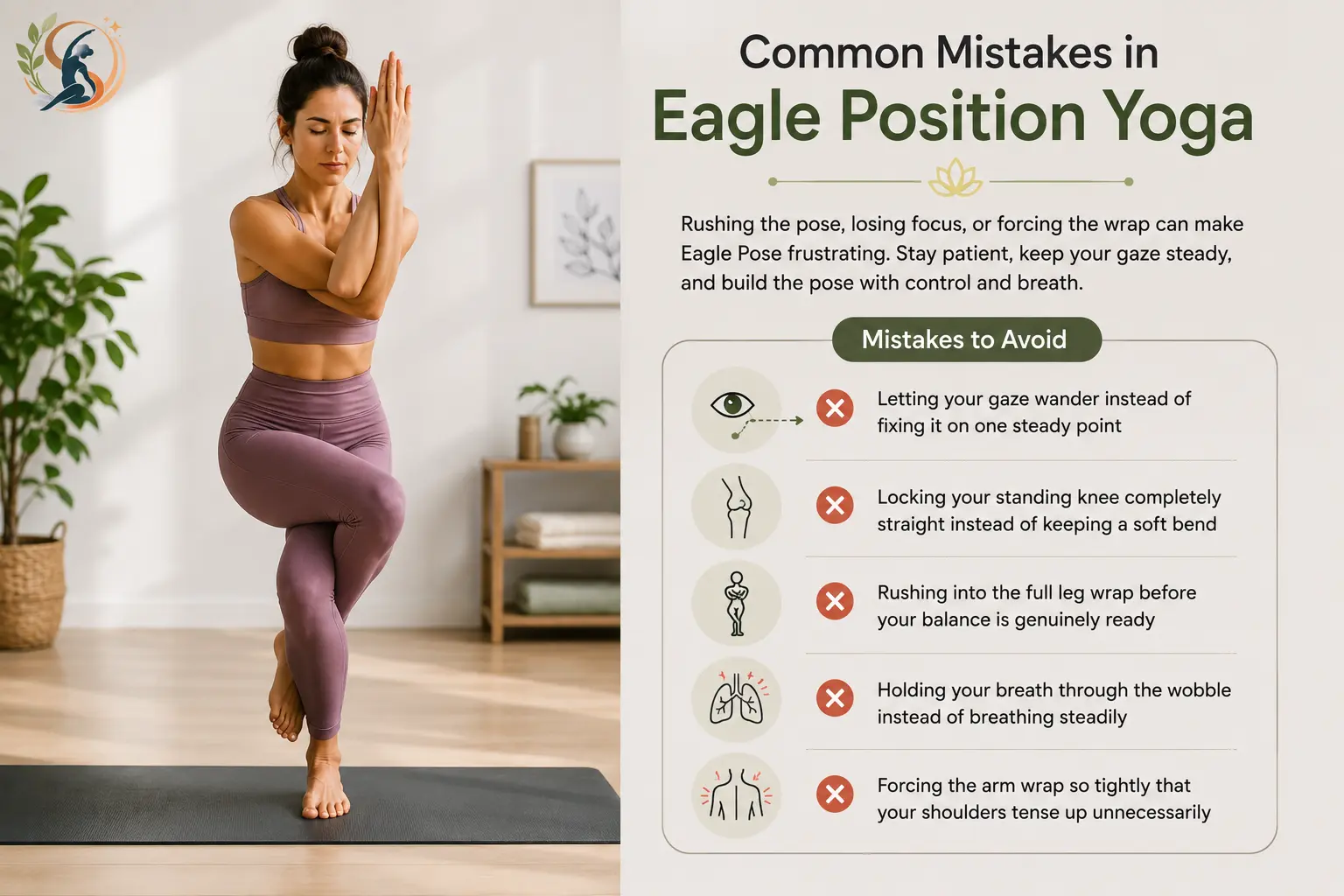
Most people rush straight into the full wrap before their balance and flexibility are genuinely ready for it, which usually just leads to frustration and repeated toppling rather than actual progress toward the pose they're picturing in their head after seeing it demonstrated in class.
Losing the gaze point is probably the single most common mistake, letting your eyes wander the moment you start wobbling instead of locking onto something steady nearby. Eagle position yoga rewards patience and a fixed focus far more than it rewards rushing straight into the deepest version of the shape before your body's actually ready for it, no matter how eager you are to nail it on day one.
Mistakes to Avoid
Letting your gaze wander instead of fixing it on one steady point
Locking your standing knee completely straight instead of keeping a soft bend
Rushing into the full leg wrap before your balance is genuinely ready
Holding your breath through the wobble instead of breathing steadily
Forcing the arm wrap so tightly that your shoulders tense up unnecessarily
Is Eagle Position Yoga Right for You
Honestly, most people can work toward some version of eagle pose yoga safely, even if the full wrapped expression takes weeks or months to feel genuinely steady. What matters more than achieving the deepest version is whether your body feels supported throughout the hold, not just how tightly you can wrap your limbs together to look impressive.
If you've got existing knee or shoulder injuries, it's worth checking with a teacher before working the full expression into your regular practice, since the wrap does put real pressure through both joints.
For most people though, eagle position becomes one of those poses you eventually look forward to instead of dreading, the wobble slowly turning into something almost meditative over the weeks you spend building toward it.
Finding Guidance From a Yoga Master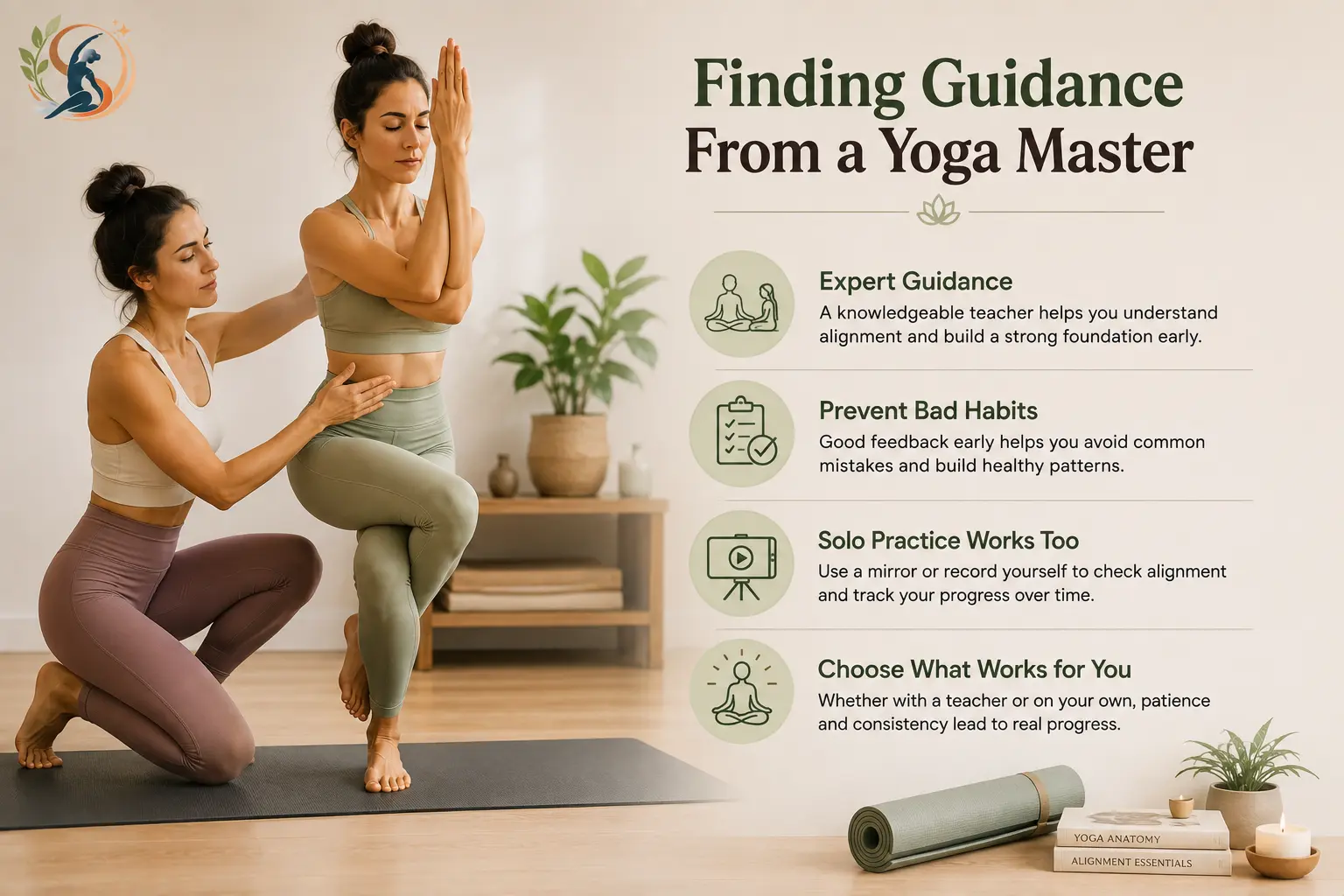
Learning eagle position yoga from a teacher who genuinely understands alignment makes a real difference, especially early on when the coordination feels completely foreign to your body.
Getting guidance from a yoga master, whether in person or through a well-structured online class, helps catch small alignment issues before they turn into bad habits that are a lot harder to unlearn later once they've become automatic.
That said, plenty of people learn this pose successfully through patient, consistent solo practice too, using a mirror or recording themselves occasionally to check alignment against what a teacher would typically be watching for in class.
Neither path is wrong, it really just depends on how you personally learn best and what resources you actually have access to. If foundational alignment work like this interests you, learning proper downward-facing dog alignment covers similar ground for another commonly misunderstood pose.
How Eagle Pose Fits Into a Yoga Sequence
This eagle yoga pose rarely stands completely alone in a well-built class, usually showing up somewhere in the middle once the body's warmed through a few standing poses first. Jumping straight into it cold, without any real warm-up beforehand, tends to make the balance and flexibility demands feel a lot harder than they actually need to be for most people.
Teachers often place this eagle yoga position after poses like tree pose or a standing forward fold, giving the hips and shoulders a chance to open gradually before asking for the tighter wrap this shape requires from the body.
Coming out of it into a gentle counter-stretch, like a simple shoulder roll or a forward fold, helps release whatever just got compressed during the hold, leaving the body feeling balanced and open rather than tight or compressed afterward.
How Often Should You Practice This Pose
There's no strict rule here and honestly the answer depends more on how your balance and flexibility are progressing than any fixed number of sessions per week you feel obligated to hit. Some weeks I work this eagle posture yoga shape into almost every practice, other weeks it barely makes an appearance at all and both are completely fine depending on what else is going on.
For most people building toward a steadier hold, practicing it two or three times a week tends to show noticeable improvement within a month or so of consistent effort. Consistency matters more here than intensity, a few focused minutes most sessions beats one long, frustrated attempt where you just keep falling out of the pose and getting more discouraged with every attempt.
Using Props to Support Your Practice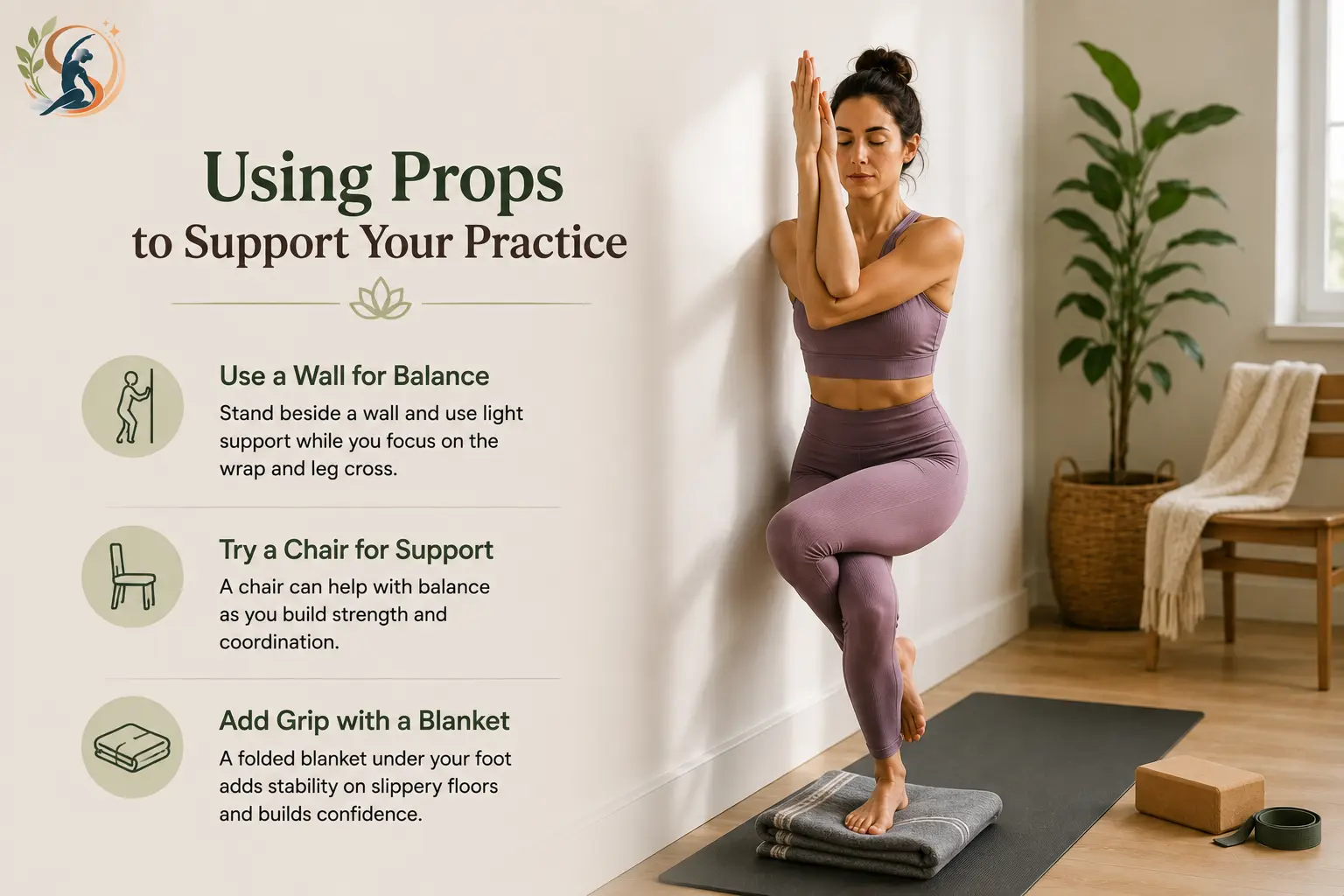
Not everyone needs to balance and wrap unassisted right away and props can genuinely speed up the learning curve here instead of just leaving you frustrated week after week trying to force it alone. A wall nearby or even a chair for light support, takes the pressure off while your body learns the coordination this pose genuinely demands.
Standing sideways next to a wall lets you lightly touch it for balance while you focus purely on the arm wrap and leg cross without worrying about toppling completely over onto the mat. Once that coordination starts feeling natural, stepping away from the wall becomes a lot less intimidating than starting from scratch in the middle of an open room with nothing to catch you.
A folded blanket under bare feet can also help on slippery studio floors, giving your standing foot a bit more grip while you're still building confidence in the pose overall.
Frequently Asked Questions
1. What is the Eagle Pose good for?
Eagle pose improves balance, focus and flexibility through the shoulders, upper back, hips and outer thighs simultaneously. It's particularly helpful for desk workers and athletes carrying tension in the upper body from repetitive daily movement patterns over time.
2. What is the most seductive yoga pose?
Yoga poses aren't really designed around seduction, they're built around alignment, breath and body awareness above everything else. Poses like eagle position or dancer's pose sometimes get described as graceful or elegant, but that's a byproduct of good alignment, not the actual intention behind the practice.
3. What are the common mistakes in Eagle Pose yoga?
The most frequent mistakes include letting your gaze wander, locking the standing knee straight and rushing into the full leg wrap before balance is genuinely ready. Fixing your gaze and keeping a soft knee bend solves most of these issues quickly.
4. How to do a yoga Eagle Pose?
Cross one leg over the other while balancing on the standing leg, then wrap your arms so your palms meet together in front of you at roughly chest height. Sink your hips slightly, fix your gaze on something steady nearby and breathe steadily through the wobble instead of holding your breath.
5. Is eagle position yoga good for beginners?
Yes, with modifications like wall support or practicing just the seated arm wrap first before attempting the full standing version. It's genuinely worth learning gradually rather than rushing, since balance and flexibility both improve significantly with consistent, patient practice over time.
6. How long should I hold an eagle pose?
Most practitioners hold each side for five to eight breaths, switching sides afterward to keep things balanced on both sides of the body. Beginners can start with just a few seconds per side and build up gradually from there as strength and balance improve.
Conclusion
Eagle position yoga isn't just another balance pose to check off a list, it's genuinely one of those shapes that teaches patience, focus and a strange kind of humility every time you topple out of it. Some days it feels steady and almost graceful, other days it feels like a comedy routine and both are completely normal parts of the process.
Give it time and it becomes one of the more rewarding poses in your entire practice. If eagle position becomes a favorite, working toward a deep backbend like camel pose is a natural next challenge.


Comments (0)
No comments yet. Be the first to share your thoughts!
Leave a Comment